
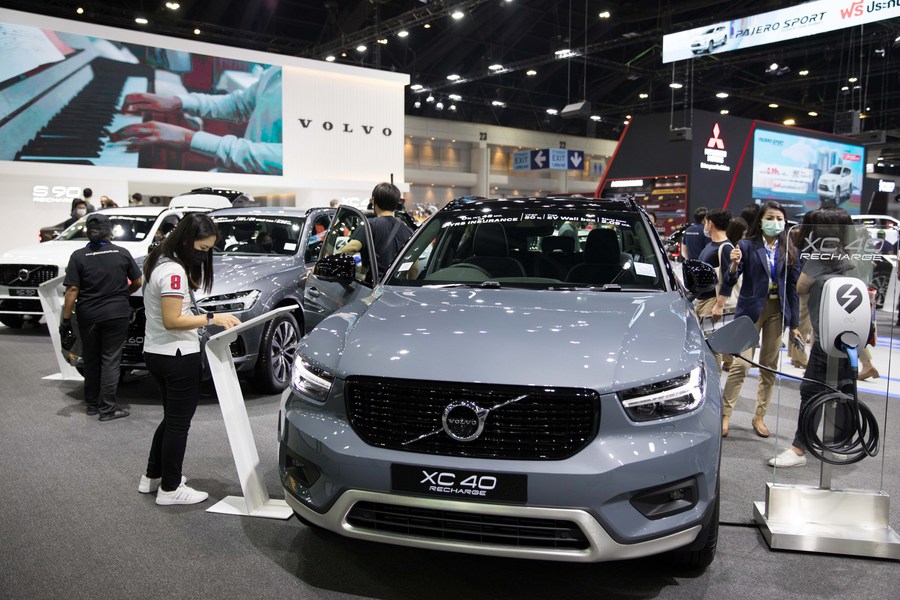
Visitors view Volvo cars during the 37th Thailand International Motor Expo 2020 in Bangkok, Thailand, Dec. 13, 2020. (Xinhua/Zhang Keren)
The increased sale was driven by fully electric cars, of which 59,260 were sold, an increase of 167 percent, Volvo Cars said in a press release.
STOCKHOLM, July 5 (Xinhua) -- Volvo Cars said on Wednesday that its global sales in the first six months of 2023 increased by 17 percent year-on-year to 341,691 units.
The increase was driven by fully electric cars, of which 59,260 were sold, an increase of 167 percent, the company said in a press release.
In China, sales grew by 12 percent to 78,526 cars, of which 7,565 were chargeable models, either fully electric or plug-in hybrids.
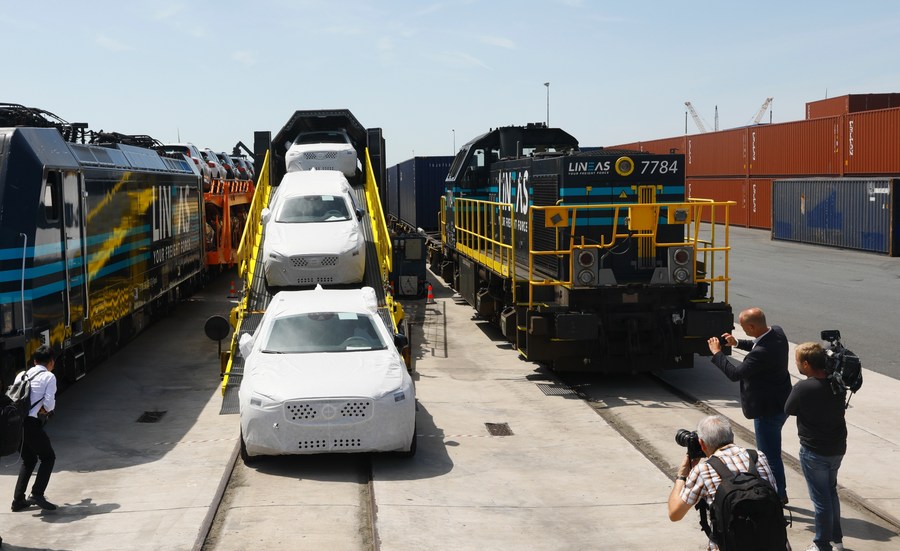
Volvo XC60 vehicles are seen at the Port of Ghent in Belgium on July 4, 2019. (Xinhua/Pan Geping)
Volvo sold 59,750 cars in the United States, up 18 percent year-on-year, while sales of fully electric cars doubled to 7,603.
In Europe, 146,943 cars were sold during the same period, up 23 percent year-on-year.
Much of the growth in Europe can be attributed to fully electric cars, of which sales increased by 203 percent compared with the first six months of 2022 to 39,617, or 27 percent of total sales.
Volvo Cars, acquired by Chinese automaker Geely in 2010, employed approximately 43,200 full-time employees globally in 2022.
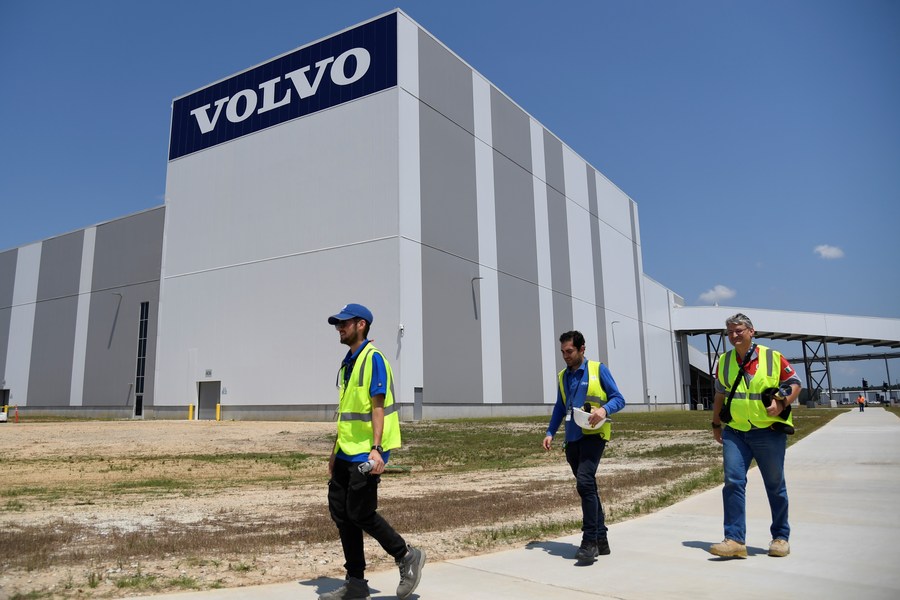
Workers walk at Volvo Cars new plant in Charleston, South Carolina, the United States, June 20, 2018. (Xinhua/Yang Chenglin)
Headquartered in the Swedish city of Gothenburg, Volvo Cars has main car production plants in Gothenburg, Ghent (Belgium), South Carolina (the U.S.), and Chengdu, Daqing and Taizhou (China). The company also has research and development (R&D) and design centers in Gothenburg, Camarillo (the U.S.) and Shanghai (China).
The company said in 2021 that it aimed to phase out models with combustion engines, including plug-in hybrids, and solely produce fully electric cars by 2030. ■