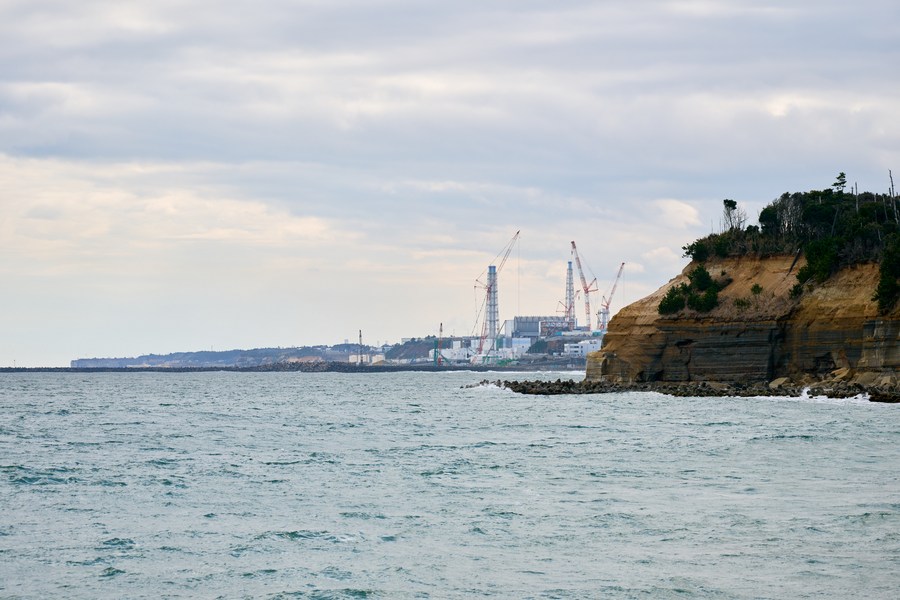
This photo taken on March 6, 2023 shows the Fukushima Daiichi nuclear power plant seen from Futabacho, Futabagun, Fukushima prefecture, Japan. (Xinhua/Zhang Xiaoyu)
Japan's discharge of nuclear waste should be prohibited as it will do significant transboundary harm to the territories of the Pacific, putting marine ecosystem and human health at risk, said the scholars.
SUVA, June 17 (Xinhua) -- Two Fijian scholars have expressed their disappointment with Japan's ongoing trial operation of nuclear-contaminated water discharge equipment at the Fukushima plant.
"It is very unfortunate that Japan is doing this," said Keshmeer Makun, a lecturer at the University of the South Pacific (USP) based in the Fijian capital Suva, adding that "the Pacific Islands Forum (PIF) leaders need to take action."
He told Xinhua in a recent interview that Pacific island countries have made their objections very clear that Japan should not release radioactive wastewater into the ocean.
"Experts and scientists are telling us that it is going to be dangerous to the marine ecosystem and human health," Makun said.
He quoted PIF Secretary-General Henry Puna's words as saying that "Pacific Islanders are people of the ocean. Anything that prejudices the health of the ocean is a matter of serious concern."
Kalinga Seneviratne, a consultant with the journalism program at USP, said Japan should respect the South Pacific Nuclear Free Zone Treaty, inked by PIF members in 1985, which prohibits testing, manufacturing, and stationing nuclear explosive devices and dumping nuclear waste within the zone.
He said the contamination will do significant transboundary harm to the territories of the Pacific, including the treaty zone.
Tokyo Electric Power Company, the operator of the Fukushima Daiichi nuclear power plant, was reported to begin trialing the equipment on Monday to discharge nuclear-contaminated water into the Pacific.
The test run of the discharge facility is expected to last for around two weeks.■