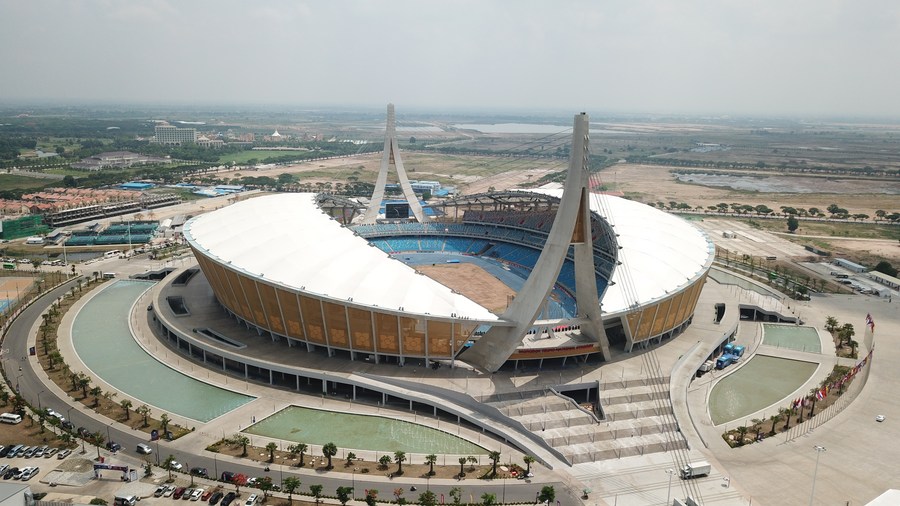
Photo taken on May 10, 2023 shows the Morodok Techo National Stadium in Phnom Penh, Cambodia. (Photo by Van Pov/Xinhua)
"The stadium has stood as the symbol of the comprehensive strategic cooperative partnership between Cambodia and China, and has opened a new historic chapter for the development of sports in Cambodia," said Vath Chamroeun, secretary general of the National Olympic Committee of Cambodia.
PHNOM PENH, May 16 (Xinhua) -- Cambodian Prime Minister Samdech Techo Hun Sen said on Monday that the China-aided Morodok Techo National Stadium has allowed the kingdom to host the Southeast Asian (SEA) Games proudly.
Cambodia is hosting the 32nd SEA Games for the first time in 64 years on May 5-17, with the 60,000-seat Morodok Techo National Stadium being the centerpiece venue for official opening and closing ceremonies as well as tournaments.
The biennial multi-sport event has brought together a total of 10,890 athletes, coaches, referees and officials from 11 Southeast Asian countries.
In a speech delivered at a graduation ceremony of more than 3,000 university students in Phnom Penh, Hun Sen said he would like to send his thanks to China for having provided a beautifully huge stadium as a gift to Cambodia.
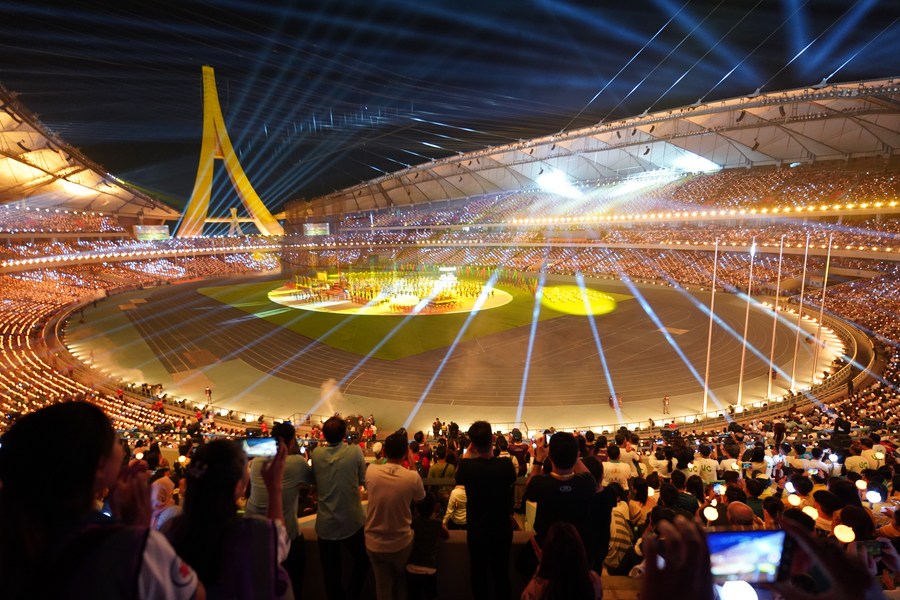
Photo taken on May 5, 2023 shows the opening ceremony of the 32nd Southeast Asian (SEA) Games at the Morodok Techo National Stadium in Phnom Penh, Cambodia. (Photo by Ly Lay/Xinhua)
"The stadium has given Cambodia an opportunity to host SEA Games 2023 proudly," he said.
Located on the northern outskirts of the capital Phnom Penh, the stadium, built by the China State Construction Engineering Corporation (CSCEC), has been put into use since December 2021.
Vath Chamroeun, secretary general of the National Olympic Committee of Cambodia, said the stadium has promoted Cambodia's prestige and honor on the international arena.
"The stadium has stood as the symbol of the comprehensive strategic cooperative partnership between Cambodia and China, and has opened a new historic chapter for the development of sports in Cambodia," he told Xinhua, adding that "it will also be a magnet to attract foreign tourists, especially Chinese visitors."■