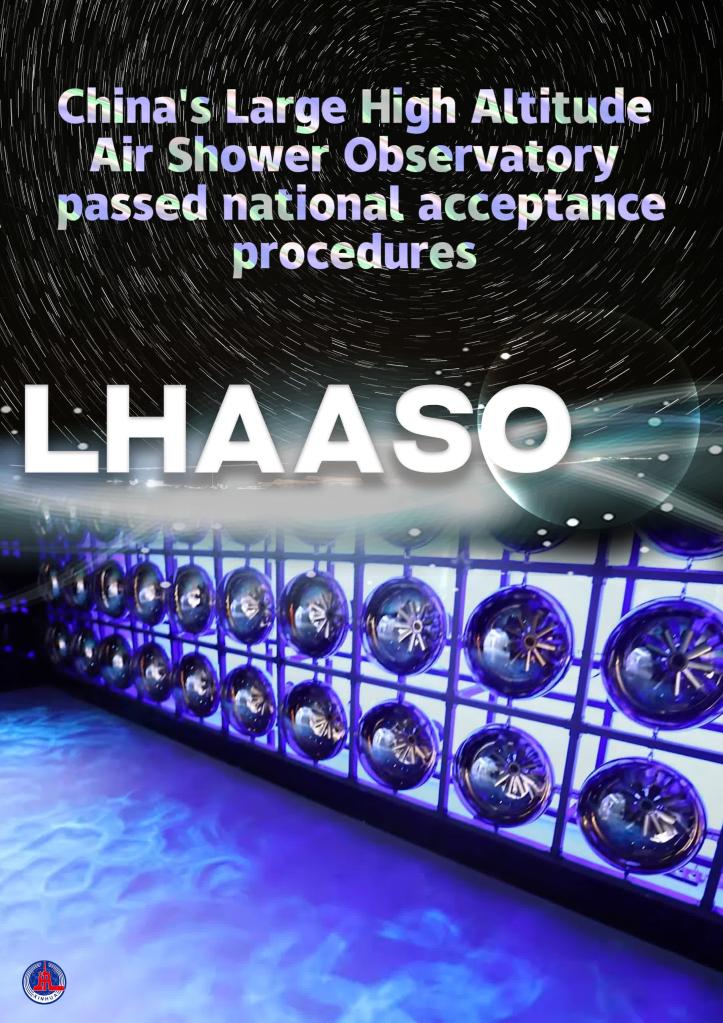
BEIJING, May 11 (Xinhua) -- China's Large High Altitude Air Shower Observatory (LHAASO), a high-altitude cosmic ray observatory, passed national acceptance procedures on Wednesday, according to the Chinese Academy of Sciences (CAS).
LHAASO, covering an area of 1.36 square kilometers located 4,410 meters above sea level in Daocheng County, southwest China's Sichuan Province, is one of the country's key national science and technology facilities.
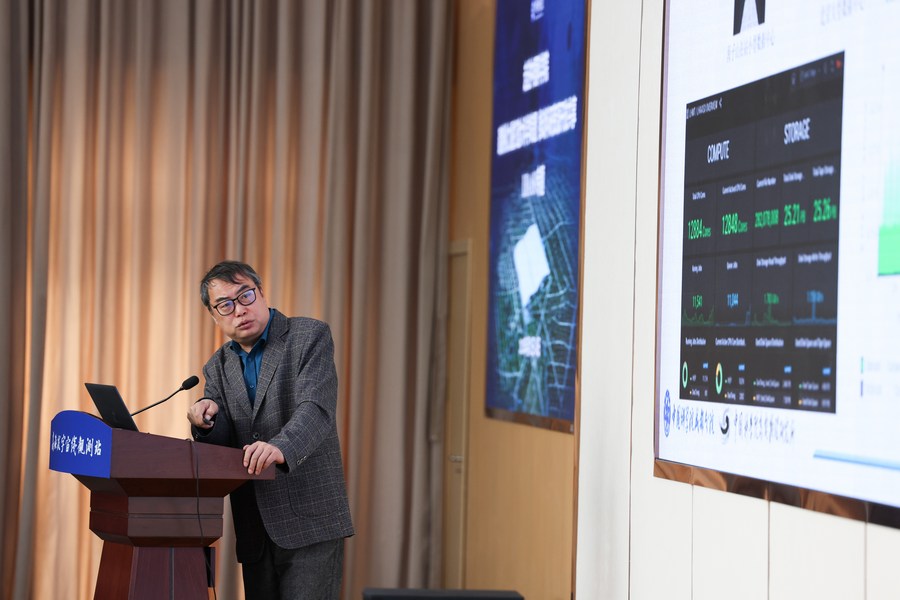
Cao Zhen, chief scientist at LHAASO and a researcher at the Institute of High Energy Physics under CAS, speaks during a briefing in Chengdu, southwest China's Sichuan Province, April 23, 2023. (Xinhua/Jin Liwang)
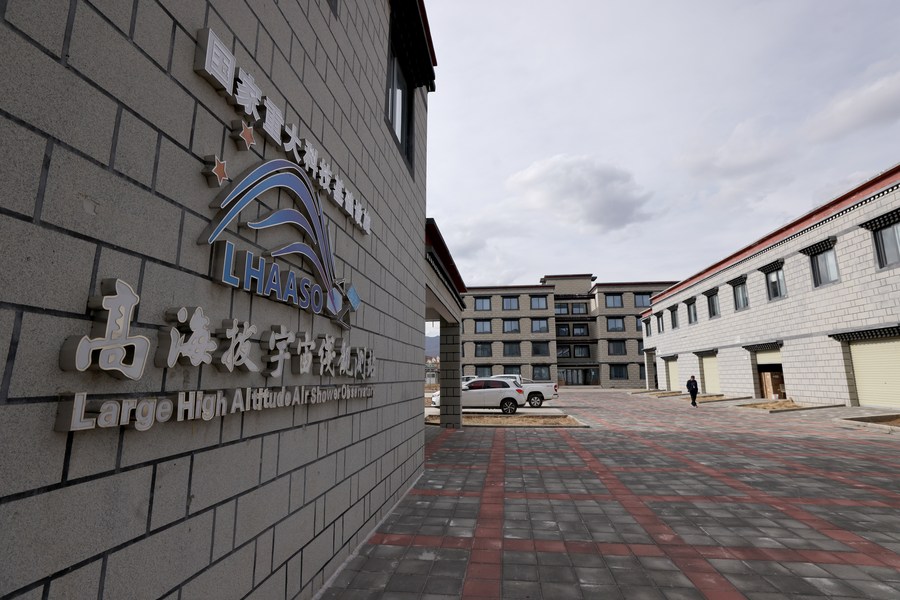
This photo taken on April 22, 2023 shows the observation and control base of LHAASO in Daocheng County, southwest China's Sichuan Province. (Xinhua/Jin Liwang)
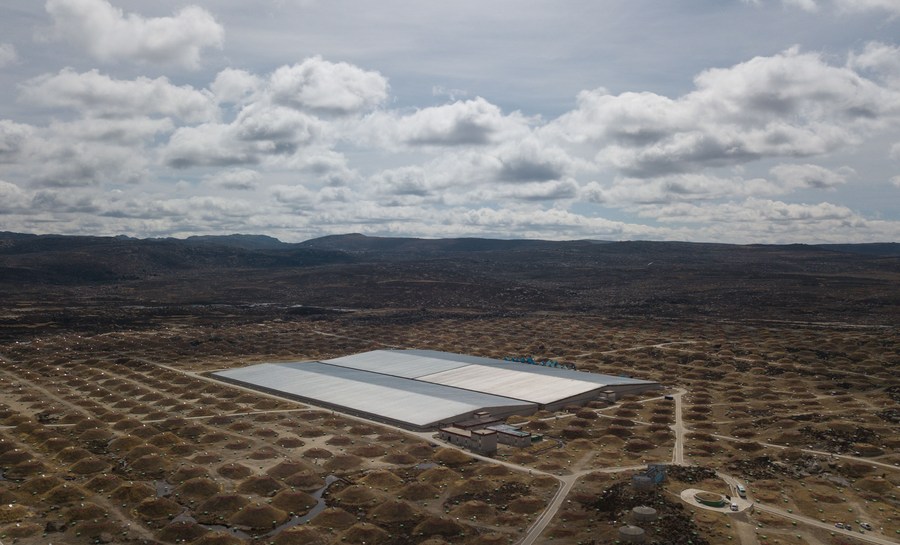
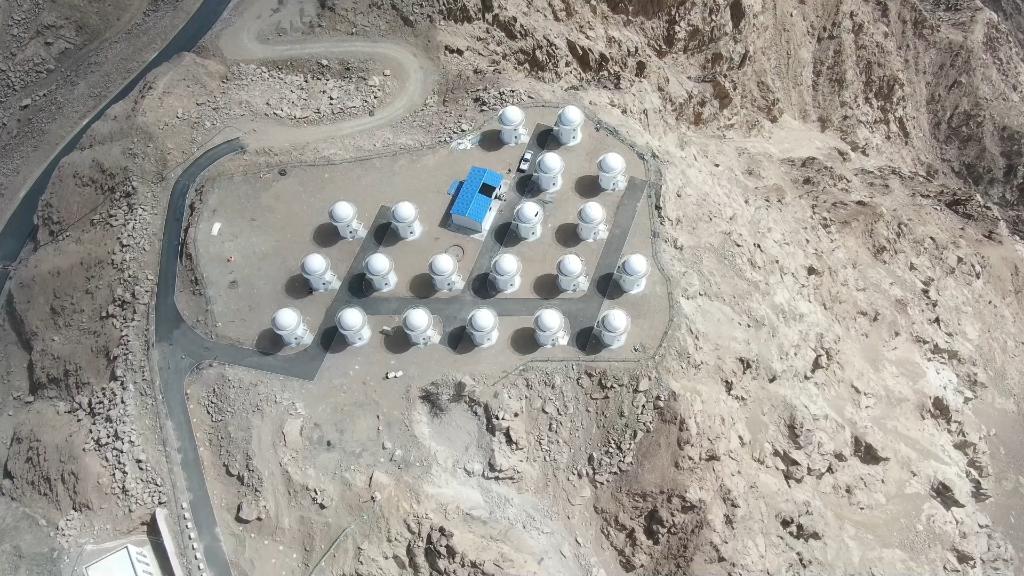
This aerial photo taken on April 22, 2023 shows the LHAASO in Daocheng County, southwest China's Sichuan Province. (Xinhua/Jin Liwang)
According to CAS, the observatory is designed to explore the mysteries of the universe by observing cosmic rays.
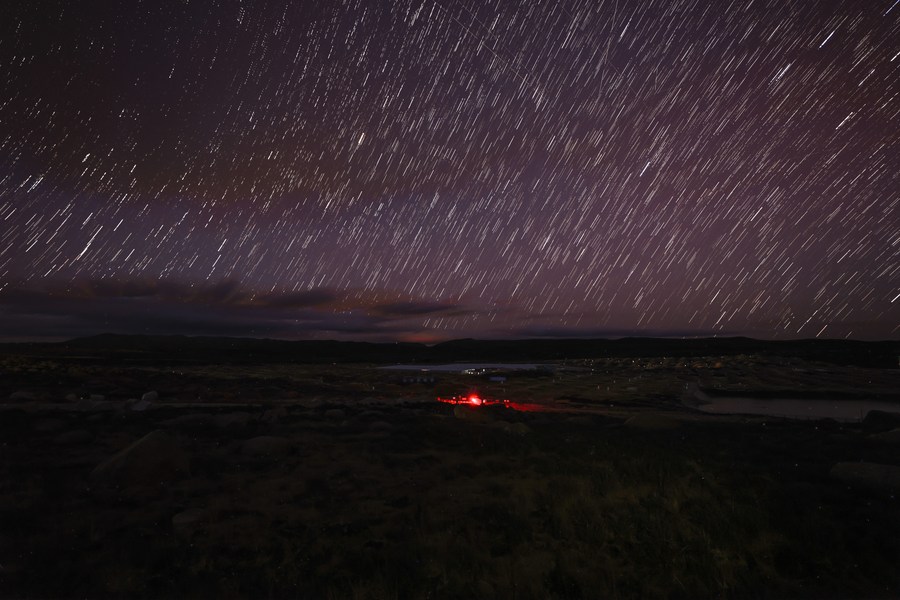
This photomontage taken on April 21, 2023 shows the night sky above LHAASO in Daocheng County, southwest China's Sichuan Province. (Xinhua/Jin Liwang)

This photo taken on April 22, 2023 shows the wide-field-of-view Cherenkov telescopes at LHAASO in Daocheng County, southwest China's Sichuan Province.(Xinhua/Jin Liwang)
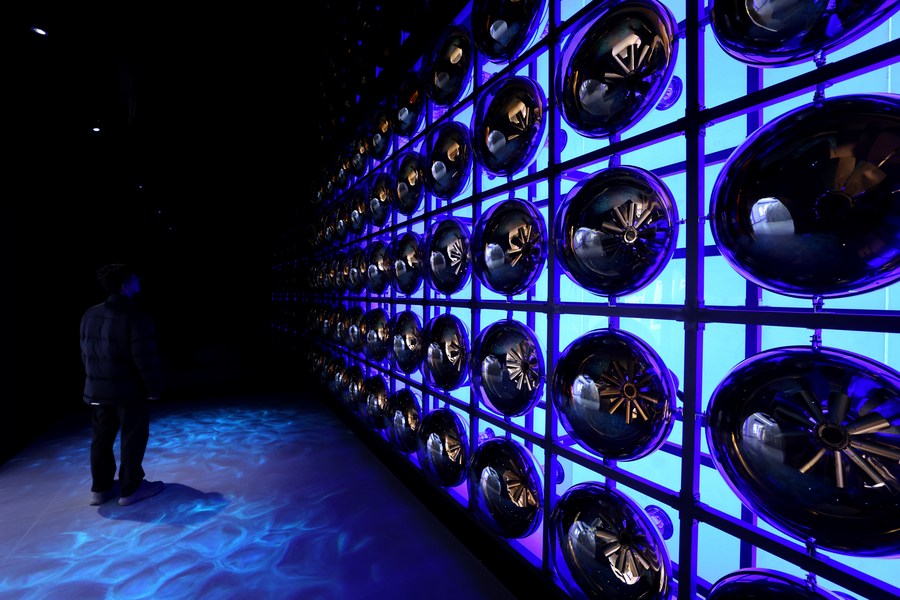
This photo taken on April 22, 2023 shows a demonstration for photomultiplier tubes at LHAASO in Daocheng County, southwest China's Sichuan Province.(Xinhua/Jin Liwang)
"Cosmic rays carry important scientific information about the origin of the universe, the evolution of celestial bodies, and solar activity," said Cao Zhen, chief scientist at LHAASO and a researcher at the Institute of High Energy Physics under CAS. He said that studying cosmic rays and their origins is an important way for human beings to explore the universe.
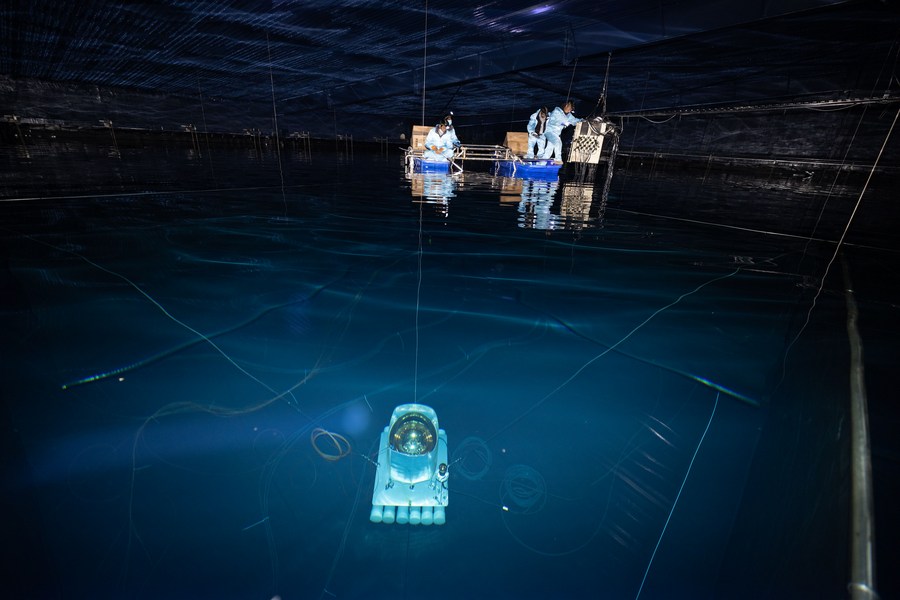
Researchers change parts of scientific devices in a pool of the Water Cherenkov Detector Array of LHAASO in Daocheng County, southwest China's Sichuan Province, April 21, 2023.(Xinhua/Jin Liwang)
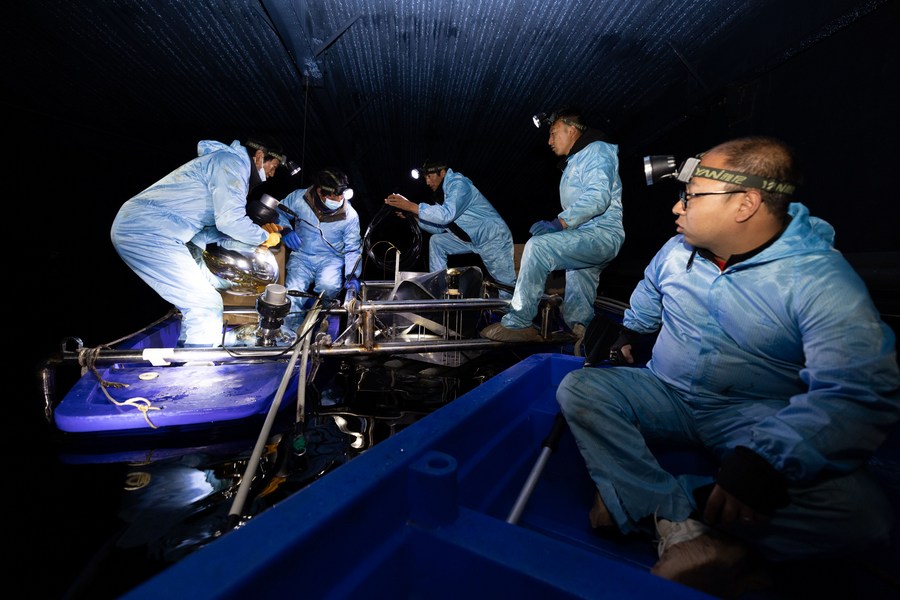
Researchers change parts of scientific devices in a pool of the Water Cherenkov Detector Array of LHAASO in Daocheng County, southwest China's Sichuan Province, April 21, 2023.(Xinhua/Jin Liwang)

Researchers change parts of scientific devices in a pool of the Water Cherenkov Detector Array of LHAASO in Daocheng County, southwest China's Sichuan Province, April 21, 2023.(Xinhua/Jin Liwang)
The construction of the main part of the observatory began in 2017 and was completed in 2021. With the unique advantages of a high altitude and key core technologies, LHAASO has become the most sensitive ultra-high-energy gamma ray detecting instrument in the world, according to CAS.
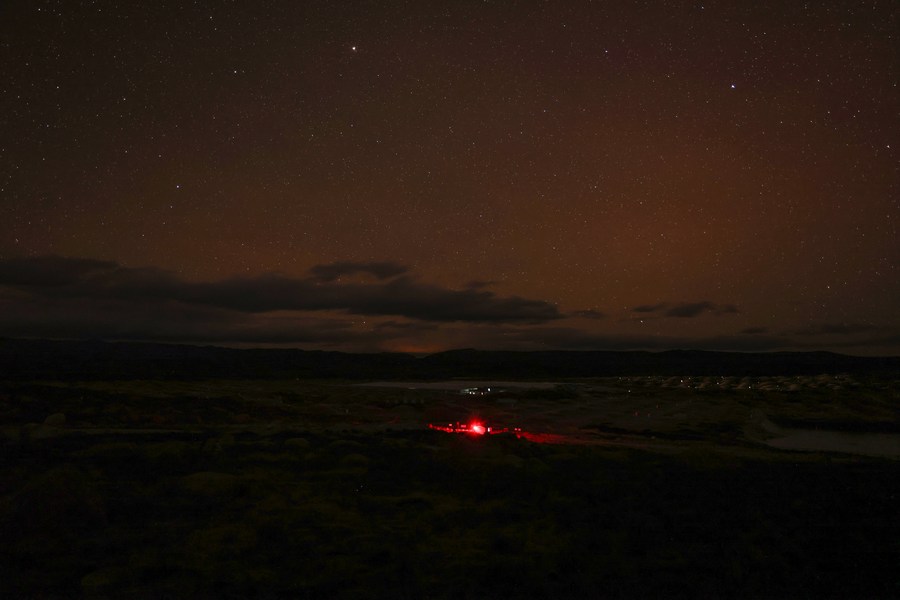
This photo taken on April 21, 2023 shows the night sky above LHAASO in Daocheng County, southwest China's Sichuan Province. (Xinhua/Jin Liwang)
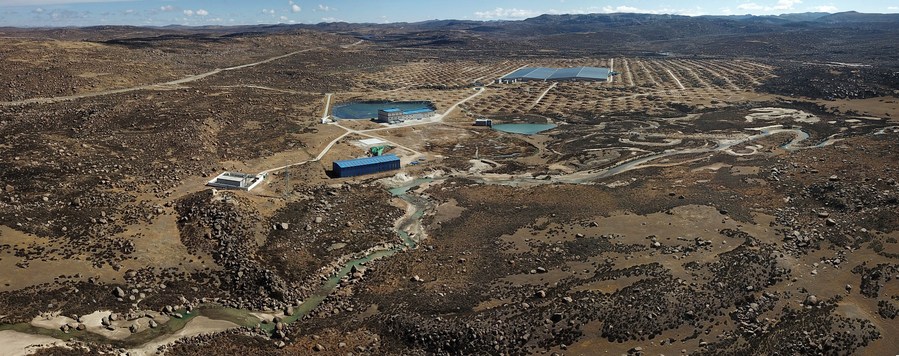
This aerial panorama photo taken on April 21, 2023 shows the LHAASO in Daocheng County, southwest China's Sichuan Province.(Xinhua/Jin Liwang)
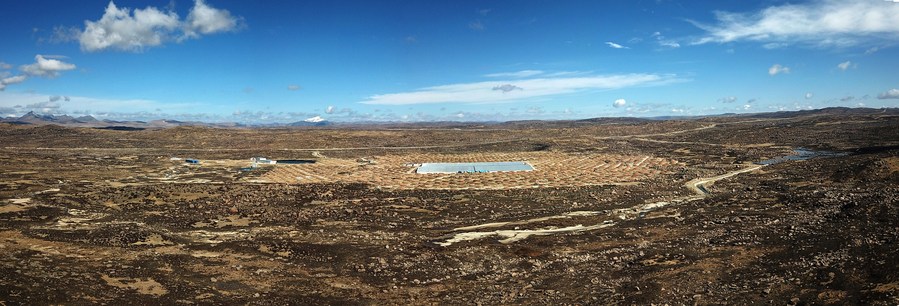
This aerial panorama photo taken on April 21, 2023 shows the LHAASO in Daocheng County, southwest China's Sichuan Province.(Xinhua/Jin Liwang)■