
People visit an Easter market in Nairobi, Kenya, on April 1, 2023. (Xinhua/Han Xu)
Long-term growth, peace, and stability in the Horn of Africa region will be dependent on the enactment of policies and legislation to facilitate structured human mobility across borders, says the UN International Organization for Migration (IOM) in a report launched Tuesday in the Kenyan capital of Nairobi.
NAIROBI, May 3 (Xinhua) -- Long-term growth, peace, and stability in the Horn of Africa region will be dependent on the enactment of policies and legislation to facilitate structured human mobility across borders, says the UN International Organization for Migration (IOM) in a report launched Tuesday in the Kenyan capital of Nairobi.
The inaugural State of Migration in East and Horn of Africa report, compiled by the IOM in conjunction with the East African Community and Intergovernmental Authority on Development, both regional blocs, says that the free movement of civilians will enable the region to harness the full benefits of integration.
Kenyan President William Ruto in the report's foreword said the Horn of Africa region stood to gain from seamless human mobility, citing sustained economic growth, political stability, and social cohesion.
"Allowing people, goods, and services to move freely across the region and the continent creates opportunities and wealth for Africa and its people," Ruto said, adding that human mobility will be key to realizing aspirations of the African Continental Free Trade Area (AfCFTA).
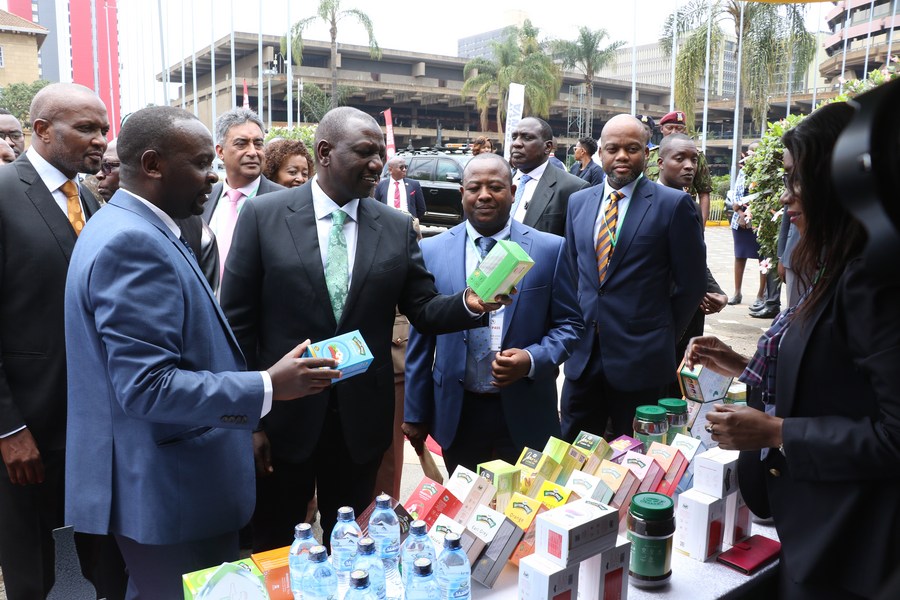
Kenyan President William Ruto (2nd L, Front) looks at a brand of local tea in Nairobi, capital of Kenya, Oct. 5, 2022. (Photo by Allan Mutiso/Xinhua)
Ruto also said that Kenya was committed to the regional integration agenda, having enacted legal and policy instruments aimed at facilitating the free cross-border movement of skilled labor, goods, and services.
The State of Migration in the East and Horn of Africa report, covering 12 countries, offers a comprehensive insight into the mobility dimension of regional integration, trade, and the impact of migration on health, gender parity, and climate resilience.
In addition, the report calls for enhanced labor mobility, revamping of border posts through digitization, and sustainable reintegration of migrants fleeing turmoil and economic hardships.
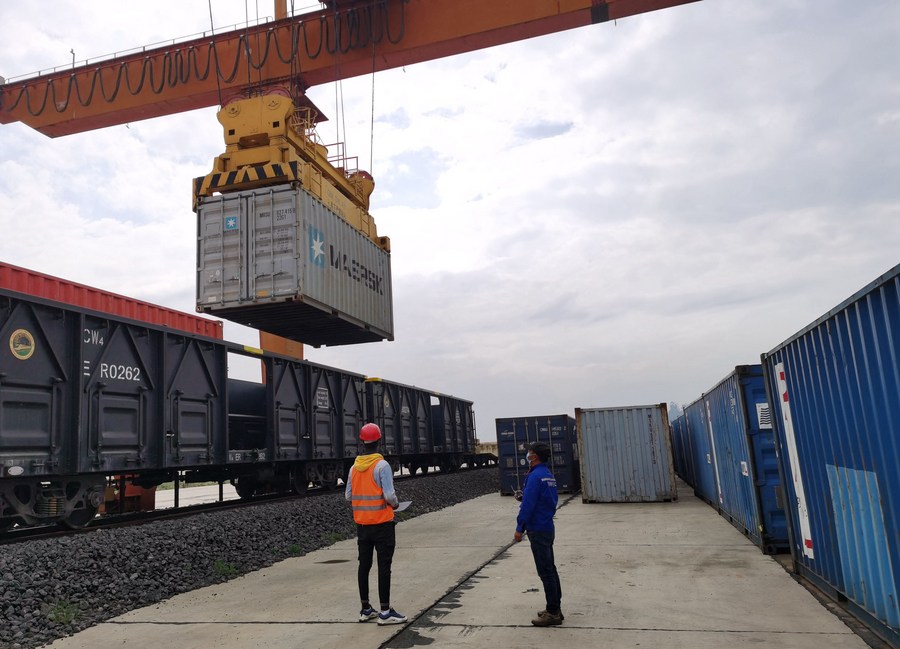
Chinese and Ethiopian staff members monitor the loading of containers to be transported by the Ethiopia-Djibouti railway in Ethiopia, on Sept. 2, 2020. (Photo by Tang Yongcheng/Xinhua)
The report calls on Horn of Africa states to address climate change, human trafficking, high youth unemployment, and infectious diseases that posed existential threats to the safe, orderly, and human movement of civilians.
Mohammed Abdiker, regional director of the IOM Office for East and Horn of Africa, said human mobility if well-managed has the potential to lift the region out of poverty besides easing inter-communal tensions.
Abdiker noted that by fully integrating migrants and protecting their civil liberties, Horn of Africa countries will address the shortage of skilled labor, and unleash innovations and enterprises. ■