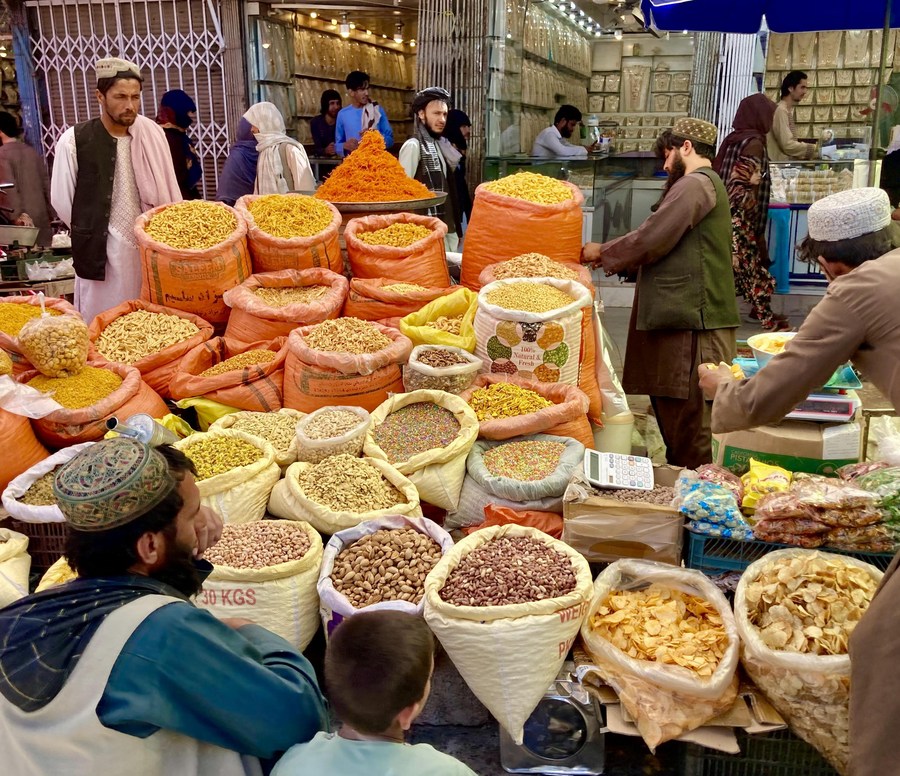
Afghan people buy dry fruits at a local market ahead of the Eid al-Fitr festival, in Kandahar province, Afghanistan, April 20, 2023. (Photo by Arghand/Xinhua)
The U.S. sanctions have plunged Afghanistan into the throes of economic crisis, with local residents still wrestling with high prices and low incomes, even on the grand Eid al-Fitr holiday.
KABUL, April 21 (Xinhua) -- As the Islamic sacred month of Ramadan is nearing an end, Afghans are getting ready to celebrate Eid al-Fitr amid increasing poverty caused by sanctions imposed by the United States.
Traditionally, as part of their culture, the faithful Afghans buy fresh and dried fruits, cookies, confectioneries, and different kinds of dishes during the three-day Eid al-Fitr festival to mark the end of Ramadan.
However, aid agencies predicted that a record 28.3 million Afghans, which is around two-thirds of the population, will need humanitarian assistance in 2023, with 6 million of those already perilously close to famine.
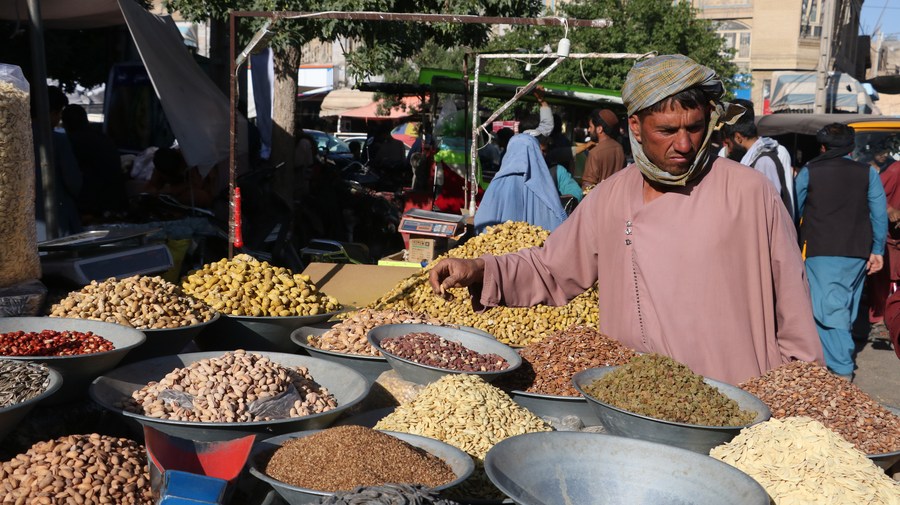
A vendor sells dry fruits at a local market ahead of the Eid al-Fitr festival, in Herat province, Afghanistan, April 19, 2023. (Photo by Mashal/Xinhua)
"Prices are skyrocketing and people are living in extreme poverty. Businesses are flopping and few people can buy fresh and dry fruits for their Eid table," said Fazal Rahman.
A resident of Kabul, Rahman, 48, while wandering in a local market to buy sweets and fruits for the Eid al-Fitr celebration, lamented that price hikes have shrunk his purchasing power.
"I was only able to buy chickpeas and some sweets. I wanted to buy pistachios and almonds but couldn't," Rahman told Xinhua.
He said he believed the U.S. sanctions had "seriously" impacted the price of commodities in Afghanistan.
Following the withdrawal of U.S.-led forces from the Asian country, Afghanistan's assets worth more than 9 billion U.S. dollars were frozen by the United States as part of its sanctions on the new rulers of the war-torn country.
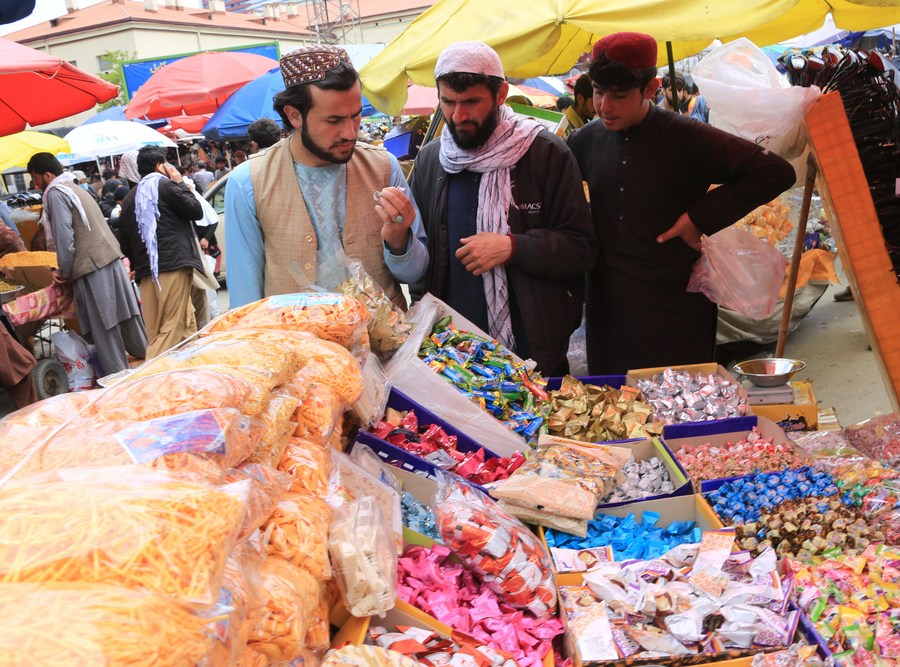
Afghan people buy sweets at a market ahead of Eid al-Fitr, in Kabul, Afghanistan, April 18, 2023. (Photo by Saifurahman Safi/Xinhua)
"My demand is to see Afghanistan money unfrozen, so as to create job opportunities and to improve living conditions," said Rahman, a father of seven.
Echoing his sentiments, Rustam, a 35-year-old fruit seller, said that the current economic problems have badly reduced people's purchasing power, and therefore their ability to decorate tables with fruits and sweets.
"The price of 1 kg of oranges is 150 afghani and the price of 1 kg of pears is 400 afghani. No one can afford to buy them," Rustam told Xinhua.
"When a person can't buy a naan (Afghan traditional flat bread), how can they afford to buy fruit?" the fruit seller said.
Talking about the impact of U.S. sanctions on the prices of goods in the market, Rustam said, "The prices of everything have increased and the economic situation of people has 100 percent worsened as a direct result of the sanctions."
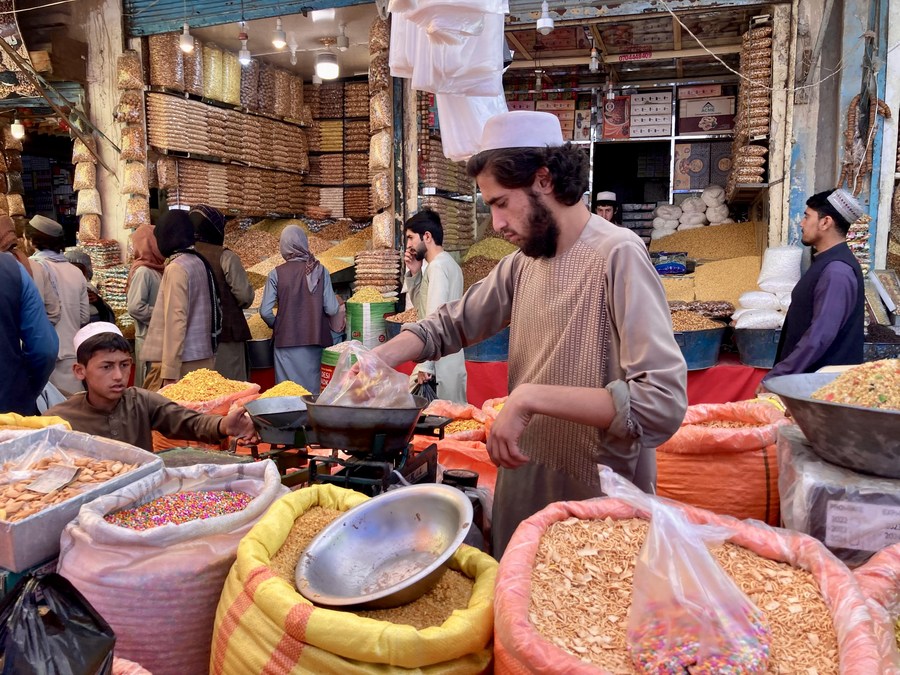
A local vendor sells dried fruits and nuts at a local market ahead of Eid al -Fitr festival in Kandahar province, Afghanistan, on April 20, 2023. (Photo by Arghand/Xinhua)
Rustam also complained that he used to earn around 100,000 afghani during Ramadan in the past, but he has hardly earned 25,000 afghani this year.
Zahir Behzad, an economics researcher from the Technical Vocational Education and Training Authority of Afghanistan, said that the sanctions could be one of the main factors that have undermined people's purchasing power.
"Certainly, the sanctions have affected the banking system as investment companies and foreign investors have given up," said Behzad, also a university professor.
"They're not spending on development projects in Afghanistan, because they are facing problems depositing, withdrawing and transferring money," Behzad told Xinhua. (1 U.S. dollar equals 86 afghani) ■