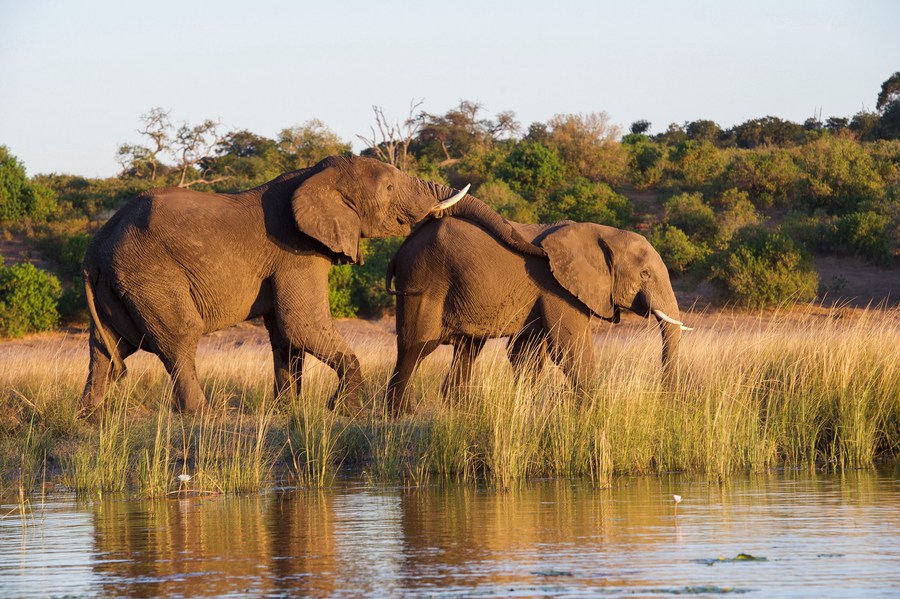
This photo taken on May 10, 2021, shows elephants along the Chobe River in Kasane, Botswana. (Photo by Tshekiso Tebalo/Xinhua)
In northern Botswana, the co-existence between humans and wildlife has brought life-changing benefits to residents as a community-based program seeks to strike a balance between wildlife conservation and rural development.
GABORONE, March 29 (Xinhua) -- In the northern part of Botswana, the co-existence between humans and wildlife has brought life-changing benefits to community residents despite challenges posed by human-wildlife conflicts.
Mababe community, situated some 925 km northwest of Gaborone, the capital city of Botswana, has benefited from the country's Community-Based Natural Resources Management (CBNRM) program, which aims to achieve a balance between wildlife conservation and rural development.
"CBNRM has delivered positive conservation, rural development and governance impacts," said Bofeletse Ruthamo, the chairperson of Mababe Zokotsama Community Development Trust, adding that at least 250 people have been employed in lodges utilized by tourists who visit his community to view wildlife.
Botswana is renowned for its spectacular wildlife and pristine wilderness areas, with tourism as the country's second-largest foreign currency earner, behind diamond mining. It is also home to some 130,000 elephants, more than any other country in the world.
To keep the balance between the local economy and wildlife conservation, Botswana has approved hunting as a tourism activity, although it has always been controversial.
In 2014, former President Ian Khama of Botswana put in place a moratorium on hunting citing species decline. However, President Mokgweetsi Masisi lifted the ban in 2019.
"In fact, a driving force behind the change was the demonstrated economic benefits of legal hunting," said Uyapo Ndadi, a human rights lawyer based in Gaborone.
Cited as well, Ndadi added, were increases in human and wildlife conflicts experienced over the five years of banning and the inability of the country's Department of Wildlife and National Parks to adequately respond to problematic animals.
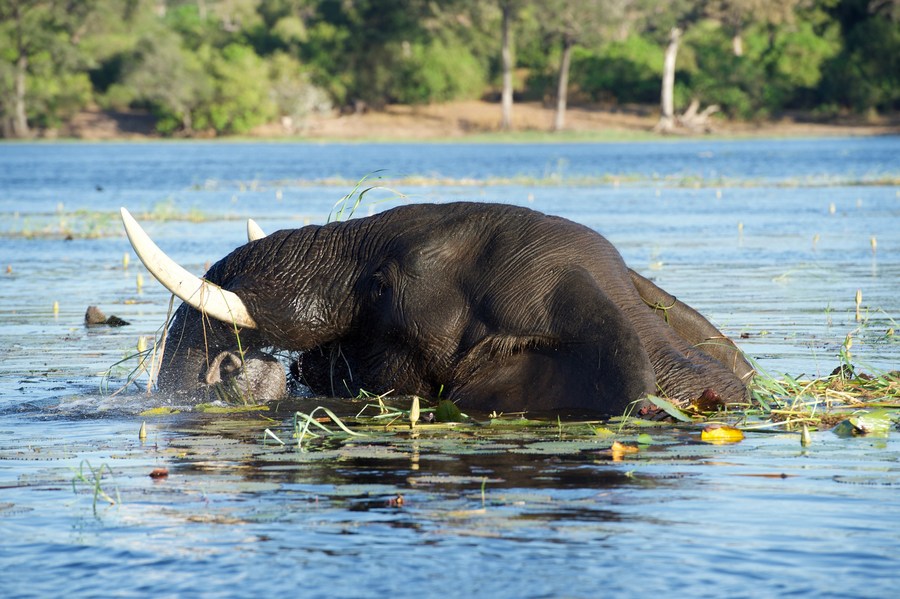
This photo taken on May 10, 2021, shows an elephant in the Chobe River in Kasane, Botswana. (Photo by Tshekiso Tebalo/Xinhua)
According to a 2019 International Union for Conservation of Nature report titled Informing Decisions on Trophy Hunting, prices paid for hunts differ enormously, from hundreds to hundreds of thousands of U.S. dollars.
"In 2022, my community Trust managed to earn 4.6 million pula (about 350,000 U.S. dollars) from international hunting," Nchunga Nchunga, the board member of the Chobe Enclave Conservation Trust said, adding that the money was used to meet the communities' socio-economic needs such as houses and mortuaries.
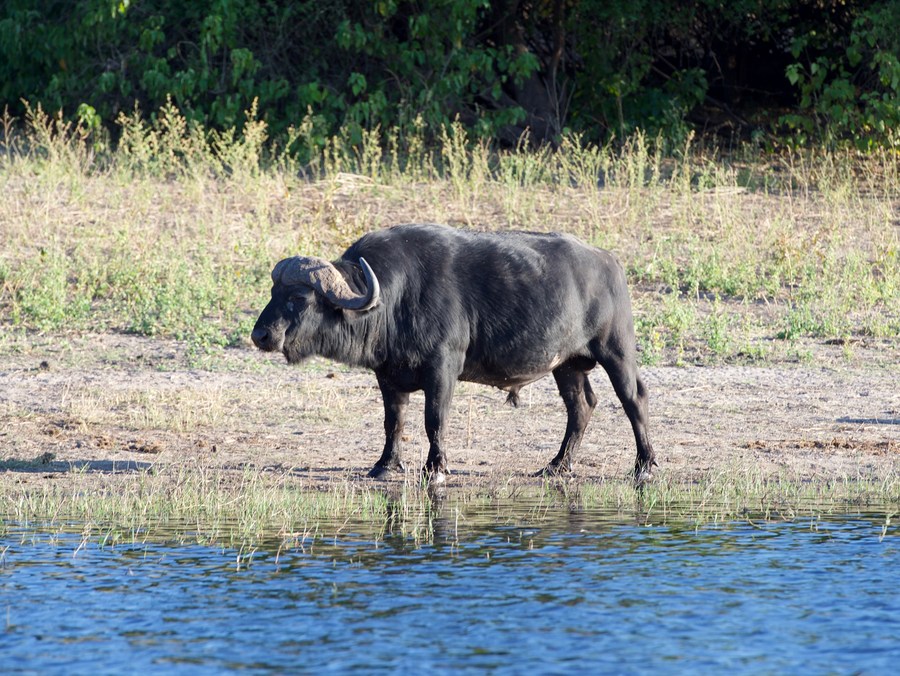
This photo taken on May 10, 2021, shows a buffalo along the Chobe River in Kasane, Botswana. (Photo by Tshekiso Tebalo/Xinhua)
A recently circulated video shows an elephant bull violently slamming a resident of a Botswana hunting community into the ground with fellow residents watching helplessly. They screamed to scare the elephant bull away, but the wild animal did not stop its deadly attack.
While at hunting lodges where hunters stay and dine, local people are employed as chefs, waitresses, car-washers, professional hunters and trackers, said Gakemotho Satau, the coordinator of Okavango Cultural and Development Initiatives Trust.
"Local people use their income to support their families and send their children to schools. This helps to alleviate poverty," Satau said. ■