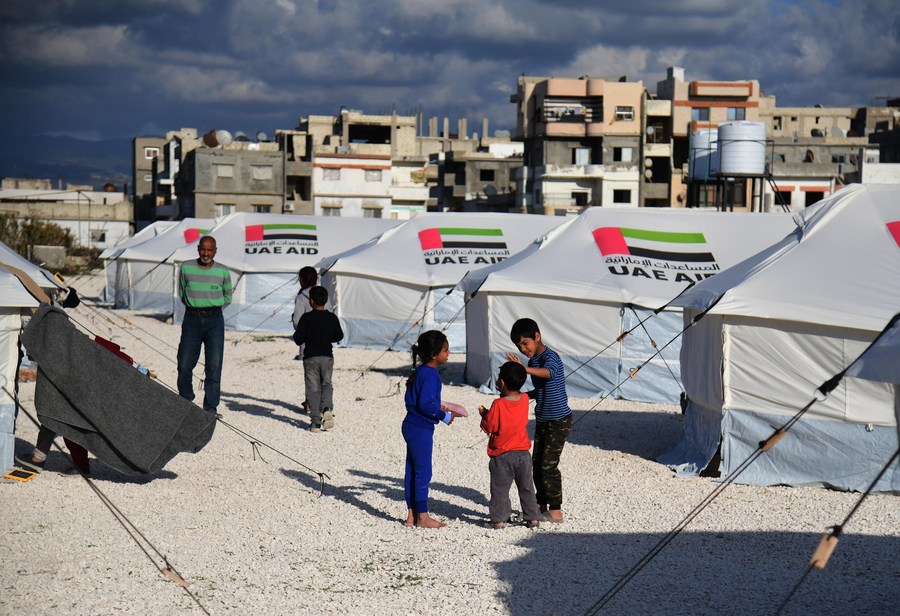
Children from an earthquake-stricken area are pictured at a shelter in the city of Jableh, Latakia province, Syria, March 9, 2023. (Photo by Ammar Safarjalani/Xinhua)
Current positive momentum in Syria's ties with regional powers like Türkiye, Saudi Arabia, and Egypt are encouraging, Syrian analysts said, but noting the economy still has a long way to recover amid lingering U.S. sanctions.
DAMASCUS, March 15 (Xinhua) -- The Syrian crisis is entering its 13th year with some positive signs that the stalemated political settlement could see a nudge this year.
The first three months of 2023 witnessed some crucial developments that raised hopes about a possible detente in the 13th year of the crisis. The main headline was the success of the Russian and Iranian efforts to break the ice between Syria and Türkiye as the relations between the two neighboring countries have seen much tension over the past 12 years.
Deputy foreign ministers of Syria, Türkiye, Russia, and Iran are set to meet soon to pave the way for the meetings of Syrian and Turkish foreign ministers for the first time since the beginning of the Syrian crisis. In December, the defense ministers of the two rivals met in Moscow.
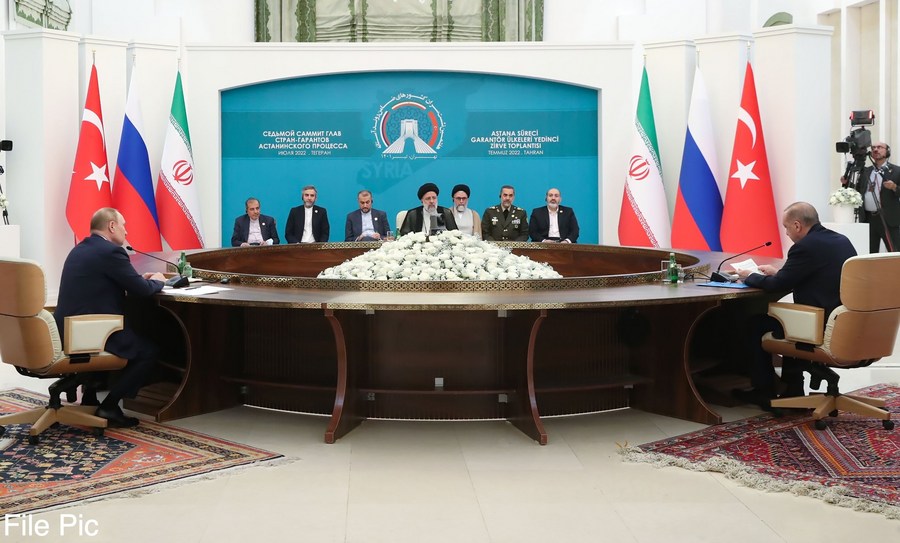
Iranian President Ebrahim Raisi (C), Russian President Vladimir Putin (1st L) and Turkish President Recep Tayyip Erdogan (R, Front) attend a trilateral meeting on the situation in Syria, in Tehran, Iran, on July 19, 2022. (Iranian Presidential Website/Handout via Xinhua)
A possible rapprochement between Syria and Türkiye is crucial for peacefully defusing the Syrian crisis. Türkiye enjoys considerable sway over key rebel groups in northern Syria as it's one of the opposition backers.
Another unexpected positive development was the China-backed reconciliation between Saudi Arabia and Iran. Both are regional powerhouses and key players in the Syrian war, with Iran supporting the government of President Bashar al-Assad while Saudi is a key opposition backer.
On top of that, devastating earthquakes, which jolted Syria on Feb. 6, have pushed Arab countries to shelve former policies toward Syria, creating the so-called "disaster diplomacy."
For the first time in more than a decade, Saudi planes landed in Syrian airports delivering relief aid to the earthquake victims. Egyptian Foreign Minister Sameh Shoukry also made an "ice-breaking" visit to Syria after the quake, expressing the most populous Arab country's support for Syria.
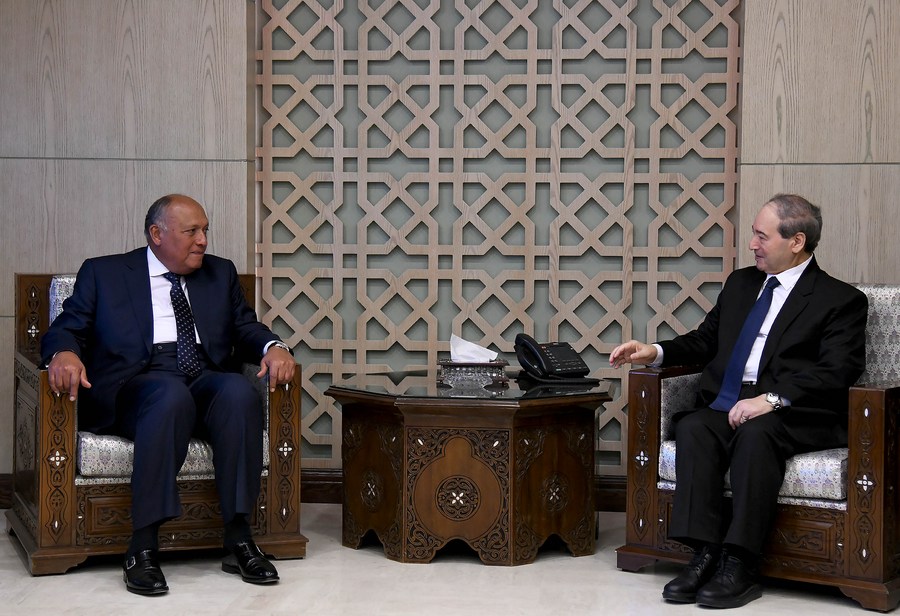
Syrian Foreign Minister Faisal Mekdad (R) holds talks with visiting Egyptian Foreign Minister Sameh Shoukry in Damascus, Syria, Feb. 27, 2023. (Photo by Ammar Safarjalani/Xinhua)
On Wednesday, the 12th anniversary of the Syrian war, Russian President Vladimir Putin hosted Syrian President Bashar Assad for talks that are believed to touch upon Syrian-Turkish reconciliation.
Positive signals can be felt domestically, regionally, and globally, said Mohammad Al-Omari, a Syrian political observer and writer.
"Moscow and Tehran exert efforts to find a mediation formula between Syria and Türkiye and reflect that on the political track in Syria. The earthquake's devastating impact on Syria has provided chances for some countries to communicate and cooperate with Syria," he told Xinhua.
The analyst pointed out that the current positive vibe could push the stalemated political talk forward, noting that a comprehensive political solution demands a broader international and regional alignment based on cooperation and stability.
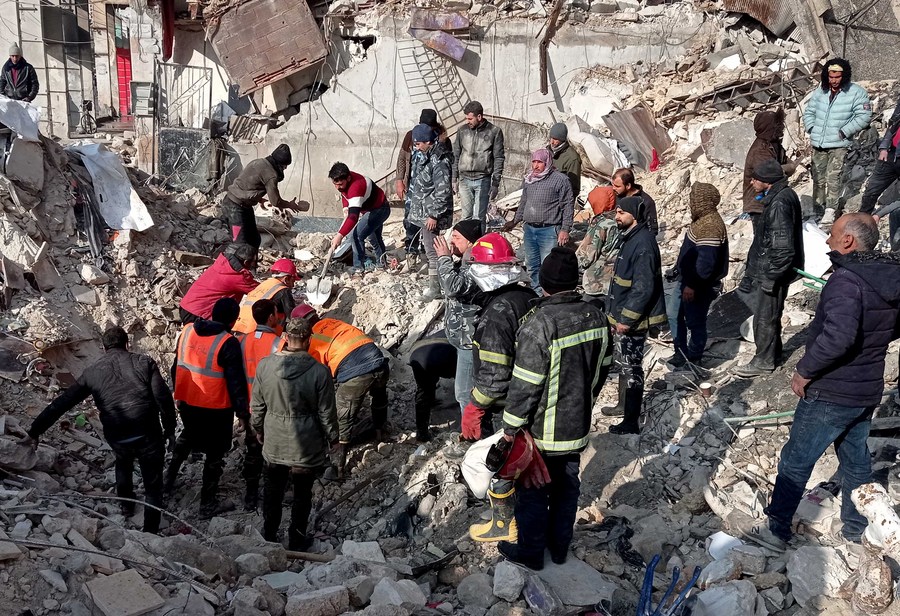
People search for survivors among the rubble of a building destroyed in a powerful earthquake in the al-Masharqa neighborhood of Aleppo city, northern Syria, on Feb. 7, 2023. (Str/Xinhua)
However, as Syria's political development moves to the positive side, the financial situation doesn't seem as promising due to the U.S. sanctions that are choking the country's economy.
Al-Omari noted that even if the U.S. could lift the sanctions, which is highly unlikely, the impacts would not end overnight as the U.S. measures had created a "cracked environment" in Syria.
"The U.S. sanctions and embargo imposed on Syria, as well as its illegal actions in stealing our resources, have led to a cracked and fragile environment that will have a substantial influence on the country's education, health, and food security in the future," he noted.
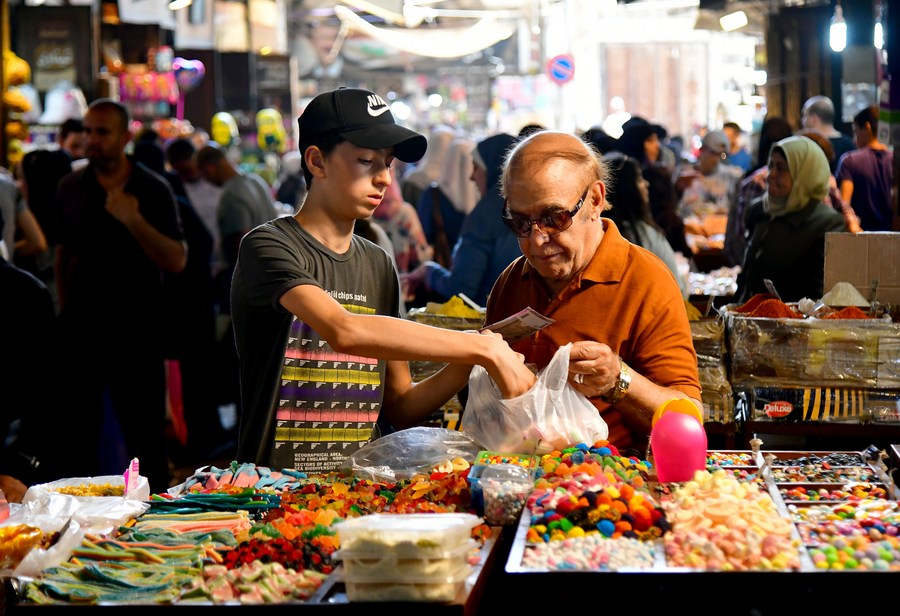
People buy sweets for the upcoming Eid al-Adha, also known as the Feast of the Sacrifice, at Buzouriyeh in Damascus, Syria, July 4, 2022. (Photo by Ammar Safarjalani/Xinhua)
According to UNICEF estimates, 90 percent of people in Syria live in poverty, most are unable to make ends meet or bring food to the table. Families have had their resources depleted, with limited employment opportunities, skyrocketing prices, and a shortage of basic supplies.
Osama Danura, another political analyst, said he is optimistic about the continuous reconciliation between Syria and regional countries, adding that the communication that has already taken place will help reduce tensions in regional flashpoints. ■