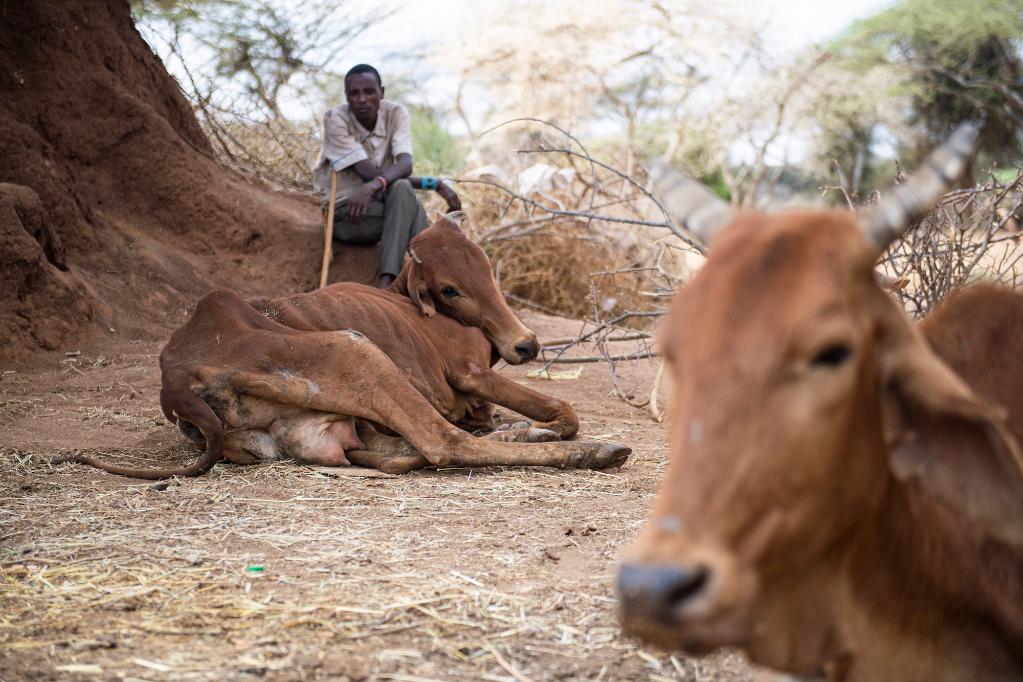
This photo taken on Feb. 28, 2023 shows a Maasai trader gazing at emaciated livestock at a livestock market in Kajiado County, Kenya. (Xinhua/Li Yahui)
Gideon Nailoli, a Maasai herder from the southern Kenyan county of Kajiado, was in a forlorn mood as he gazed at his emaciated cow that lay helpless on the bare ground, unable to lift itself up due to excruciating hunger and thirst.
NAIROBI, March 2 (Xinhua) -- Gideon Nailoli, a Maasai herder from the southern Kenyan county of Kajiado, was in a forlorn mood as he gazed at his emaciated cow that lay helpless on the bare ground, unable to lift itself up due to excruciating hunger and thirst.
According to the 53-year-old, his favorite zebu cow that was on the verge of starvation had survived weeks without fodder or water because of the biting drought that has been ravaging his ancestral village.
"This is the worst drought that I have witnessed in my lifetime. It has killed our livestock and our only source of income. We are unable to feed our children or even pay their tuition fees," Nailoli told Xinhua during a recent interview at a makeshift cattle market located on the southern fringes of Kajiado County.
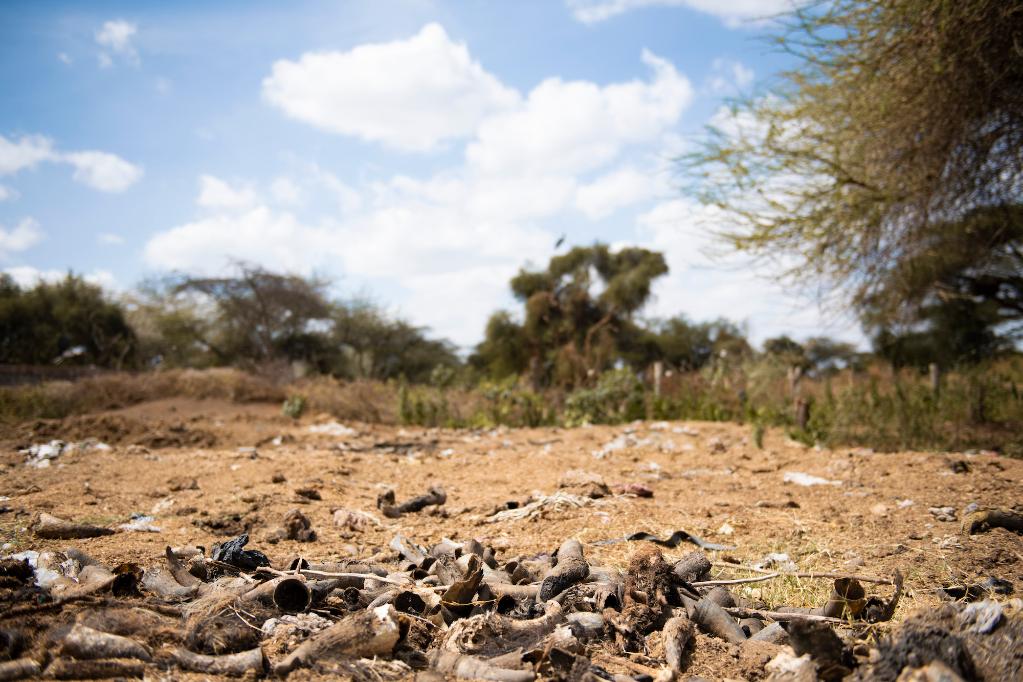
This photo taken on Feb. 28, 2023 shows horns of livestock after their corpses were cremated near a livestock market in Kajiado County, Kenya. (Xinhua/Li Yahui)
He revealed that 67 out of 70 cows in his stable have already succumbed to drought, adding that goats, too, have not been spared the slow but painful demise arising from starvation.
Nailoli's plight mirrors the dire situation millions of Kenyan pastoralists have found themselves in as the worst drought in four decades continues to ravage 23 arid and semi-arid counties in the country, including Kajiado.
More than six million Kenyans in 32 counties, the majority semi-arid and occupied by nomads, are grappling with an acute food crisis linked to five consecutive failed rainy seasons, according to the latest update from the National Drought Management Authority.
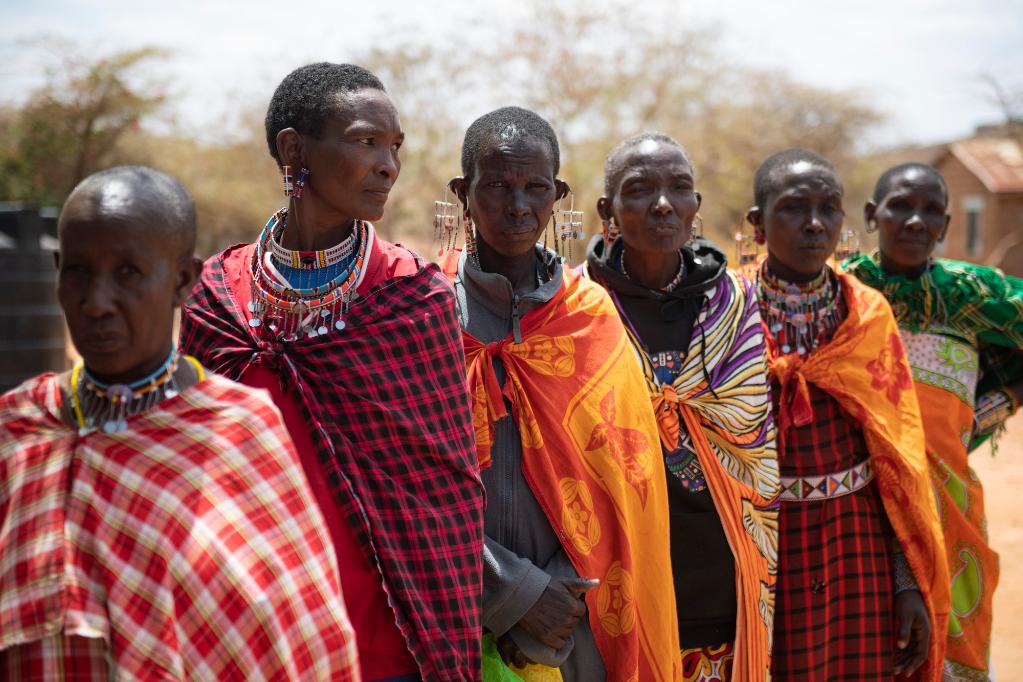
Members of a Maasai family wait for food aid at a boarding school in Kajiado County, Kenya, Feb. 28, 2023. (Xinhua/Li Yahui)
Kajiado County Commissioner Felix Watakila said the severe dry spell has torpedoed the livelihoods of native Maasai nomads, renowned for preserving their cultural heritage. "We are facing severe and persistent drought cycles because of climate change, and the current one has taken a heavier toll on pastoralists. It has killed their livestock, yet they rely on them for livelihood."
According to Watakila, over 500,000 people are affected by drought in Kajiado County even as the government and relief agencies intensify the provision of food aid, clean water, and animal feed to avert a humanitarian crisis.
Joshua Sempeta, a 71-year-old pastoralist, huddled with his peers under a tall acacia tree at the Ilbissil Boarding Primary School as they waited for food rations thanks to the benevolence of the school's administrators.
Looking frail and subdued, Sempeta decried the loss of 20 cows due to the escalating drought, forcing him to beg for food at the public school and going against cultural norms that frown upon such behavior.
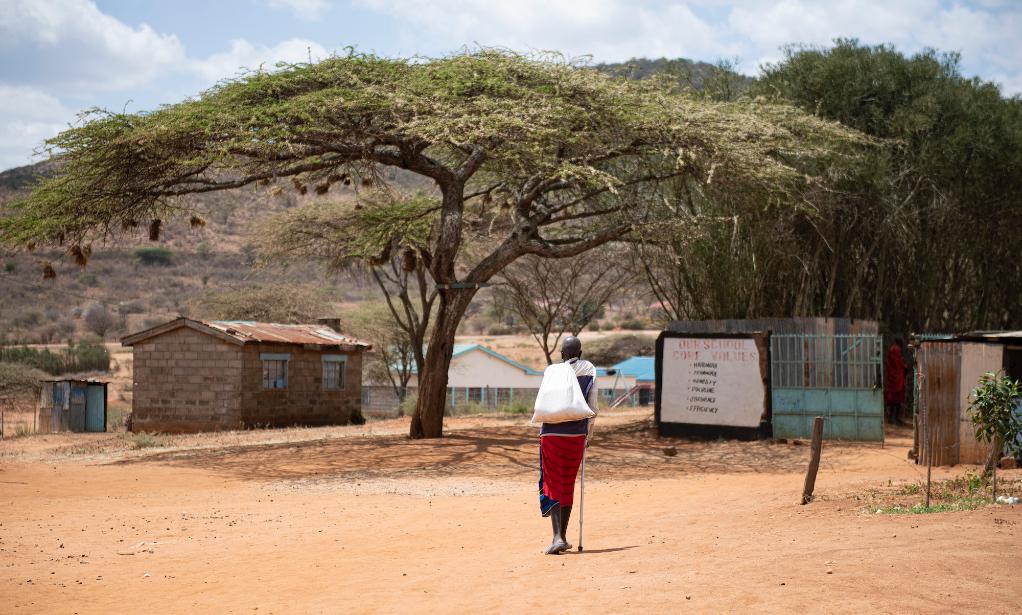
Joshua Sempeta, a 71-year-old father of ten and a patriarch of a Maasai family, is on his way home carrying food aid at a boarding school in Kajiado County, Kenya, Feb. 28, 2023. (Xinhua/Li Yahui)
Sempeta and a rapidly growing number of elderly Maasai herders have been flocking to the public school daily when children break for lunch in the hope they will secure some portions and relieve themselves of acute hunger pangs.
Established in the early 1950s, the Ilbissil Boarding Primary School has been receiving 10 to 20 elderly pastoralists from adjacent villages daily, and they are gladly served with portions of local staples for free.
According to Daniel Lantai, the school principal, the severest impacts of drought ravaging his backyard started manifesting in late 2022 when herders lost their livestock in huge numbers, denying them a source of food and income.
Rose Nkoira, a 53-year-old herder, is among a group of women who have been visiting the public school every lunch hour to take a meal and carry the surplus home. She migrated from a remote village located far away from the school after the ongoing dry spell decimated her herd of cattle and goats, forcing her to beg for sustenance from well-wishers.
"This drought is hurting us. Our cows and goats have died, and that is why we have been trekking to the school every day to request food," said Nkoira. ■