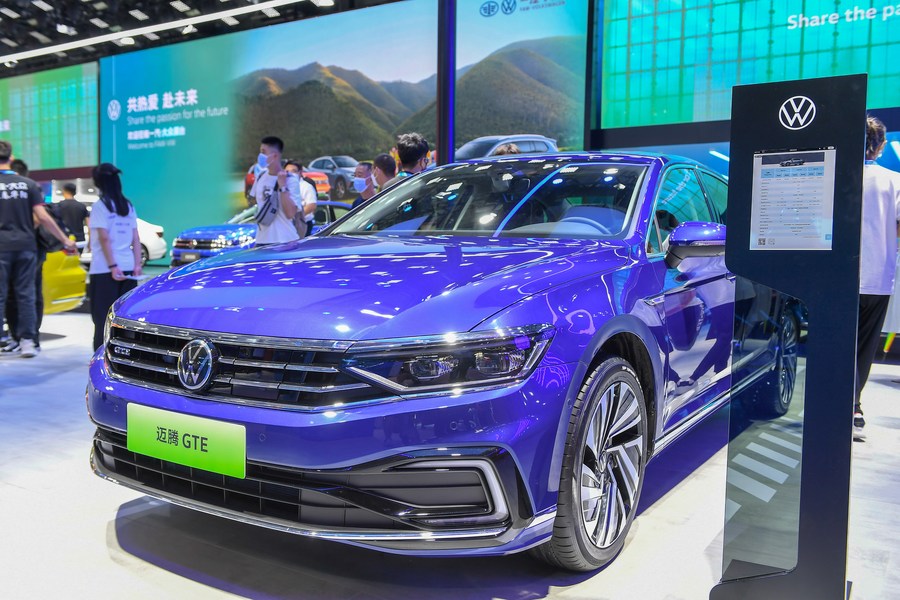
People visit the booth of the FAW-Volkswagen during the 19th China (Changchun) International Automobile Expo in Changchun, capital of northeast China's Jilin Province, July 15, 2022. (Xinhua/Zhang Nan)
The Asia-Pacific region saw the smallest sales decline among the major regions at 2.7 percent. In China, Volkswagen's largest single market, deliveries fell by 3.6 percent to 3.18 million vehicles.
BERLIN, Jan. 12 (Xinhua) -- Due to supply bottlenecks and temporary production stops, the Volkswagen Group's deliveries in 2022 were down 7 percent year-on-year to 8.26 million vehicles worldwide, Germany's largest carmaker said on Thursday.
By the end of the year, however, business had stabilized again as Volkswagen increased global sales in December by 18.1 percent.
In 2022, the number of vehicles sold by the company in the United States dropped by 6.1 percent year-on-year to 631,100 units, and sales in Europe were down by 10.4 percent to 3.15 million vehicles.
The Asia-Pacific region "saw the smallest decline among the major regions" at 2.7 percent, the company said. China, Volkswagen's largest single market, "showed a similar performance" as deliveries only fell by 3.6 percent to 3.18 million vehicles.
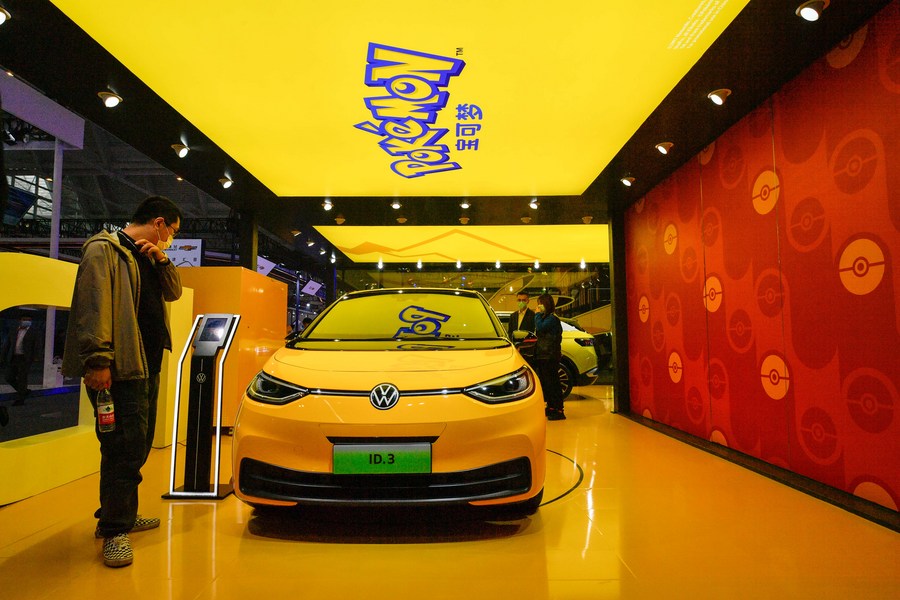
Visitors view an electric vehicle at the booth of German automaker Volkswagen during the China Motor Show (Tianjin) 2022 in north China's Tianjin, Nov. 10, 2022. (Xinhua/Sun Fanyue)
"Our brands have shown a decent performance regarding deliveries in a very challenging environment," Hildegard Wortmann, member of the Extended Executive Committee for Sales at Volkswagen, said in a statement.
The German Association of the Automotive Industry (VDA) said last week that the lack of intermediate products, high energy and raw material prices and the uncertainties due to the Russia-Ukraine conflict "dampened the market and production considerably" last year.
Despite the overall sales developments, Volkswagen "made significant progress in its electric transformation in 2022," the carmaker said. It delivered 572,100 battery electric vehicles (BEVs) worldwide, a significant 26 percent increase year-on-year.
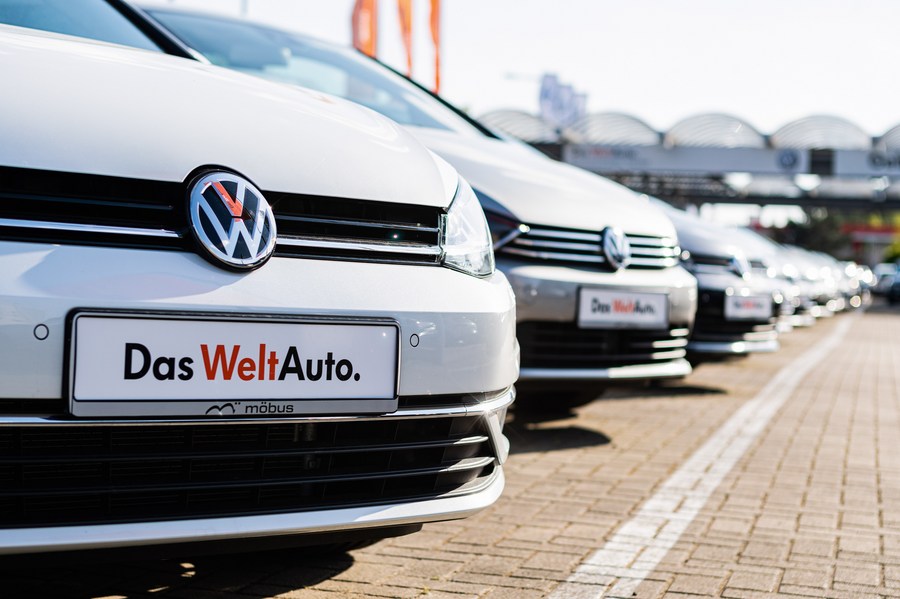
Vehicles are seen at a car dealership of Volkswagen in Berlin, capital of Germany, May 7, 2020. (Photo by Binh Truong/Xinhua)
China was the "biggest contributor to the group's global BEV increase" as deliveries were up by 68 percent to 155,700 units. The share of BEVs in total deliveries was 6.9 percent, up from 5.1 percent in 2021.
In 2023, Volkswagen aims to increase the share of BEVs to around 11 percent. By 2030, every second vehicle delivered by the group worldwide is to be fully electric.■