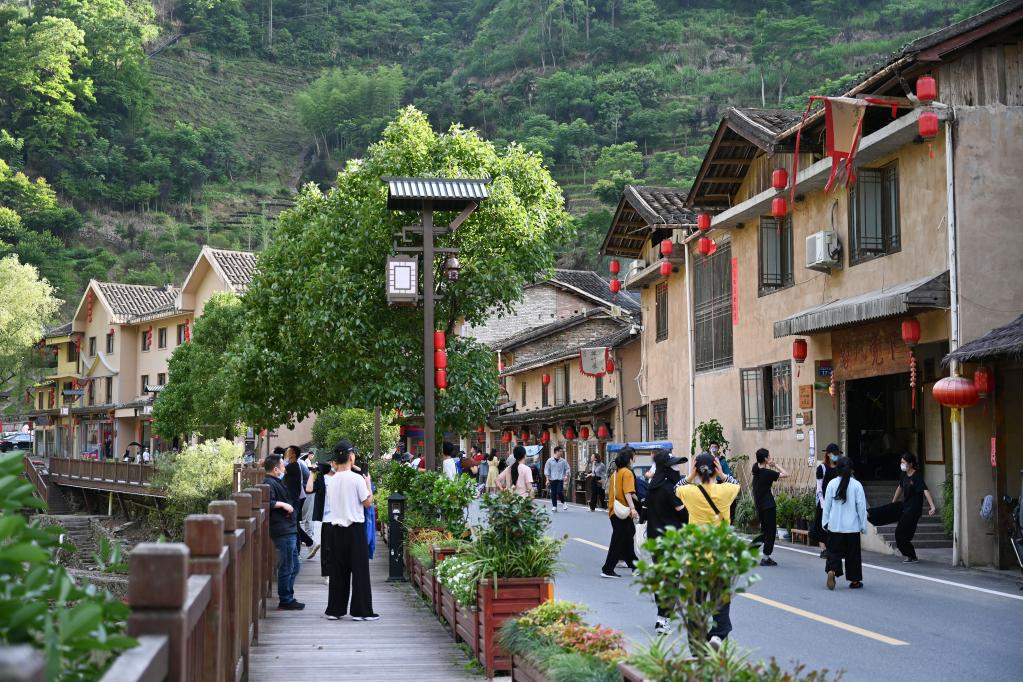
Tourists visiting Xiadang Village, Xiadang Township, east China's Fujian Province, on June 22. (Xinhua/Zhou Yi)
FUZHOU, Sept. 2 (Xinhua) -- In early July, when the summer break started, three Ph.D. students left their campus in Beijing and headed for a remote corner in east China's Fujian Province.
They wanted to find out first-hand how villagers in China's deep mountains are faring after shaking off poverty and what the country's rural revitalization strategy means for them.
Winding country roads took them to Xiadang, a township of 7,000 residents, in Shouning County. After staying there for two months, they returned with a full load of knowledge they did not learn from books.
"I could not explain the drastic changes in such a small and mountain-locked place with the theories of Western economics," said Wang Yangzhi, who studies regional economics at Renmin University of China.
They were told by locals that Xiadang had no paved roads until the early 1990s. Villagers feared raising fat hogs because it would require an extra effort to carry them out of the mountains to the nearest butcher's shop in town.
There was no tap water or electricity. Villagers lived from hand to mouth. The township's government was broke. It did not even have a proper office and clerks had to work from a family temple next to a stinky cowshed.
Things started to pick up in the 1990s as the upper-level governments ramped up spending to build roads and infrastructure projects, such as a hydropower station. Villagers also improved their lot by growing mushrooms or migrating to cities for work.
However, more significant changes came by in the past decade, said Xiang Zhonghong, secretary of the Xiadang Township Committee of the Communist Party of China (CPC).
Authorities worked out tailor-made plans for each village and, indeed, each rural household still struggling below the poverty line. Many poor small villages were entirely moved out of the mountains.
"The plan for Xiadang was to leverage its unique edge in a pristine environment and natural resources by growing tea and developing rural tourism," Xiang said. "We make full use of what is available."
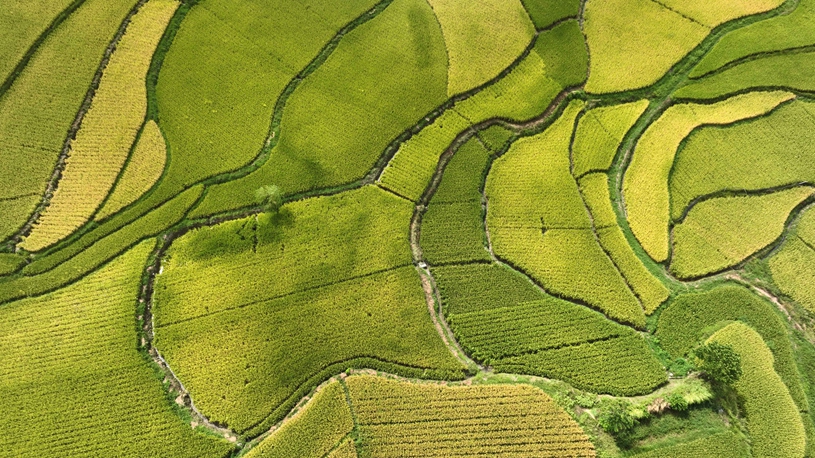
Tea planting cooperatives were established, and customized tea gardens were promoted through the internet. Rustic farmhouses were renovated to welcome tourists.
Xiadang, which met its poverty eradication goal in late 2018, was made a model in the national anti-poverty fight. The per capita disposable income of rural residents in the township currently exceeds 20,000 yuan (2,902 U.S. dollars), growing a hundred-fold in just three decades.
"This success is attributed to the power of socialism with Chinese characteristics," Wang observed.
The CPC's leadership is where the system's greatest strength comes from. Across the country, nearly 100 million rural residents had been lifted out of poverty in the past decade alone. China declared victory in the war to end absolute poverty in 2021 and has since embarked on a new journey to revitalize the countryside.
The three Ph.D. students explored what it meant; first from their homestay host in Xiadang, Wang Canlin.
Wang Canlin, in his 50s, is a driver for the township government. But he is not content with his fixed wage. This year, he ventured to contract a vineyard and open a hotpot restaurant.
"I'm very busy, working from 5 a.m. straight to midnight every day," Wang Canlin said, as he lounged in his eatery, lighting up a cigarette.
"But all these are worthwhile as I know I can foot the bill for a better education for my son and maybe all the way to get his Ph.D., just like you," he told the students as they came to say goodbye.
They did some math for their host: on good days, his restaurant can turn over 1,000 yuan in a single day, and if his vineyard business goes smoothly, he can earn 20,000 to 30,000 in the first year.
"The business prospects are good," Wang Canlin said.
Just like in the anti-poverty war, Party cadres play a leading role in rural revitalization, the students found.
Fang Danyang said over the two months of his stay in Xiadang, he observed that overtime is a staple for local cadres. "Everyone is working so hard for the betterment of this place." He said that the lights were on in government offices in the dead of night almost every day.
"Party chief Xiang often took us to check the process of major projects in the evening, because that was often the only time she was free," Fang said.
In the rural revitalization drive, Party members should continue to take the lead in improving their skill sets, initiating business projects, and assisting villagers in increasing their income, Xiang said.
Wang Canlin's vineyard serves as a good example. Villagers living on a subsistence allowance, or with disabilities, are hired by the vineyard, with a daily wage of 200 yuan.
"It doesn't matter if I make money or not. As a Party member, I want to set an example and provide job opportunities to those in difficulty," Wang Canlin said.
With the advancement of rural revitalization, Xiadang is ushering in fresh opportunities for development.
A part of the ancient village was preserved, renovated and repurposed to host hostels, teahouses, restaurants, boutique shops and ateliers.
According to government statistics, Xiadang has received more than 1.2 million tourists since 2016, with a total tourism income of nearly 100 million yuan.
Wang Mingshou, a villager in his 60s, runs a restaurant renovated from his family's former residence. "At first, no one would take the risk (of opening a restaurant), and I didn't have any experience. But I thought I had to give it a try," he recalled. After a bleak first year, his business has been getting better. Despite the impact of COVID-19, he earned a net profit of more than 200,000 last year.
Some visitors choose to stay and become new villagers.
Among them are Xia Meixiong and his business partners, who opened a restaurant and a teahouse. Xia also operates a channel on Douyin, selling local farm specialties. In 2021, the sales reached 1.7 million yuan.
Ye Licheng settles down for the craftsmanship of purple clay wares unique to Shouning. He opened an art studio and devoted himself to reinvigorating the traditional craft that blends seal cutting, calligraphy, and ceramics.
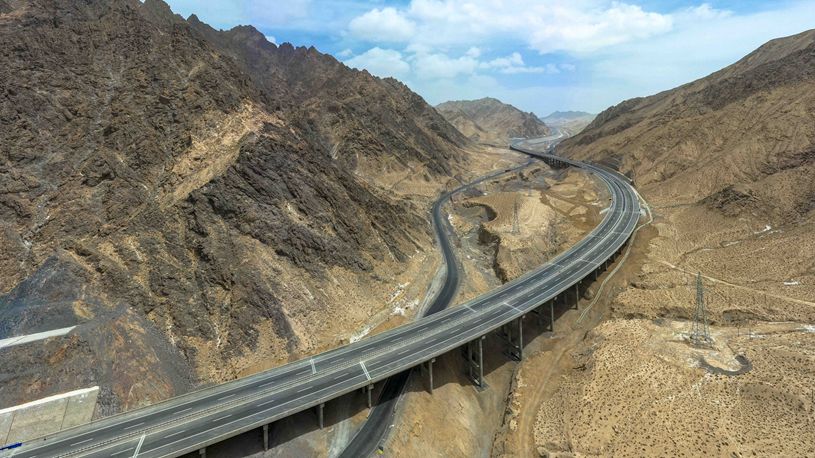
Today, the once isolated Xiadang has been well connected with the outside world by multiple roads. A new cross-provincial road is being built. Xiang Zhonghong expects the road to lead Xiadang to a more prosperous future.
Fang Danyang is confident of such a future. "Xiadang peps me up every morning, and every day is a bright new day here," he said. ■