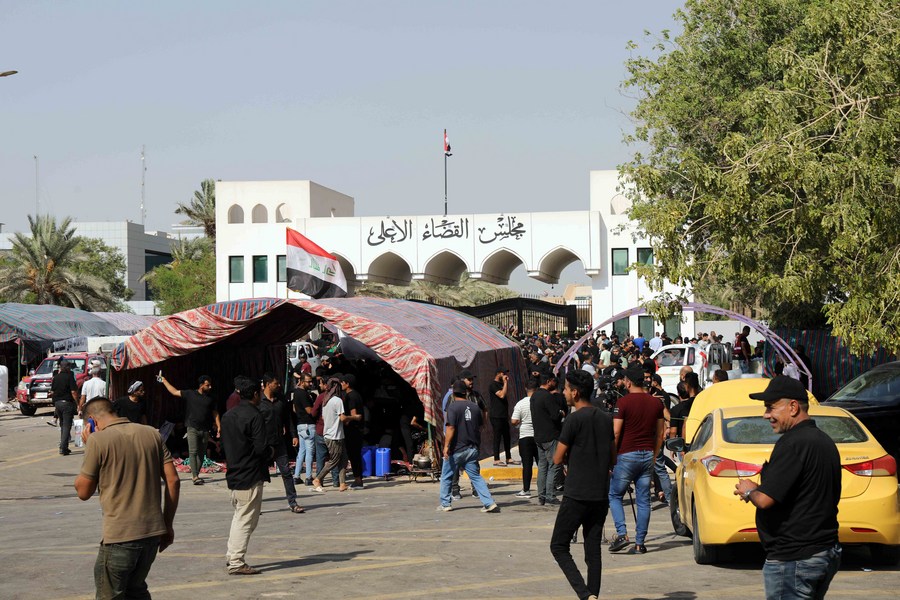
Iraqi shiite cleric Moqtada al-Sadr's supporters stage a sit-in protest in front of the Supreme Judicial Council in Baghdad, Iraq, on Aug. 23, 2022. (Xinhua/Khalil Dawood)
Iraqi Prime Minister Mustafa al-Kadhimi cut short his visit in Egypt and returned home to deal with a protest by supporters of Shiite cleric Moqtada al-Sadr which disrupted the judiciary's work.
BAGHDAD, Aug. 23 (Xinhua) -- Iraqi Prime Minister Mustafa al-Kadhimi on Tuesday cut short his trip to Egypt for a five-way Arab summit after a protest by supporters of Shiite cleric Moqtada al-Sadr in Baghdad disrupted the judiciary's work.
Al-Kadhimi, also commander-in-chief of the Iraqi forces, returned to Baghdad to directly supervise the security forces protecting judicial institutions, according to a statement issued by his media office.
"Disrupting the work of the judicial institution exposes the country to real risks," he warned, stressing "the need to respect state institutions."
Al-Kadhimi also called for an immediate meeting of political leaders to activate a national dialogue to defuse the crisis.
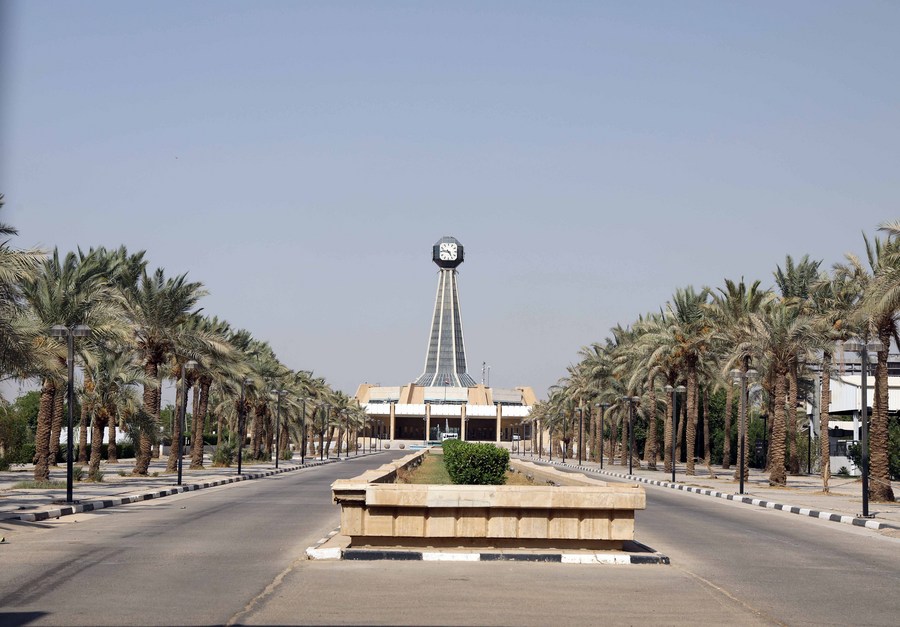
The compound of the Iraqi Supreme Judicial Council was deserted after the decision to suspend the judiciary activities due to a protest held by Shiite cleric Moqtada al-Sadr's supporters in Baghdad, Iraq, on Aug. 23, 2022. (Xinhua/Khalil Dawood)
Earlier in the day, hundreds of al-Sadr's supporters began a sit-in protest in front of the gate of the Supreme Judicial Council (SJC) in Baghdad, demanding a decision to dissolve the parliament.
The protest, along with some threatening messages received by the SJC, forced the Iraqi judiciary to suspend its work.
The latest sit-in came as the political disputes have escalated in the past weeks between al-Sadr and his rival Shiite parties in the Coordination Framework (CF), an umbrella group of Shiite parliamentary parties.
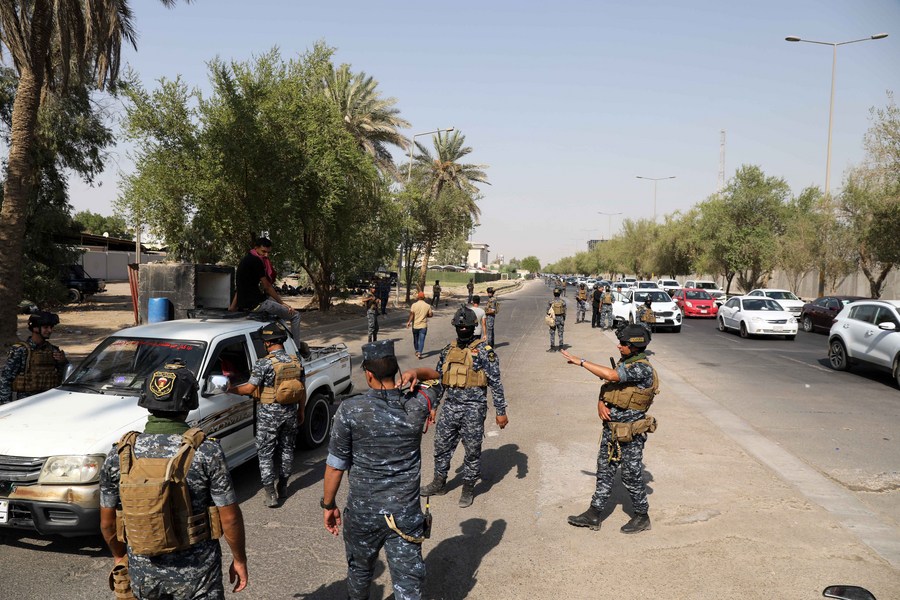
Iraqi security forces deployed in streets near the Supreme Judicial Council where Shiite cleric Moqtada al-Sadr's supporters hold a sit-in protest in Baghdad, Iraq, on Aug. 23, 2022. (Xinhua/Khalil Dawood)
On July 30, al-Sadr's followers broke into the heavily fortified Green Zone in central Baghdad and held an open sit-in in and outside the parliament building, demanding the dissolution of the parliament and early elections, all rejected by the CF parties.
The CF became the largest alliance in the Iraqi parliament after al-Sadr ordered his followers in the Sadrist Movement, the biggest winner of the Oct. 2021 elections with 73 seats, to withdraw from the parliament.
During the past months, the continued disputes among the Shiite parties have hampered the formation of a new Iraqi government, making it unable to elect a new president by a two-thirds majority of the 329-seat parliament under the constitution.
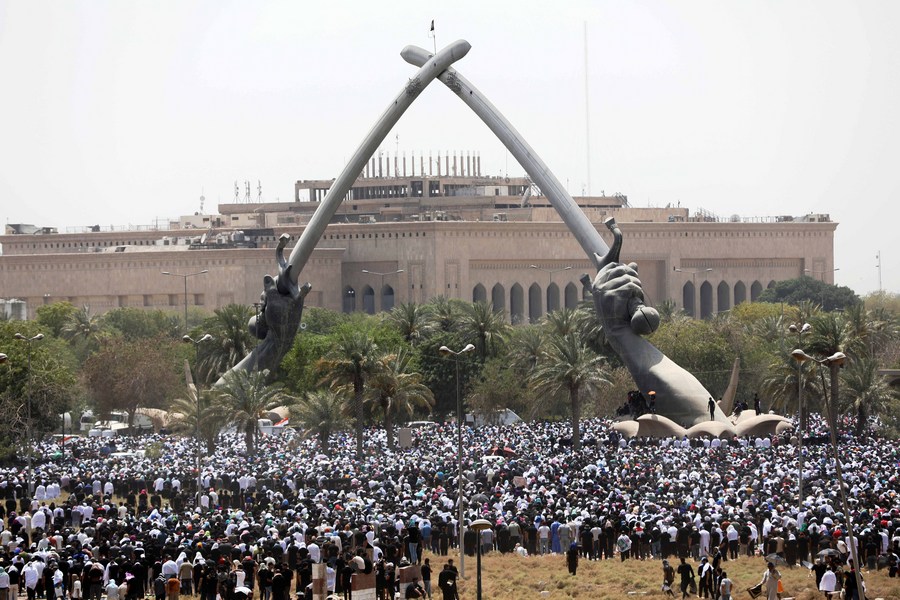
Followers of Shiite cleric Moqtada al-Sadr gather on the Grand Festivities Square in the Green Zone in central Baghdad, Iraq, on Aug. 5, 2022. (Xinhua/Khalil Dawood)
If elected, the president will appoint the prime minister nominated by the largest alliance in the parliament, now the CF, to form a new government that would rule the country for the next four years. ■