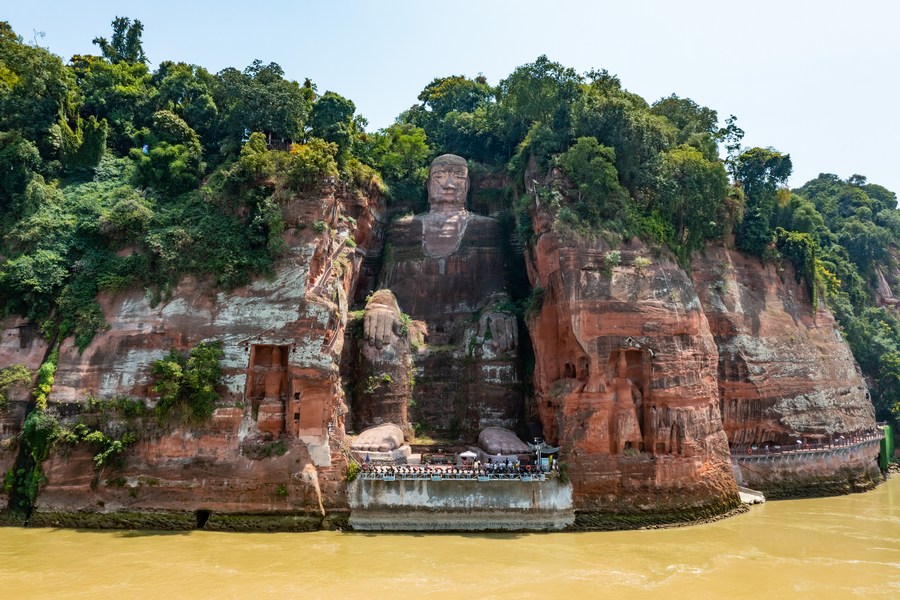
Photo taken with a drone on Aug. 23, 2022 shows the Leshan Giant Buddha with its base section exposed as a result of low water levels in Leshan, southwest China's Sichuan Province. (Xinhua/Shen Bohan)
LESHAN, Aug. 24 (Xinhua) -- Drought-triggered water level decrease in three Yangtze River tributaries has exposed a look of the base section of the Leshan Giant Buddha, a UNESCO world heritage site situated outside the city of Leshan, southwest China's Sichuan Province.
The Buddha statue, carved into a cliff in Leshan Mountain and overlooking three converging rivers, namely the Minjiang, Qingyi and Dadu rivers, was built over a 90-year period beginning in 713 during the Tang Dynasty (618-907).
Parts of Jiangsu, Anhui, Henan, Hubei, Zhejiang, Fujian, Jiangxi, Hunan, Guizhou, Chongqing, Sichuan, Shaanxi, Gansu and Tibet have been affected by moderate to severe droughts, according to the National Meteorological Center.
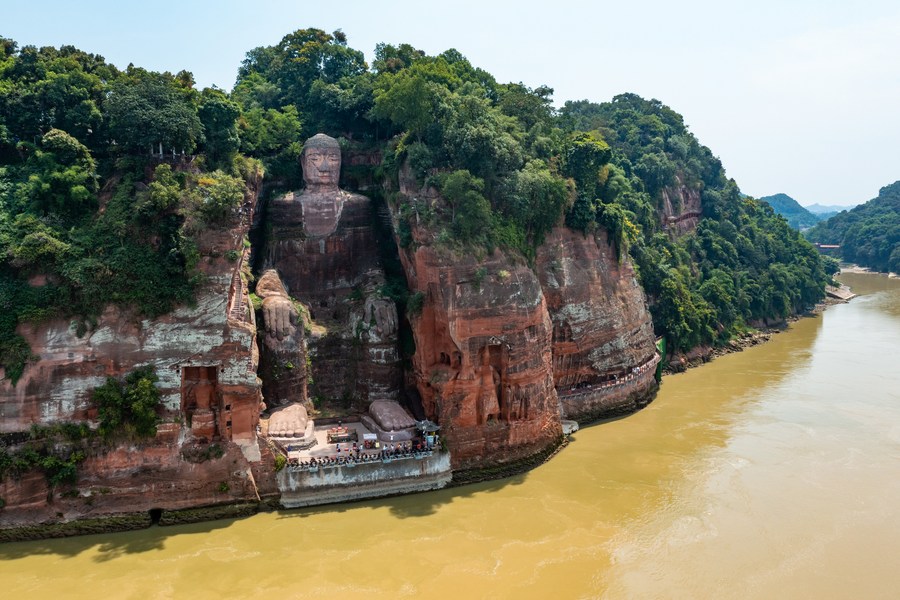
Photo taken with a drone on Aug. 23, 2022 shows the Leshan Giant Buddha with its base section exposed as a result of low water levels in Leshan, southwest China's Sichuan Province. (Xinhua/Shen Bohan)
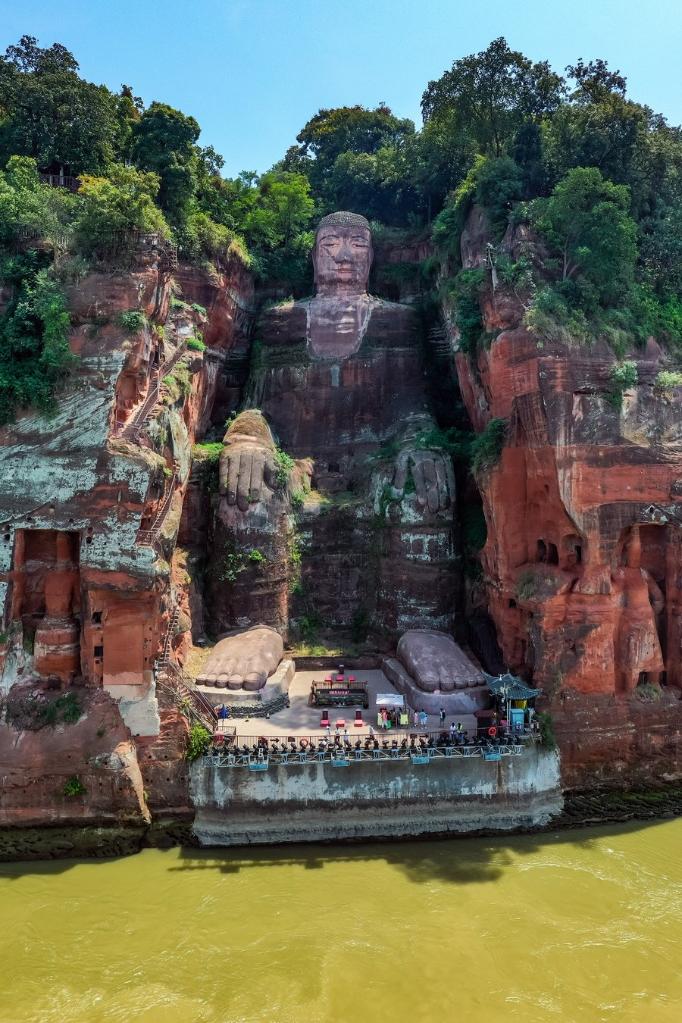
Photo taken with a drone on Aug. 23, 2022 shows the Leshan Giant Buddha with its base section exposed as a result of low water levels in Leshan, southwest China's Sichuan Province. (Xinhua/Shen Bohan)
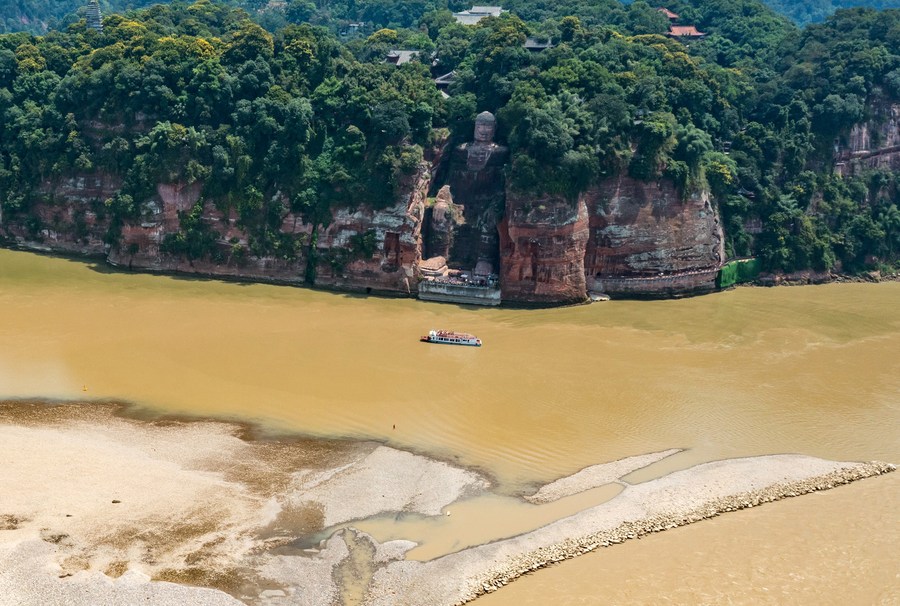
Photo taken with a drone on Aug. 23, 2022 shows the Leshan Giant Buddha with its base section exposed as a result of low water levels in Leshan, southwest China's Sichuan Province. (Xinhua/Shen Bohan)
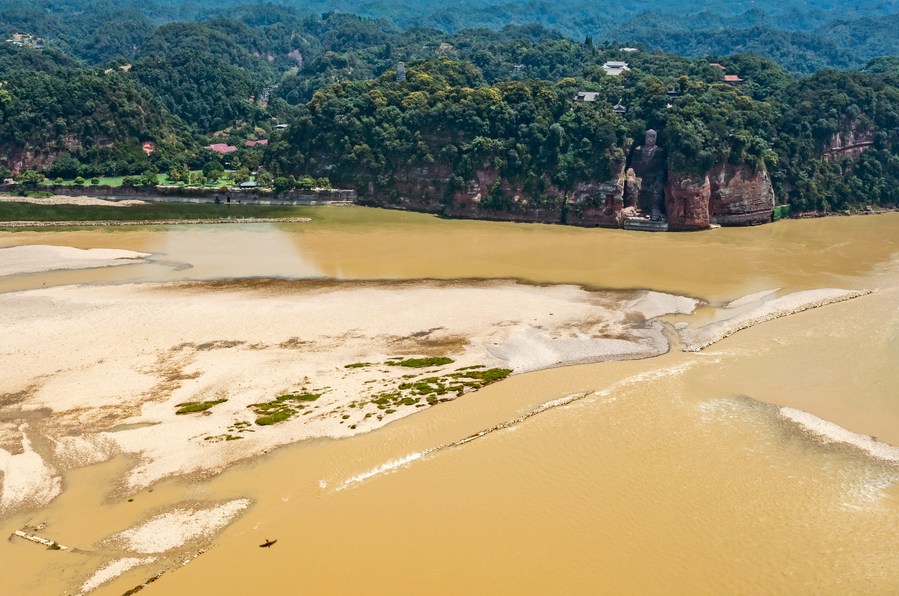
Photo taken with a drone on Aug. 23, 2022 shows the Leshan Giant Buddha with its base section exposed as a result of low water levels in Leshan, southwest China's Sichuan Province. (Xinhua/Shen Bohan)
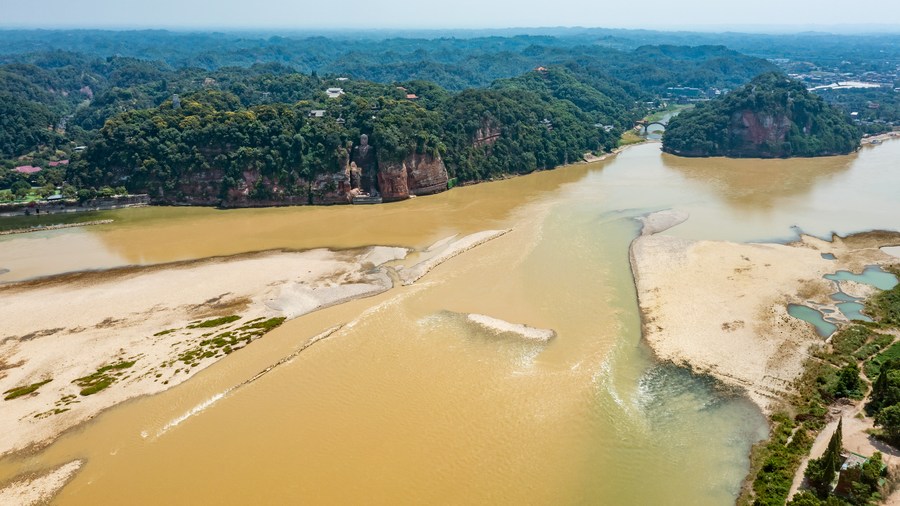
Photo taken with a drone on Aug. 23, 2022 shows the Leshan Giant Buddha with its base section exposed as a result of low water levels in Leshan, southwest China's Sichuan Province. (Xinhua/Shen Bohan) ■