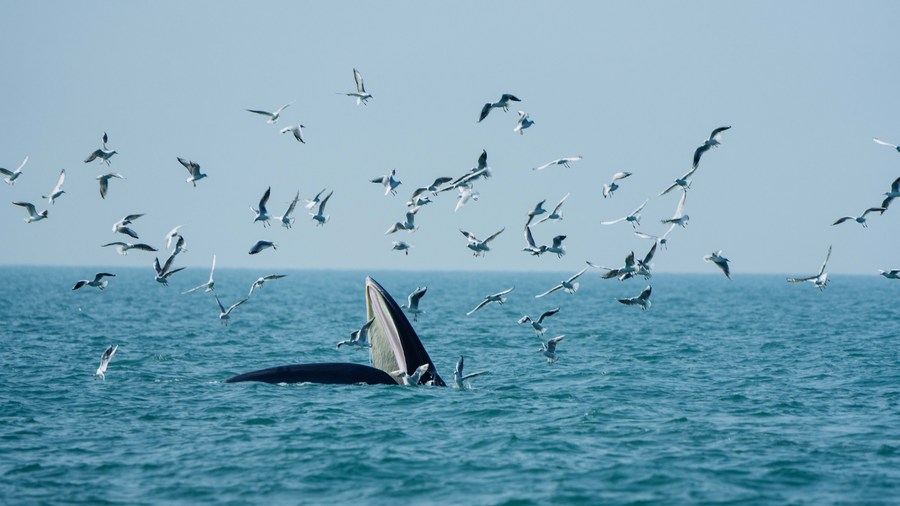
A Bryde's whale forages in waters off Weizhou Island in south China's Guangxi Zhuang Autonomous Region, Jan. 15, 2021. A scientific research team, composed of scientists, videographers, fishermen, and volunteers, has been conducting research on the whales and taking the role of the guardians of these marine mammals since they were first discovered in waters off Weizhou Island in 2016. (Xinhua/Liu Jinhai)
BEIJING, July 2 (Xinhua) -- The 2022 United Nations Ocean Conference closed in Lisbon, Portugal on July 1. More than 6,000 participants, including 24 Heads of State and Government, and over 2,000 stakeholders and representatives of civil society attended the conference, advocating for urgent and concrete actions to tackle the ocean crisis at the five-day conference.
Over the past decade, China has made strides in the conservation of marine ecology, prevention and treatment of marine pollution, and protection of marine biodiversity.
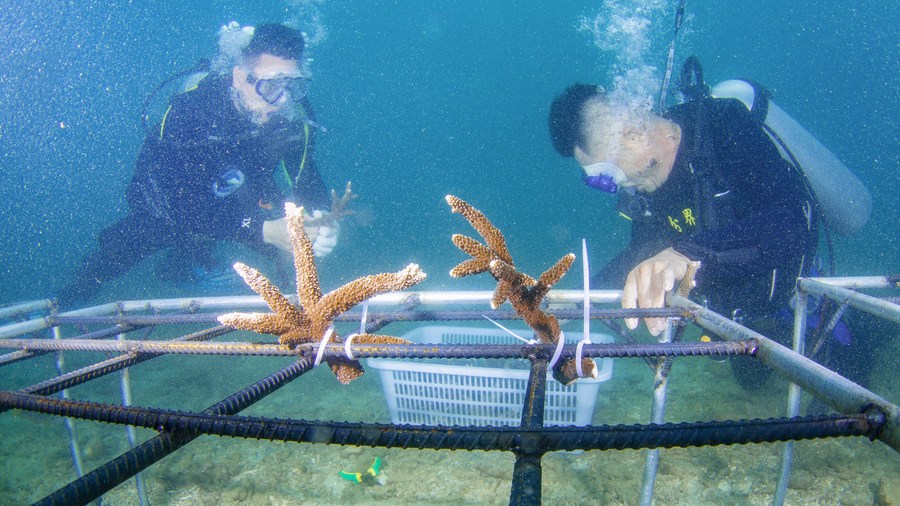
Researcher and staff transplant corals in the waters of Fenjiezhou Island of Hainan Province, south China, June 7, 2022. June 8 marks World Oceans Day. To protect the local underwater ecology, Fenjiezhou scenic area authorities, together with oceanic and fishery researchers, have been growing and transplanting corals since 2004. After years of protection and restoration, the coral coverage rate of Fenjiezhou Island waters has increased. The improvement of the underwater ecosystem has attracted more marine creatures. (Xinhua/Zhang Liyun)
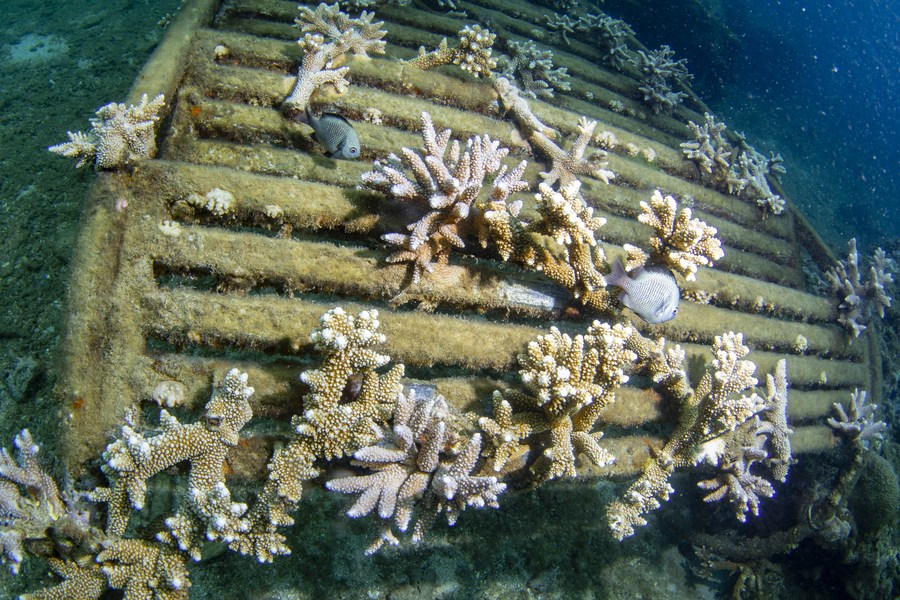
Photo taken on June 8, 2022 shows planted corals in the waters of Fenjiezhou Island of Hainan Province, south China. (Xinhua/Zhang Liyun)
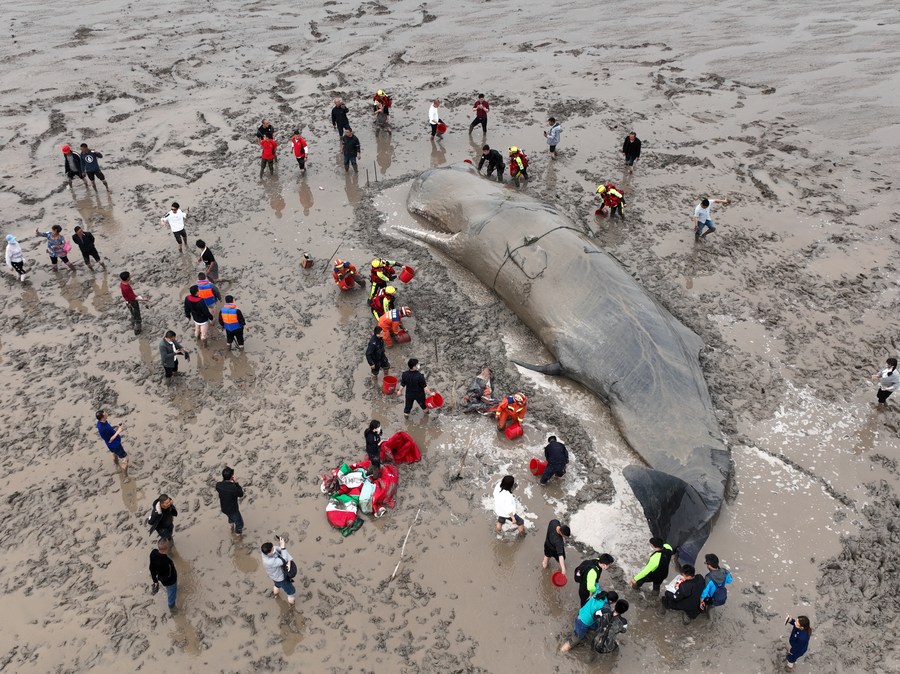
Aerial photo shows rescuers helping a stranded whale in Xiangshan County of Ningbo, east China's Zhejiang Province, April 19, 2022. (Xinhua)
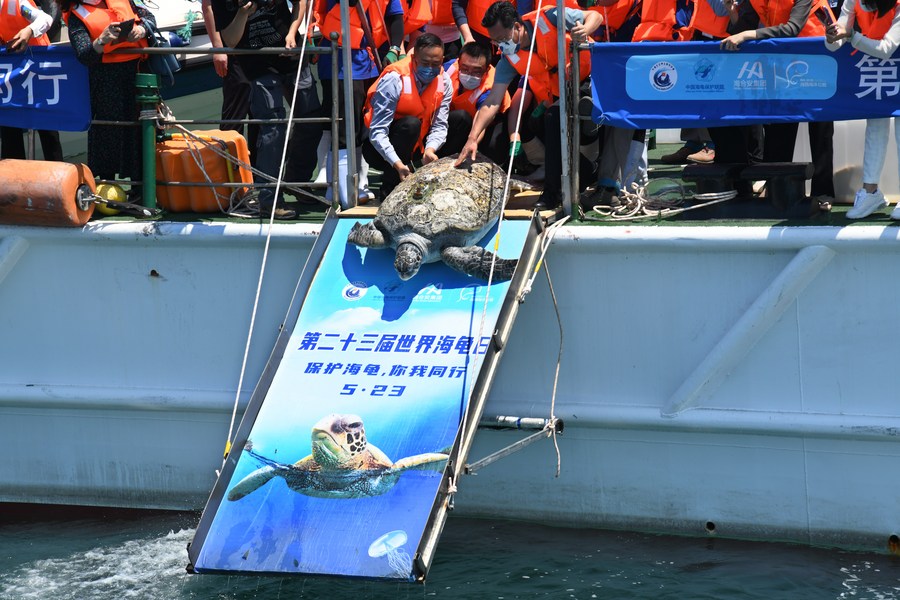
Staff members release a sea turtle on the occasion of World Turtle Day in Qingdao, east China's Shandong Province, May 23, 2022. (Xinhua/Li Ziheng)
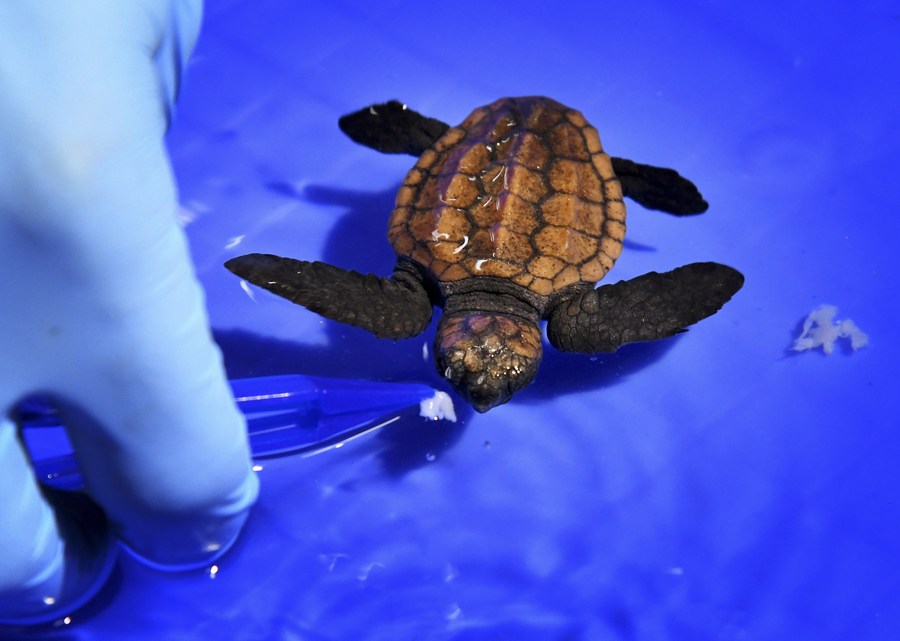
A staff member feeds a baby loggerhead turtle at Qingdao Haichang Ocean Park in Qingdao, a coastal city in east China's Shandong Province, Aug. 25, 2021. Seven baby loggerhead turtles, a species under first-class state protection in China, were hatched after a successful artificial incubation at Qingdao Haichang Ocean Park in Qingdao, marking the first artificial breeding of loggerhead turtles in the country. (Xinhua/Li Ziheng)
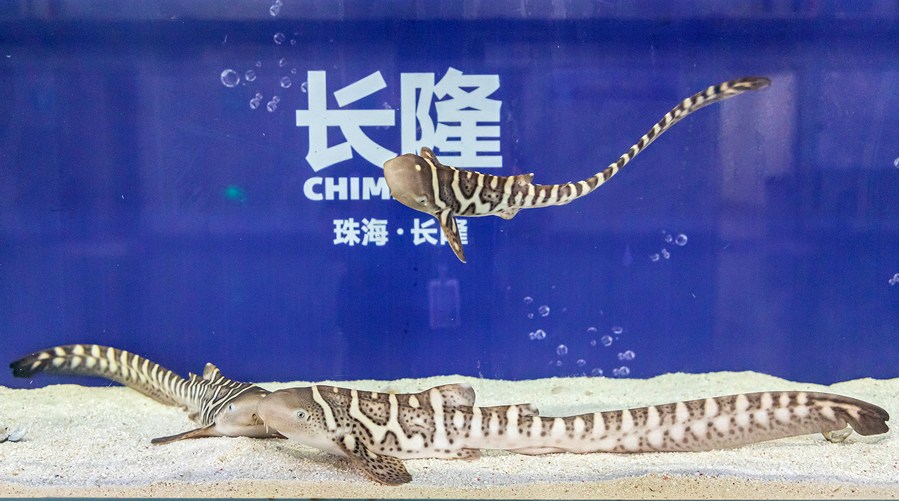
Photo taken on July 13, 2021 shows the three zebra sharks at the Chimelong Ocean Kingdom in Zhuhai, south China's Guangdong Province. Three endangered species of zebra sharks have been successfully bred by the theme park Chimelong Ocean Kingdom in Zhuhai, south China's Guangdong Province, in the first half of 2021. (Xinhua/Huang Guobao)
Over recent years, the ecological environment has been improved in the Bohai Sea, as well as in marine areas around the Yangtze Estuary-Hangzhou Bay and Pearl River Estuary. However, pressure from pollution and ecological degradation continues to pose arduous challenges to the sustainable improvement of the marine environment from 2021 to 2025.
China aims to raise the proportion of excellent water quality in the three key marine areas by about 2 percentage points by 2025, compared with the 2020 level, according to an action plan jointly issued by the ministry and six other departments. In the meantime, risk prevention and emergency response capabilities in the marine areas will be significantly improved.
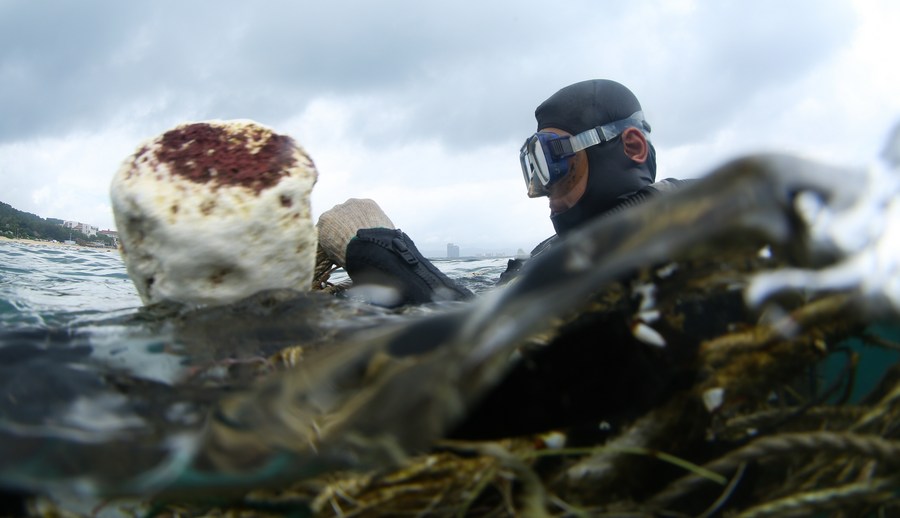
A staff member collects wastes in the sea area of Wuzhizhou Island of Sanya, south China's Hainan Province, Sept. 14, 2021. (Xinhua/Yang Guanyu)
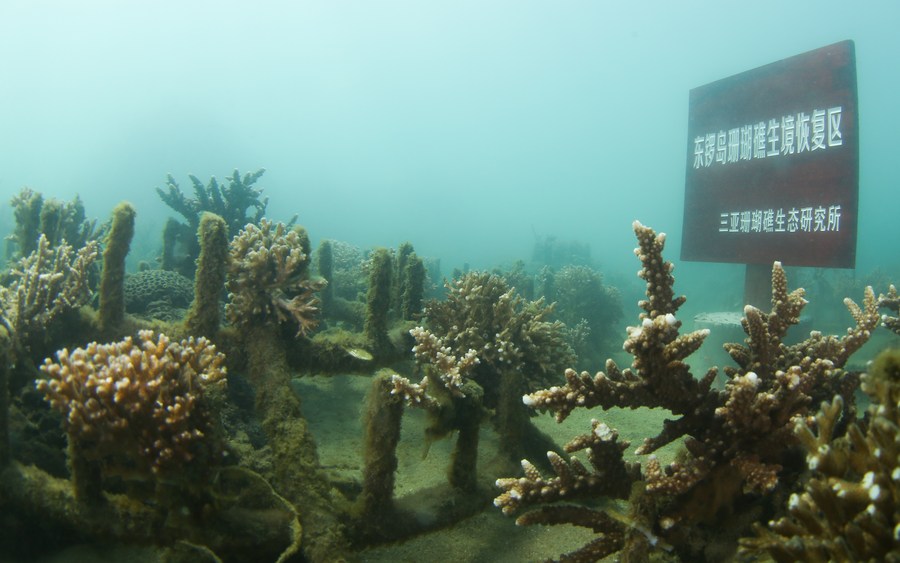
Photo taken on March 18, 2021 shows an area for coral restoration near Dongluo Island in Yazhou Bay of Sanya, south China's Hainan Province. The ecological restoration demonstration in Yazhou Bay has achieved initial effects. The project is proposed based on the urgent need for the restoration of the Hainan coastal ecosystem. Researchers carry out systematic ecological restoration activities for the coral reef ecosystem around Dongluo Island. Thanks to researchers' work, the survival rate of coral has reached more than 70 percent. And the coral coverage rate has increased by 10 percent. (Xinhua/Yang Guanyu)
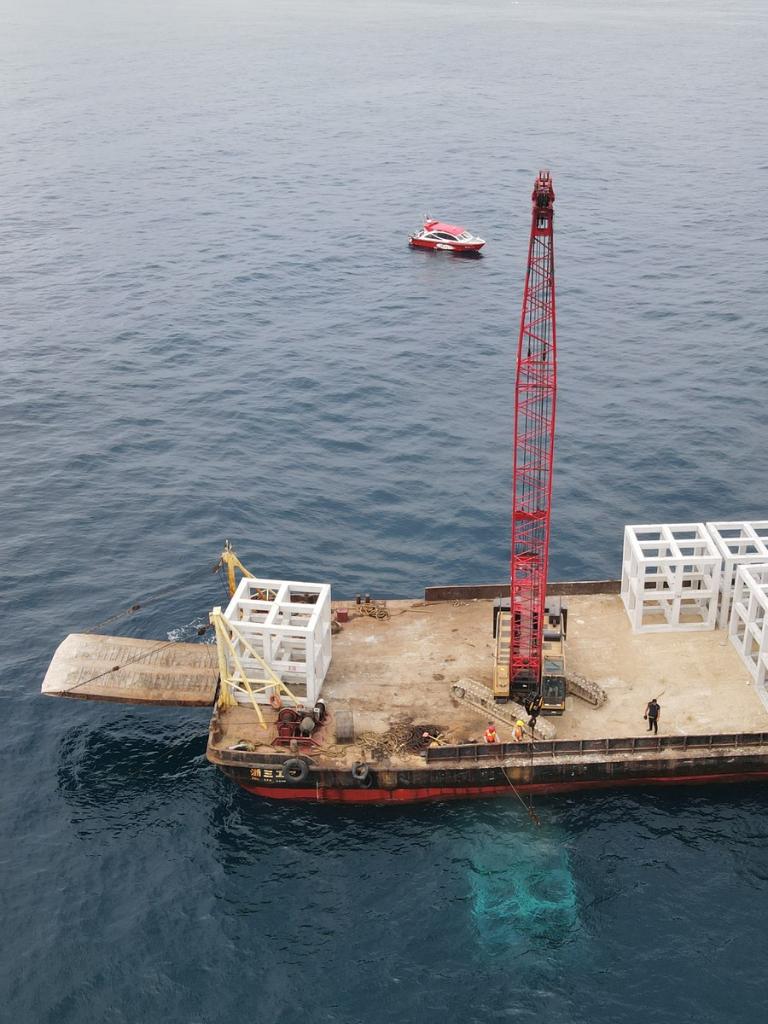
In this aerial photo taken on April 1, 2021, staff lay artificial reefs around Wuzhizhou Island in Sanya City, south China's Hainan Province. Wuzhizhou Island has launched a comprehensive drive to build a marine ranch and restore the marine ecosystem, by placing artificial reefs under the sea and transplanting corals. By the end of 2020, Wuzhizhou Island marine ranch has placed 1,526 artificial reefs. And 870 more will be laid within a month in the recent artificial reefs placement. (Xinhua/Zhang Liyun)
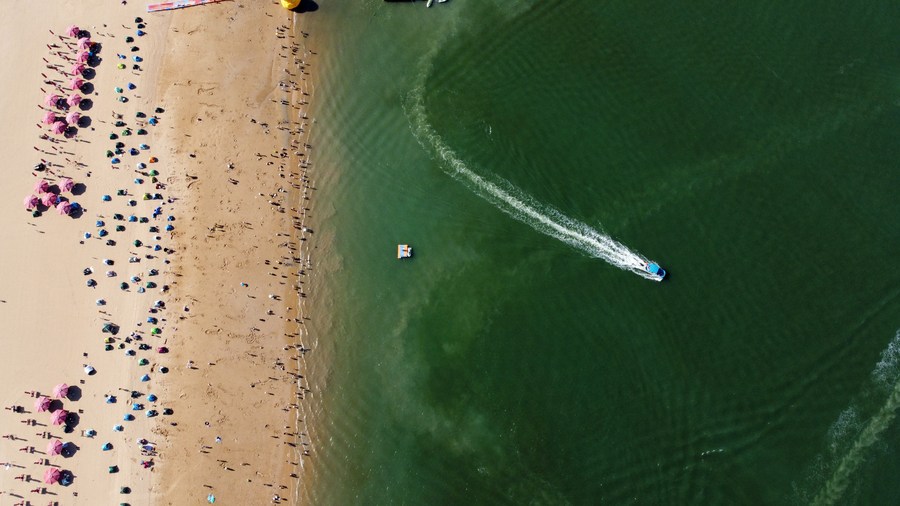
Aerial photo taken on June 5, 2021 shows an artificial beach resort at Dongjiang Port in the Binhai New Area of north China's Tianjin. Over the years, the city has worked on pollution control and shoreline management of the Bohai Sea to restore its coastal wetlands, while stricter measures on land reclamation have been implemented. In 2020, 70.4 percent of Tianjin's offshore waters achieved sound quality under a three-year action plan to battle water pollution. (Xinhua/Zhao Zishuo)
Looking ahead, China is set to coordinate and promote maritime ecological protection and maritime economic development while safeguarding its maritime rights and interests, according to the 14th Five-Year Plan (2021-2025), a key blueprint for the country's economic and social development.
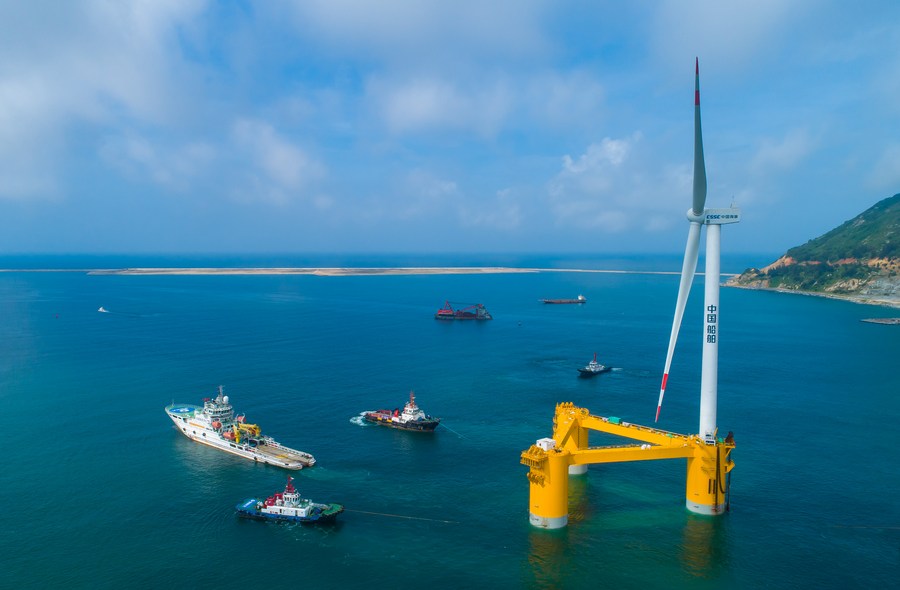
Aerial photo taken on May 29, 2022 shows a deep-sea floating wind power equipment "Fuyao" being towed from Maoming to Luodousha sea area, south China's Guangdong Province. (Xinhua/Liu Dawei)
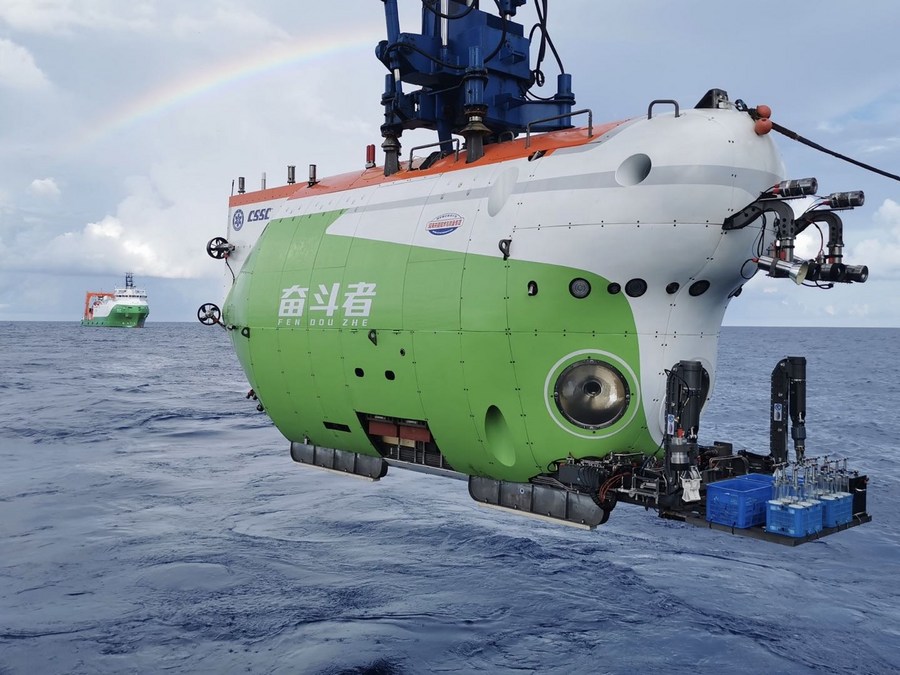
Undated file photo shows China's deep-sea manned submersible Fendouzhe (Striver). The manned submersible Fendouzhe, setting a national record by diving to a depth of 10,909 meters in the Mariana Trench during an expedition, returned to south China's Hainan Province on Nov. 28, 2020. (China State Shipbuilding Corporation /Handout via Xinhua)■