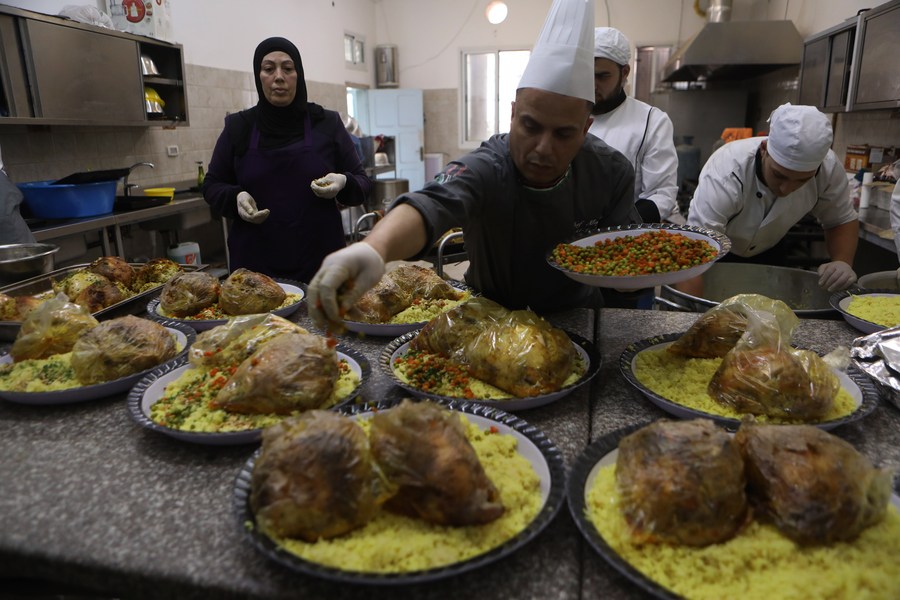
Palestinian chefs cook charity meals at the Islamic Charitable Society in the West Bank city of Hebron, on April 12, 2022. The group prepares Hundreds of free meals for Palestinian orphans each day during the holy month of Ramadan. (Photo by Mamoun Wazwaz/Xinhua)
by Sanaa Kamal
RAMALLAH, April 25 (Xinhua) -- Every day during the Muslim holy month of Ramadan, a group of Palestinian chefs gathers in a charity kitchen to make food for needy families in the West Bank city of Hebron.
Crushed wheat, white beans, beef, and poultry are among the ingredients of the food commonly cooked in the charity kitchen dubbed "Abrahamic Hospice."
"I have been working in this hospice for more than 15 years, and we are preserving a human heritage by saving poor families from feeling hungry," Abu Mohammed, one of the chefs, told Xinhua.
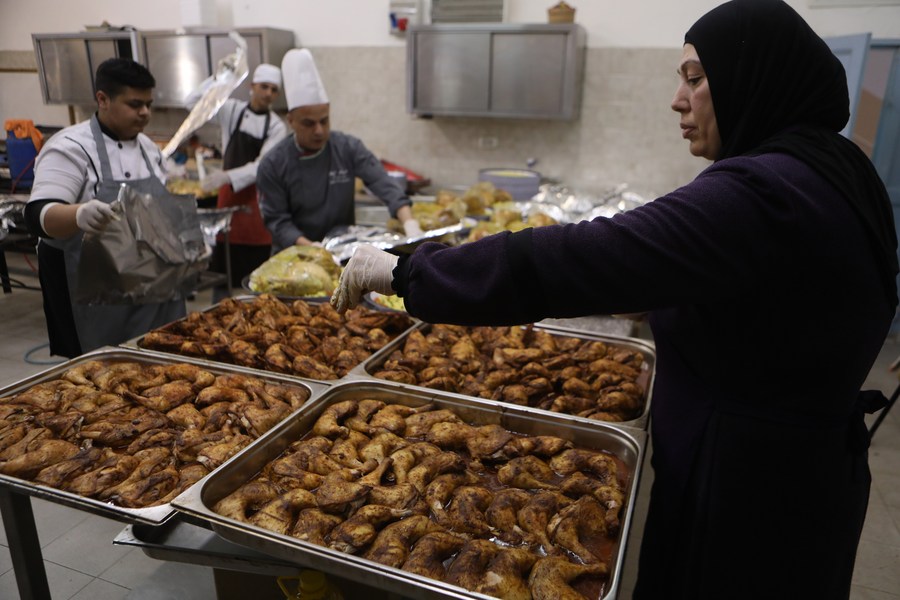
Palestinian cooks prepare charitable meals during Ramadan at the Islamic Charitable Society in the West Bank city of Hebron, on April 12, 2022. (Photo by Mamoun Wazwaz/Xinhua)
The charity kitchen provides around 16,000 meals for low-income families, said Loay al-Khatib, the supervisor of the hospice.
"We sometimes also deliver uncooked food to those who live in remote villages to prepare it in their houses," he added.
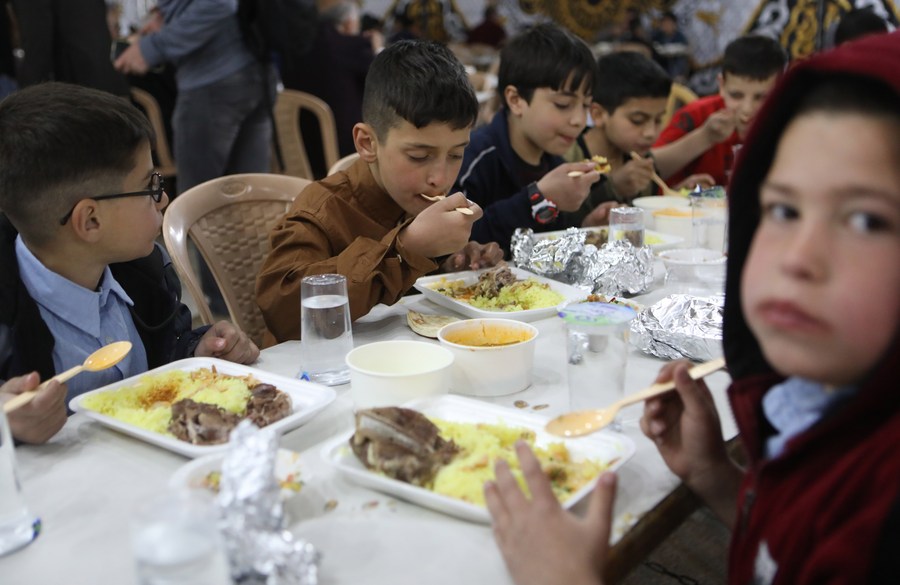
Palestinians have their fast-breaking meal (iftar), during a fundraising banquet for orphans organized by the Islamic Charitable Society in the West Bank city of Hebron, April 6, 2022. (Photo by Mamoun Wazwaz/Xinhua)
Al-Khatib said the scene has been repeated for centuries since the set up of the Abrahamic Hospice in the old city of Hebron.
"The food provision for the needy families is not only during Ramadan, but also for the rest of the year, so that there is not a single hungry person in Hebron," he noted.
Over the year, local businessmen, as well as foreign and Arab delegations donate money to the hospice for purchasing basic materials for cooking food.
According to the Palestinian Central Bureau of Statistics, about 14 percent of the population of the West Bank suffers from poverty, among whom 5.8 percent suffer from extreme poverty.
Sitting in his wheelchair, Mohammed Ibrahim was in an orderly queue in front of the hospice headquarters to get a meal for his eight-member family.
"Seven years ago, I lost my legs in a traffic accident and lost my job, and I became impoverished and unable to provide food for my family," Ibrahim told Xinhua.
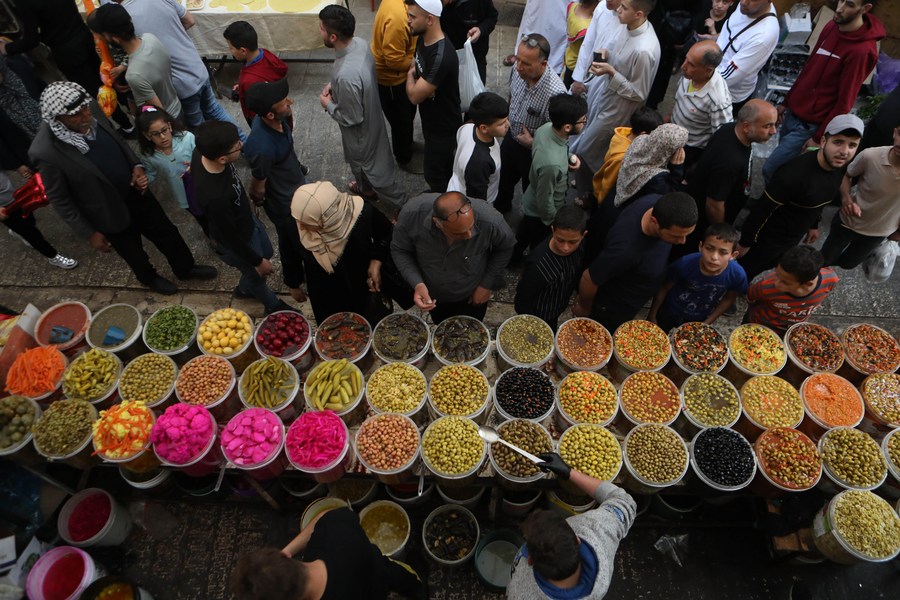
People visit a market during the Islamic holy month of Ramadan in the West Bank city of Hebron, on April 5, 2022. (Photo by Mamoun Wazwaz/Xinhua)
However, the situation did not last long, "I get my family's food seven days a week from the hospice in Hebron," recalled the man, expressing his thanks for the initiatives that help the poor families.
"We are lucky here (in Hebron). Everyone gets the necessary food, and you will not find any poor people sleeping hungry in the city of Hebron," the 48-year-old man said.
The situation is not much different for Umm Ahmed, an elderly woman from Hebron, who is responsible for raising four grandchildren who lost their parents four years ago.
"The assistance we get from such an initiative is not limited to food only, but also there are many donors who provide money for the daily expenses of my poor family," she said. ■