
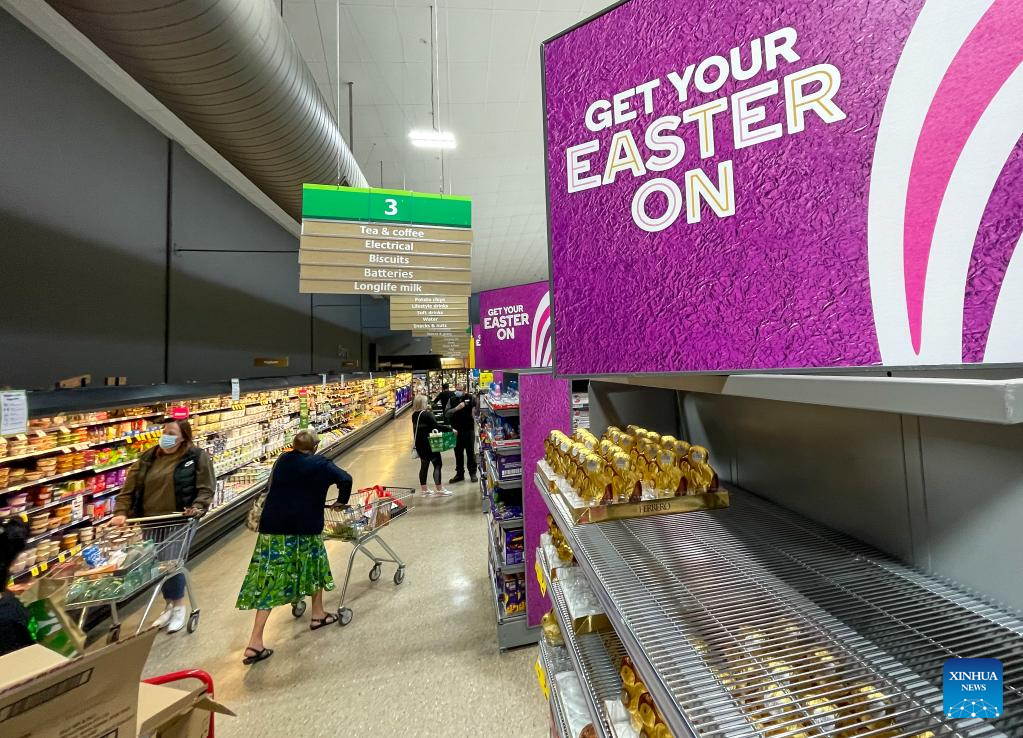
People shop at a supermarket in Wellington, New Zealand on April 8, 2022. (Xinhua/Guo Lei)
WELLINGTON, April 7 (Xinhua) -- Mary Cooper is a retired Auckland pensioner who enjoys dining out and buying presents for her grandchildren. But now, she is cutting back on some of the spendings and mostly eating at home.
Her household being vulnerable to the Omicron variant of COVID-19 is one reason; the rising cost of living is another.
Everything is getting more expensive in New Zealand recently. Just like Mary Cooper, most people in New Zealand find their salaries difficult to catch up with expenses.
A full tank of petrol for their vehicles cost around 70 to 100 New Zealand dollars (48 to 69 U.S. dollars) one year before. People are now paying 150 New Zealand dollars (103 U.S. dollars) or more. The prices of cauliflowers, which used to be a stable winter vegetable supply for many households, have doubled due to shortages.
The uncertainty brought by the Russia-Ukraine conflict along with many internal and external factors is pushing up the New Zealand cost of living, said Tony Alexander, an independent economist in New Zealand.
He told Xinhua that the inflation in New Zealand is expected to rise to a peak of 7.5 percent through the winter season here in the Southern Hemisphere.
"It's fairly tough for families now. People will experience a drop in the real incomes," said Alexander.
According to the New Zealand statistic department, Stats NZ's December quarter data, the consumer price index, an indicator for inflation, has already increased 5.9 per cent in the past year. As a result, consumer confidence, an important indicator of New Zealand's economic growth, is declining.
The latest March figure from New Zealand credit agency Centrix showed that New Zealand people are starting to spend less due to uncertainties such as the Omicron, rising mortgage rates and rising inflation.
"Consumers are already reacting strongly to the increased cost of living and the uncertainty regarding the omicron variant, Russia and Ukraine, etc. That weakness in consumer spending, which makes up about 65 per cent of the New Zealand economy, also means a slower pace of growth in the New Zealand economy," said Alexander.
The reason for inflation and the rising cost of living is complex, being the combination of external and internal factors.
"I think the normal New Zealand domestic inflation is relatively low. The drive towards higher inflation now has largely come from offshore," said Alexander. "Because most of the consumer goods we purchase come from offshore. So, if they go up in price, it naturally affects things here."
The Russia-Ukraine conflict in particular is expected to push the New Zealand inflation up by one percentage point extra, Alexander said, citing longer-term impact on energy prices.
A higher international commodity price tends to benefit the New Zealand primary industry, which exports food and dairy products overseas, but general Kiwi consumers are feeling the bane in the supermarkets.
"For New Zealand, when we get energy prices rising, we also tend to get minerals from Australia prices rising. At the supermarket, we are paying more for our food because international food prices have been soared," explained Alexander.
One way to find lower prices is online shopping. However, with the supply chain being disrupted due to the pandemic, online shopping is not a viable option now in New Zealand.
"It is due to the impact of the pandemic affecting supply chains and shipping costs in particular. For example, the price of shipping containers has increased five to 10 times, many factories in producing countries sometimes close down," said Alexander. "As a result, materials are hard to come by."
Alexander is optimistic that these external factors are temporary and will eventually ease off. But the labor shortage and the resource constraint on New Zealand's economy is also impacting its economic growth.
"For the next two to three years, although the growth of New Zealand economy will be relatively slow to maybe 2.5 percent, it will still be good growth," he said, noting, "It is physically difficult for New Zealand's economy to grow rapidly because we don't have the resources needed to do that. We have become a much capacity constrained economy, not a demand constrained economy now."
For Mary Cooper, she is considering fully utilize her garden to grow vegetables so that her grocery cost can be controlled. ■
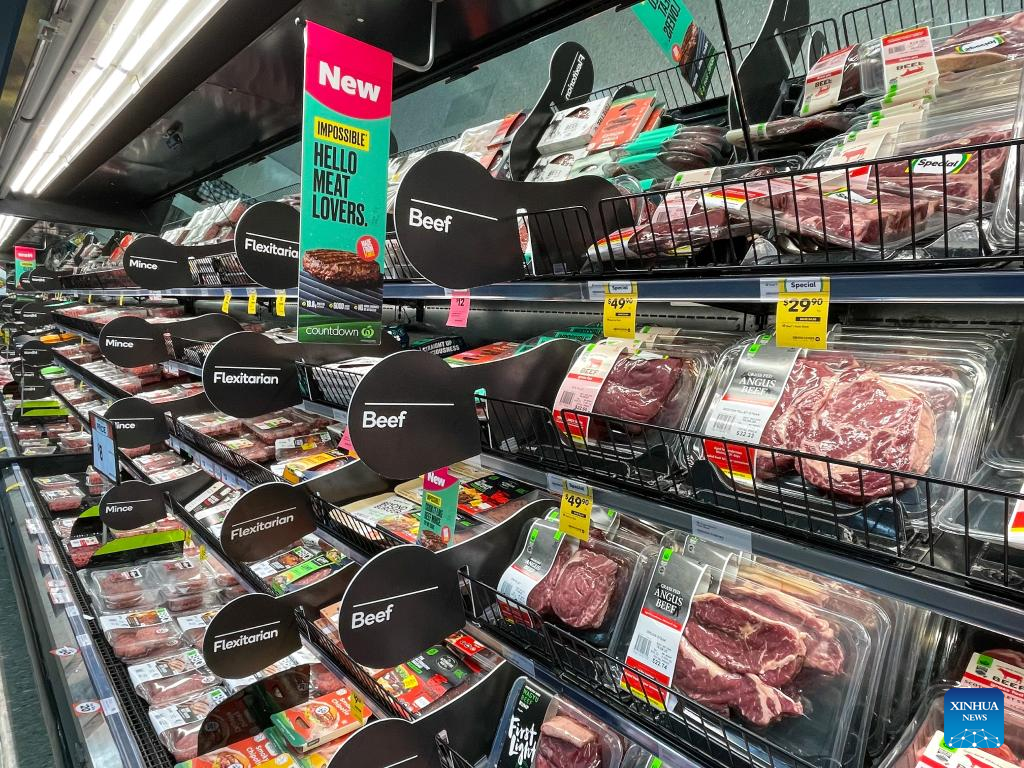
Meat products are seen on shelves at a supermarket in Wellington, New Zealand on April 8, 2022. (Xinhua/Guo Lei)
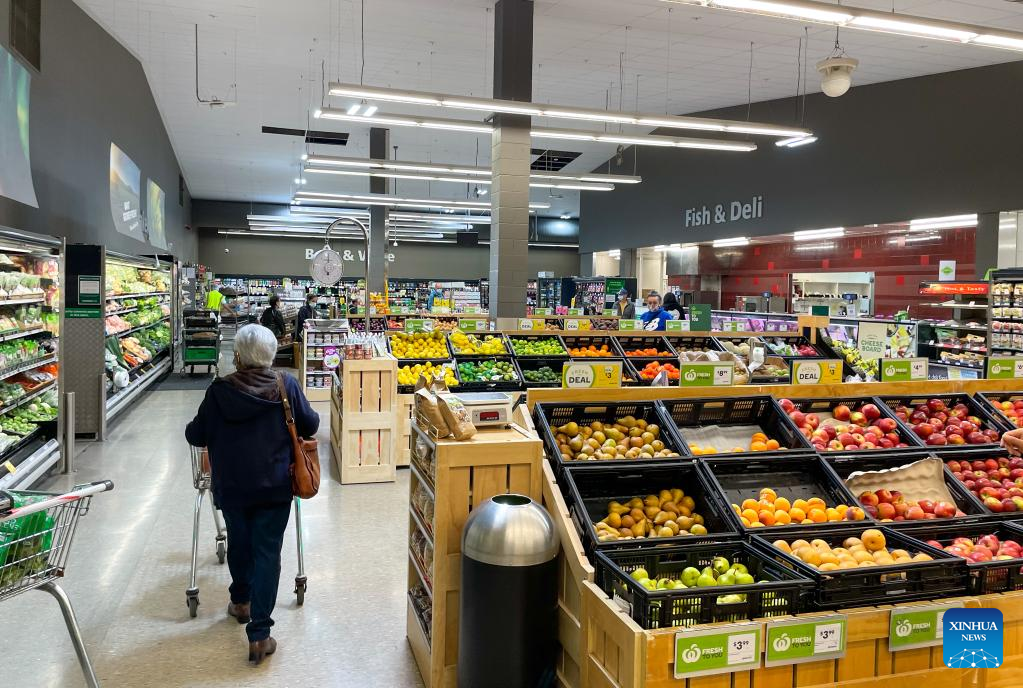
People shop at a supermarket in Wellington, New Zealand on April 8, 2022. (Xinhua/Guo Lei)


