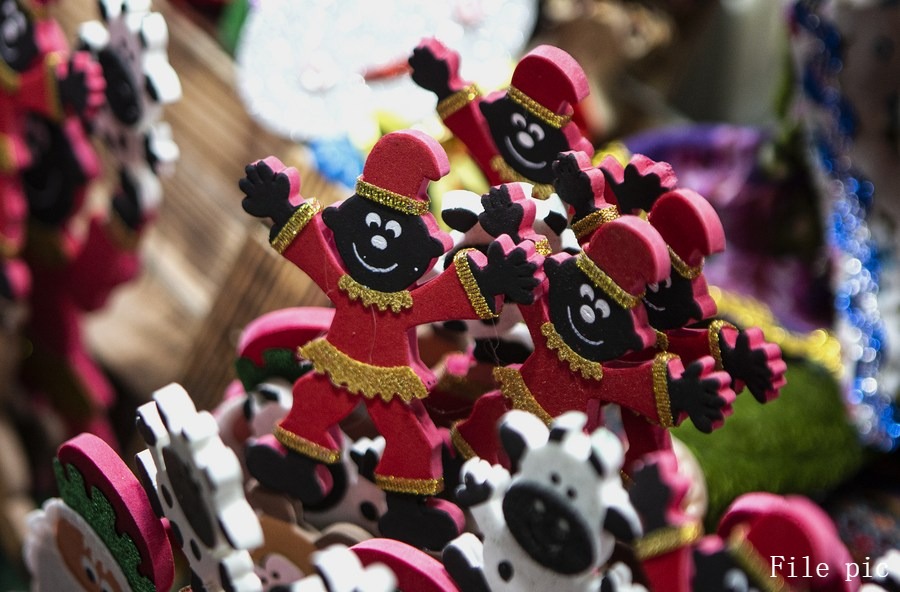
Dolls of Haji Firouz, a traditional character who appears in streets by the beginning of Iranian New Year, is displayed for sale at a bazaar in Tehran, Iran, on March. 18, 2021, ahead of Nowruz, the Iranian New Year. (Photo by Ahmad Halabisaz/Xinhua)
Ahead of the Iran's new year Nowruz, Iranians expects an agreement to revive the nuclear deal, formally known as the Joint Comprehensive Plan of Action (JCPOA), will be reached in the upcoming new year, which may lift the sanctions on the Islamic republic reimposed by the United States, and will make life easier.
TEHRAN, March 19 (Xinhua) -- As Nowruz, the Iranian new year, will begin on March 21, Reza, a construction worker living in Tehran, is feeling depressed because he hasn't been able to afford to buy new clothes and gifts for his children.
"It is a tradition, and they are looking forward to new clothes," Reza, who only gave his first name, regretted. He is the father of a 10-year-old girl and a five-year-old boy.
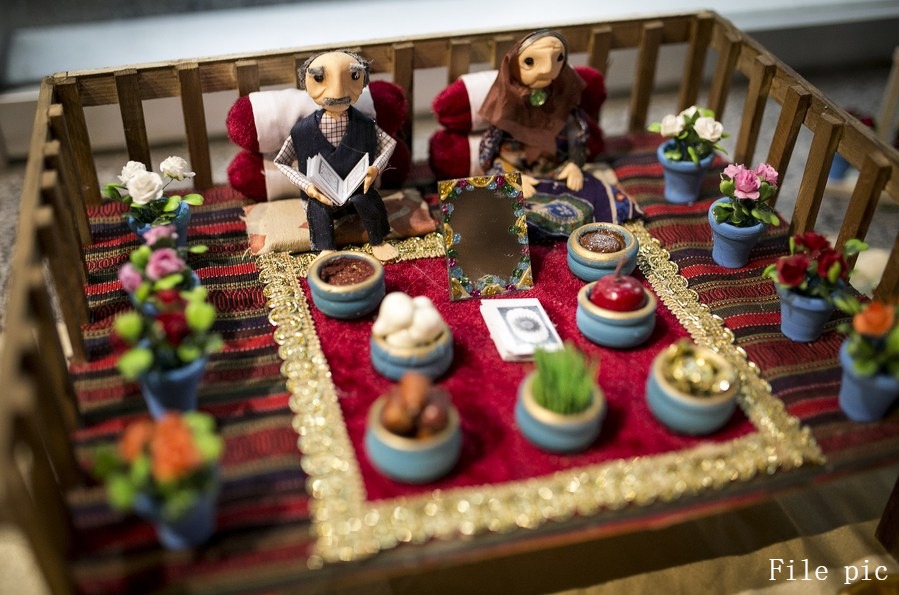
A number of symbolic objects are displayed for sale during the Nowruz celebrations, in Tehran, Iran, on March 18, 2018, ahead of Nowruz, the Iranian New Year. (Xinhua/Ahmad Halabisaz)
Hardly capable of reading and writing, Reza recalled that life has turned to be more difficult after the United States, under former President Donald Trump, withdrew from the international Iran nuclear deal, formally known as the Joint Comprehensive Plan of Action (JCPOA), in 2018 and reimposed sweeping sanctions on the Islamic republic.
Though the sanctions failed to bring Tehran to its knees, a bitter yet undeniable fact is that it has always been Iran's people, mainly low-income class, who have borne the brunt of the pressures caused by these unilateral coercive measures.
"They are only kids and they don't understand it when I say I don't have enough money," he said, questioning "Don't they (the Americans) say that they want to reach an agreement? Why do they insist on keeping sanctions in place?"
Reza said that in the early months after the re-imposition of the sanctions, the prices in Iran kept spiking that it was once hard for him to repair any of their broken appliances, let alone to buy new ones.
After the sanctions' reinstatement, the prices of major foreign currencies in the domestic market were on an uptrend, rising even tenfold in some cases.
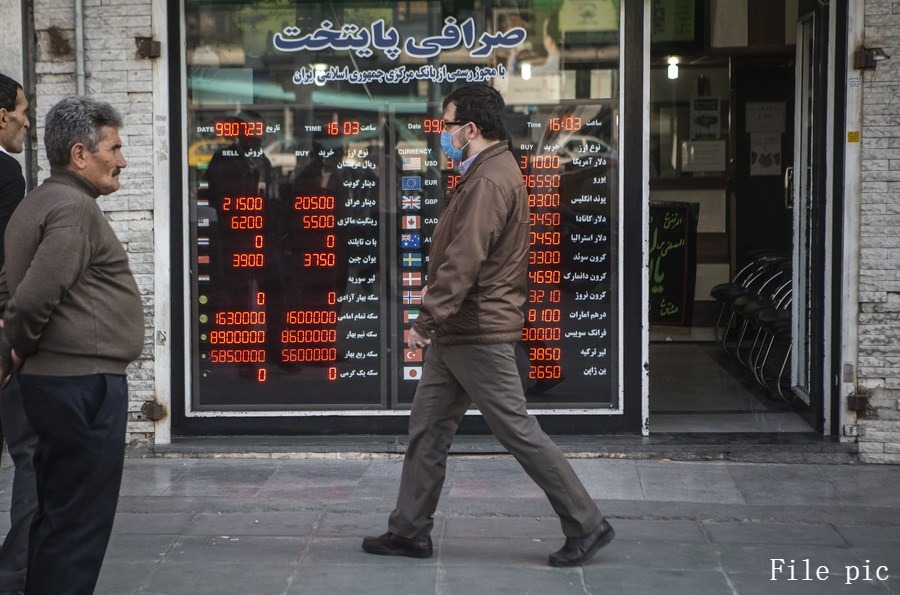
A man walks past a board showing the rates of currencies at a currency exchange center in central Tehran, Iran, Oct. 14, 2020. Iran's currency rial has hit a new low against foreign currencies days after the United States slapped fresh sanctions against the Iranian financial sector. (Photo by Ahmad Halabisaz/Xinhua)
Commending efforts by the new Iranian administration, "I am hopeful that (Iranian President Ebrahim) Raisi would lift the sanctions as he and his team are very determined and capable," Reza said, referring to the ongoing talks between Iran and the remaining parties, namely China, Russia, Britain, France and Germany, in Vienna on the JCPOA's revival.
"Hopefully, if the sanctions are lifted in the coming Iranian year, the economy will be able to take a fresh breath. We can sell oil with greater ease and receive its money. In addition, the downward trend in (market) prices will gain greater momentum," he told his expects.
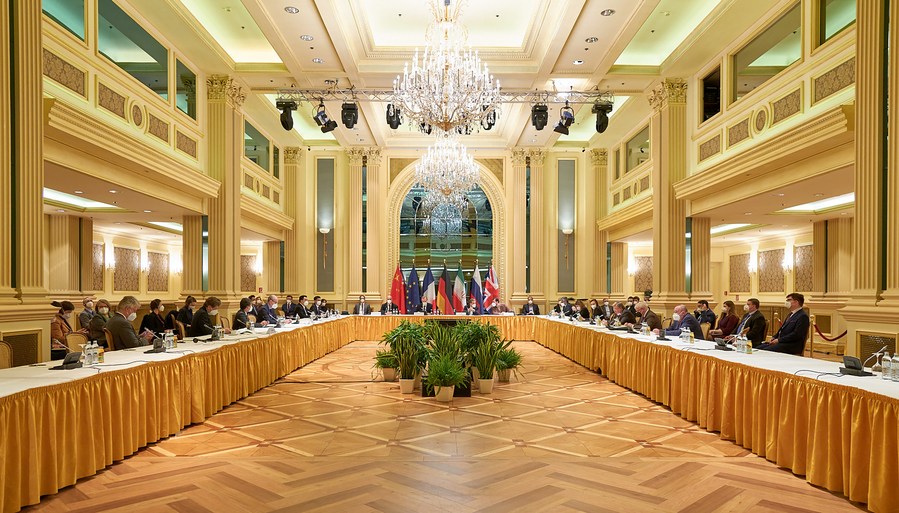
Photo taken on April 17, 2021 shows a meeting of the Joint Commission of the Joint Comprehensive Plan of Action (JCPOA) in Vienna, Austria. (EU Delegation Vienna/Handout via Xinhua)
Washington re-imposed the sanctions, mainly targeting the country's oil and banking sectors, on Iran as a part of its "maximum pressure" campaign in a bid to cripple the country's economy.
"My son wants a bike. I hope I would be able to buy him one for the next Nowruz," Reza said. ■