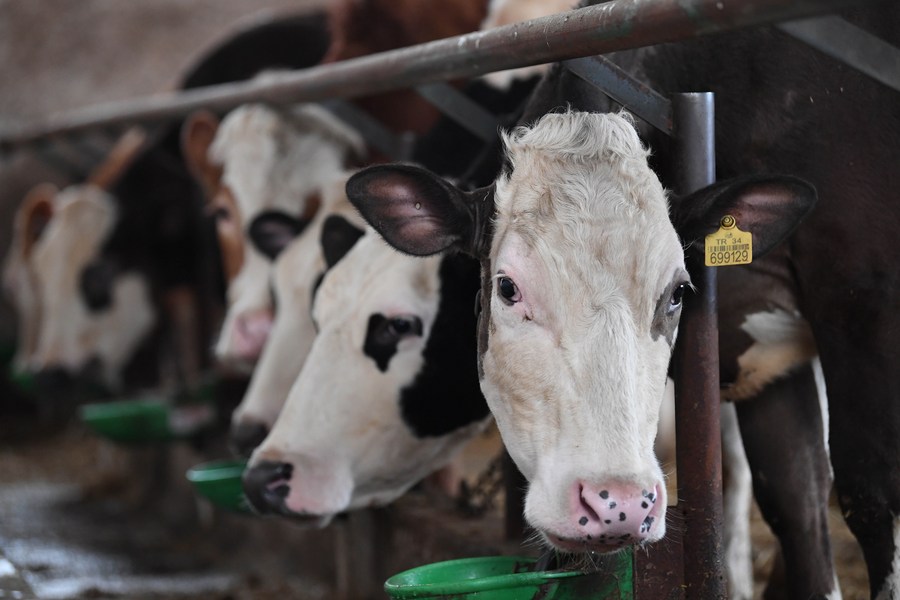
Photo taken on March 9, 2022 shows cows being housed in a cattle pen in Istanbul, Turkey. (Xinhua/Shadati)
The Sekmen brothers, who have raised the cattle for nearly 40 years, find that fuel, electricity, fodder, and veterinary medicines are becoming increasingly unaffordable as the country's inflation continues on a drastic upward trajectory.
by Zeynep Cermen
ISTANBUL, March 14 (Xinhua) -- A snowy and freezing day couldn't stop Hamdi Sekmen and his two brothers from doing their routines inside their cattle pen in the outskirts of Istanbul.
Feeding the cattle, pouring straw under the animals' feet, and taking special care of the calves are essential parts of their daily life for nearly 40 years.
Work hard and get what their sweats earn, that is how the Sekman brothers see the way of life. But as the country's inflation goes higher and higher, they have begun to feel the blunt.
"We have lost control of everything," Sekmen said. "The pandemic erupted. It has put a heavy burden on our shoulders. Now as we are finally beginning to get out of the pandemic, the country's economic woes dealt another blow to us."
As the country's inflation continues on a drastic upward trajectory, livestock production costs are also skyrocketing. The Sekmen brothers now find fuel, electricity, fodder, and veterinary medicines are becoming increasingly unaffordable and the margin of interest is getting thinner.
Sekmen said their expense nearly quadrupled in the last 12 months, adding that they now can barely keep their cattle alive and are eagerly hoping the government can increase the assistance to the agricultural sector.
According to Turkish law, the state provides 1 percent of the gross national product to agricultural and animal producers, in addition to various incentives provided on the municipal levels.
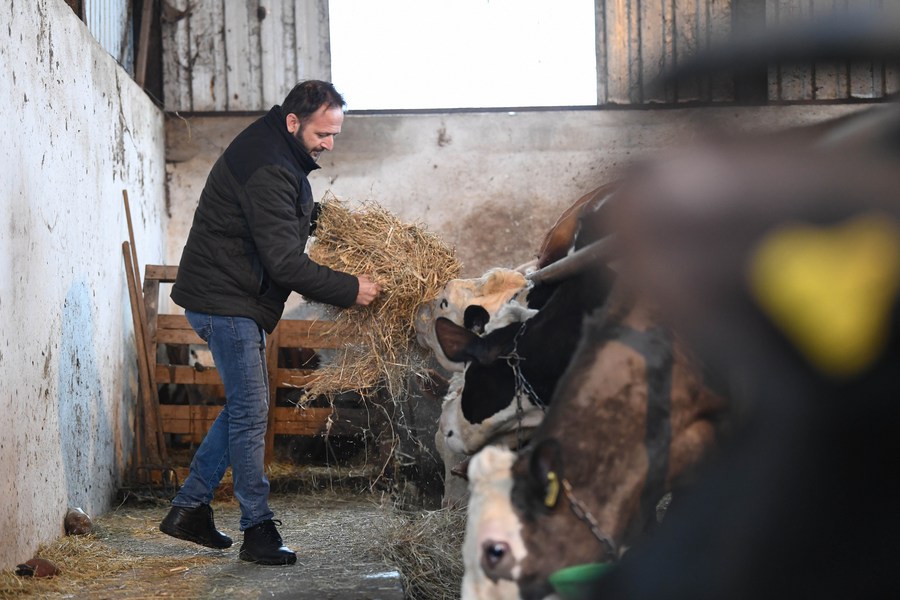
Hamdi Sekmen feeds the cattle in the pen in the outskirts of Istanbul, Turkey, on March 9, 2022. (Xinhua/Shadati)
Fevzi Karaagac, a veterinarian and director of veterinary services at the Istanbul municipality's agricultural services department, told Xinhua that there are 110,000 cattle, 1.25 million poultry, and approximately 165,000 sheep and goats in Istanbul.
The municipality provided 2.5 tons of lamb feed per producer in 2021 and reserved 1,250 million tons of dairy feed for each cattle producer this year. The assistance is only valid for those who own a certain number of animals.
"These supports must continue, and it will be," he pointed out.
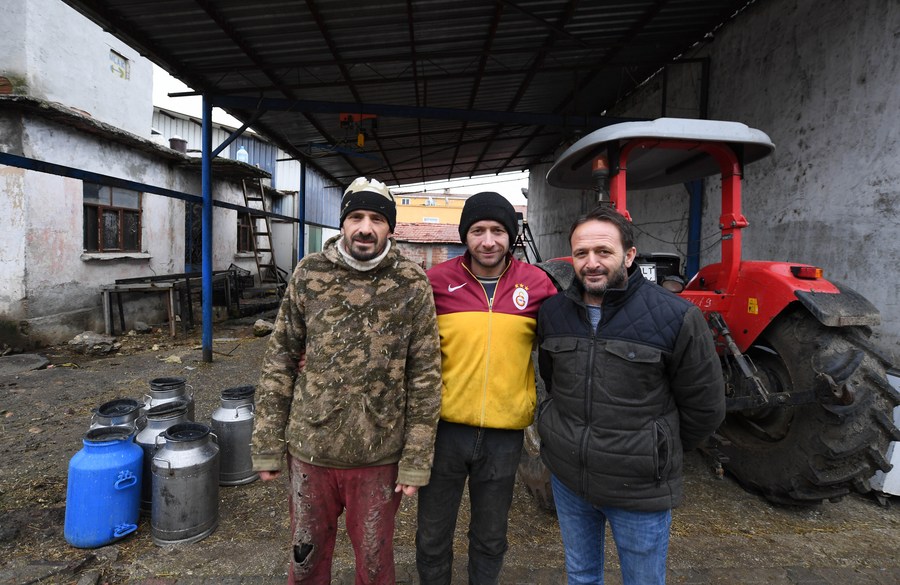
Photo taken on March 9, 2022 shows Hamdi Sekmen and his two brothers standing in front of their cattle pen in the outskirts of Istanbul, Turkey. (Xinhua/Shadati)
"The situation today imposes that agriculture is now a strategic area and that Turkey should be a self-sufficient country in agriculture and food," said the veterinarian.
Karaagac believes that universities, municipalities, and the ministry of agriculture and forestry need to work together to boost the efficiency of animal production in the country.
"We have got help from the Istanbul municipality. We saw the benefit, but it is not enough because conditions are very harsh," Sekmen added.
"Do not take our enthusiasm from us. Let us work," he called on the government for more help.■