The movie SEMA, meaning "speak out" in Swahili, a story about two rape survivors in the eastern Democratic Republic of the Congo, takes the audience through their heartbreaks and struggle to pick up the broken pieces and fight the good fight.
KINSHASA, March 8 (Xinhua) -- "If without us women, who would have given birth to you?" As Matumani, a sexual abuse victim from the Democratic Republic of the Congo (DRC), cried her heart-torn and soul-searching line out loud, there was barely a dry eye in a small theater in the DRC's eastern city of Goma, at the screening of the movie SEMA in early March.
The movie SEMA, meaning "speak out" in Swahili, a story about two rape survivors in eastern DRC, takes the audience through their heartbreaks and struggle to pick up the broken pieces and fight the good fight.
"Deep inside me, there was a strong sadness, anger and a kind of revolt. I thought of all the women I know, my friends, my sisters, my wife, who could also be victims of this violence and these activities," Gerome Musingi, a viewer from Goma, a brother and also a husband, told Xinhua after the screening.
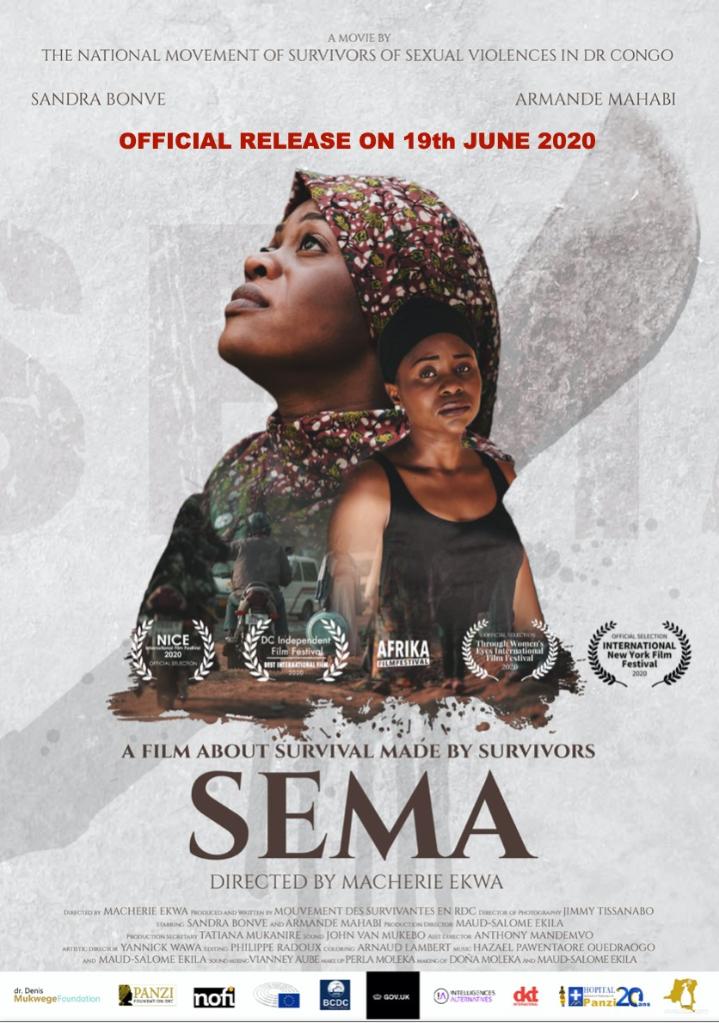
Poster of the movie SEMA, a story about two rape survivors in the eastern Democratic Republic of the Congo, getting back on their feet. (Hand-out via Xinhua)
"It's a film that we can't watch and stay put, it pushes us to do something," he said.
Written in 2018, the film reunites more than 60 survivors of sexual violence through the DRC Movement of Survivors, who decided to create the film based on tragedies that had unfortunately happened.
Over 90 percent of the cast are survivors of sexual abuses, who bravely volunteered to be part of the film, by replaying and reliving their traumas, in order to show the necessity to speak out and raise awareness against sexual abuses inside the country and worldwide.
"Sexual violence is a reality. We wanted to call on communities to put themselves in the shoes of these rape victims, to accompany them in their fight, and to approach them to understand what they are experiencing," said Niclette Tsongo, a member of the DRC Movement of Survivors.
Kimia, one of the film's heroines, nearly collapsed as she spoke out her past, the traumatizing assault that gave her HIV for the very first time in front of a help group of women like herself, including Matumani, the other heroine, who courageously defended herself against the whole village for shaming and casting blame on her and her rape-born child.
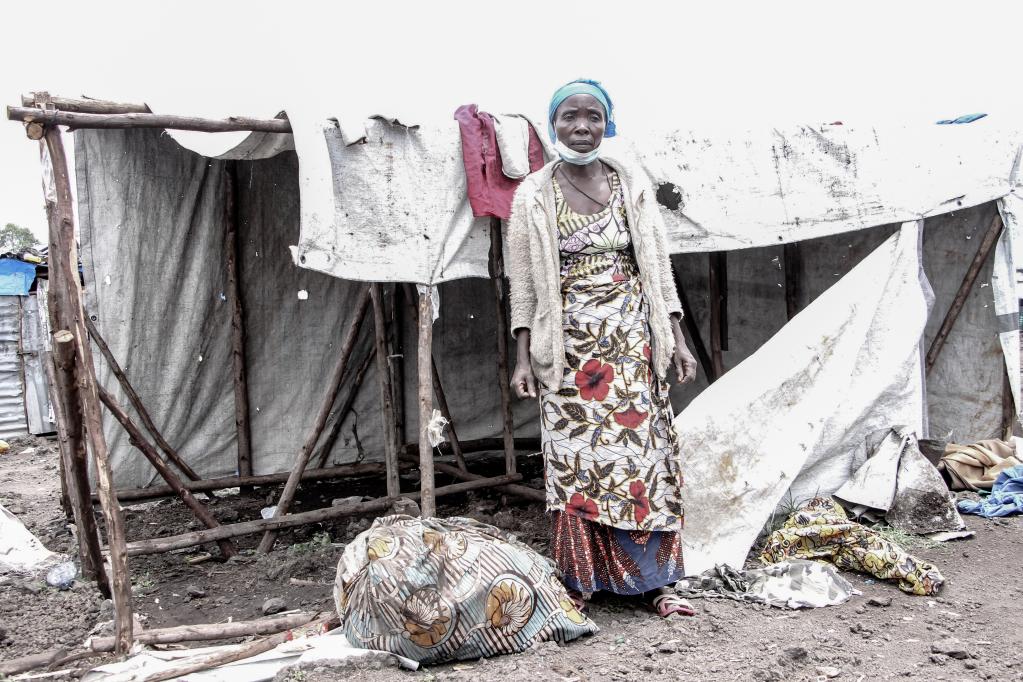
Photo taken on Sept. 7, 2021 shows a woman next to a shelter near Goma, the eastern Democratic Republic of the Congo. (Photo by Zanem/Xinhua)
As heartbreaking as it was, the confession gives Kimia the strength to finally face her perpetrator in the courtroom. As the movie fades out on the silver screen, the two women walked down the country road, holding their child in hand, talking about the weather at the end of the scene.
For Tatiana Mukanire Bandalire, the coordinator of the Movement, who once fell victim to the abuses, speaking up helped her to step out of the shadow and get back on her feet.
"Speaking up helped me overcome these challenges. I am not guilty, I am a victim. All abused women should be able to proclaim it loud and clear to break the taboo of sexual violence," she said. "They (the victims) must not live in fear and shame. Their tormentors must face up to their responsibilities. That is why we created the National Movement of Survivors of Sexual Violence in the DRC, which I am coordinating today. Thanks to this network, I try every day to carry the voice of these heroines." ■