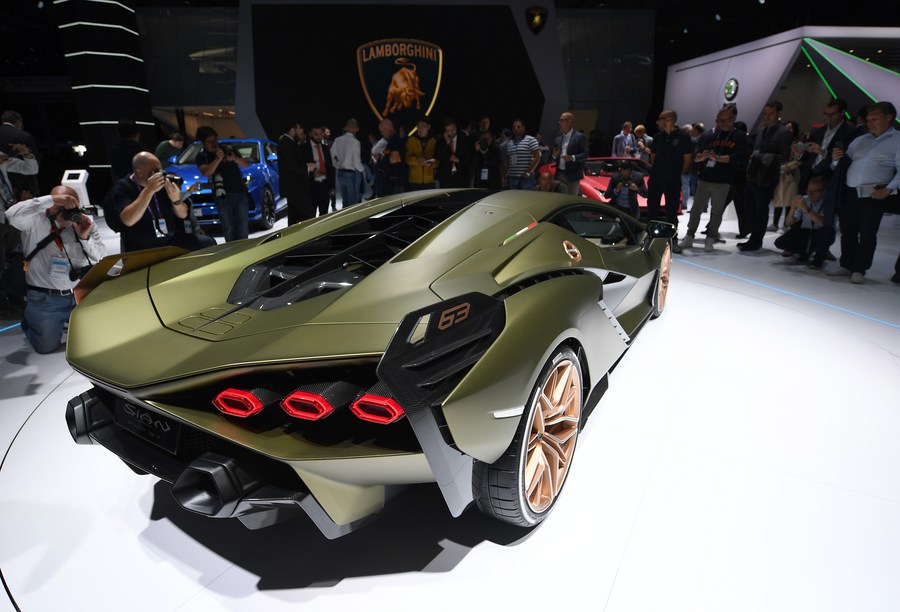
A Lamborghini Sian Hybrid car is on display during the first press day of Germany's International Motor Show (IAA) 2019 in Frankfurt, Germany, on Sept. 10, 2019. (Xinhua/Lu Yang)
2022 got off to a particularly successful start for pure battery electric passenger cars and hybrids, said Reinhard Zirpel, president of the Association of International Motor Vehicle Manufacturers (VDIK).
BERLIN, Feb. 8 (Xinhua) -- Registrations of cars with alternative drive systems in Germany increased by 23.2 percent year-on-year in January, the Federal Motor Transport Authority (KBA) said on Monday.
Hybrid and fully electric cars accounted for 41.7 percent of all new passenger car registrations in Germany during that period, according to KBA.
"2022 got off to a particularly successful start for pure battery electric passenger cars and hybrids," said Reinhard Zirpel, president of the Association of International Motor Vehicle Manufacturers (VDIK).
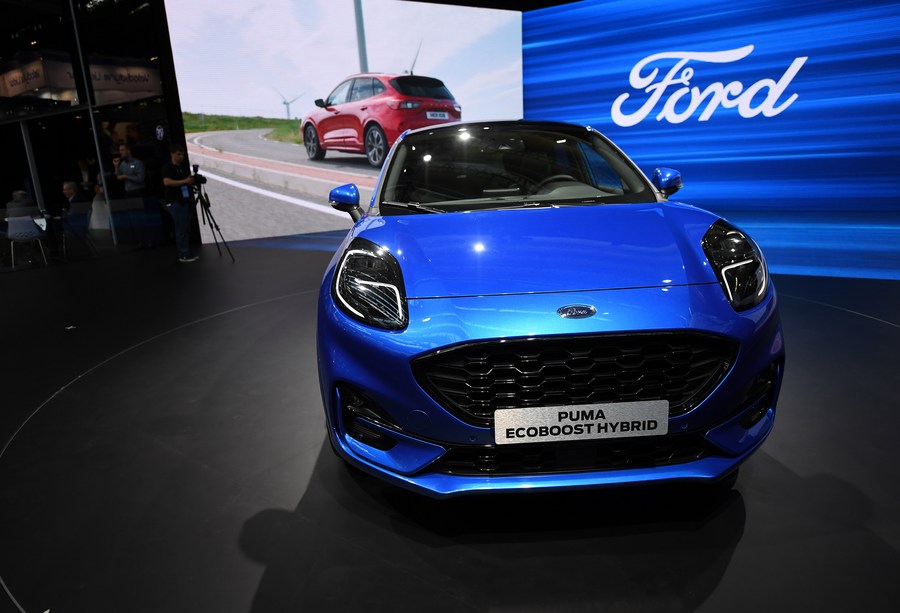
A Ford Ecoboost Puma hybrid car is on display during the first press day of Germany's International Motor Show (IAA) 2019 in Frankfurt, Germany, on Sept. 10, 2019. (Xinhua/Lu Yang)
Unplugged hybrids were the top sellers, with 35,226 registrations, up 42 percent, followed by battery electric vehicles (BEV) with 20,892 new registrations, reports KBA.
"However, the current delivery difficulties are also having an impact on alternative powertrains. If the situation at the plants improves, further growth can be expected," added Zirpel.
The German government is providing a purchase premium of up to 9,000 euros (10,280 U.S. dollars) for electric vehicles until the end of 2022, and plans to have 15 million pure electric cars on the road by 2030. (1 euro = 1.14 U.S. dollars)
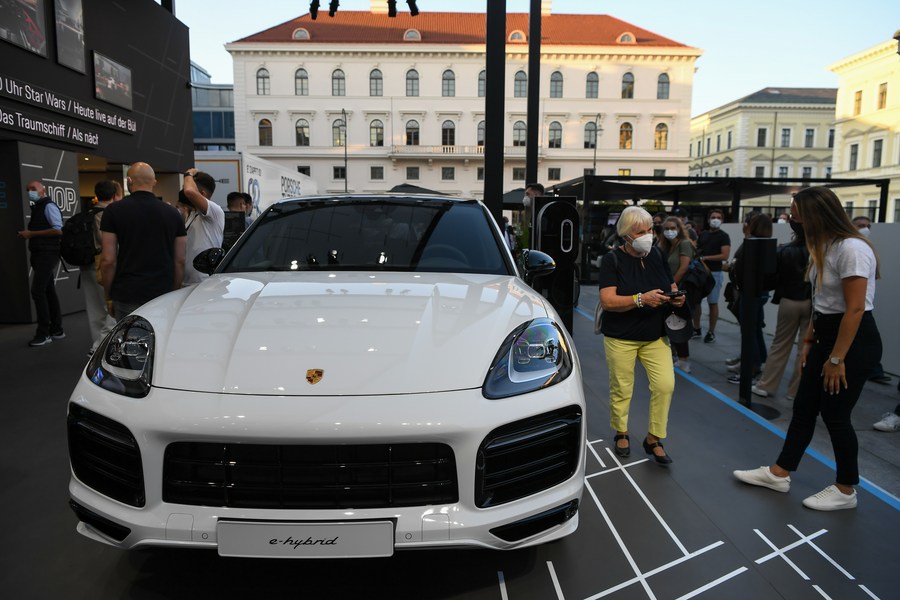
A Porsche Cayenne E-Hybrid Coupe is on display at the Porsche outdoor booth during the International Motor Show Germany (IAA Mobility) in Munich, Germany, Sept. 8, 2021. (Xinhua/Lu Yang)■