
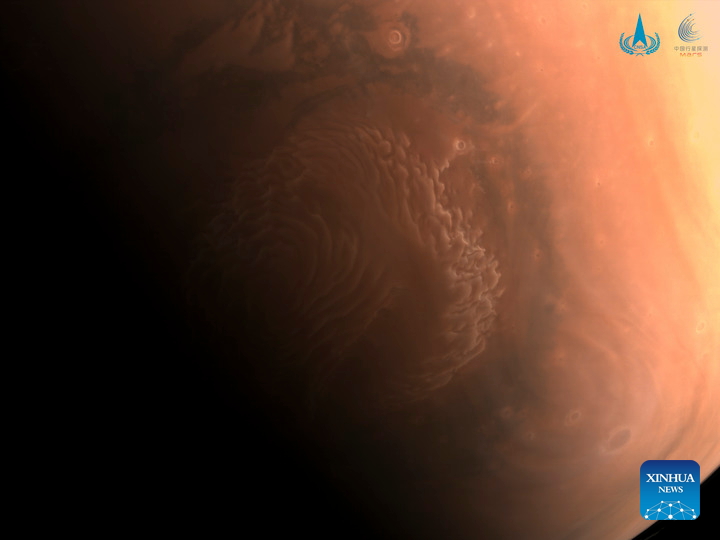
Photo released on March 4, 2021 by the China National Space Administration (CNSA) shows a high-resolution image of Mars captured by the country's Tianwen-1 probe. The China National Space Administration (CNSA) on Thursday published high-resolution images of Mars captured by the country's Tianwen-1 probe. These images include two panchromatic images and one color image, said the CNSA. (CNSA/Handout via Xinhua)
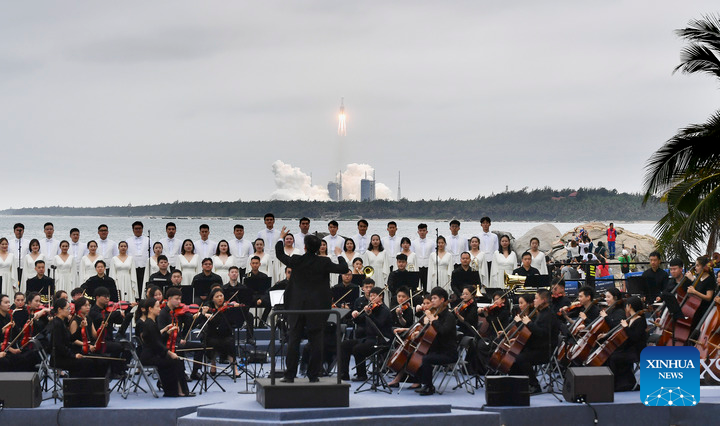
The Long March-5B Y2 rocket, carrying the Tianhe module, blasts off from the Wenchang Spacecraft Launch Site in south China's Hainan Province, April 29, 2021. China on Thursday sent into space the core module of its space station, kicking off a series of key launch missions that aim to complete the construction of the station by the end of next year. (Xinhua/Guo Cheng)
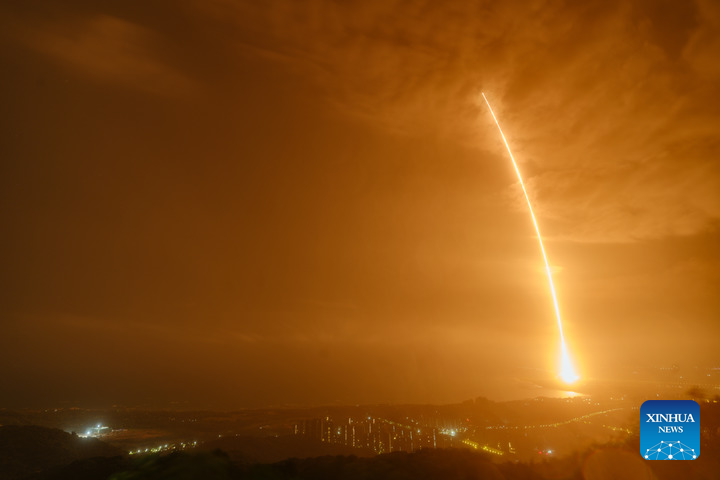
The Long March-7 Y3 rocket, carrying the Tianzhou-2 cargo spacecraft, blasts off from the Wenchang Spacecraft Launch Site in south China's Hainan Province, May 29, 2021. China launched the cargo spacecraft Tianzhou-2 on Saturday, which is scheduled to dock with the space station core module Tianhe to deliver supplies, equipment and propellant. (Photo by Guo Wenbin/Xinhua)
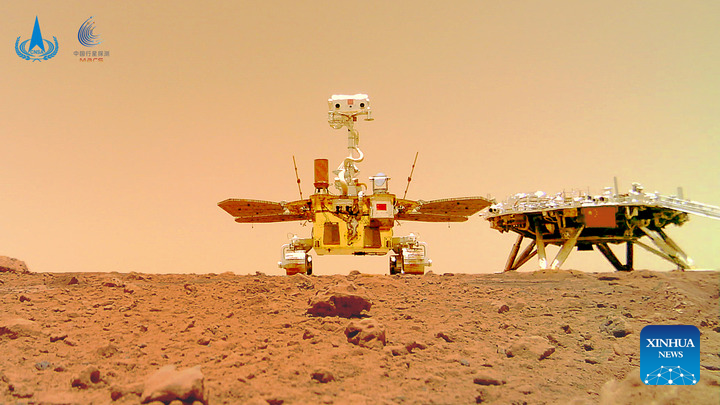
Photo released on June 11, 2021 by the China National Space Administration (CNSA) shows a selfie of China's first Mars rover Zhurong with the landing platform. The China National Space Administration Friday released new images taken by the country's first Mars rover Zhurong, showing national flag on the red planet. The images were unveiled at a ceremony in Beijing, signifying a complete success of China's first mars exploration mission. The images include the landing site panorama, Martian landscape and a selfie of the rover with the landing platform. (CNSA/Handout via Xinhua)
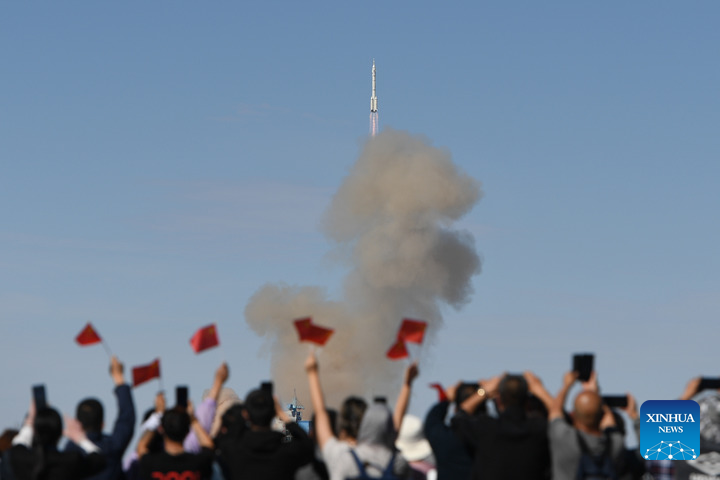
The crewed spacecraft Shenzhou-12, atop a Long March-2F carrier rocket, is launched from the Jiuquan Satellite Launch Center in northwest China's Gobi Desert, June 17, 2021. (Xinhua/Liu Lei)
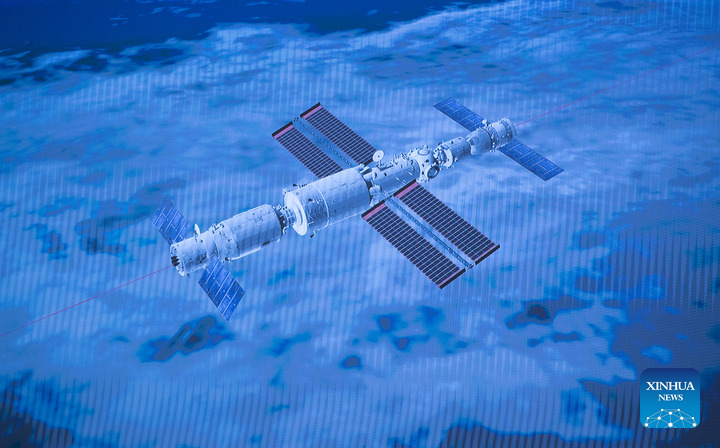
Screen image captured at Beijing Aerospace Control Center in Beijing, capital of China, June 17, 2021 shows China's Shenzhou-12 manned spaceship having successfully docked with the space station core module Tianhe. China's Shenzhou-12 manned spaceship has successfully docked with the space station core module Tianhe on Thursday, according to the China Manned Space Agency (CMSA). The spaceship, launched on Thursday morning, completed orbital status setting after entering the orbit and conducted a fast autonomous rendezvous and docking with the front docking port of Tianhe at 3:54 p.m. (Beijing Time), forming a three-module complex with the cargo craft Tianzhou-2. The whole process took approximately 6.5 hours. This is Tianhe's first rendezvous and docking with a Shenzhou spaceship since it was sent into orbit on April 29. (Xinhua/Jin Liwang)
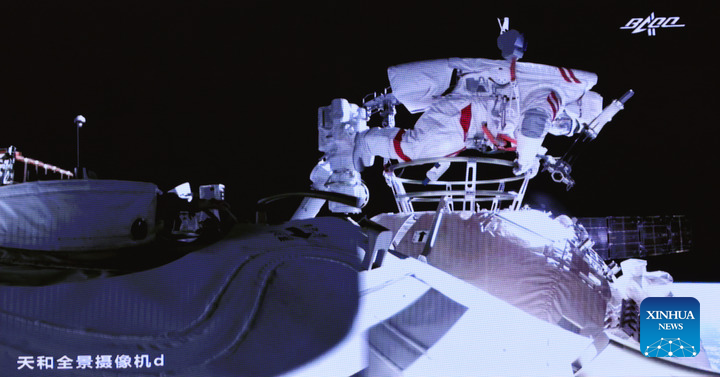
Screen image taken at Beijing Aerospace Control Center on July 4, 2021 shows Chinese astronaut Liu Boming slipping out of the space station core module Tianhe. Chinese astronauts Liu Boming and Tang Hongbo had both slipped out of the space station core module Tianhe by 11:02 a.m. (Beijing Time) on Sunday, starting extravehicular activities (EVAs), according to the China Manned Space Agency (CMSA). Donning new-generation homemade EMU (extravehicular mobility unit) spacesuits Feitian, meaning flying to space, the two astronauts have completed installing the foot restraints and extravehicular working platform on the mechanical arm, the CMSA said. They will continue to work together to install other relevant extravehicular equipment with the aid of the mechanical arm, it said. Astronaut Nie Haisheng has been staying inside Tianhe in cooperation with Liu and Tang for their EVAs. (Xinhua/Jin Liwang)
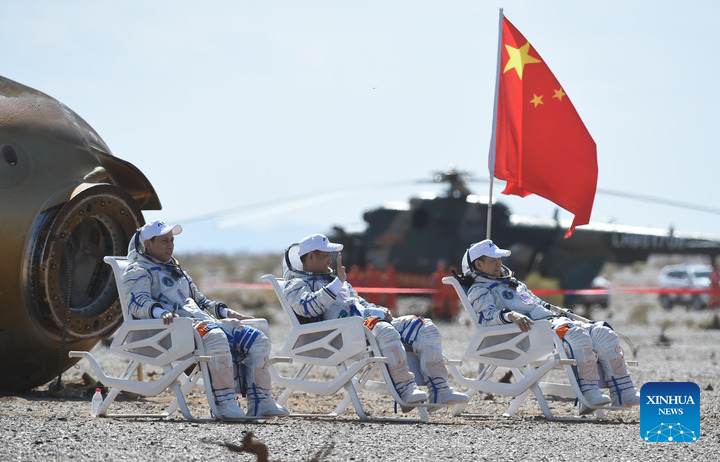
Astronauts Nie Haisheng (C), Liu Boming (R) and Tang Hongbo are out of the return capsule of the Shenzhou-12 spaceship at the Dongfeng landing site in north China's Inner Mongolia Autonomous Region on Sept. 17, 2021. Three Chinese astronauts, the first sent to orbit for space station construction, have completed their three-month mission and returned to Earth safely on Friday. (Xinhua/Lian Zhen)
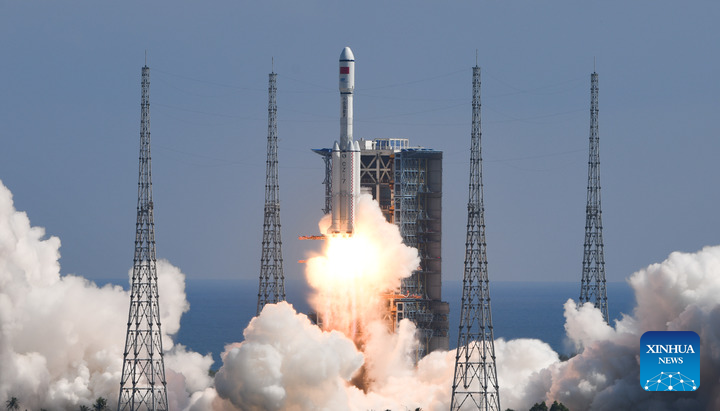
The Long March-7 Y4 rocket, carrying Tianzhou-3, blasts off from the Wenchang Spacecraft Launch Site in south China's Hainan Province, Sept. 20, 2021. China launched cargo spacecraft Tianzhou-3 on Monday to deliver supplies for its under-construction space station. (Xinhua/Yang Guanyu)
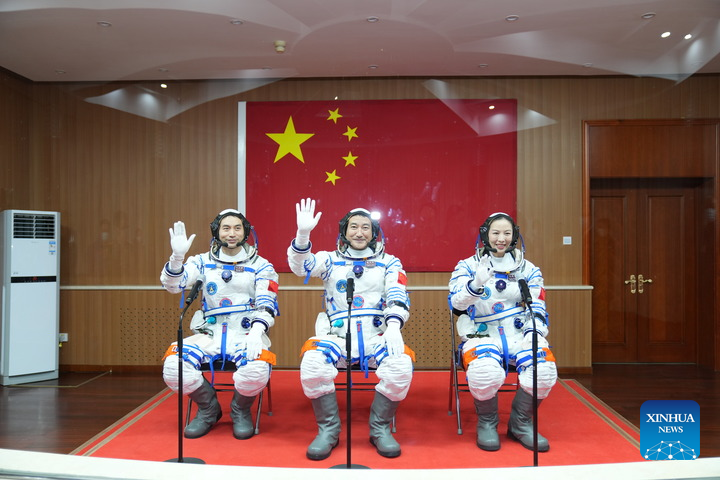
A see-off ceremony for three Chinese astronauts of the Shenzhou-13 crewed space mission is held at the Jiuquan Satellite Launch Center in northwest China, Oct. 15, 2021. Chinese astronauts Zhai Zhigang (C), Wang Yaping (R) and Ye Guangfu will stay in space for about six months. (Xinhua/Li Gang)
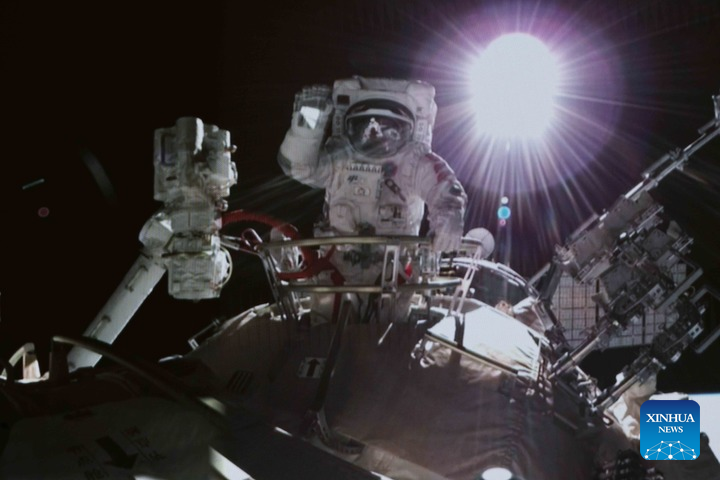
Screen image taken at Beijing Aerospace Control Center on Nov. 7, 2021 shows Chinese taikonaut Zhai Zhigang conducting extravehicular activities (EVAs) out of the space station core module Tianhe. Taikonauts Zhai Zhigang and Wang Yaping have been out of China's space station core module Tianhe by 8:28 p.m. (Beijing Time) Sunday to start EVAs, the China Manned Space Agency said. Zhai opened the hatch of Tianhe's node cabin at 6:51 p.m. This is the second time Zhai has performed EVAs, having completed China's first spacewalk 13 years ago during the Shenzhou-7 mission. Meanwhile, Wang's EVAs make her the country's first female astronaut to leave footprints in outer space. Donning China-developed new-generation Feitian spacesuits, the pair will conduct a series of extravehicular tasks with the aid of the mechanical arm, the agency noted. Ye Guangfu stayed inside to support his crewmates in completing the operations. (Photo by Guo Zhongzheng/Xinhua)
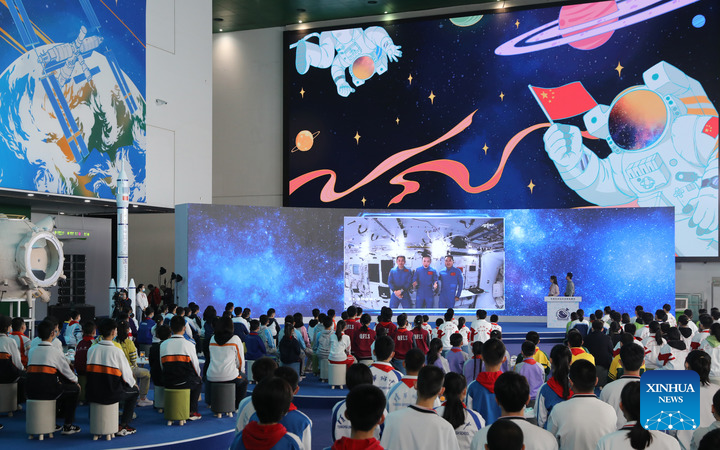
Students attend a live class given by the Shenzhou-13 crew members, at the China Science and Technology Museum in Beijing, capital of China, Dec. 9, 2021. The first live class from China's space station was held on Thursday afternoon, given by Shenzhou-13 crew members Zhai Zhigang, Wang Yaping and Ye Guangfu to students on Earth. (Xinhua/Jin Liwang)


