
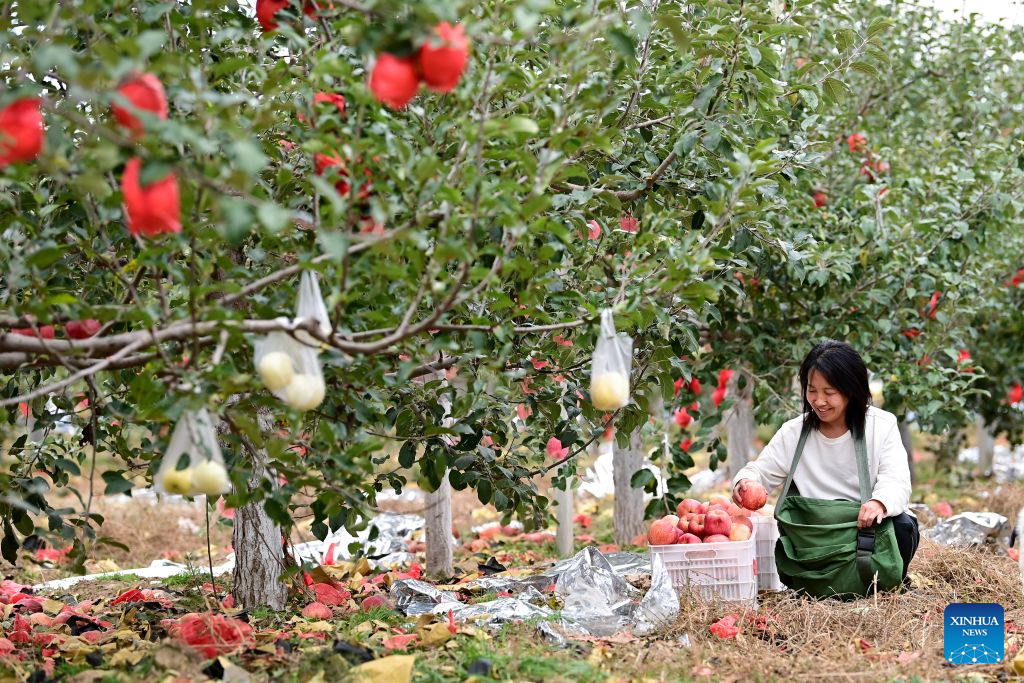
Farmer Zhou Xiaoqin picks apples at her orchard in Nangou Village in Wuqi County of Yan'an City, northwest China's Shaanxi Province, Oct. 2, 2026.
The year 2026 marks the 90th anniversary of the victory of the Central Red Army's Long March. Wuqi is the county where the Long March ended. Today, the county is home to many revolutionary sites.
The Long March was an epic military trek from 1934 to 1936, during which the Communist Party of China-led Red Army broke through encirclement by the Kuomintang forces. Red Army soldiers braved raging rivers, snow-covered mountains and treacherous grasslands, with some marching as far as 12,500 kilometers. The maneuver helped lay the foundation for the eventual victory of the Chinese revolution.
The spirit of the Long March has been passed down through generations in Wuqi, inspiring local people to forge ahead and pursue development.
In the past, the county had long suffered from fragile environment, severe desertification and natural disasters. Since launching large-scale ecological restoration efforts in 1998, the county has seen its forest and grass coverage rate rise from 19.6 percent in 1997 to 72.9 percent at present, bringing significant improvements to the local environment.
Meanwhile, Wuqi has actively developed its apple industry. The apple orchards now cover 120,000 mu (about 8,000 hectares), helping increase farmers' incomes and promote rural revitalization. (Xinhua/Zou Jingyi)
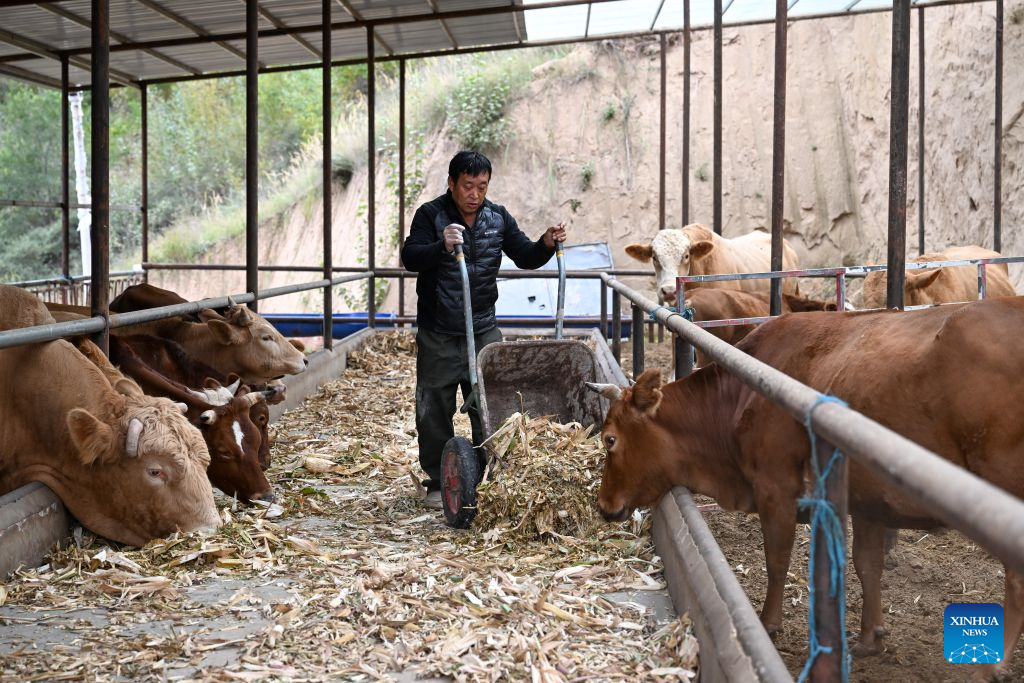
Farmer Jiang Runhong feeds beef cattle at his farm in Nangou Village in Wuqi County of Yan'an City, northwest China's Shaanxi Province, Oct. 2, 2026.
The year 2026 marks the 90th anniversary of the victory of the Central Red Army's Long March. Wuqi is the county where the Long March ended. Today, the county is home to many revolutionary sites.
The Long March was an epic military trek from 1934 to 1936, during which the Communist Party of China-led Red Army broke through encirclement by the Kuomintang forces. Red Army soldiers braved raging rivers, snow-covered mountains and treacherous grasslands, with some marching as far as 12,500 kilometers. The maneuver helped lay the foundation for the eventual victory of the Chinese revolution.
The spirit of the Long March has been passed down through generations in Wuqi, inspiring local people to forge ahead and pursue development.
In the past, the county had long suffered from fragile environment, severe desertification and natural disasters. Since launching large-scale ecological restoration efforts in 1998, the county has seen its forest and grass coverage rate rise from 19.6 percent in 1997 to 72.9 percent at present, bringing significant improvements to the local environment.
Meanwhile, Wuqi has actively developed its apple industry. The apple orchards now cover 120,000 mu (about 8,000 hectares), helping increase farmers' incomes and promote rural revitalization. (Xinhua/Zou Jingyi)
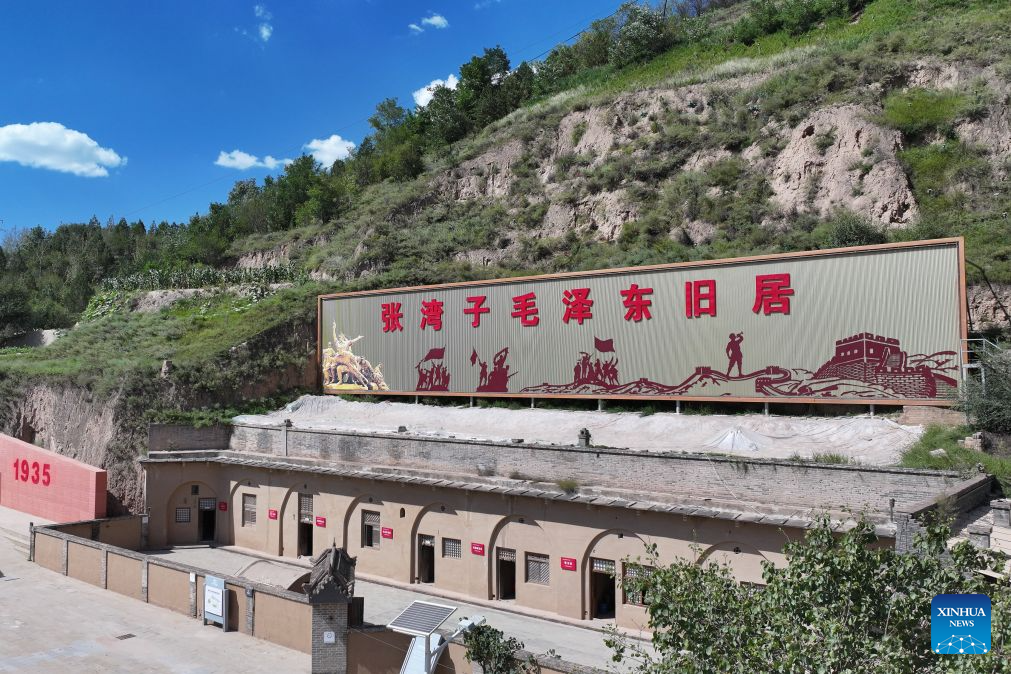
A drone photo taken on Sept. 1, 2026 shows a former residence of late Chinese leader Mao Zedong in Tiebiancheng Town of Wuqi County in Yan'an City, northwest China's Shaanxi Province.
The year 2026 marks the 90th anniversary of the victory of the Central Red Army's Long March. Wuqi is the county where the Long March ended. Today, the county is home to many revolutionary sites.
The Long March was an epic military trek from 1934 to 1936, during which the Communist Party of China-led Red Army broke through encirclement by the Kuomintang forces. Red Army soldiers braved raging rivers, snow-covered mountains and treacherous grasslands, with some marching as far as 12,500 kilometers. The maneuver helped lay the foundation for the eventual victory of the Chinese revolution.
The spirit of the Long March has been passed down through generations in Wuqi, inspiring local people to forge ahead and pursue development.
In the past, the county had long suffered from fragile environment, severe desertification and natural disasters. Since launching large-scale ecological restoration efforts in 1998, the county has seen its forest and grass coverage rate rise from 19.6 percent in 1997 to 72.9 percent at present, bringing significant improvements to the local environment.
Meanwhile, Wuqi has actively developed its apple industry. The apple orchards now cover 120,000 mu (about 8,000 hectares), helping increase farmers' incomes and promote rural revitalization. (Xinhua/Zou Jingyi)
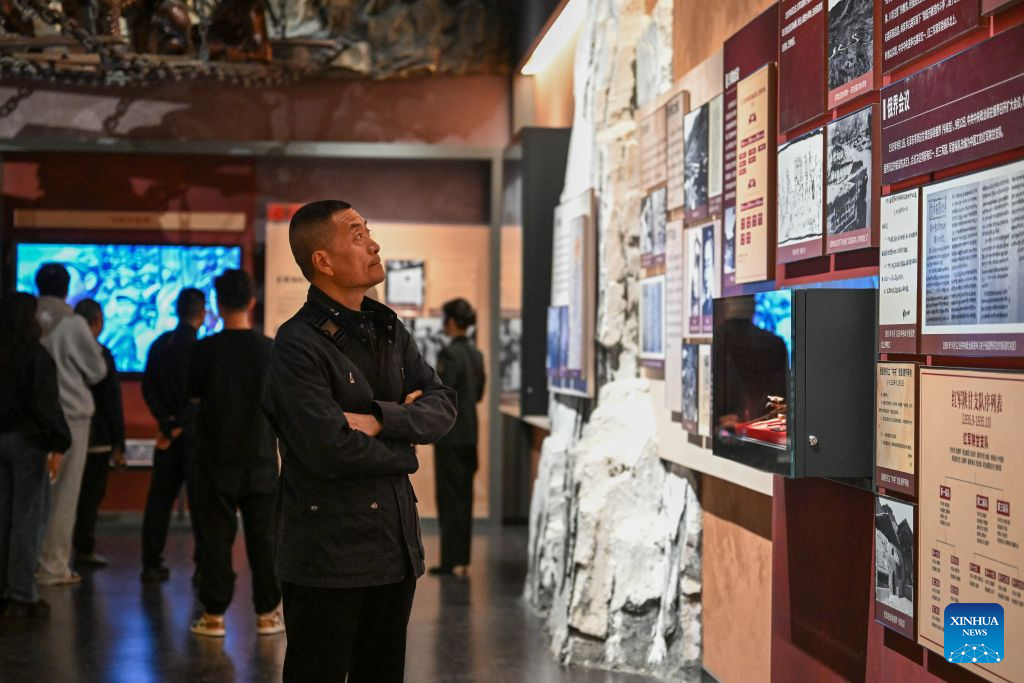
Tourists visit the Memorial Museum of the Central Red Army's Victory in the Long March in Wuqi County of Yan'an City, northwest China's Shaanxi Province, Oct. 1, 2026.
The year 2026 marks the 90th anniversary of the victory of the Central Red Army's Long March. Wuqi is the county where the Long March ended. Today, the county is home to many revolutionary sites.
The Long March was an epic military trek from 1934 to 1936, during which the Communist Party of China-led Red Army broke through encirclement by the Kuomintang forces. Red Army soldiers braved raging rivers, snow-covered mountains and treacherous grasslands, with some marching as far as 12,500 kilometers. The maneuver helped lay the foundation for the eventual victory of the Chinese revolution.
The spirit of the Long March has been passed down through generations in Wuqi, inspiring local people to forge ahead and pursue development.
In the past, the county had long suffered from fragile environment, severe desertification and natural disasters. Since launching large-scale ecological restoration efforts in 1998, the county has seen its forest and grass coverage rate rise from 19.6 percent in 1997 to 72.9 percent at present, bringing significant improvements to the local environment.
Meanwhile, Wuqi has actively developed its apple industry. The apple orchards now cover 120,000 mu (about 8,000 hectares), helping increase farmers' incomes and promote rural revitalization. (Xinhua/Zou Jingyi)
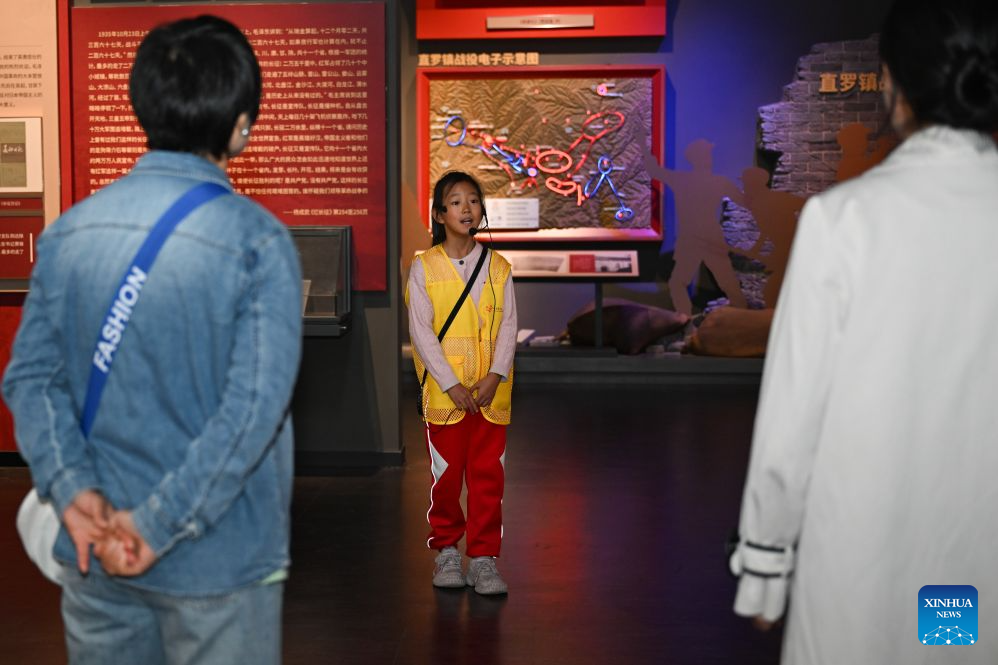
A young docent explains the history to visitors at the Memorial Museum of the Central Red Army's Victory in the Long March in Wuqi County of Yan'an City, northwest China's Shaanxi Province, Oct. 1, 2026.
The year 2026 marks the 90th anniversary of the victory of the Central Red Army's Long March. Wuqi is the county where the Long March ended. Today, the county is home to many revolutionary sites.
The Long March was an epic military trek from 1934 to 1936, during which the Communist Party of China-led Red Army broke through encirclement by the Kuomintang forces. Red Army soldiers braved raging rivers, snow-covered mountains and treacherous grasslands, with some marching as far as 12,500 kilometers. The maneuver helped lay the foundation for the eventual victory of the Chinese revolution.
The spirit of the Long March has been passed down through generations in Wuqi, inspiring local people to forge ahead and pursue development.
In the past, the county had long suffered from fragile environment, severe desertification and natural disasters. Since launching large-scale ecological restoration efforts in 1998, the county has seen its forest and grass coverage rate rise from 19.6 percent in 1997 to 72.9 percent at present, bringing significant improvements to the local environment.
Meanwhile, Wuqi has actively developed its apple industry. The apple orchards now cover 120,000 mu (about 8,000 hectares), helping increase farmers' incomes and promote rural revitalization. (Xinhua/Zou Jingyi)
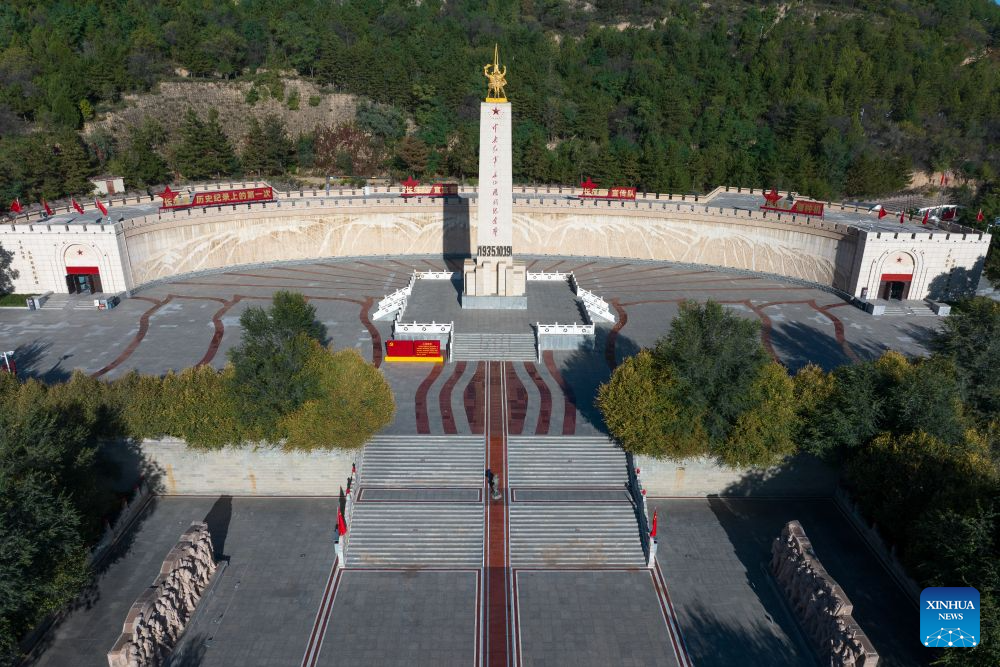
A drone photo taken on Oct. 2, 2026 shows a view of the Memorial Park of the Central Red Army's Victory in the Long March in Wuqi County of Yan'an City, northwest China's Shaanxi Province.
The year 2026 marks the 90th anniversary of the victory of the Central Red Army's Long March. Wuqi is the county where the Long March ended. Today, the county is home to many revolutionary sites.
The Long March was an epic military trek from 1934 to 1936, during which the Communist Party of China-led Red Army broke through encirclement by the Kuomintang forces. Red Army soldiers braved raging rivers, snow-covered mountains and treacherous grasslands, with some marching as far as 12,500 kilometers. The maneuver helped lay the foundation for the eventual victory of the Chinese revolution.
The spirit of the Long March has been passed down through generations in Wuqi, inspiring local people to forge ahead and pursue development.
In the past, the county had long suffered from fragile environment, severe desertification and natural disasters. Since launching large-scale ecological restoration efforts in 1998, the county has seen its forest and grass coverage rate rise from 19.6 percent in 1997 to 72.9 percent at present, bringing significant improvements to the local environment.
Meanwhile, Wuqi has actively developed its apple industry. The apple orchards now cover 120,000 mu (about 8,000 hectares), helping increase farmers' incomes and promote rural revitalization. (Xinhua/Zou Jingyi)
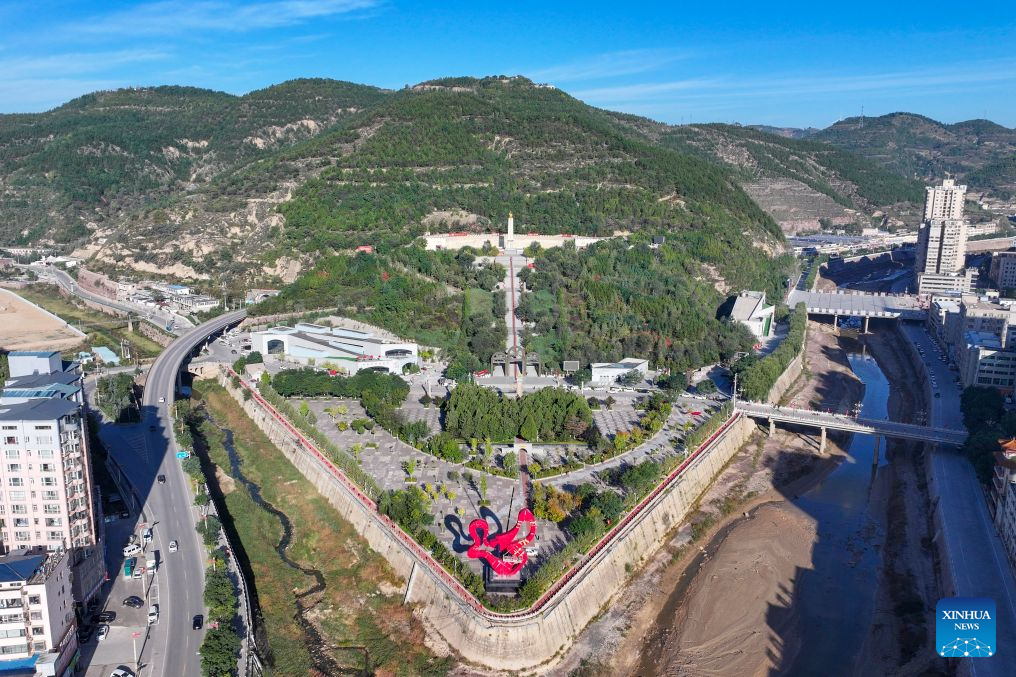
A drone photo taken on Oct. 2, 2026 shows a view of the Shengli Mountain in Wuqi County of Yan'an City, northwest China's Shaanxi Province.
The year 2026 marks the 90th anniversary of the victory of the Central Red Army's Long March. Wuqi is the county where the Long March ended. Today, the county is home to many revolutionary sites.
The Long March was an epic military trek from 1934 to 1936, during which the Communist Party of China-led Red Army broke through encirclement by the Kuomintang forces. Red Army soldiers braved raging rivers, snow-covered mountains and treacherous grasslands, with some marching as far as 12,500 kilometers. The maneuver helped lay the foundation for the eventual victory of the Chinese revolution.
The spirit of the Long March has been passed down through generations in Wuqi, inspiring local people to forge ahead and pursue development.
In the past, the county had long suffered from fragile environment, severe desertification and natural disasters. Since launching large-scale ecological restoration efforts in 1998, the county has seen its forest and grass coverage rate rise from 19.6 percent in 1997 to 72.9 percent at present, bringing significant improvements to the local environment.
Meanwhile, Wuqi has actively developed its apple industry. The apple orchards now cover 120,000 mu (about 8,000 hectares), helping increase farmers' incomes and promote rural revitalization. (Xinhua/Zou Jingyi)
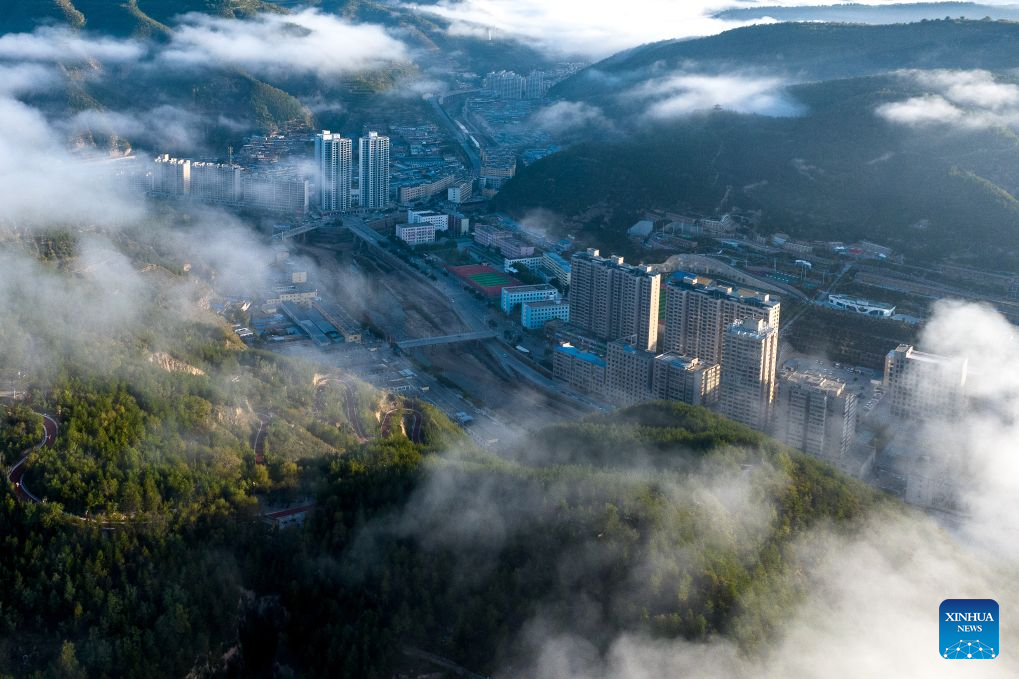
An aerial drone photo taken on Oct. 1, 2026 shows a view of the Wuqi County of Yan'an City, northwest China's Shaanxi Province.
The year 2026 marks the 90th anniversary of the victory of the Central Red Army's Long March. Wuqi is the county where the Long March ended. Today, the county is home to many revolutionary sites.
The Long March was an epic military trek from 1934 to 1936, during which the Communist Party of China-led Red Army broke through encirclement by the Kuomintang forces. Red Army soldiers braved raging rivers, snow-covered mountains and treacherous grasslands, with some marching as far as 12,500 kilometers. The maneuver helped lay the foundation for the eventual victory of the Chinese revolution.
The spirit of the Long March has been passed down through generations in Wuqi, inspiring local people to forge ahead and pursue development.
In the past, the county had long suffered from fragile environment, severe desertification and natural disasters. Since launching large-scale ecological restoration efforts in 1998, the county has seen its forest and grass coverage rate rise from 19.6 percent in 1997 to 72.9 percent at present, bringing significant improvements to the local environment.
Meanwhile, Wuqi has actively developed its apple industry. The apple orchards now cover 120,000 mu (about 8,000 hectares), helping increase farmers' incomes and promote rural revitalization. (Xinhua/Zou Jingyi)
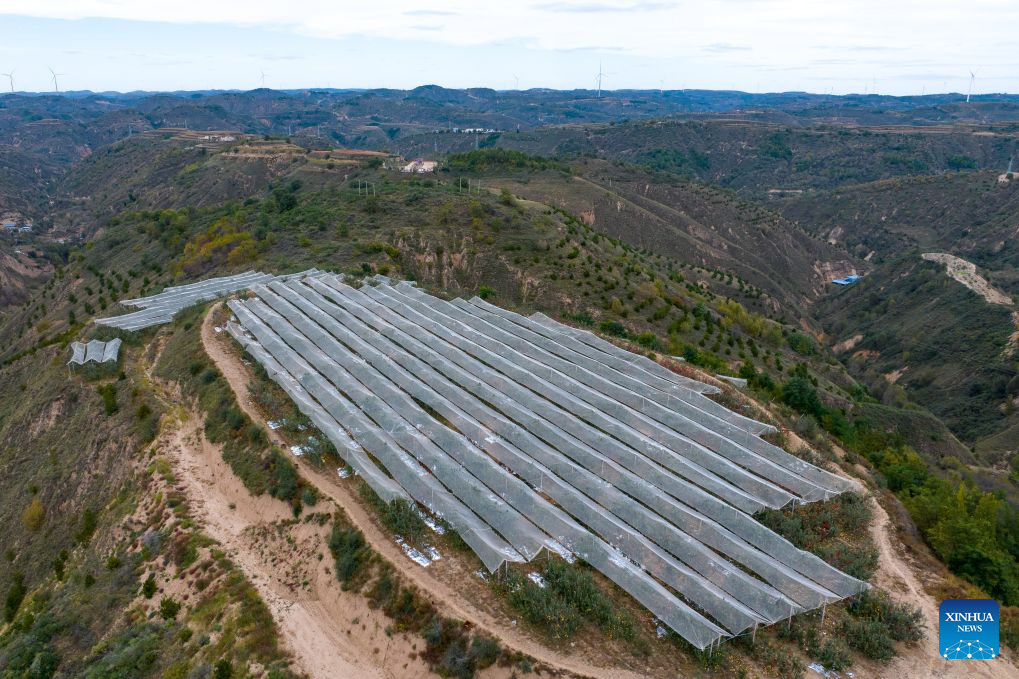
An aerial drone photo taken on Oct. 2, 2026 shows an apple orchard in Nangou Village in Wuqi County of Yan'an City, northwest China's Shaanxi Province.
The year 2026 marks the 90th anniversary of the victory of the Central Red Army's Long March. Wuqi is the county where the Long March ended. Today, the county is home to many revolutionary sites.
The Long March was an epic military trek from 1934 to 1936, during which the Communist Party of China-led Red Army broke through encirclement by the Kuomintang forces. Red Army soldiers braved raging rivers, snow-covered mountains and treacherous grasslands, with some marching as far as 12,500 kilometers. The maneuver helped lay the foundation for the eventual victory of the Chinese revolution.
The spirit of the Long March has been passed down through generations in Wuqi, inspiring local people to forge ahead and pursue development.
In the past, the county had long suffered from fragile environment, severe desertification and natural disasters. Since launching large-scale ecological restoration efforts in 1998, the county has seen its forest and grass coverage rate rise from 19.6 percent in 1997 to 72.9 percent at present, bringing significant improvements to the local environment.
Meanwhile, Wuqi has actively developed its apple industry. The apple orchards now cover 120,000 mu (about 8,000 hectares), helping increase farmers' incomes and promote rural revitalization. (Xinhua/Zou Jingyi)


