From 12-year-old skateboarder Cao Shiqi and 13-year-old swimmer Yu Zidi to 51-year-old gymnast Oksana Chusovitina and 55-year-old shooter Nasser Al-Attiyah, the Aichi-Nagoya Asian Games offer a vivid snapshot of sport across generations. Their contrasting journeys show that while athletes' paths may differ with age, dedication and a desire to compete can span decades.
by sportswriter Cao Yibo, Sun Zhe and Lin Deren
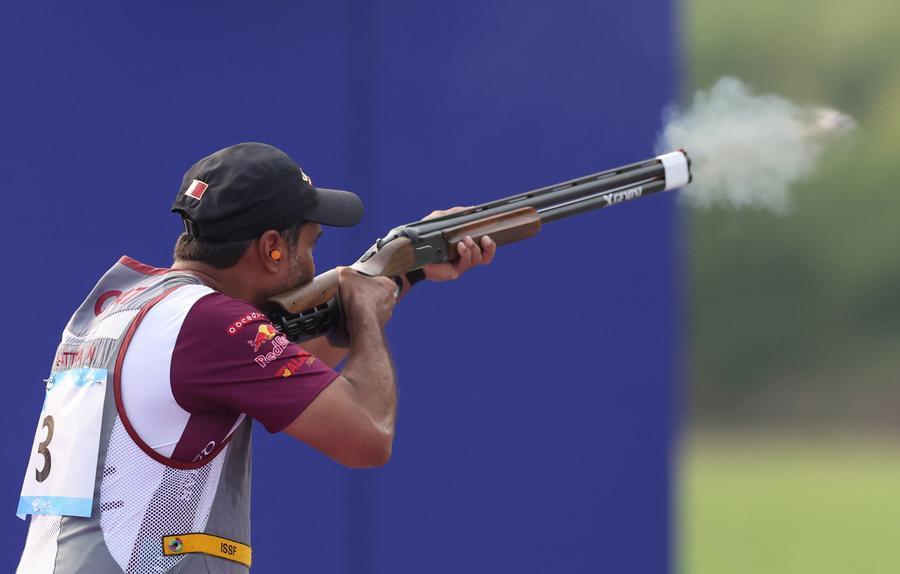
NAGOYA, Japan, Sept. 24 (Xinhua) -- Nasser Al-Attiyah does not look, or shoot, like a man of 55.
The Qatari, who claimed his sixth Dakar Rally title barely eight months ago, teamed up with two compatriots on Wednesday to win gold in the men's skeet team event at the Aichi-Nagoya Asian Games, his third gold and sixth medal across nine Asian Games spanning 32 years.
"To start from the Hiroshima Asian Games and to come back here again, and today for our team to win two gold medals, is really amazing," he said. Al-Attiyah described his performance as "one of the highest scores in the field," despite having only about two months to prepare between rally races.
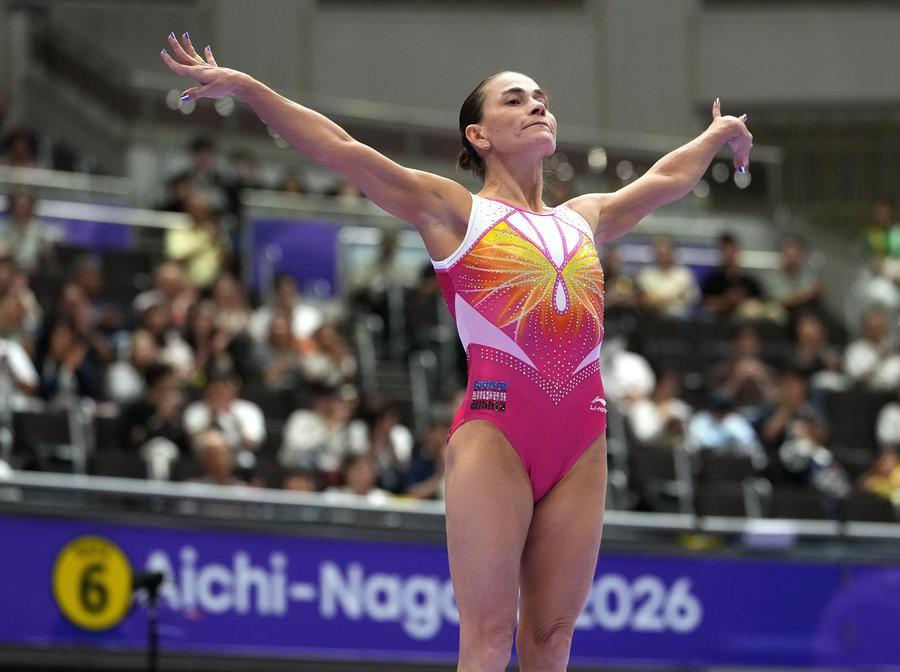
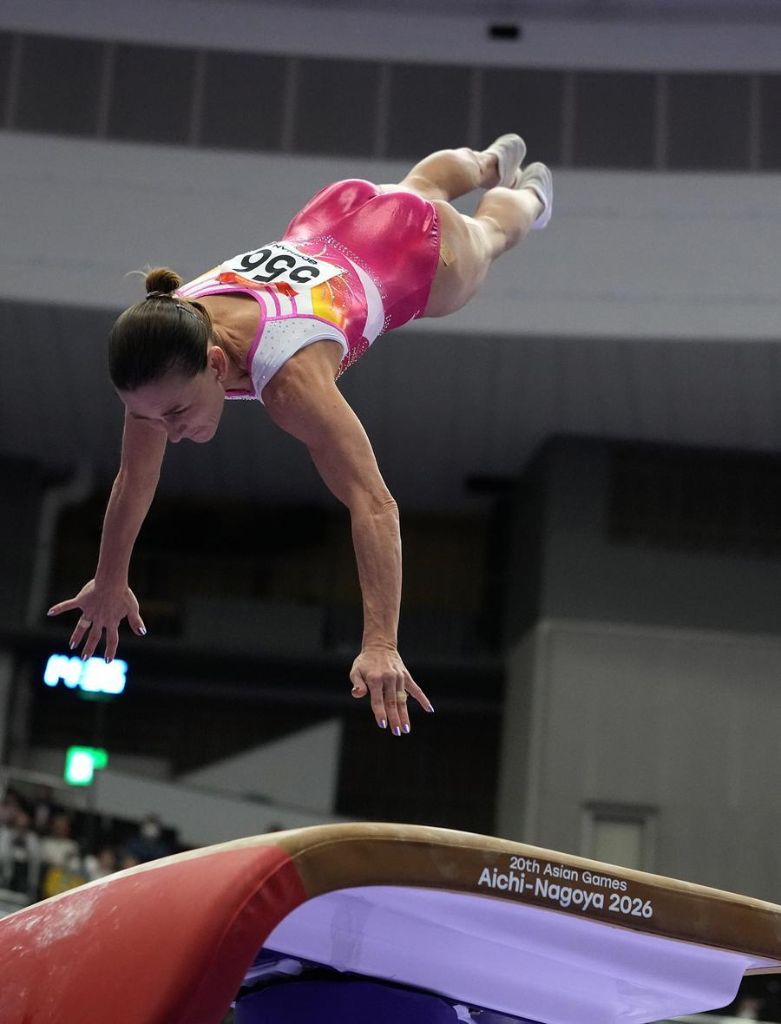
Al-Attiyah is far from alone among the older competitors at these Games. At Nagoya City General Gymnasium this week, 51-year-old Uzbek vaulter Oksana Chusovitina, known to fans simply as "Chuso," was competing at her seventh Asian Games, a run stretching back to Hiroshima 1994, the same edition where Al-Attiyah made his debut.
At Aichi-Nagoya 2026, Chusovitina qualified fourth for the vault final with a score of 13.266, adding another chapter to a career that has already brought her two golds, four silvers and two bronzes since 1994.
Chusovitina's longevity, however, has never been only about medals. In 2002, her three-year-old son Alisher was diagnosed with leukemia, and she turned gymnastics into a lifeline, competing wherever prize money and support were available.
Her son had recovered by the time she won vault silver at Beijing 2008. Rather than step away, she chose to keep competing, through Tokyo 2020 at 46 and an injury-forced absence from Paris 2024, before returning at 50 to win World Cup gold in Baku.
Asked in Nagoya, inevitably, when she might retire, she shot back with a grin: "What, don't you want to see me anymore?" With Los Angeles 2028 in her sights, she is not ruling out a ninth Olympics.
The same refusal to be counted out defines Nosheen Aslam's Asian Games debut. At 55, the Pakistani table tennis player was the oldest competitor in the women's team event in Nagoya, sharing a roster with a 15-year-old teammate and facing opponents decades younger.
She took up the sport 12 years ago, already a mother of three, and often trains at night after cooking, working and caring for her children. "Every time I play, I feel happy and forget the worries of my life," she said. "Age is just a number."
Her results in Nagoya did not go her way, but she left already looking ahead to next April's South Asian Games. "Maybe I can play for another two or three years," she said, before adding with a smile: "Maybe next time my performance will be better."
China also has its own example of longevity. Wan Antao, a 41-year-old shooter, is making his Asian Games debut as the oldest member of an 815-strong Chinese delegation whose average age is 24.
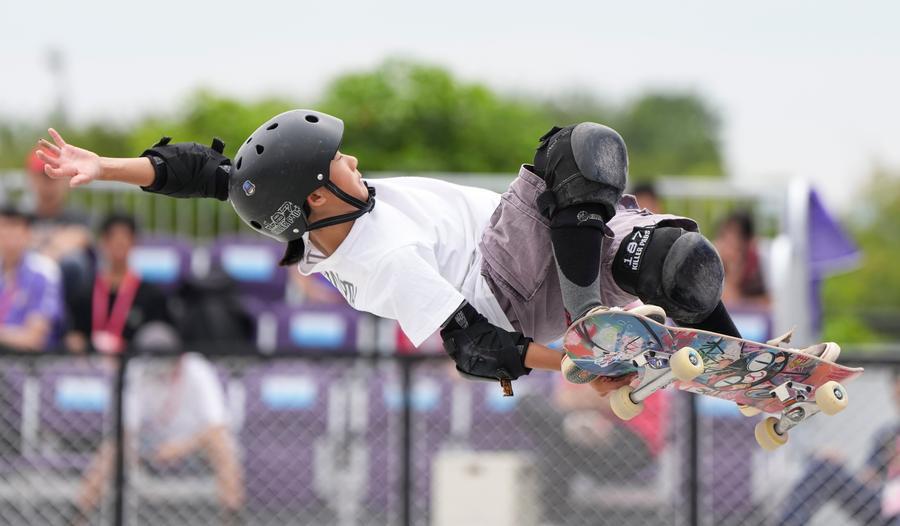
At the opposite end of that same delegation is its youngest athlete, nearly three decades his junior: 12-year-old skateboarder Cao Shiqi.
The Beijing native discovered the sport by chance at a shopping mall at age four, balancing on a demonstration board before she could properly ride a bike. She has spent this year making progress in her specialty, park, an event in which competitors perform tricks in pool-like courses up to 4.5 meters deep.
The seventh-grader won the junior title at the Asian Skateboarding Championships in April and the national title in July, bouncing back after a fall at China's National Games last November left her in tears.
Her coaches have been careful not to make results the sole focus. For a 12-year-old, her family says, simply experiencing the atmosphere of a major Games matters more than a place on the podium, with the Olympics a longer-term target.
Youth is making itself felt well beyond the Chinese team.
Should eleven-year-old Kurihara Yuki, a fifth-grader from Tokyo, medal in Nagoya in Esports, he would break the record for the youngest medalist in Asian Games history, currently held by a 12-year-old Indonesian skateboarder who took bronze at Jakarta 2018.
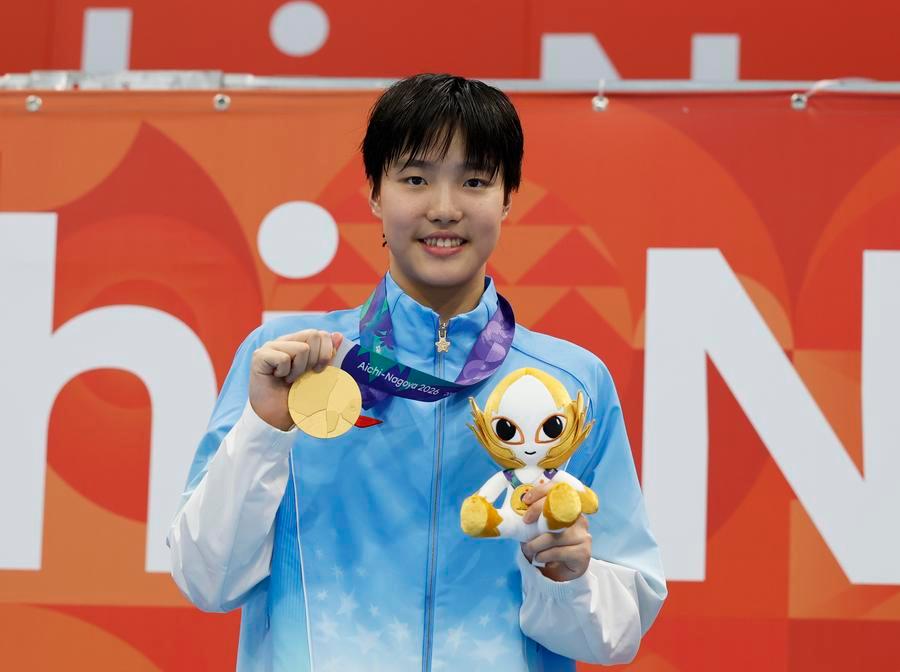
No teenager at the Games has made a bigger impact than 13-year-old Chinese swimmer Yu Zidi. Making her Asian Games debut, she broke the Games record to win the women's 200m butterfly, then broke the Asian record in the 200m individual medley two days later, edging compatriot and defending champion Yu Yiting in one of the closest races of the meet.
On Wednesday, she added a third gold in the 400m individual medley, finishing nearly four seconds clear of the field. "It's the final 50 meters, so I just told myself not to hold anything back," she said of her closing kick.
Out of the pool, she is unmistakably 13, calling her parents from training camps and insisting people remember she is "just a kid" her age. In the water, she sounds like anything but a novice: "Even when I'm very tired, I have to keep training. When I feel I can't hold on, I still have to keep going."
From Yu at 13 to Chusovitina at 51, from Al-Attiyah's three decades of elite competition to a fifth-grader's rise through the ranks of a video game, the Asian Games have shown that high-level sport does not belong to any single age group.
What connects them is not the number of years behind them, but a determination not to let age decide when their time in competition is over. ■