China has consistently participated in HCCH meetings and contributed to the organization's work both in the development of international legal norms and in the area of good governance, The Hague Conference on Private International Law (HCCH) Secretary General Christophe Bernasconi has said.
The Hague, Sept. 17 (Xinhua) -- China's Global Governance Initiative (GGI) shares many common principles with the multilateral approach pursued by The Hague Conference on Private International Law (HCCH), particularly in promoting universality, inclusiveness and practical international cooperation, HCCH Secretary General Christophe Bernasconi has said.
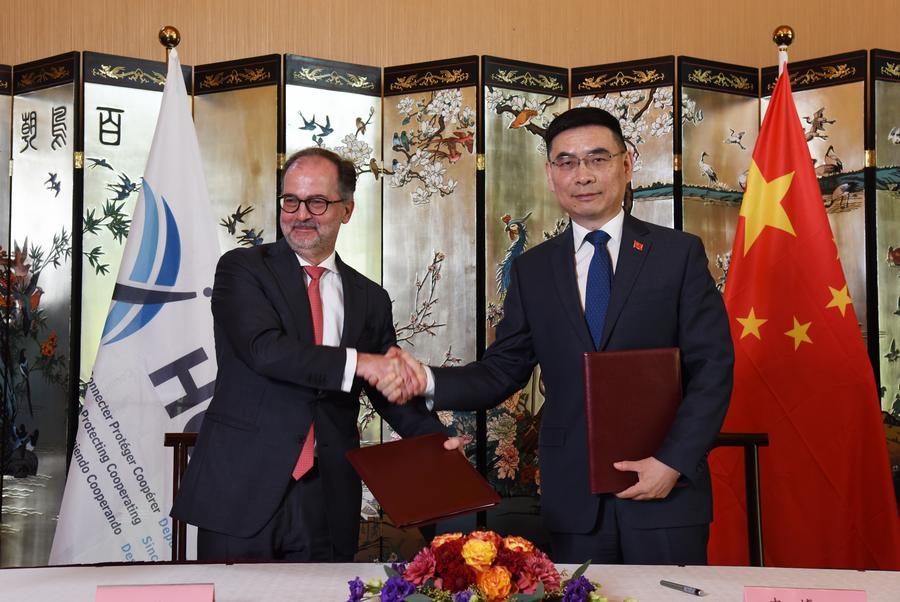
Bernasconi and Chinese Ambassador to the Netherlands Shen Bo signed a Memorandum of Understanding (MoU) in The Hague on Wednesday between the Ministry of Foreign Affairs of China and the HCCH on cooperation to strengthen global governance.
Bernasconi told Xinhua in an interview after the signing ceremony that he recognized many common elements between the GGI and the work of the HCCH.
"The key points are a vision of bringing as many States as possible together around the table, based on equal sovereignty, and a willingness to develop effective and practical instruments that have a direct impact on people's lives and facilitate cross-border activities and initiatives," he said.
He added that such cooperation should be pursued "while respecting each other and respecting differences, including differences between legal systems, while recognizing the need to connect these systems."
With its origin dating back to 1893, the HCCH is an intergovernmental organization headquartered in The Hague. Its statutory purpose is to work for the progressive unification of the rules of private international law.
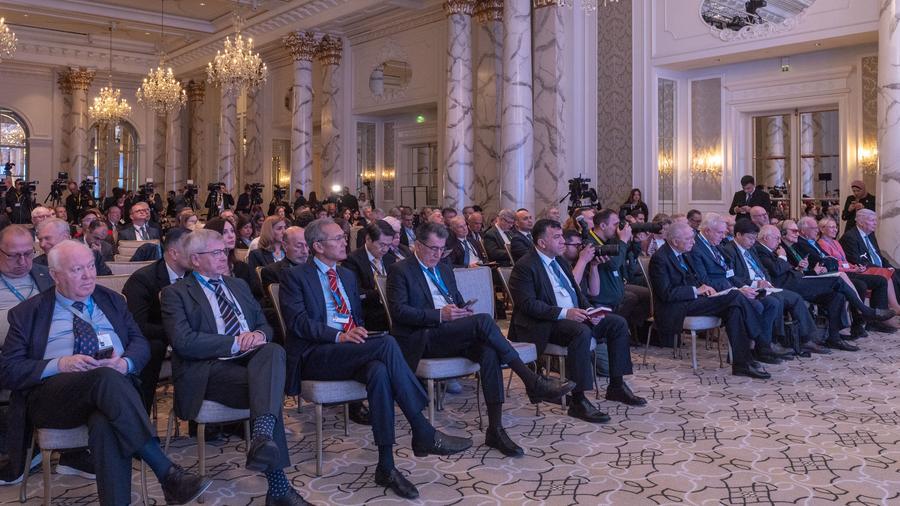
The HCCH currently has 95 Members, comprising 94 States and the European Union. China joined the organization on July 3, 1987.
Bernasconi said China has consistently participated in HCCH meetings and contributed to the organization's work both in the development of international legal norms and in the area of good governance.
"China has always been a very active, engaged Member, participating in our meetings and contributing both on the normative side and in the area of good governance," he said.
He said the MoU signed Wednesday would provide a platform for further cooperation between China and the HCCH.
"We also hope to see China join more of our Conventions," Bernasconi said, adding that there was room for China to derive greater benefits from its membership while continuing to contribute to the organization.
He said workshops and seminars can be organized to help relevant authorities in China better understand the meaning and practical benefits of additional HCCH Conventions.
"I look forward to using the Memorandum of Understanding, among other things, as a platform for further cooperation," he said.
Bernasconi said China's role in international legal cooperation is important because meaningful international law, including private international law, can not be developed without China's active participation.
"You cannot develop meaningful international law, including in the field of private international law, without China's active participation," he said. ■