

Players of Real Madrid celebrate a goal during the La Liga football match between Elche CF and Real Madrid in Elche, Spain, on Sept. 15, 2026. (Str/Xinhua)

Kylian Mbappe of Real Madrid competes during the La Liga football match between Elche CF and Real Madrid in Elche, Spain, on Sept. 15, 2026. (Str/Xinhua)

Yan Diomande (L) of Real Madrid competes during the La Liga football match between Elche CF and Real Madrid in Elche, Spain, on Sept. 15, 2026. (Str/Xinhua)

Buba Sangare (L) of Elche vies for the ball with Vinicius Jr (C) of Real Madrid during the La Liga football match between Elche CF and Real Madrid in Elche, Spain, on Sept. 15, 2026. (Str/Xinhua)

Head coach Jose Mourinho of Real Madrid reacts during the La Liga football match between Elche CF and Real Madrid in Elche, Spain, on Sept. 15, 2026. (Str/Xinhua)

Buba Sangare (R) of Elche vies for the ball with Kylian Mbappe of Real Madrid during the La Liga football match between Elche CF and Real Madrid in Elche, Spain, on Sept. 15, 2026. (Str/Xinhua)

Head coach Jose Mourinho of Real Madrid reacts during the La Liga football match between Elche CF and Real Madrid in Elche, Spain, on Sept. 15, 2026. (Str/Xinhua)

Kylian Mbappe of Real Madrid competes during the La Liga football match between Elche CF and Real Madrid in Elche, Spain, on Sept. 15, 2026. (Str/Xinhua)

(260916) -- BEIJING, Sept. 16, 2026 (Xinhua) -- A drone photo shows a cargo ship leaving a container terminal of Tangshan Port, north China's Hebei Province, Sept. 15, 2026. China's economy maintained steady momentum boosted by innovation-led and high-quality development in August, with production and supply growing steadily, employment and prices generally stable, and foreign trade registering rapid growth, official data showed on Tuesday. (Photo by Liu Mancang/Xinhua)
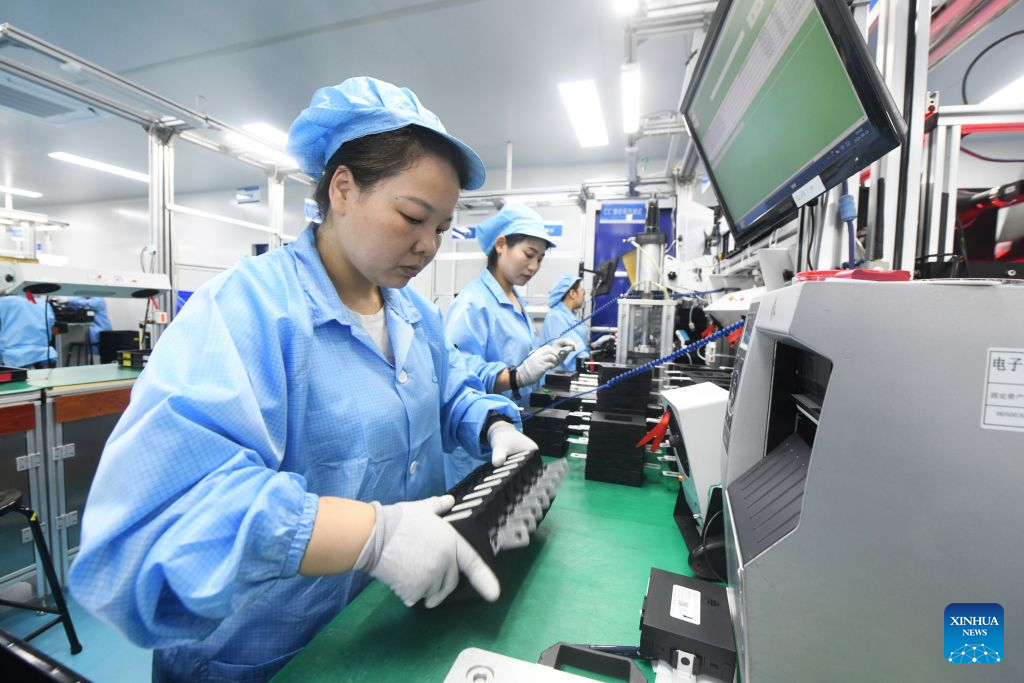
(260916) -- BEIJING, Sept. 16, 2026 (Xinhua) -- Employees work on products for export orders at an automotive electronics company in Xinle City of Shijiazhuang, north China's Hebei Province, Sept. 15, 2026. China's economy maintained steady momentum boosted by innovation-led and high-quality development in August, with production and supply growing steadily, employment and prices generally stable, and foreign trade registering rapid growth, official data showed on Tuesday. (Photo by Jia Minjie/Xinhua)
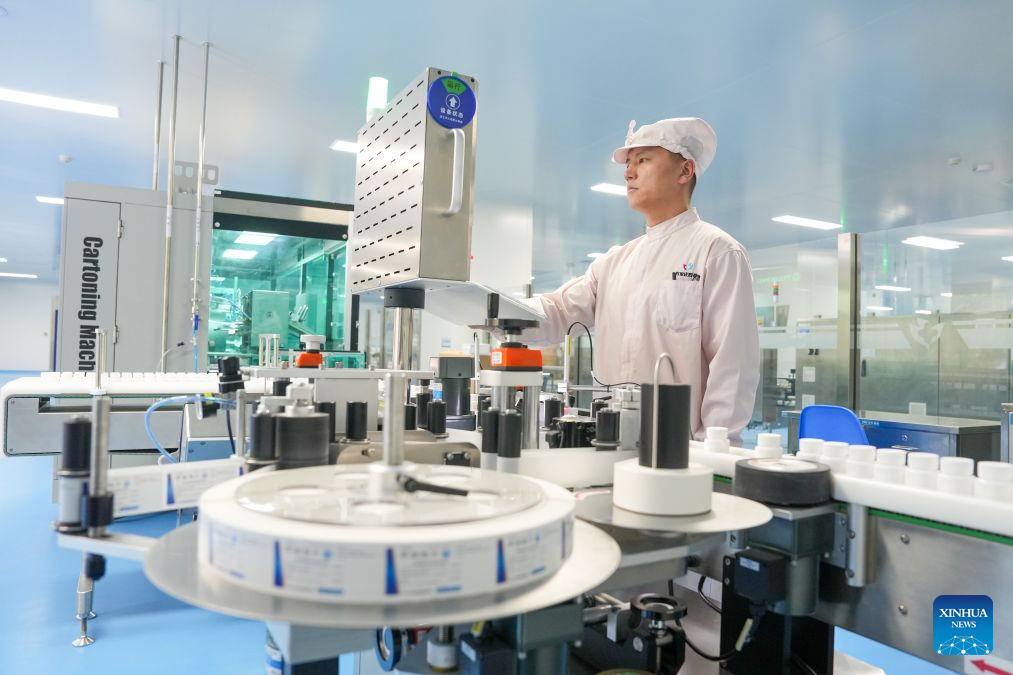
(260916) -- BEIJING, Sept. 16, 2026 (Xinhua) -- An employee works at a production line of Shijiazhuang No. 4 Pharmaceutical Co., Ltd. in Shijiazhuang, north China's Hebei Province, Sept. 15, 2026. China's economy maintained steady momentum boosted by innovation-led and high-quality development in August, with production and supply growing steadily, employment and prices generally stable, and foreign trade registering rapid growth, official data showed on Tuesday. (Photo by Liang Zidong/Xinhua)
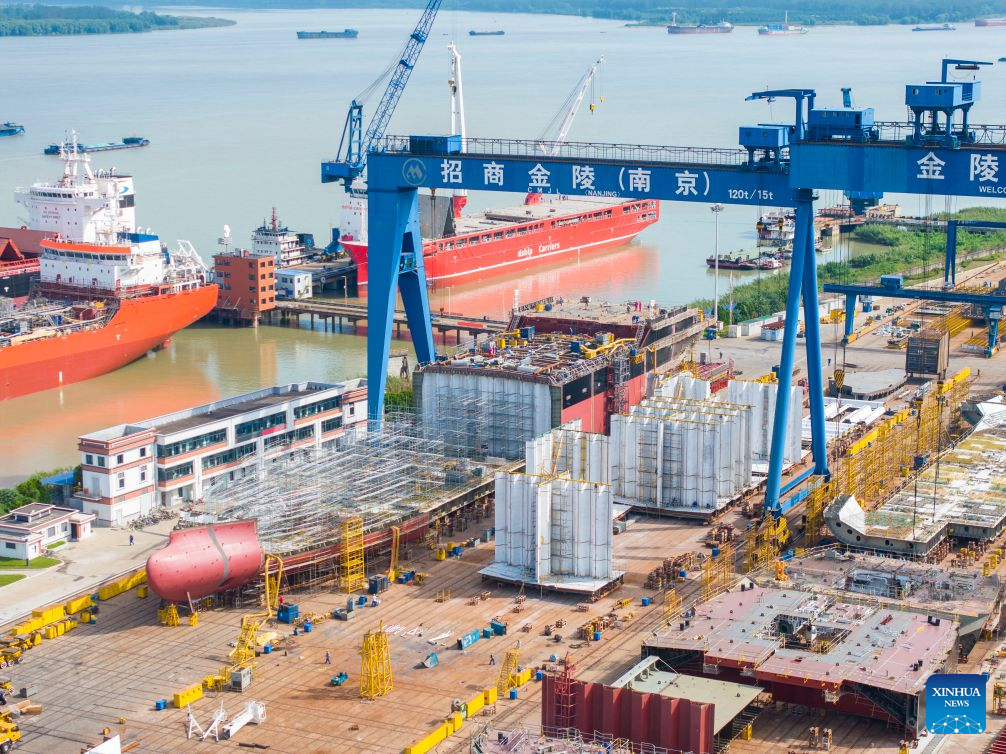
(260916) -- BEIJING, Sept. 16, 2026 (Xinhua) -- A drone photo shows workers building a vessel at a ship building factory in Nanjing, east China's Jiangsu Province, Sept. 15, 2026. China's economy maintained steady momentum boosted by innovation-led and high-quality development in August, with production and supply growing steadily, employment and prices generally stable, and foreign trade registering rapid growth, official data showed on Tuesday. (Photo by Shi Jun/Xinhua)
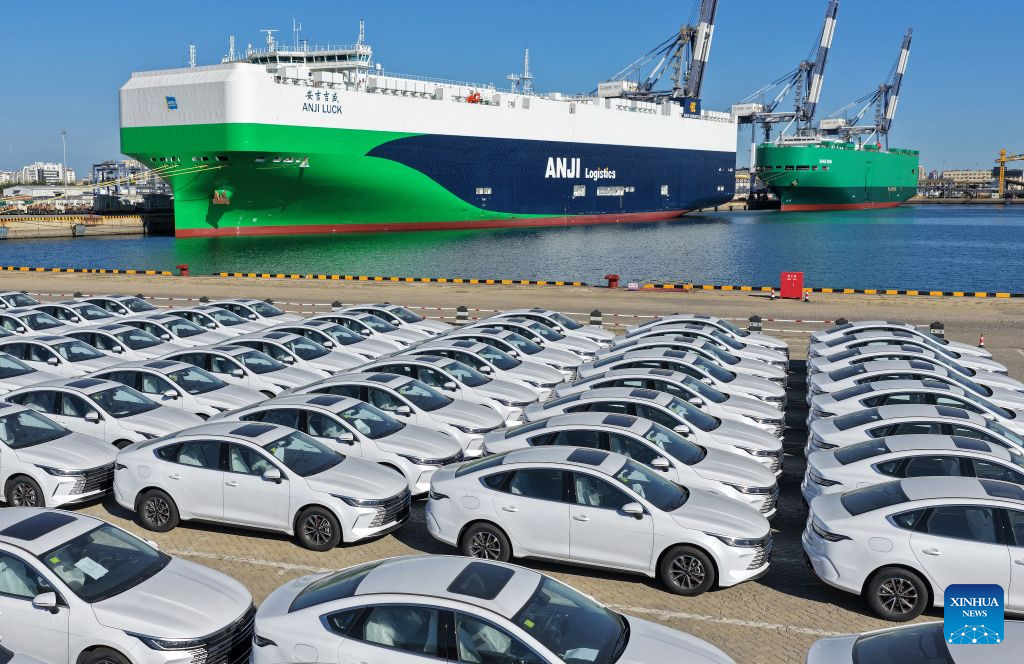
(260916) -- BEIJING, Sept. 16, 2026 (Xinhua) -- A drone photo shows new energy vehicles to be exported at Yantai Port in east China's Shandong Province, Sept. 15, 2026. China's economy maintained steady momentum boosted by innovation-led and high-quality development in August, with production and supply growing steadily, employment and prices generally stable, and foreign trade registering rapid growth, official data showed on Tuesday. (Photo by Tang Ke/Xinhua)
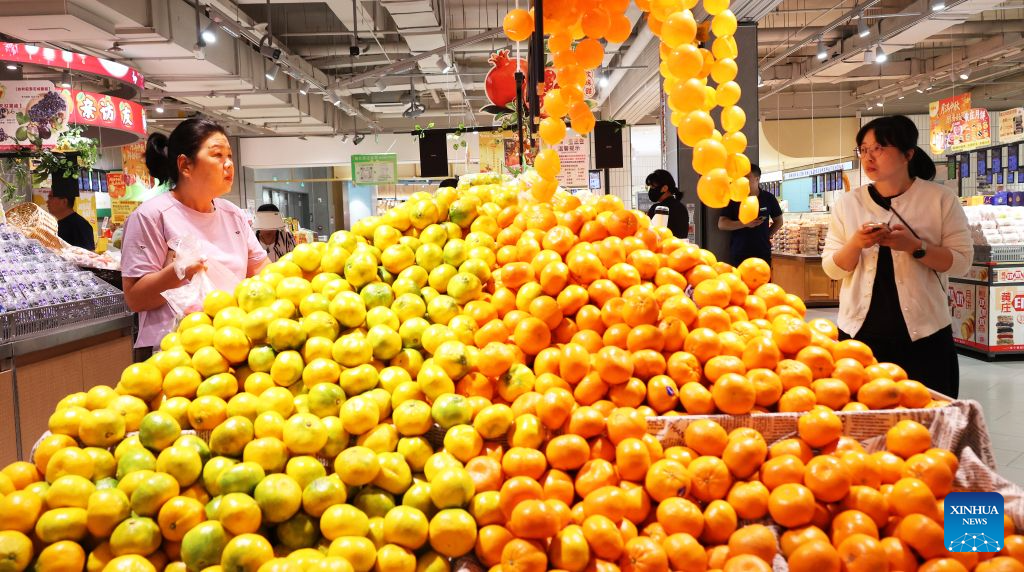
(260916) -- BEIJING, Sept. 16, 2026 (Xinhua) -- Citizens select fruits at a supermarket in Haizhou District of Lianyungang, east China's Jiangsu Province, Sept. 15, 2026. China's economy maintained steady momentum boosted by innovation-led and high-quality development in August, with production and supply growing steadily, employment and prices generally stable, and foreign trade registering rapid growth, official data showed on Tuesday. (Photo by Geng Yuhe/Xinhua)
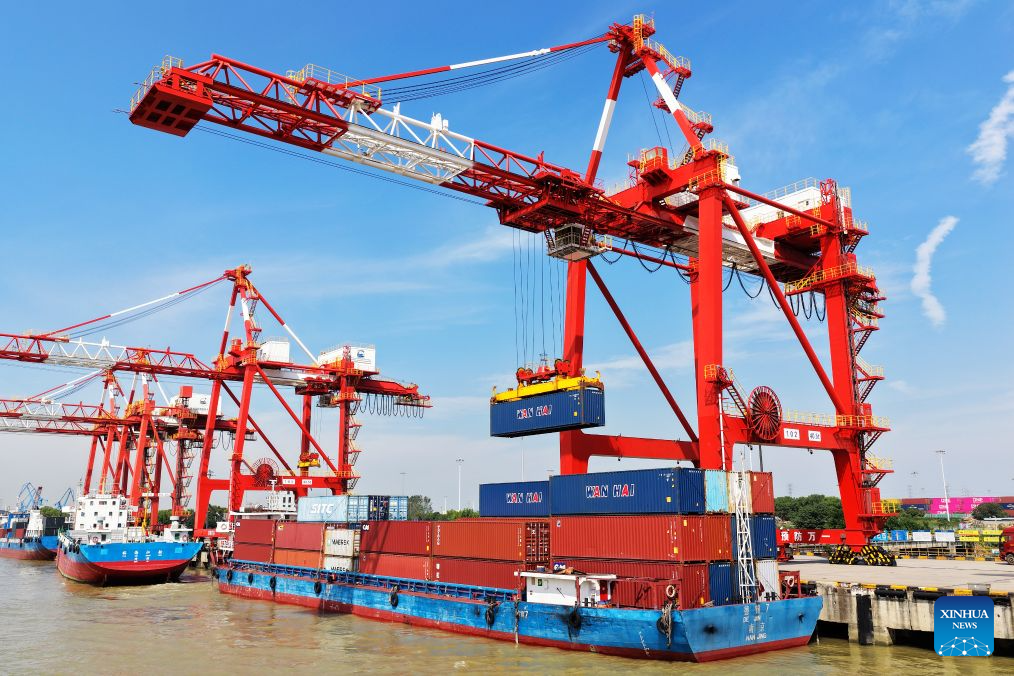
(260916) -- BEIJING, Sept. 16, 2026 (Xinhua) -- A drone photo shows a cargo ship docking at Yangzhou Port to unload containers in Yangzhou, east China's Jiangsu Province, Sept. 15, 2026. China's economy maintained steady momentum boosted by innovation-led and high-quality development in August, with production and supply growing steadily, employment and prices generally stable, and foreign trade registering rapid growth, official data showed on Tuesday. (Photo by Meng Delong/Xinhua)
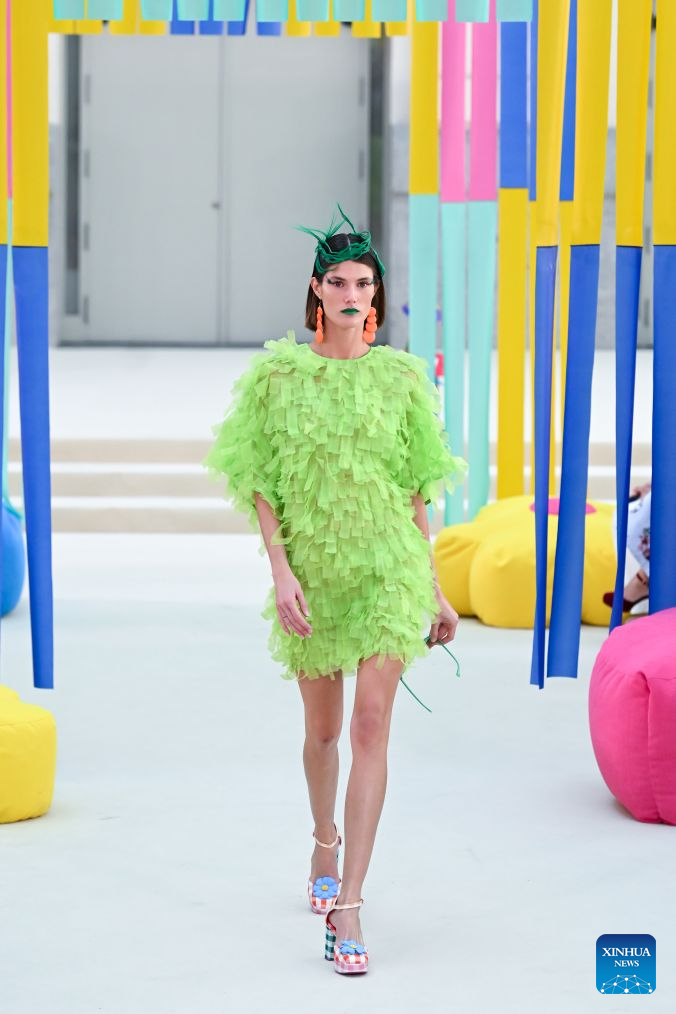
(260915) -- MADRID, Sept. 15, 2026 (Xinhua) -- A model presents a creation by Agatha Ruiz de la Prada during the Madrid Fashion Week in Madrid, Spain, Sept. 15, 2026. (Photo by Gustavo Valiente/Xinhua)

(260915) -- MADRID, Sept. 15, 2026 (Xinhua) -- A model presents a creation by Agatha Ruiz de la Prada during the Madrid Fashion Week in Madrid, Spain, Sept. 15, 2026. (Photo by Gustavo Valiente/Xinhua)

(260915) -- MADRID, Sept. 15, 2026 (Xinhua) -- Models present creations by Agatha Ruiz de la Prada during the Madrid Fashion Week in Madrid, Spain, Sept. 15, 2026. (Photo by Gustavo Valiente/Xinhua)

(260915) -- MADRID, Sept. 15, 2026 (Xinhua) -- Models present creations by Agatha Ruiz de la Prada during the Madrid Fashion Week in Madrid, Spain, Sept. 15, 2026. (Photo by Gustavo Valiente/Xinhua)
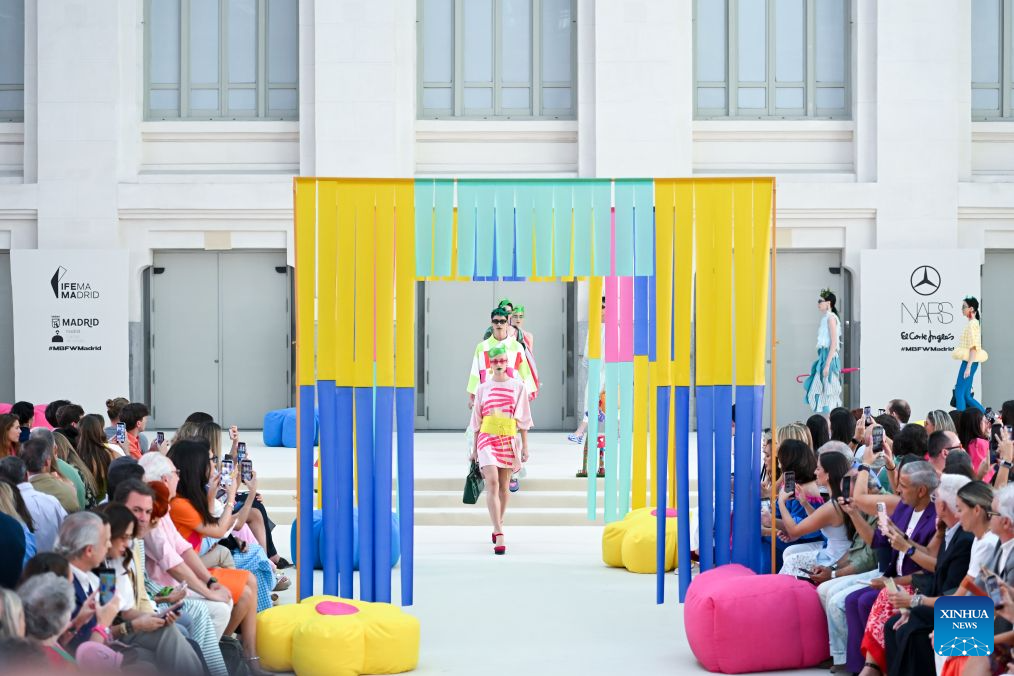
(260915) -- MADRID, Sept. 15, 2026 (Xinhua) -- Models present creations by Agatha Ruiz de la Prada during the Madrid Fashion Week in Madrid, Spain, Sept. 15, 2026. (Photo by Gustavo Valiente/Xinhua)
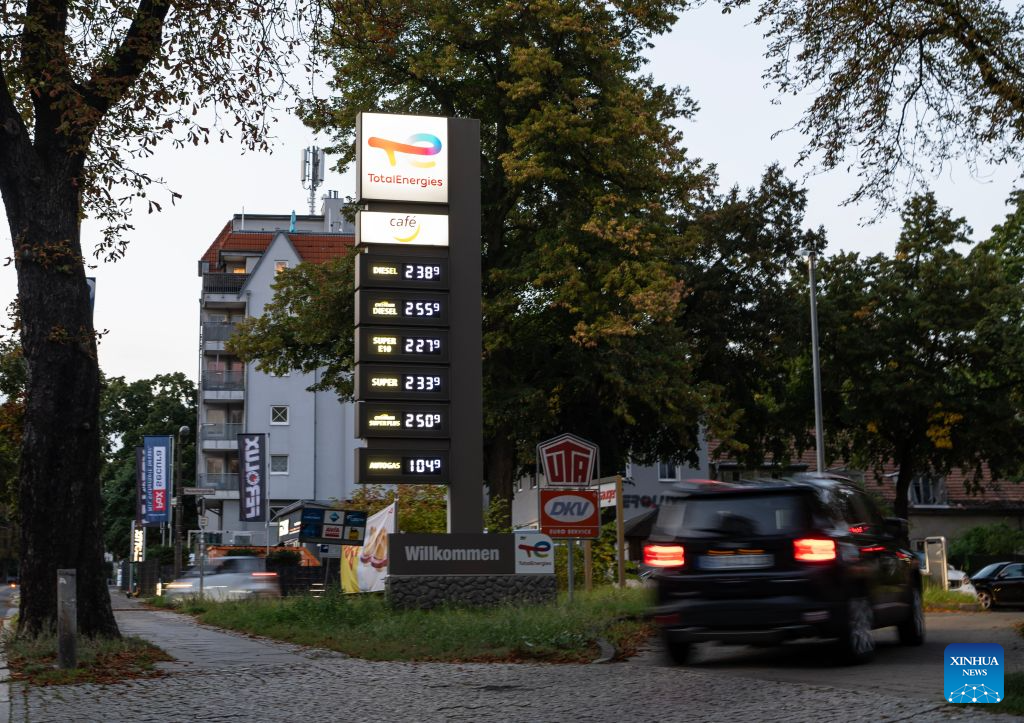
(260915) -- BERLIN, Sept. 15, 2026 (Xinhua) -- This photo taken on Sept. 15, 2026 shows prices displayed at a gas station in Berlin, Germany. Fuel prices have continued to rise in Germany. (Xinhua/Zhang Haofu)
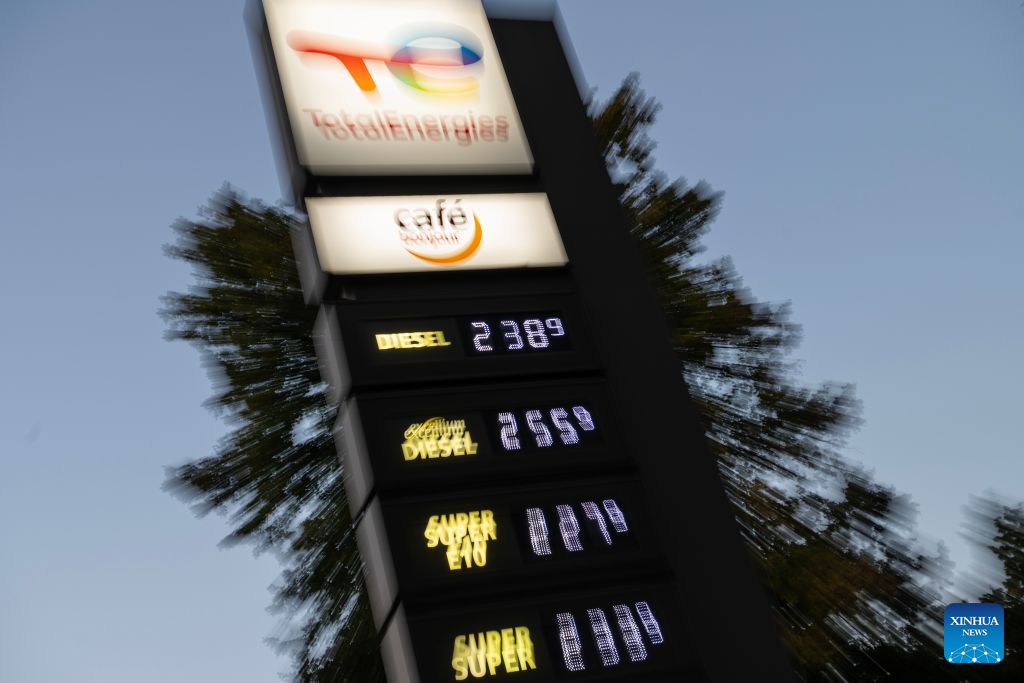
(260915) -- BERLIN, Sept. 15, 2026 (Xinhua) -- This photo taken on Sept. 15, 2026 shows prices displayed at a gas station in Berlin, Germany. Fuel prices have continued to rise in Germany. (Xinhua/Zhang Haofu)
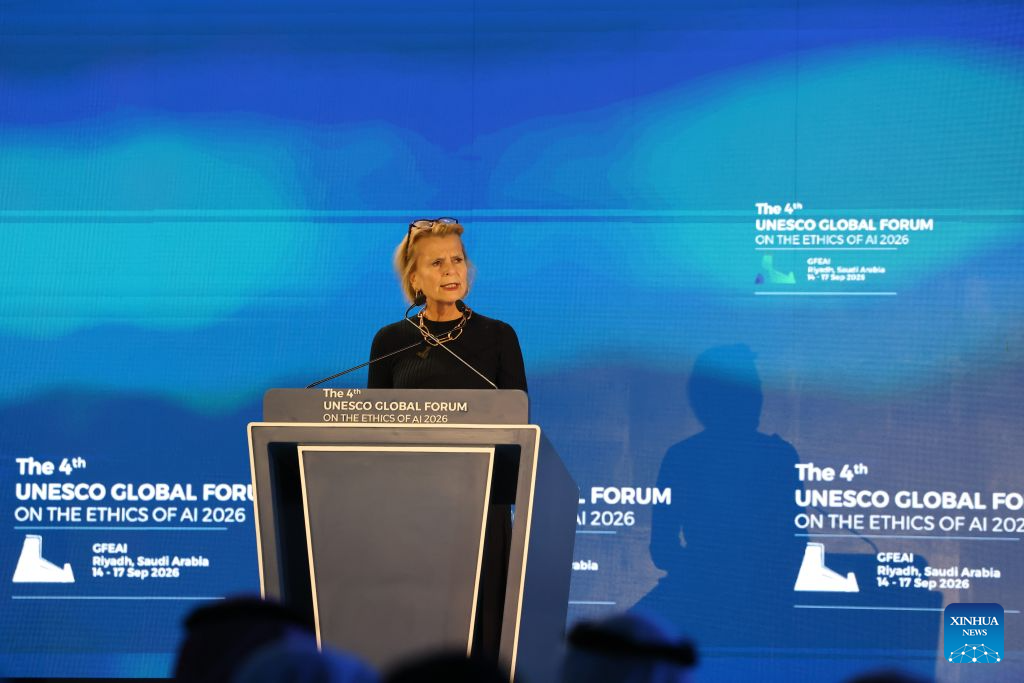
(260915) -- RIYADH, Sept. 15, 2026 (Xinhua) -- Asa Regner, deputy director-general of UNESCO speaks at the opening ceremony of the 4th Global Forum on the Ethics of Artificial Intelligence in Riyadh, Saudi Arabia, Sept. 15, 2026. The 4th Global Forum on the Ethics of Artificial Intelligence (AI) opened in Riyadh on Tuesday, where delegates discussed aligning AI development with safety and responsibility requirements. (Xinhua/Luo Chen)
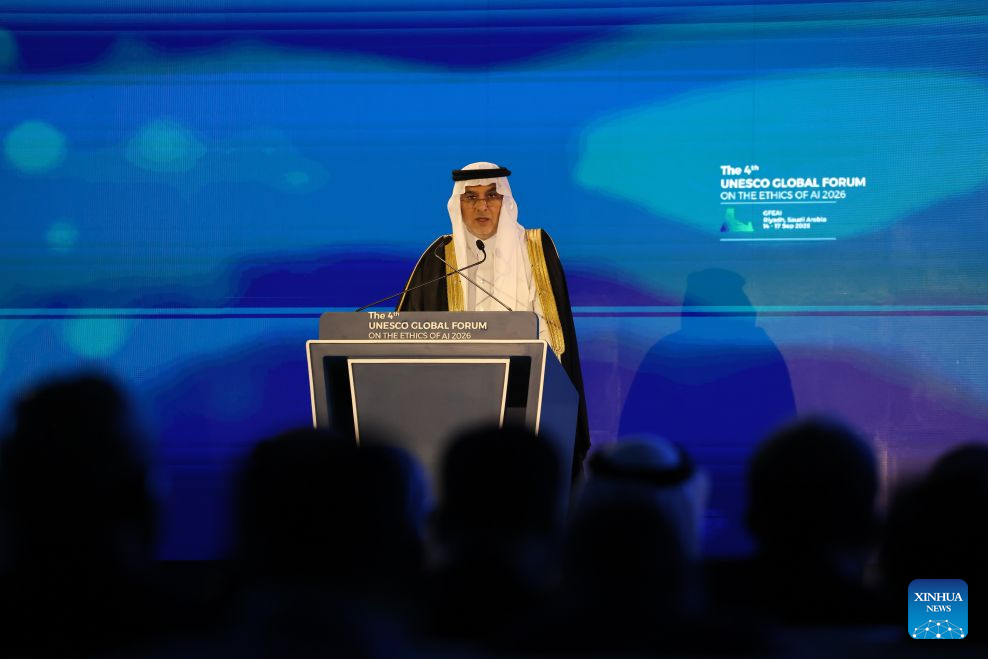
(260915) -- RIYADH, Sept. 15, 2026 (Xinhua) -- Abdullah bin Sharaf Alghamdi, president of the Saudi Data and Artificial Intelligence Authority speaks at the opening ceremony of the 4th Global Forum on the Ethics of Artificial Intelligence in Riyadh, Saudi Arabia, Sept. 15, 2026. The 4th Global Forum on the Ethics of Artificial Intelligence (AI) opened in Riyadh on Tuesday, where delegates discussed aligning AI development with safety and responsibility requirements. (Xinhua/Luo Chen)

(260915) -- RIYADH, Sept. 15, 2026 (Xinhua) -- Participants walk past a display board during the 4th Global Forum on the Ethics of Artificial Intelligence in Riyadh, Saudi Arabia, Sept. 15, 2026. The 4th Global Forum on the Ethics of Artificial Intelligence (AI) opened in Riyadh on Tuesday, where delegates discussed aligning AI development with safety and responsibility requirements. (Xinhua/Luo Chen)
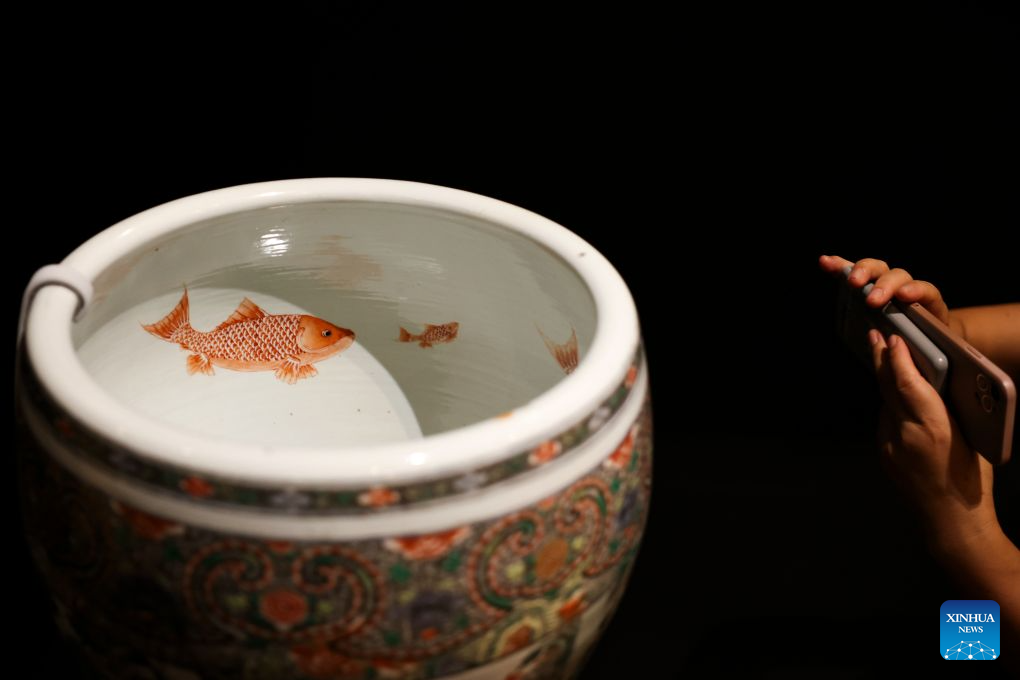
(260915) -- PARIS, Sept. 15, 2026 (Xinhua) -- A visitor takes photos of an exhibit on display at Maison Guimet in Paris, France, Sept. 15, 2026. Maison Guimet is housed in the Hotel d'Heidelbach, a private mansion built in 1913. The mansion became part of the Guimet National Museum of Asian Arts in 1991 and reopened to the public as Maison Guimet in May, 2026 following renovation. (Xinhua/Wu Huiwo)
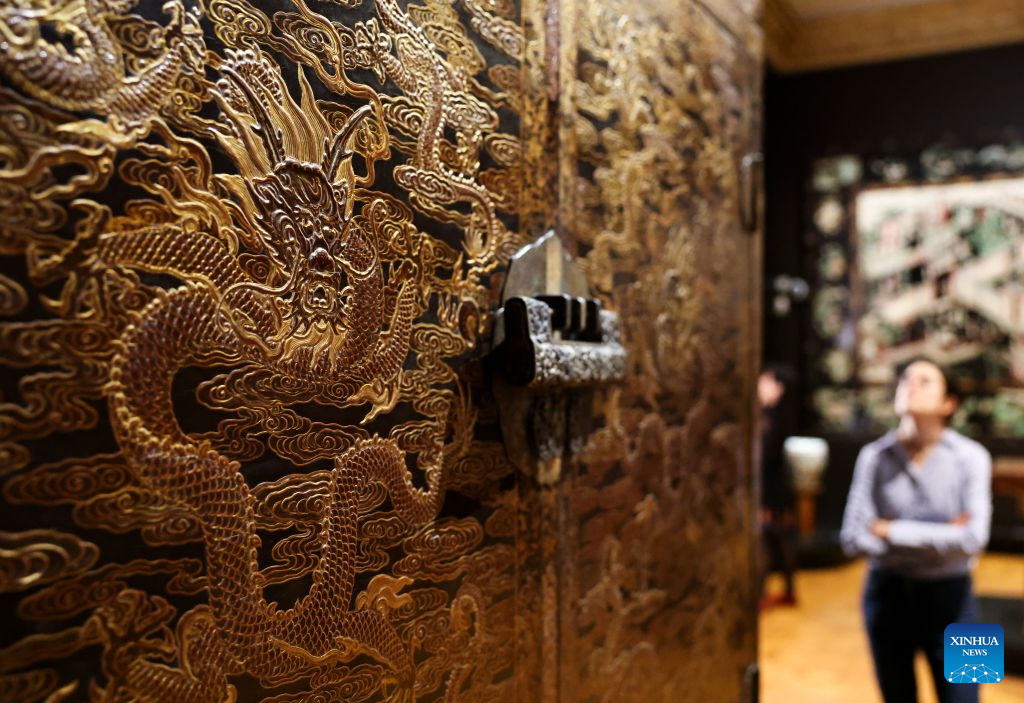
(260915) -- PARIS, Sept. 15, 2026 (Xinhua) -- This photo taken on Sept. 15, 2026 shows an exhibit on display at Maison Guimet in Paris, France. Maison Guimet is housed in the Hotel d'Heidelbach, a private mansion built in 1913. The mansion became part of the Guimet National Museum of Asian Arts in 1991 and reopened to the public as Maison Guimet in May, 2026 following renovation. (Xinhua/Wu Huiwo)
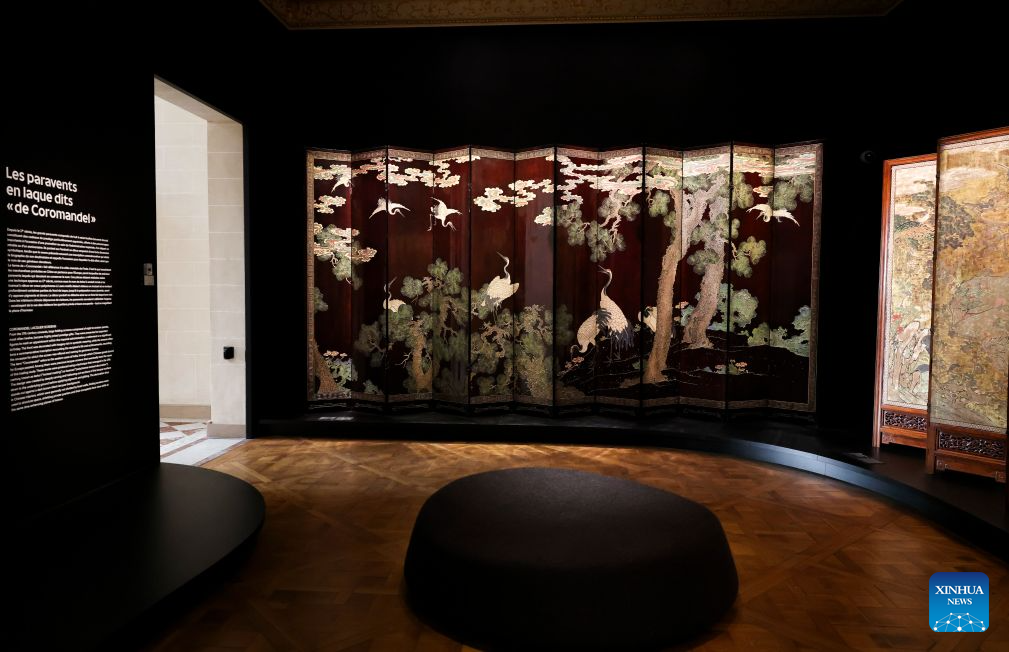
(260915) -- PARIS, Sept. 15, 2026 (Xinhua) -- This photo taken on Sept. 15, 2026 shows exhibits on display at Maison Guimet in Paris, France. Maison Guimet is housed in the Hotel d'Heidelbach, a private mansion built in 1913. The mansion became part of the Guimet National Museum of Asian Arts in 1991 and reopened to the public as Maison Guimet in May, 2026 following renovation. (Xinhua/Wu Huiwo)

(260915) -- PARIS, Sept. 15, 2026 (Xinhua) -- Visitors experience the art of tea at at Maison Guimet in Paris, France, Sept. 15, 2026. Maison Guimet is housed in the Hotel d'Heidelbach, a private mansion built in 1913. The mansion became part of the Guimet National Museum of Asian Arts in 1991 and reopened to the public as Maison Guimet in May, 2026 following renovation. (Xinhua/Wu Huiwo)
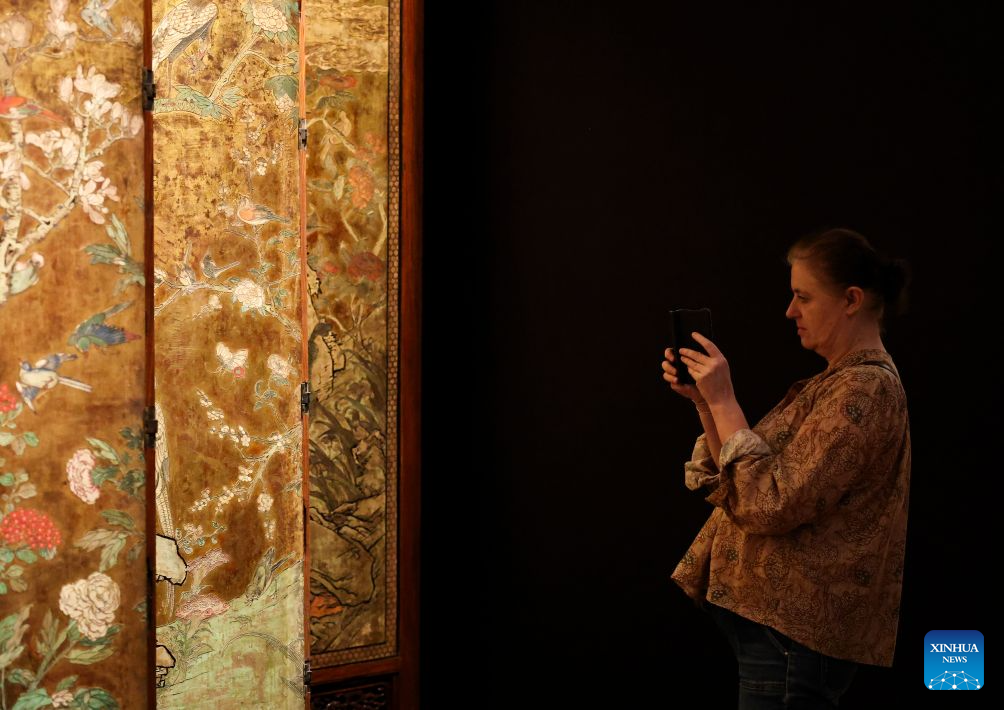
(260915) -- PARIS, Sept. 15, 2026 (Xinhua) -- A visitor takes photos of an exhibit on display at Maison Guimet in Paris, France, Sept. 15, 2026. Maison Guimet is housed in the Hotel d'Heidelbach, a private mansion built in 1913. The mansion became part of the Guimet National Museum of Asian Arts in 1991 and reopened to the public as Maison Guimet in May, 2026 following renovation. (Xinhua/Wu Huiwo)
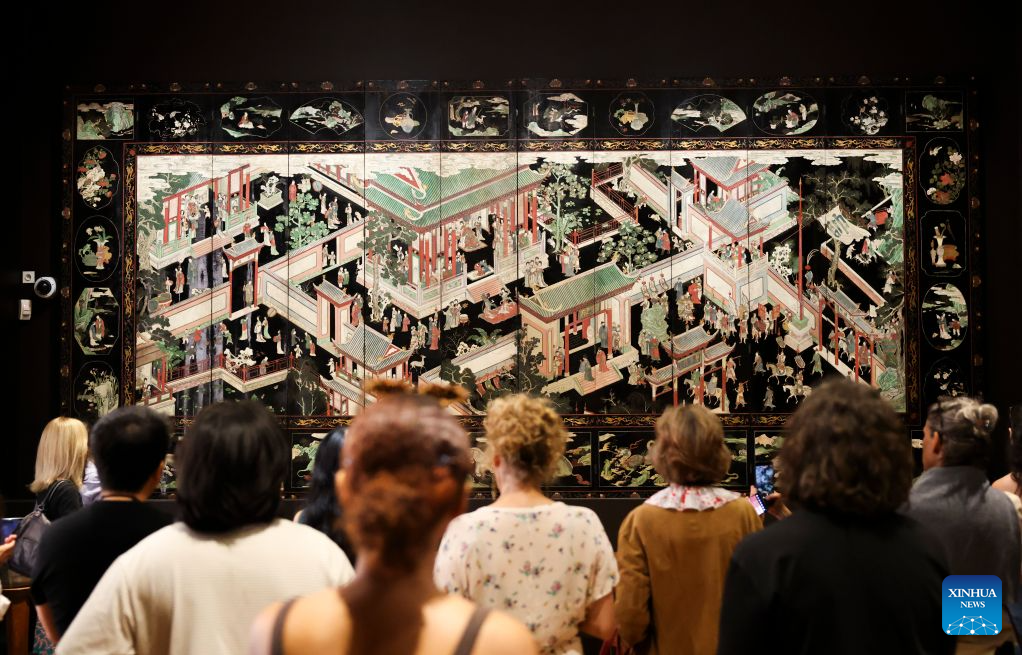
(260915) -- PARIS, Sept. 15, 2026 (Xinhua) -- Visitors view exhibits on display at Maison Guimet in Paris, France, Sept. 15, 2026. Maison Guimet is housed in the Hotel d'Heidelbach, a private mansion built in 1913. The mansion became part of the Guimet National Museum of Asian Arts in 1991 and reopened to the public as Maison Guimet in May, 2026 following renovation. (Xinhua/Wu Huiwo)
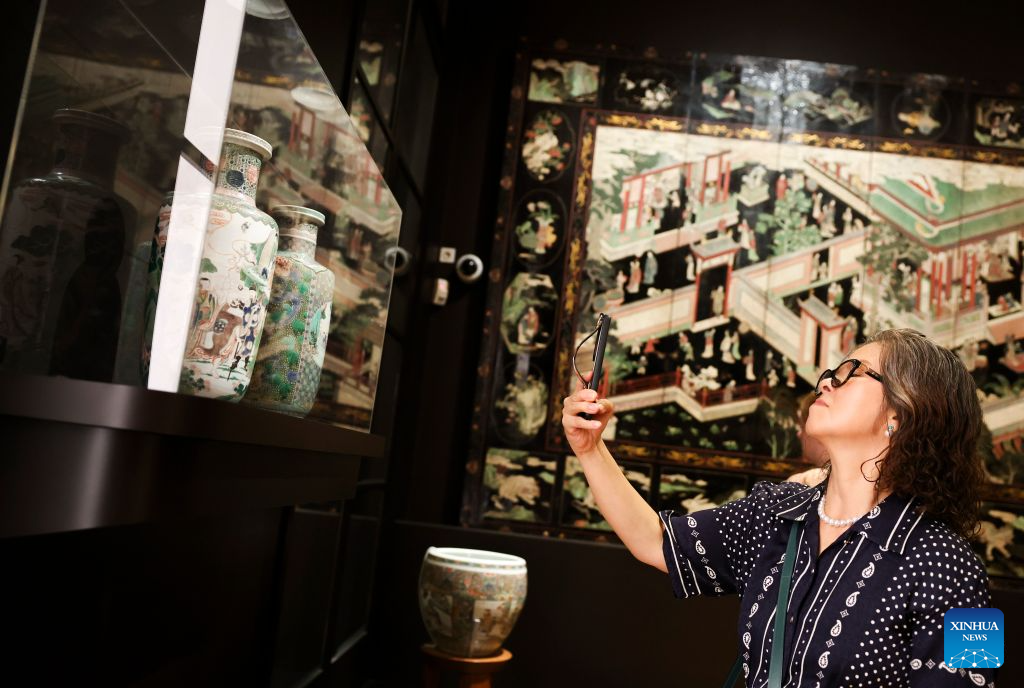
(260915) -- PARIS, Sept. 15, 2026 (Xinhua) -- A visitor takes photos of an exhibit on display at Maison Guimet in Paris, France, Sept. 15, 2026. Maison Guimet is housed in the Hotel d'Heidelbach, a private mansion built in 1913. The mansion became part of the Guimet National Museum of Asian Arts in 1991 and reopened to the public as Maison Guimet in May, 2026 following renovation. (Xinhua/Wu Huiwo)

(260915) -- PARIS, Sept. 15, 2026 (Xinhua) -- Visitors take photos of an exhibit on display at Maison Guimet in Paris, France, Sept. 15, 2026. Maison Guimet is housed in the Hotel d'Heidelbach, a private mansion built in 1913. The mansion became part of the Guimet National Museum of Asian Arts in 1991 and reopened to the public as Maison Guimet in May, 2026 following renovation. (Xinhua/Wu Huiwo)
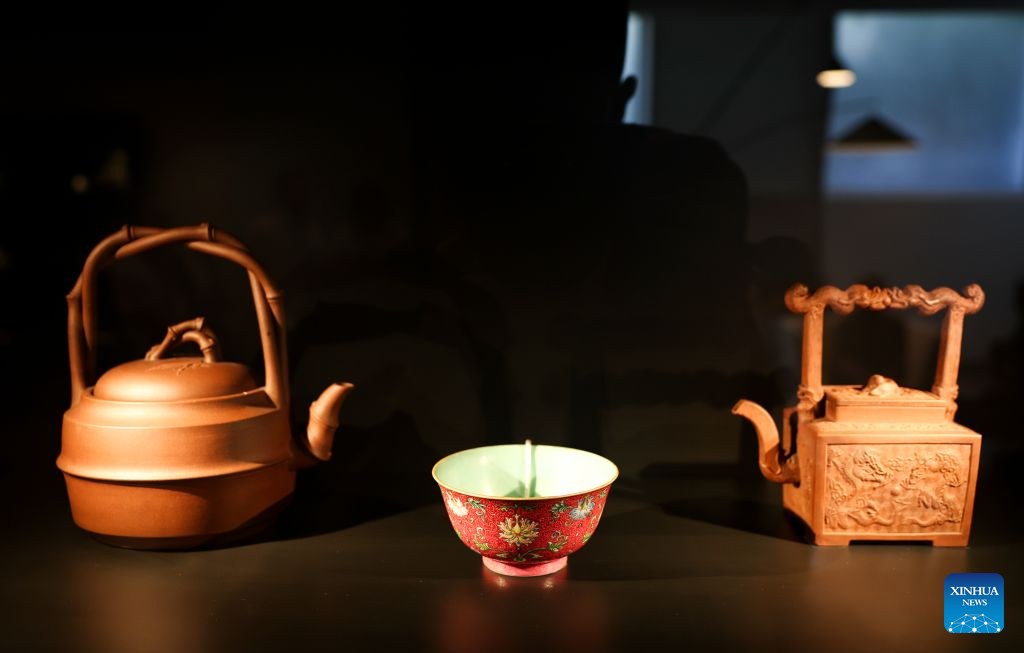
(260915) -- PARIS, Sept. 15, 2026 (Xinhua) -- This photo taken on Sept. 15, 2026 shows exhibits on display at Maison Guimet in Paris, France. Maison Guimet is housed in the Hotel d'Heidelbach, a private mansion built in 1913. The mansion became part of the Guimet National Museum of Asian Arts in 1991 and reopened to the public as Maison Guimet in May, 2026 following renovation. (Xinhua/Wu Huiwo)
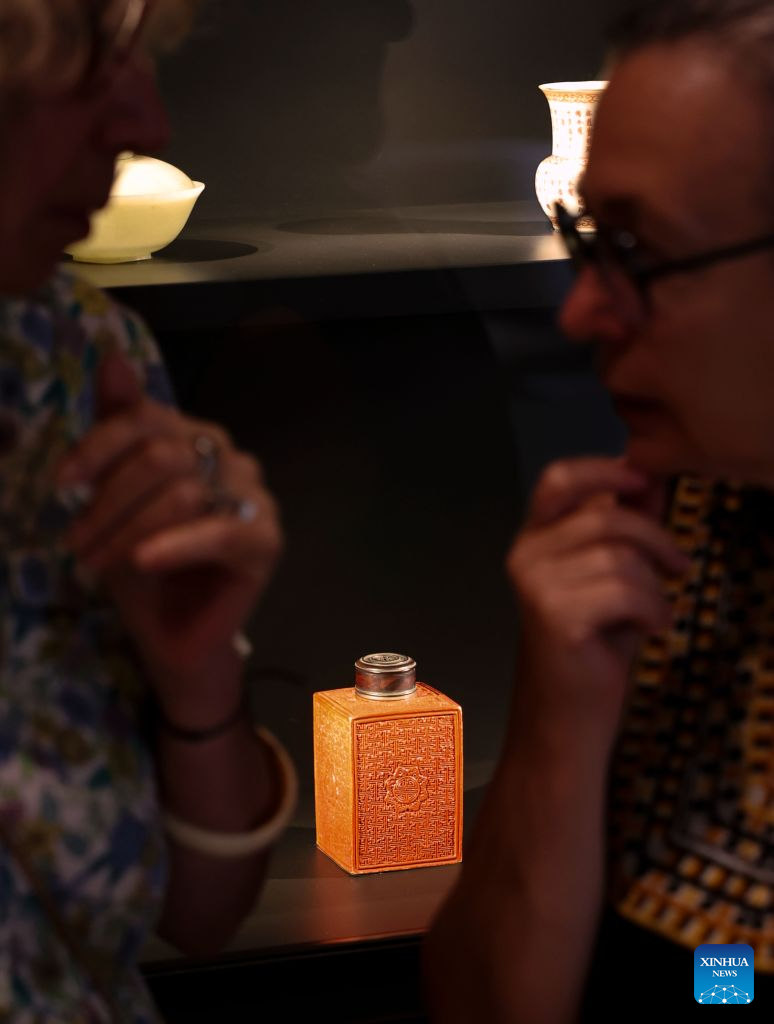
(260915) -- PARIS, Sept. 15, 2026 (Xinhua) -- This photo taken on Sept. 15, 2026 shows exhibits on display at Maison Guimet in Paris, France. Maison Guimet is housed in the Hotel d'Heidelbach, a private mansion built in 1913. The mansion became part of the Guimet National Museum of Asian Arts in 1991 and reopened to the public as Maison Guimet in May, 2026 following renovation. (Xinhua/Wu Huiwo)
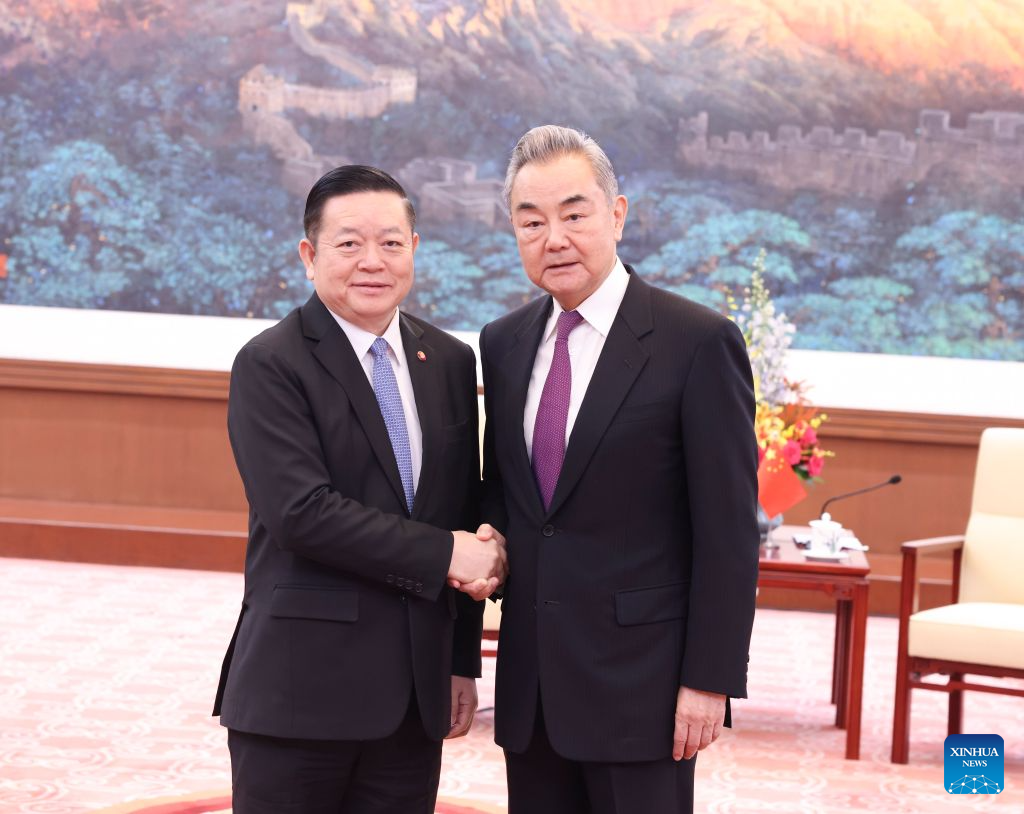
(260915) -- BEIJING, Sept. 15, 2026 (Xinhua) -- Chinese Foreign Minister Wang Yi, also a member of the Political Bureau of the Communist Party of China Central Committee, meets with Secretary-General of ASEAN Kao Kim Hourn in Beijing, capital of China, Sept. 15, 2026. (Xinhua/Pang Xinglei)
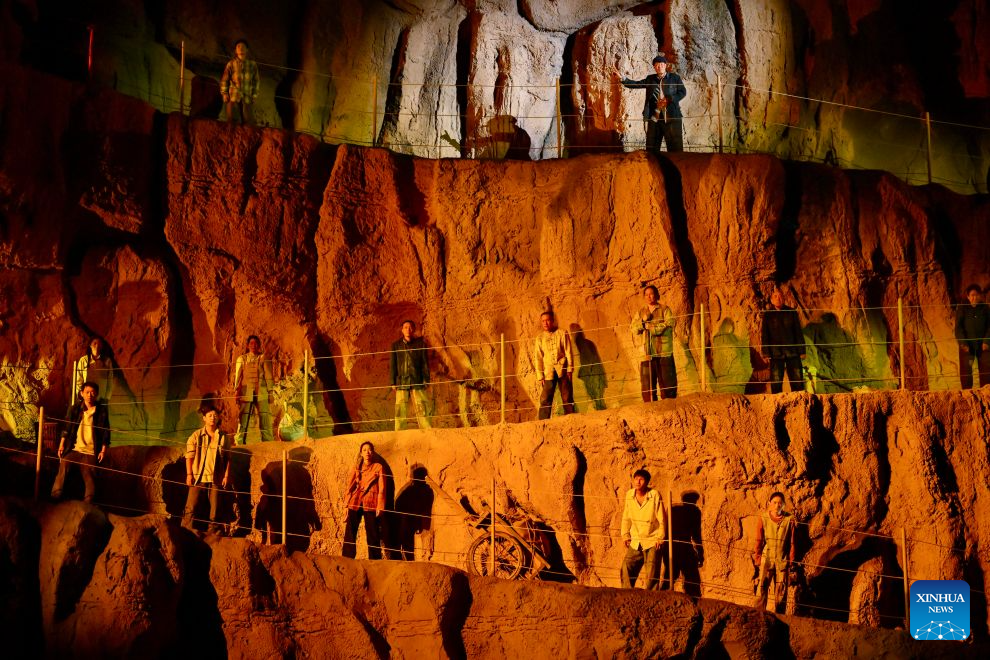
(260915) -- YINCHUAN, Sept. 15, 2026 (Xinhua) -- Actors perform during a drama at a "theater village" cultural project in Minning Town, Yongning County of Yinchuan, northwest China's Ningxia Hui Autonomous Region, Sept. 11, 2026. Located in the east of the Helan Mountains, Minning Town, named after the Chinese abbreviations of Fujian and Ningxia, stands as a living testament to China's poverty alleviation efforts, where a deserted land was turned into a new homeland for 60,000 people.
In 1996, when the east-west poverty alleviation collaboration was carried out, southeast China's Fujian Province was designated to provide pairing assistance to northwest China's Ningxia Hui Autonomous Region. In 1997, construction began on Minning Village on barren land near Yinchuan, the regional capital. Later, officials from Fujian Province came here in batches to take part in the construction, along with assisting funds and projects. The cross-provincial effort transformed Minning into a modern town, with a population rising from some 8,000 to over 60,000, mainly living on growing wine grapes, mushrooms, and goji berries and raising cattle.
Nowadays, the 4,866.67-hectare wine grape base and over 20 wineries in Minning Town receive more than 100,000 visitors annually. The Minning Industrial Park has attracted over 30 enterprises, with an output value exceeding 1 billion yuan (about 149 million U.S. dollars).
Over the past 30 years, taking Minning Town as the model, more than 110 demonstration villages for Fujian-Ningxia cooperation, 78 new villages for migrants and 423 resettlement areas for relocated people have been established in both regions, with a total of over 1.23 million people resettled. (Xinhua/Yang Zhisen)
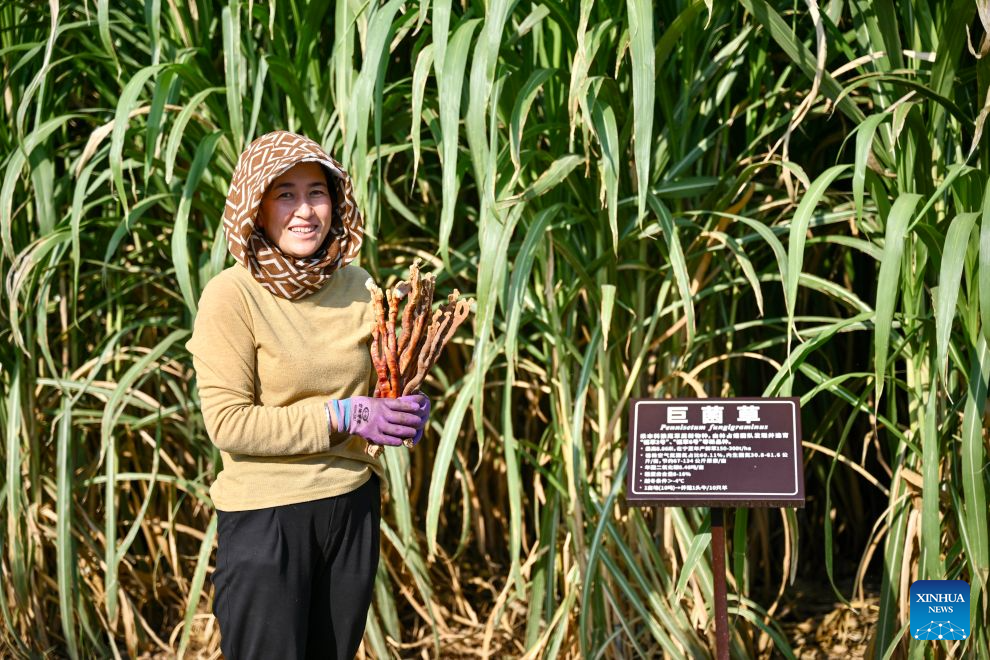
(260915) -- YINCHUAN, Sept. 15, 2026 (Xinhua) -- A farmer shows an edible fungus cultivated with the Juncao technology at Yuanyi Village of Minning Town, Yongning County of Yinchuan, northwest China's Ningxia Hui Autonomous Region, Sept. 11, 2026. Located in the east of the Helan Mountains, Minning Town, named after the Chinese abbreviations of Fujian and Ningxia, stands as a living testament to China's poverty alleviation efforts, where a deserted land was turned into a new homeland for 60,000 people.
In 1996, when the east-west poverty alleviation collaboration was carried out, southeast China's Fujian Province was designated to provide pairing assistance to northwest China's Ningxia Hui Autonomous Region. In 1997, construction began on Minning Village on barren land near Yinchuan, the regional capital. Later, officials from Fujian Province came here in batches to take part in the construction, along with assisting funds and projects. The cross-provincial effort transformed Minning into a modern town, with a population rising from some 8,000 to over 60,000, mainly living on growing wine grapes, mushrooms, and goji berries and raising cattle.
Nowadays, the 4,866.67-hectare wine grape base and over 20 wineries in Minning Town receive more than 100,000 visitors annually. The Minning Industrial Park has attracted over 30 enterprises, with an output value exceeding 1 billion yuan (about 149 million U.S. dollars).
Over the past 30 years, taking Minning Town as the model, more than 110 demonstration villages for Fujian-Ningxia cooperation, 78 new villages for migrants and 423 resettlement areas for relocated people have been established in both regions, with a total of over 1.23 million people resettled. (Xinhua/Yang Zhisen)
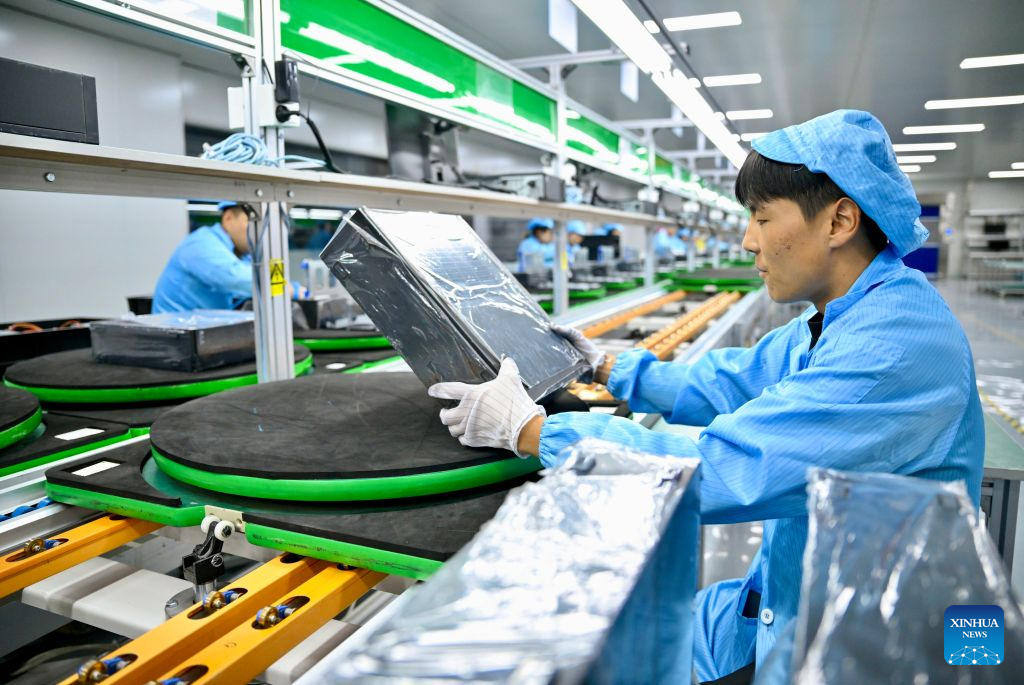
(260915) -- YINCHUAN, Sept. 15, 2026 (Xinhua) -- A worker assembles computers at an intelligent workshop in Minning Town, Yongning County of Yinchuan, northwest China's Ningxia Hui Autonomous Region, Sept. 11, 2026. Located in the east of the Helan Mountains, Minning Town, named after the Chinese abbreviations of Fujian and Ningxia, stands as a living testament to China's poverty alleviation efforts, where a deserted land was turned into a new homeland for 60,000 people.
In 1996, when the east-west poverty alleviation collaboration was carried out, southeast China's Fujian Province was designated to provide pairing assistance to northwest China's Ningxia Hui Autonomous Region. In 1997, construction began on Minning Village on barren land near Yinchuan, the regional capital. Later, officials from Fujian Province came here in batches to take part in the construction, along with assisting funds and projects. The cross-provincial effort transformed Minning into a modern town, with a population rising from some 8,000 to over 60,000, mainly living on growing wine grapes, mushrooms, and goji berries and raising cattle.
Nowadays, the 4,866.67-hectare wine grape base and over 20 wineries in Minning Town receive more than 100,000 visitors annually. The Minning Industrial Park has attracted over 30 enterprises, with an output value exceeding 1 billion yuan (about 149 million U.S. dollars).
Over the past 30 years, taking Minning Town as the model, more than 110 demonstration villages for Fujian-Ningxia cooperation, 78 new villages for migrants and 423 resettlement areas for relocated people have been established in both regions, with a total of over 1.23 million people resettled. (Xinhua/Yang Zhisen)
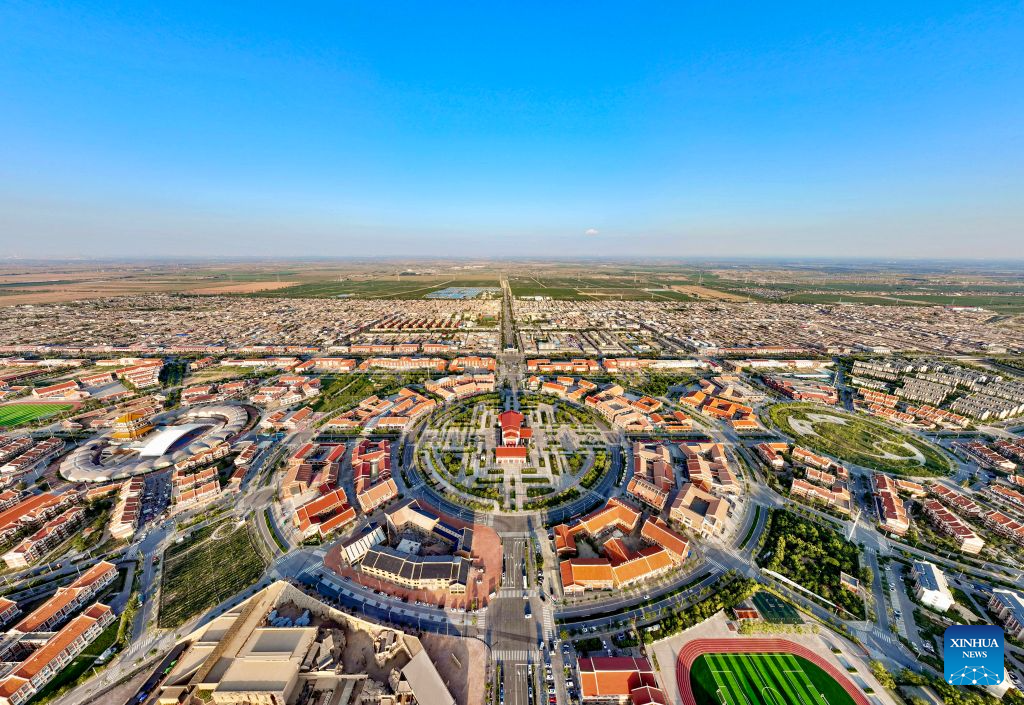
(260915) -- YINCHUAN, Sept. 15, 2026 (Xinhua) -- An aerial drone photo taken on Sept. 11, 2026 shows a view of Minning Town in Yongning County of Yinchuan, northwest China's Ningxia Hui Autonomous Region. Located in the east of the Helan Mountains, Minning Town, named after the Chinese abbreviations of Fujian and Ningxia, stands as a living testament to China's poverty alleviation efforts, where a deserted land was turned into a new homeland for 60,000 people.
In 1996, when the east-west poverty alleviation collaboration was carried out, southeast China's Fujian Province was designated to provide pairing assistance to northwest China's Ningxia Hui Autonomous Region. In 1997, construction began on Minning Village on barren land near Yinchuan, the regional capital. Later, officials from Fujian Province came here in batches to take part in the construction, along with assisting funds and projects. The cross-provincial effort transformed Minning into a modern town, with a population rising from some 8,000 to over 60,000, mainly living on growing wine grapes, mushrooms, and goji berries and raising cattle.
Nowadays, the 4,866.67-hectare wine grape base and over 20 wineries in Minning Town receive more than 100,000 visitors annually. The Minning Industrial Park has attracted over 30 enterprises, with an output value exceeding 1 billion yuan (about 149 million U.S. dollars).
Over the past 30 years, taking Minning Town as the model, more than 110 demonstration villages for Fujian-Ningxia cooperation, 78 new villages for migrants and 423 resettlement areas for relocated people have been established in both regions, with a total of over 1.23 million people resettled. (Xinhua/Yang Zhisen)
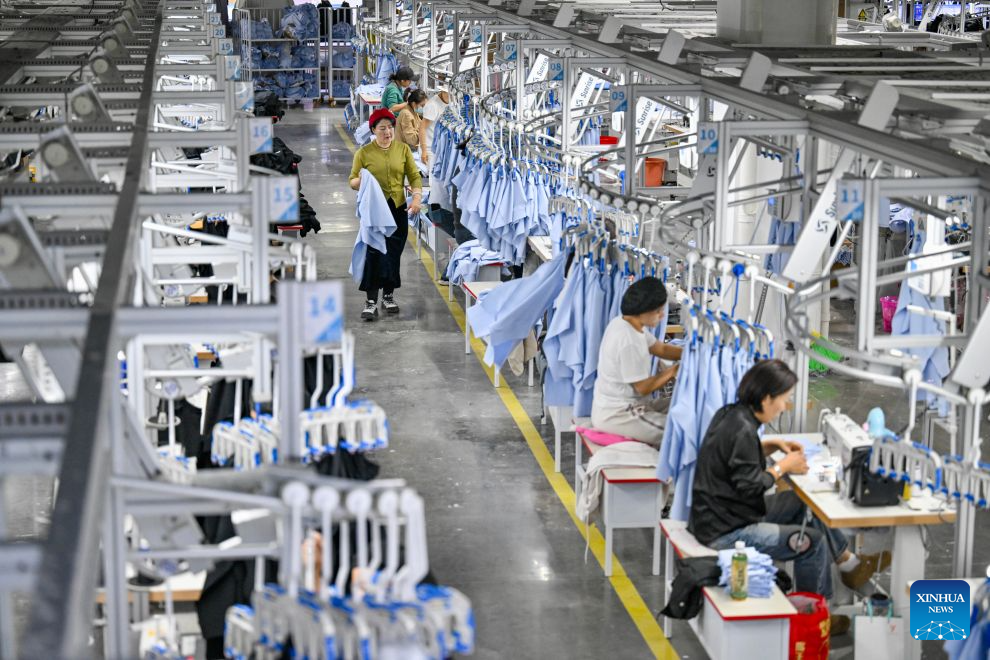
(260915) -- YINCHUAN, Sept. 15, 2026 (Xinhua) -- Workers are seen at a factory of sportswear manufacturer ERKE in Minning Town, Yongning County of Yinchuan, northwest China's Ningxia Hui Autonomous Region, Sept. 11, 2026. Located in the east of the Helan Mountains, Minning Town, named after the Chinese abbreviations of Fujian and Ningxia, stands as a living testament to China's poverty alleviation efforts, where a deserted land was turned into a new homeland for 60,000 people.
In 1996, when the east-west poverty alleviation collaboration was carried out, southeast China's Fujian Province was designated to provide pairing assistance to northwest China's Ningxia Hui Autonomous Region. In 1997, construction began on Minning Village on barren land near Yinchuan, the regional capital. Later, officials from Fujian Province came here in batches to take part in the construction, along with assisting funds and projects. The cross-provincial effort transformed Minning into a modern town, with a population rising from some 8,000 to over 60,000, mainly living on growing wine grapes, mushrooms, and goji berries and raising cattle.
Nowadays, the 4,866.67-hectare wine grape base and over 20 wineries in Minning Town receive more than 100,000 visitors annually. The Minning Industrial Park has attracted over 30 enterprises, with an output value exceeding 1 billion yuan (about 149 million U.S. dollars).
Over the past 30 years, taking Minning Town as the model, more than 110 demonstration villages for Fujian-Ningxia cooperation, 78 new villages for migrants and 423 resettlement areas for relocated people have been established in both regions, with a total of over 1.23 million people resettled. (Xinhua/Yang Zhisen)
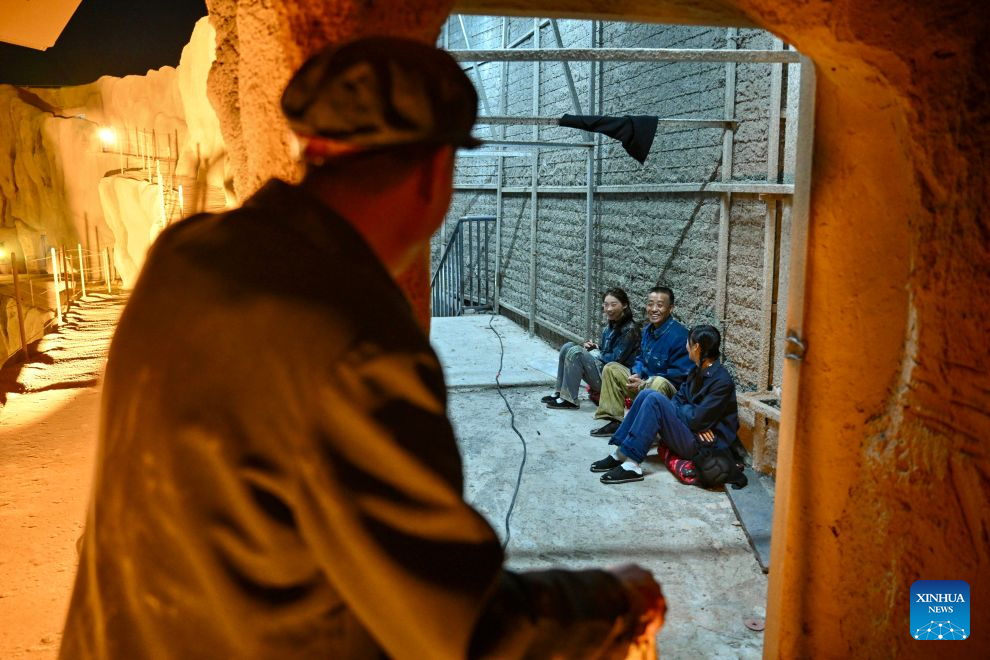
(260915) -- YINCHUAN, Sept. 15, 2026 (Xinhua) -- Actors chat with each other before a performance at a "theater village" cultural project in Minning Town, Yongning County of Yinchuan, northwest China's Ningxia Hui Autonomous Region, Sept. 11, 2026. Located in the east of the Helan Mountains, Minning Town, named after the Chinese abbreviations of Fujian and Ningxia, stands as a living testament to China's poverty alleviation efforts, where a deserted land was turned into a new homeland for 60,000 people.
In 1996, when the east-west poverty alleviation collaboration was carried out, southeast China's Fujian Province was designated to provide pairing assistance to northwest China's Ningxia Hui Autonomous Region. In 1997, construction began on Minning Village on barren land near Yinchuan, the regional capital. Later, officials from Fujian Province came here in batches to take part in the construction, along with assisting funds and projects. The cross-provincial effort transformed Minning into a modern town, with a population rising from some 8,000 to over 60,000, mainly living on growing wine grapes, mushrooms, and goji berries and raising cattle.
Nowadays, the 4,866.67-hectare wine grape base and over 20 wineries in Minning Town receive more than 100,000 visitors annually. The Minning Industrial Park has attracted over 30 enterprises, with an output value exceeding 1 billion yuan (about 149 million U.S. dollars).
Over the past 30 years, taking Minning Town as the model, more than 110 demonstration villages for Fujian-Ningxia cooperation, 78 new villages for migrants and 423 resettlement areas for relocated people have been established in both regions, with a total of over 1.23 million people resettled. (Xinhua/Yang Zhisen)
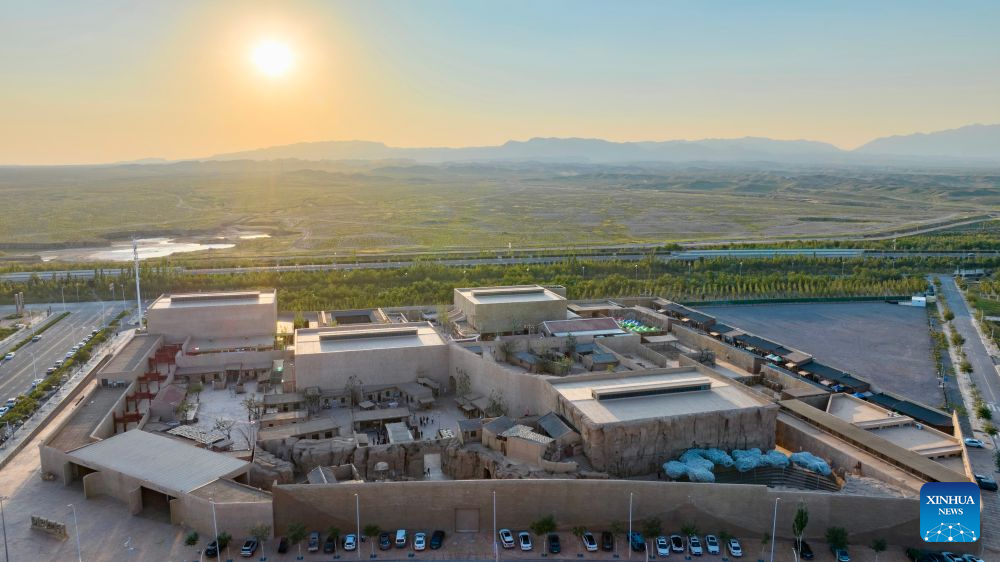
(260915) -- YINCHUAN, Sept. 15, 2026 (Xinhua) -- An aerial drone photo taken on Sept. 11, 2026 shows a "theater village" cultural project in Minning Town, Yongning County of Yinchuan, northwest China's Ningxia Hui Autonomous Region. Located in the east of the Helan Mountains, Minning Town, named after the Chinese abbreviations of Fujian and Ningxia, stands as a living testament to China's poverty alleviation efforts, where a deserted land was turned into a new homeland for 60,000 people.
In 1996, when the east-west poverty alleviation collaboration was carried out, southeast China's Fujian Province was designated to provide pairing assistance to northwest China's Ningxia Hui Autonomous Region. In 1997, construction began on Minning Village on barren land near Yinchuan, the regional capital. Later, officials from Fujian Province came here in batches to take part in the construction, along with assisting funds and projects. The cross-provincial effort transformed Minning into a modern town, with a population rising from some 8,000 to over 60,000, mainly living on growing wine grapes, mushrooms, and goji berries and raising cattle.
Nowadays, the 4,866.67-hectare wine grape base and over 20 wineries in Minning Town receive more than 100,000 visitors annually. The Minning Industrial Park has attracted over 30 enterprises, with an output value exceeding 1 billion yuan (about 149 million U.S. dollars).
Over the past 30 years, taking Minning Town as the model, more than 110 demonstration villages for Fujian-Ningxia cooperation, 78 new villages for migrants and 423 resettlement areas for relocated people have been established in both regions, with a total of over 1.23 million people resettled. (Xinhua/Yang Zhisen)
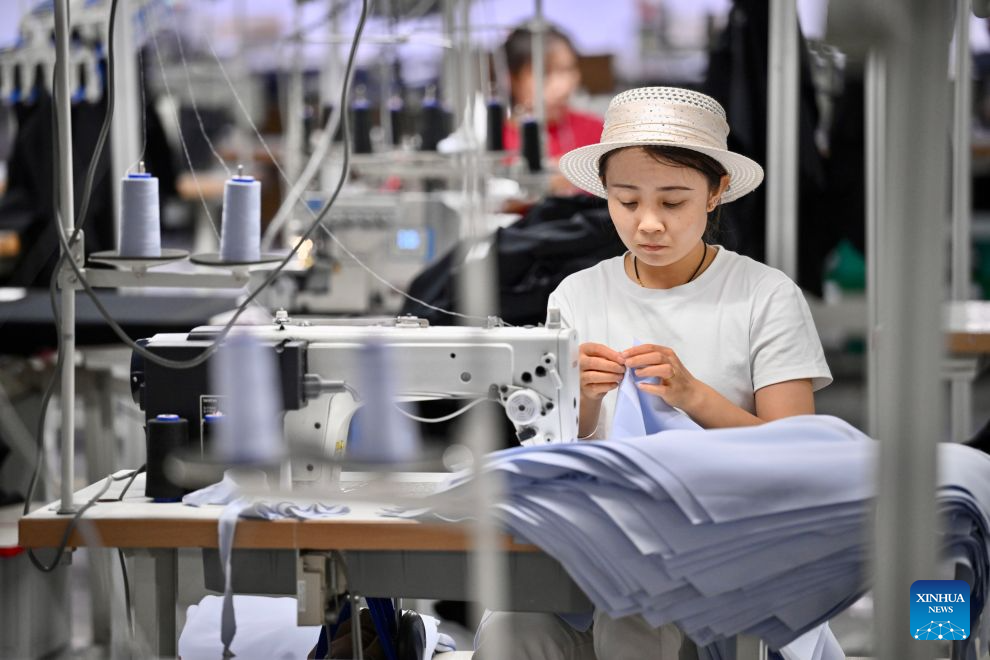
(260915) -- YINCHUAN, Sept. 15, 2026 (Xinhua) -- A worker is seen by a sewing machine at a factory of sportswear manufacturer ERKE in Minning Town, Yongning County of Yinchuan, northwest China's Ningxia Hui Autonomous Region, Sept. 11, 2026. Located in the east of the Helan Mountains, Minning Town, named after the Chinese abbreviations of Fujian and Ningxia, stands as a living testament to China's poverty alleviation efforts, where a deserted land was turned into a new homeland for 60,000 people.
In 1996, when the east-west poverty alleviation collaboration was carried out, southeast China's Fujian Province was designated to provide pairing assistance to northwest China's Ningxia Hui Autonomous Region. In 1997, construction began on Minning Village on barren land near Yinchuan, the regional capital. Later, officials from Fujian Province came here in batches to take part in the construction, along with assisting funds and projects. The cross-provincial effort transformed Minning into a modern town, with a population rising from some 8,000 to over 60,000, mainly living on growing wine grapes, mushrooms, and goji berries and raising cattle.
Nowadays, the 4,866.67-hectare wine grape base and over 20 wineries in Minning Town receive more than 100,000 visitors annually. The Minning Industrial Park has attracted over 30 enterprises, with an output value exceeding 1 billion yuan (about 149 million U.S. dollars).
Over the past 30 years, taking Minning Town as the model, more than 110 demonstration villages for Fujian-Ningxia cooperation, 78 new villages for migrants and 423 resettlement areas for relocated people have been established in both regions, with a total of over 1.23 million people resettled. (Xinhua/Yang Zhisen)
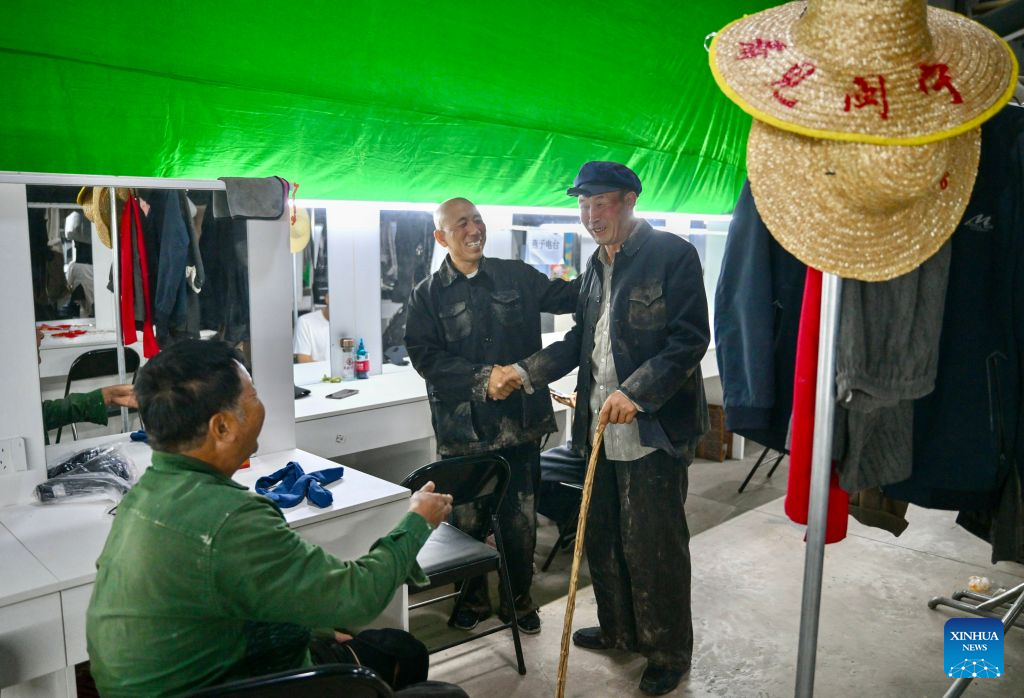
(260915) -- YINCHUAN, Sept. 15, 2026 (Xinhua) -- Local villagers chat with each other before a performance at a "theater village" cultural project in Minning Town, Yongning County of Yinchuan, northwest China's Ningxia Hui Autonomous Region, Sept. 11, 2026. Located in the east of the Helan Mountains, Minning Town, named after the Chinese abbreviations of Fujian and Ningxia, stands as a living testament to China's poverty alleviation efforts, where a deserted land was turned into a new homeland for 60,000 people.
In 1996, when the east-west poverty alleviation collaboration was carried out, southeast China's Fujian Province was designated to provide pairing assistance to northwest China's Ningxia Hui Autonomous Region. In 1997, construction began on Minning Village on barren land near Yinchuan, the regional capital. Later, officials from Fujian Province came here in batches to take part in the construction, along with assisting funds and projects. The cross-provincial effort transformed Minning into a modern town, with a population rising from some 8,000 to over 60,000, mainly living on growing wine grapes, mushrooms, and goji berries and raising cattle.
Nowadays, the 4,866.67-hectare wine grape base and over 20 wineries in Minning Town receive more than 100,000 visitors annually. The Minning Industrial Park has attracted over 30 enterprises, with an output value exceeding 1 billion yuan (about 149 million U.S. dollars).
Over the past 30 years, taking Minning Town as the model, more than 110 demonstration villages for Fujian-Ningxia cooperation, 78 new villages for migrants and 423 resettlement areas for relocated people have been established in both regions, with a total of over 1.23 million people resettled. (Xinhua/Yang Zhisen)


