by Xinhua writer Lu Rui
BEIJING, July 16 (Xinhua) -- How can residents of centuries-old hutong alleys enjoy the conveniences of modern urban life while preserving the character of their historic neighborhood?
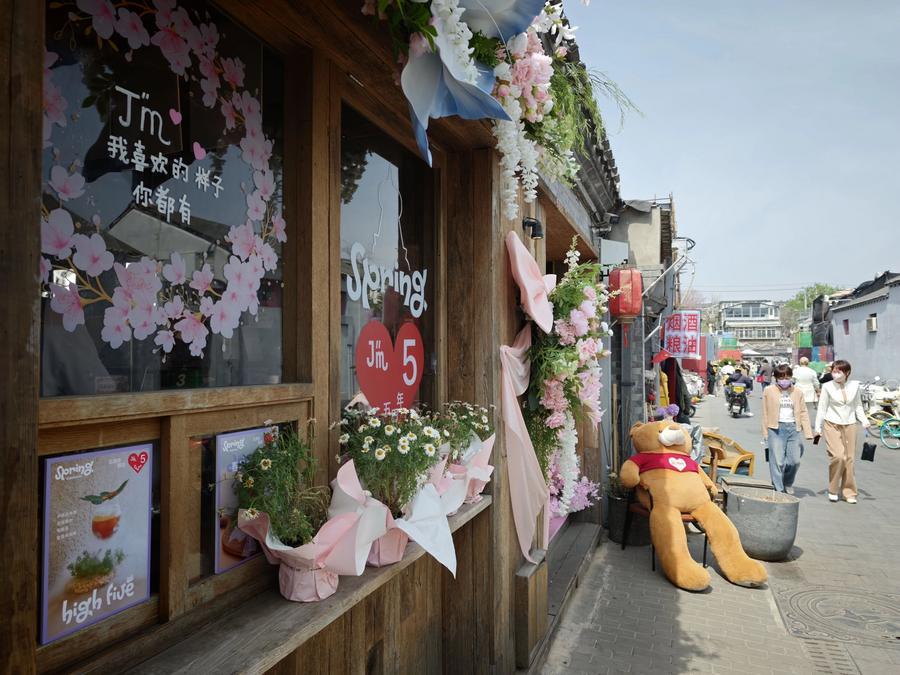
In the narrow alleys of Caochang, a symbolic hutong area in Beijing's Dongcheng District, the Xiaoyuan Yishiting, or Courtyard Meeting Room, offers one answer: advancing people-centered urban renewal through grassroots self-governance.
From replacing coal-fired heating systems and burying overhead utility cables to upgrading public toilets, these meetings provide a platform to discuss a wide range of renewal projects aimed at improving local residents' wellbeing.
They also tackle seemingly minor but meaningful issues, such as relocating outdoor clothes-drying areas that have caused inconvenience to nearby residents. Through consultation, residents can express their concerns and jointly develop practical solutions.
For Li Zheng, Party chief of the Caochang community, the process matters as much as the outcome. "Through repeated consultations, we strive to find a better solution that can be accepted by most people," Li said.
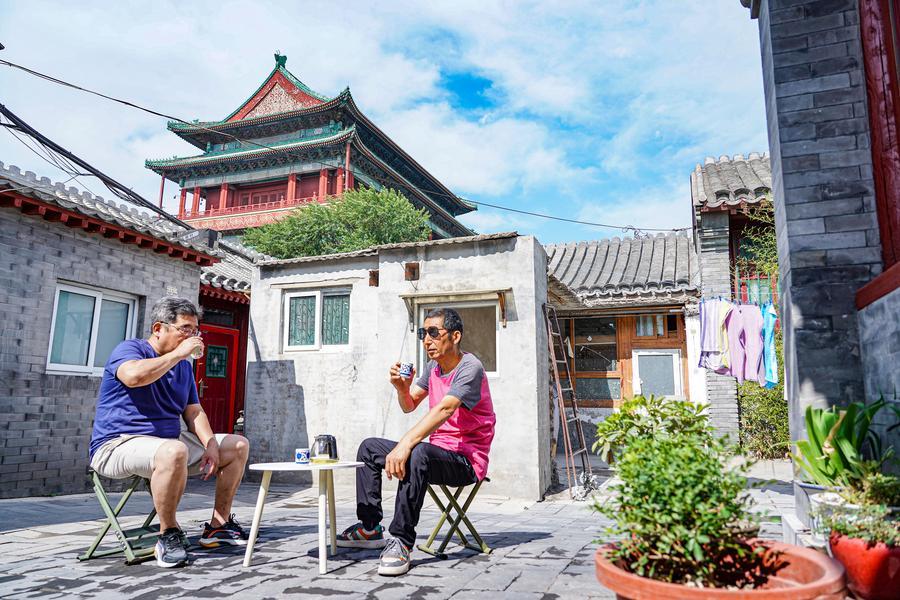
The grassroots consultation mechanism grew out of an everyday hutong tradition. As early as 2012, residents in Caochang often gathered under old trees, sitting on small stools to chat about family matters and public affairs. Recognizing the value of face-to-face exchanges, the community gradually turned the informal gatherings into a regular platform where residents can discuss shared concerns.
Step by step, what began as informal neighborhood conversations has evolved into a five-step structured mechanism for identifying issues, exploring solutions, making decisions, implementing measures and assessing outcomes.
At present, the consultation mechanism has 17 regular members, including a head, two deputy heads, resident representatives and other participants. It generally meets once a month, with attendees varying depending on the issue under discussion. Those directly involved are invited to share their views, while experts and government officials may also join the discussions to help achieve more coordinated solutions, Li explained.
Yet the consultation process is not always easy.
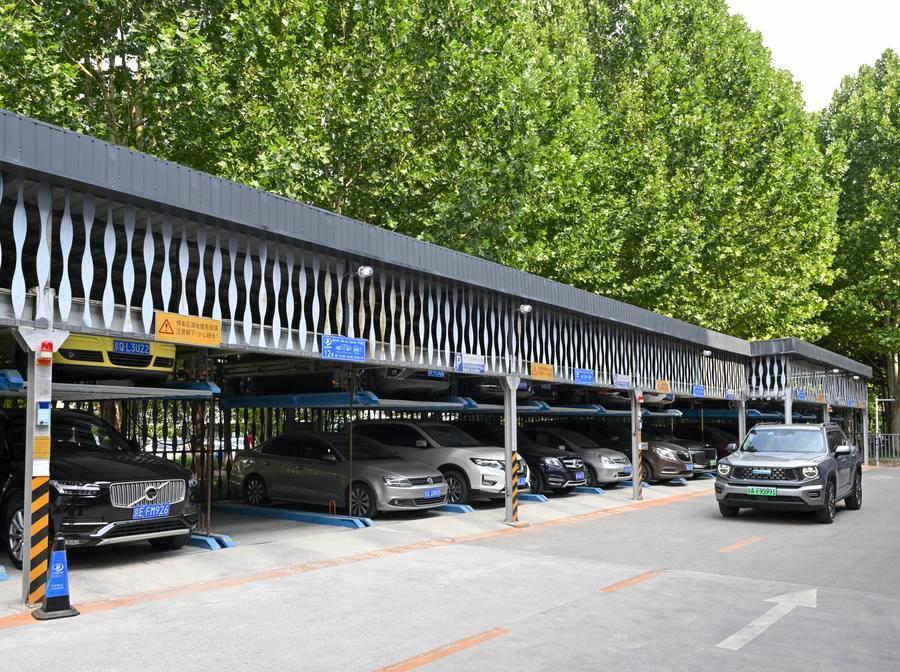
In 2023, when several residents complained about the lack of parking and charging facilities for electric bicycles, building a new site appeared to be a straightforward solution.
"What followed was eight months of consultation -- far longer than the construction itself, which took less than a month," Li told Xinhua.
The main challenge then was finding a location in the densely built community. Identifying a site proved difficult, as the narrow hutong alleys offered little available space. Of the eight locations considered, only one was eventually deemed feasible.
However, nearby residents worried that the new parking and charging facility might block sunlight, generate noise, affect drainage or make daily cleaning more difficult. Some questioned why they should accept a facility beside their homes when they themselves did not own electric bicycles.
The Courtyard Meeting Room brought together different stakeholders, including residents, property management staff, community planners, power suppliers and even some delivery workers.
Through prolonged discussions, they examined every detail, ranging from design and building materials to fire safety, sanitation and future maintenance.
After participants sorted through the concerns and finally reached a consensus, the site was established and has since operated safely and smoothly.
This case is one example of how extensive discussions in the room help turn a well-intentioned proposal into a solution that works in practice.
"Our goal is not to make everyone completely satisfied, which is impossible," Li noted. "Rather, it is to work out a solution that most people, including those who initially opposed it, can accept."
Years of renewal have transformed the neighborhood's appearance and living environment. In 2019, Caochang Sitiao, one of the hutong alleys in the community, was named one of Beijing's top 10 beautiful streets and alleys.
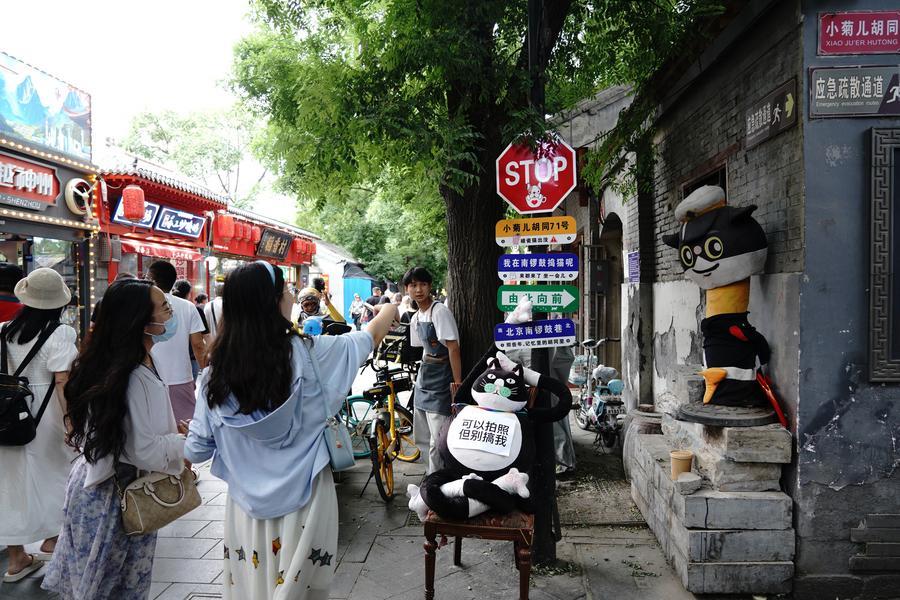
However, introducing new businesses into an old neighborhood can also bring new challenges. The opening of a courtyard-style Mandarin Oriental hotel in September 2024 injected fresh economic vitality into Caochang, but its operations also led to friction with nearby residents.
Complaints soon emerged over noise from late-night supply carts, metal door knockers, and large outdoor air-conditioning units installed close to residents' homes.
The community once again turned to its consultation mechanism, bringing hotel management, residents and community workers together to address the issues. Following rounds of face-to-face communication, a series of effective measures were implemented, and most of the complaints have since been resolved.
"Problems may arise, but they should not be turned into conflicts," Li stressed. "And that is where our meeting room mechanism can play a really important role."
Li described the Courtyard Meeting Room as a grassroots practice of consultative democracy and resident self-governance, saying that it provides a vivid example of how China's whole-process people's democracy is practiced at the community level.
Looking ahead, Li hopes the Courtyard Meeting Room will encourage more and more residents to participate in community governance, strengthen neighborhood bonds and turn shared concerns into collective action.
"With stronger cohesion, we can do more to make our neighborhood a better place to live," Li said. ■