

Tatso sits in her car with children, as a train is seen in the background, in Damxung County of Lhasa, southwest China's Xizang Autonomous Region, June 21, 2026. Twenty-one years ago, as the construction of the Qinghai-Xizang Railway was in full swing, Xinhua photojournalist Chogo took a vivid photo at the construction site in Damxung County on March 30, 2005. In the picture, two girls were sitting beside a rail with bright smiles on their faces.
Now, one of the girls, Tatso, is already a mother of three when she meets with Xinhua photojournalists again and talks about the great changes the railway has brought to the snowy plateau.
"As I watch the trains pass by here every day, it hits me that twenty-one years have gone by in the blink of an eye." Tatso said.
Since the Qinghai-Xizang Railway became operational on July 1, 2006 -- ending Xizang's long history without rail service -- the total volume of goods transported into and out of Xizang by rail has exceeded 100 million tonnes, while the number of passenger trips has surpassed 41 million.
During these two decades, the Qinghai-Xizang Railway, this major transportation artery, has been continuously improving the lives of people on the plateau.
Twenty years ago, Tatso's family had a motorcycle at home, and their income was maintained only by grazing. Nowadays, relying on animal husbandry and cargo transportation, the family owns three trucks, a loader, two private cars and two motorcycles, and more than 50 yaks.
"All kinds of clothes and daily necessities can be easily purchased." Tatso said with her daughters in her arms. In front of Xinhua photojournalists' camera, Tatso posed for photos with her girls, who are wearing beautiful and fashionable outfits, making a sharp contrast to the oil-stained and worn-out cuffs of Tatso's clothes in the old picture.
"Now I have two wishes. First, I hope my three children can study hard and grow up healthily. Second, when I have time in the future, I will take my kids on a train to visit the capital city of Beijing." said Tatso. (Xinhua/Jiang Fan)

Tatso (2nd R) and her three daughters have fun on a pasture in Damxung County of Lhasa, southwest China's Xizang Autonomous Region, June 21, 2026. (Xinhua/Tenzin Nyida)
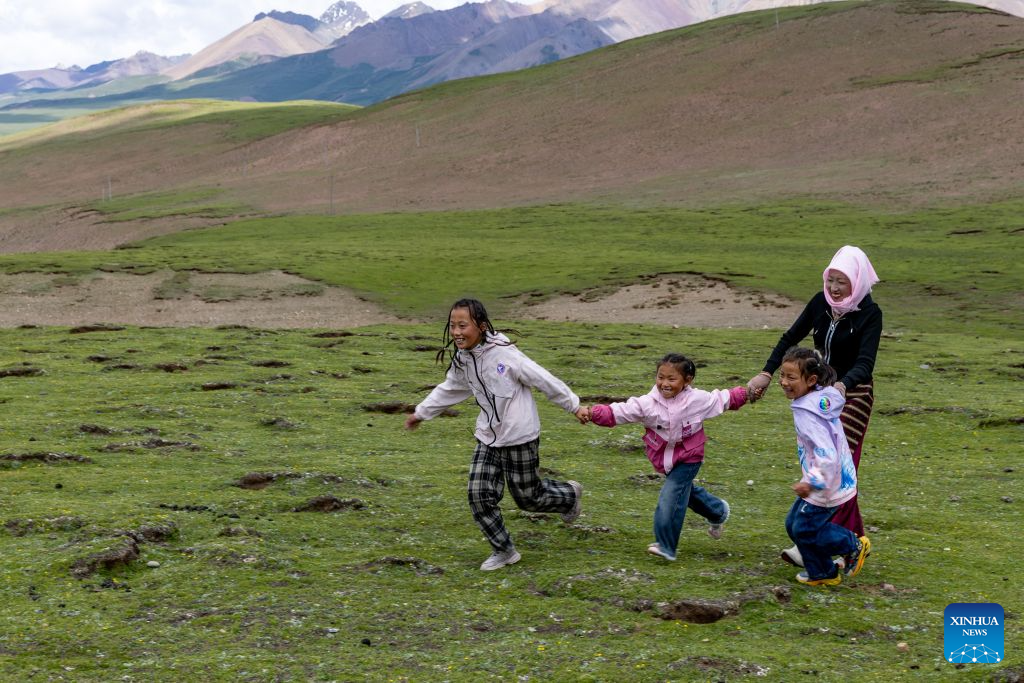
Tatso has fun with her three daughters on a pasture in Damxung County of Lhasa, southwest China's Xizang Autonomous Region, June 21, 2026. (Xinhua/Jiang Fan)
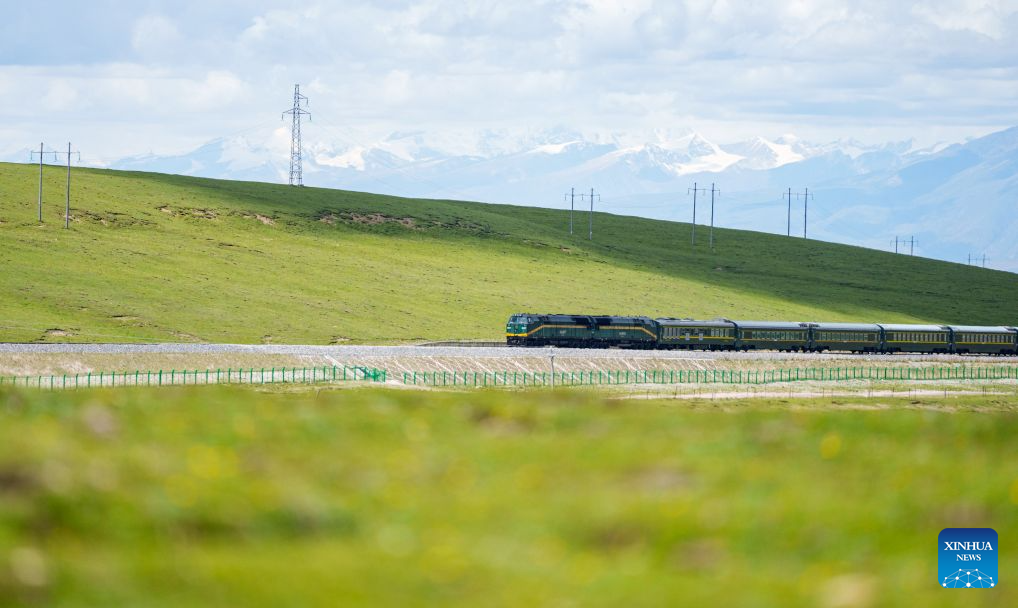
A train runs in Damxung County of Lhasa, southwest China's Xizang Autonomous Region, June 21, 2026. (Xinhua/Tenzin Nyida)
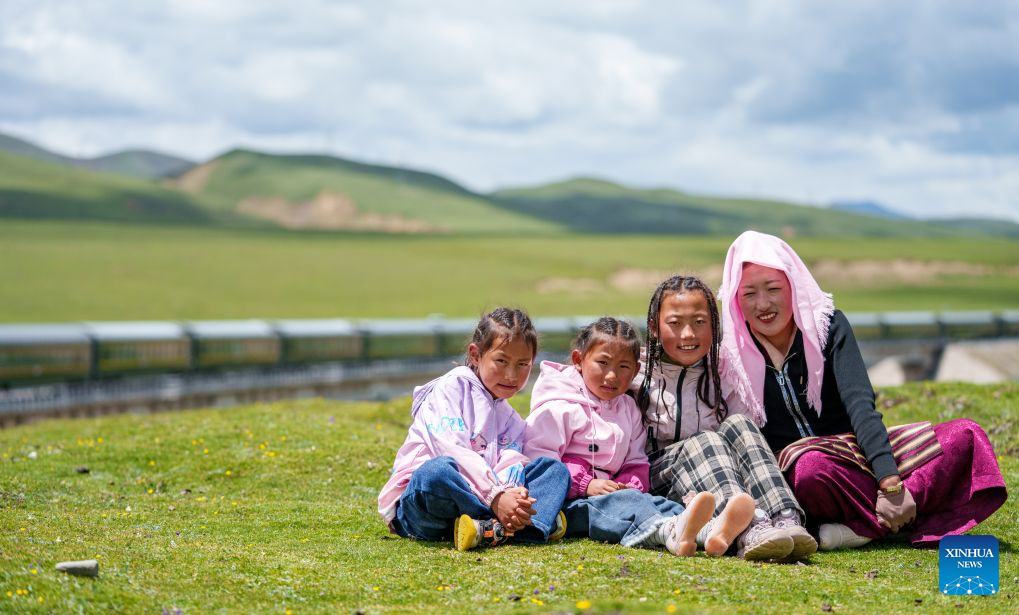
Tatso (1st R) and her three daughters pose for a photo in front of their home beside the Qinghai-Xizang Railway in Damxung County of Lhasa, southwest China's Xizang Autonomous Region, June 21, 2026. (Xinhua/Tenzin Nyida)
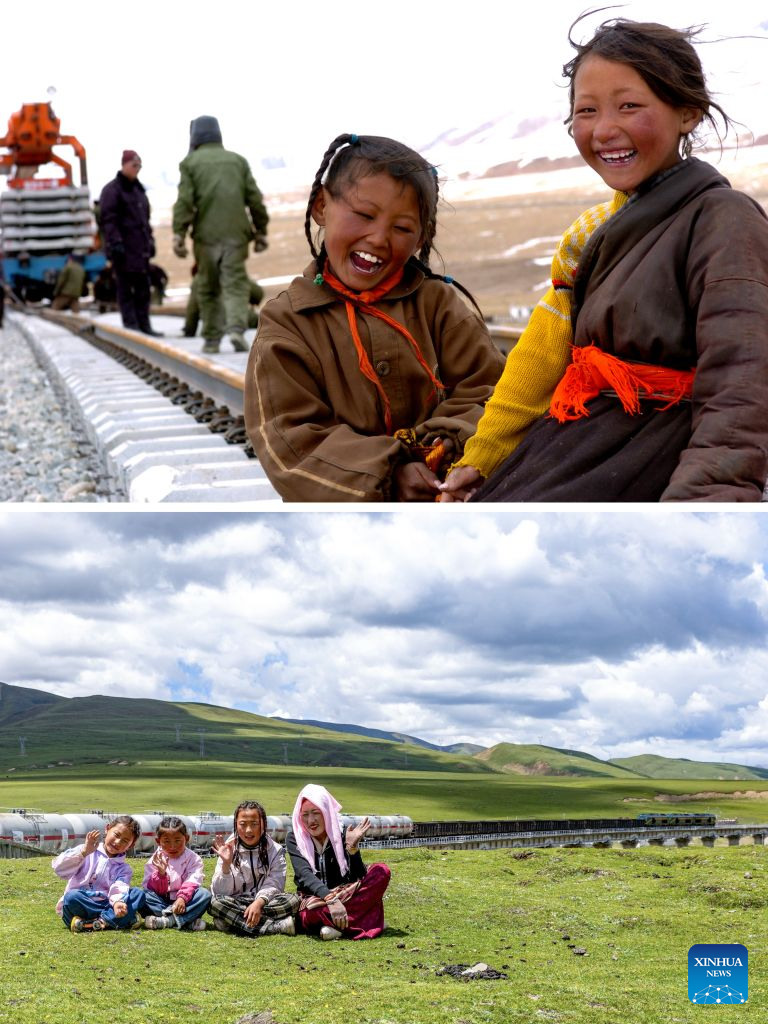
This combo photo shows Tatso (R) and her friend having fun at a construction site of the Qinghai-Xizang Railway near her home in Damxung County of Lhasa, southwest China's Xizang Autonomous Region, March 30, 2005 (above, photo by Xinhua photojournalist Chogo), and Tatso (1st R) and her three daughters posing for a photo beside the Qinghai-Xizang Railway in Damxung County of Lhasa, southwest China's Xizang Autonomous Region, June 21, 2026 (below, photo by Xinhua photojournalist Jiang Fan). (Xinhua)
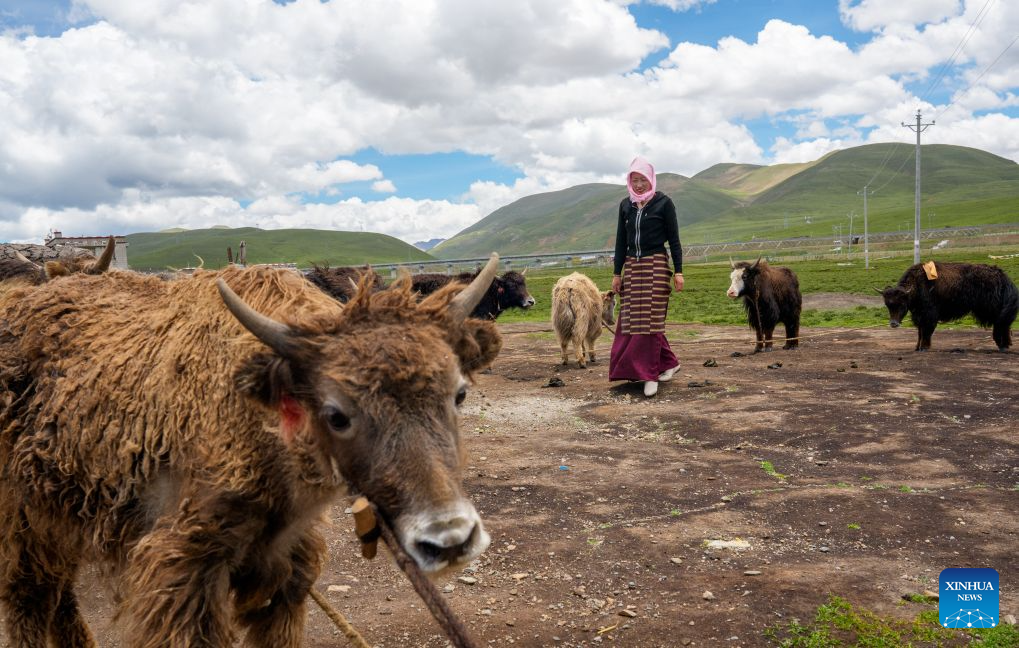
Tatso walks on the pasture in front of her home in Damxung County of Lhasa, southwest China's Xizang Autonomous Region, June 21, 2026. (Xinhua/Tenzin Nyida)
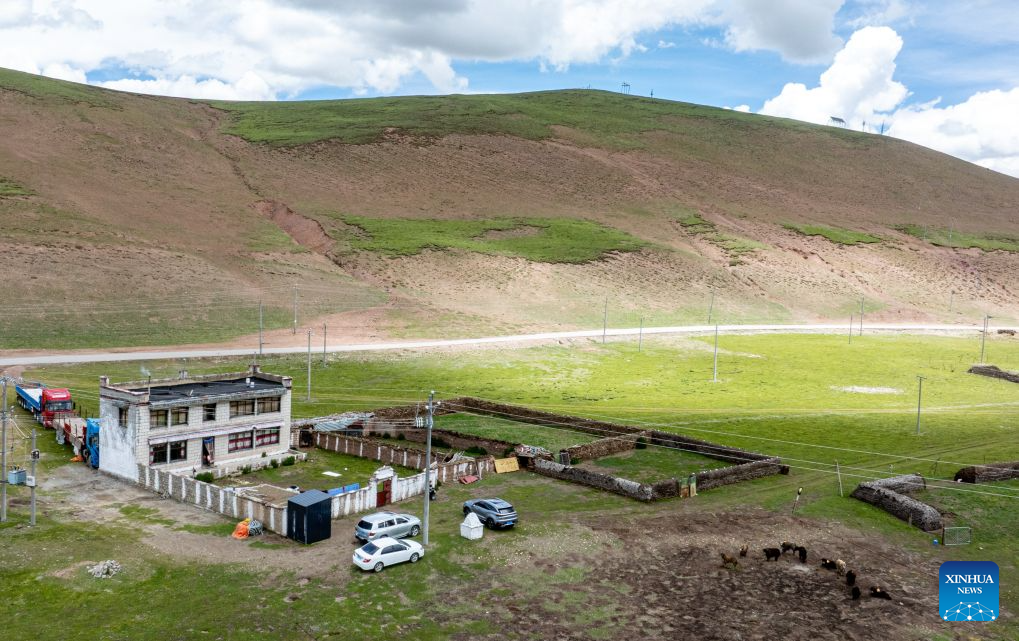
An aerial drone photo taken on June 21, 2026 shows Tatso's home in Damxung County of Lhasa, southwest China's Xizang Autonomous Region. (Xinhua/Tenzin Nyida)
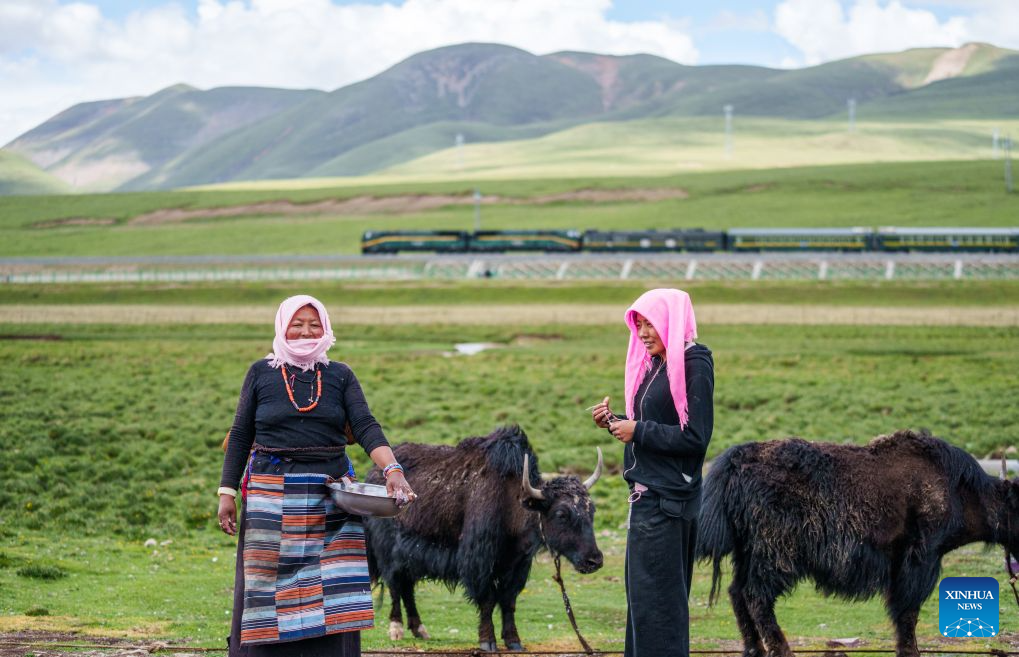
Tatso's family members feed cattle on the pasture in front of their home with a train passing behind them in Damxung County of Lhasa, southwest China's Xizang Autonomous Region, June 21, 2026. (Xinhua/Tenzin Nyida)
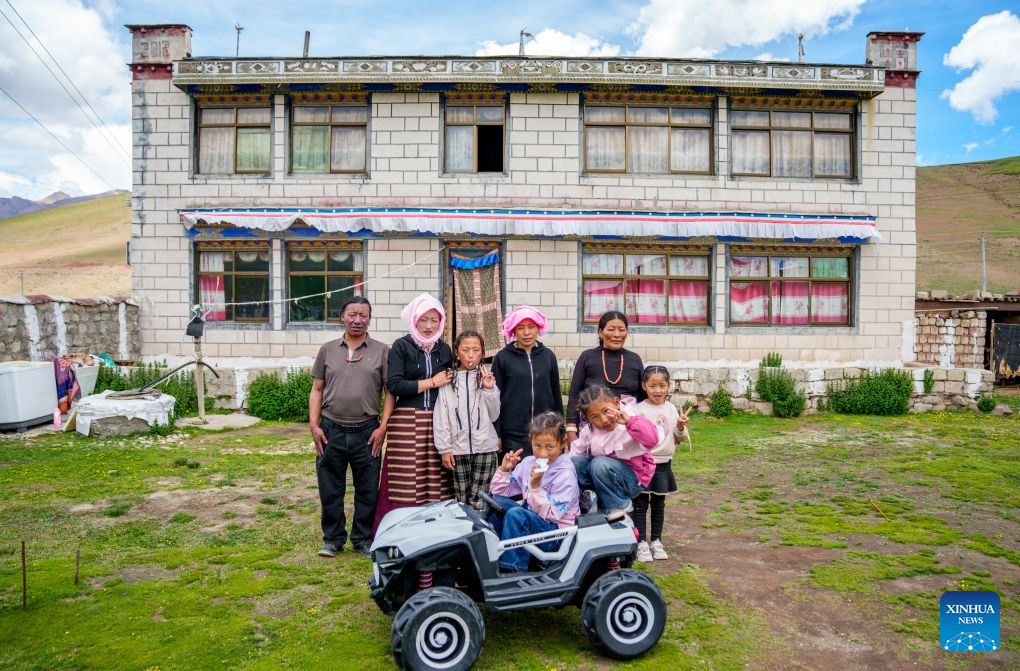
Tatso (2nd L) poses for photos with her family in their yard in Damxung County of Lhasa, southwest China's Xizang Autonomous Region, June 21, 2026. (Xinhua/Tenzin Nyida)

Tatso (1st L) has fun with her three daughters on a pasture in Damxung County of Lhasa, southwest China's Xizang Autonomous Region, June 21, 2026. (Xinhua/Tenzin Nyida)


