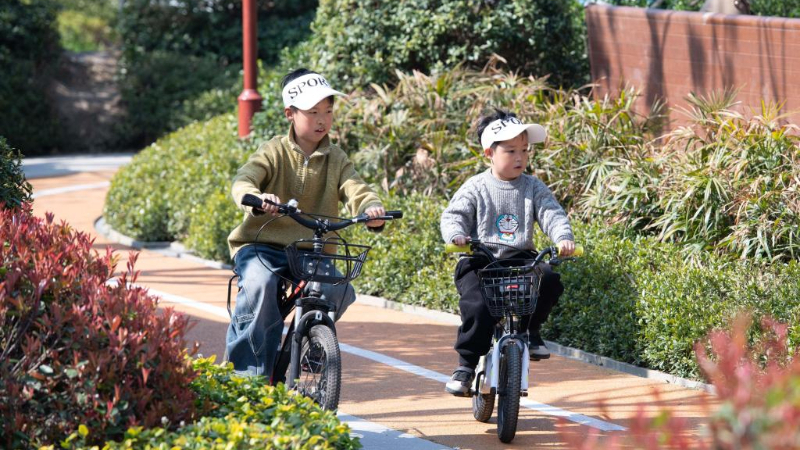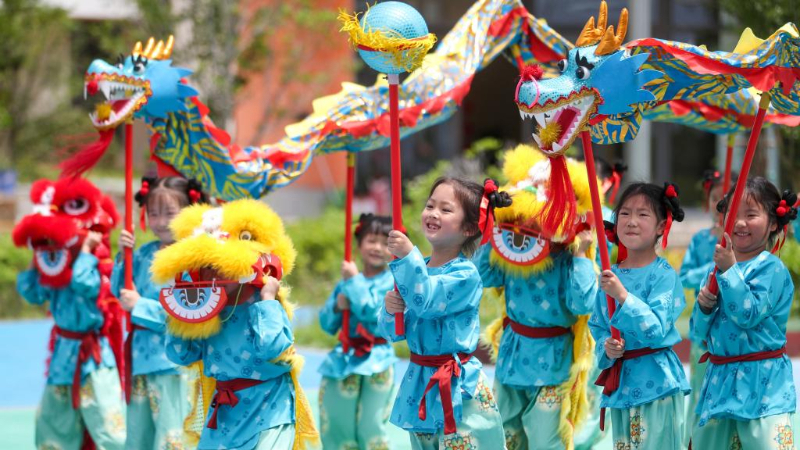
It is the youth that will shape our future and young people from both countries have a chance to spend some time in each other's countries so that they'll better understand the importance of the relationship, Jan Berris, vice president of the National Committee on U.S.-China Relations, told Xinhua on the sidelines of the event.
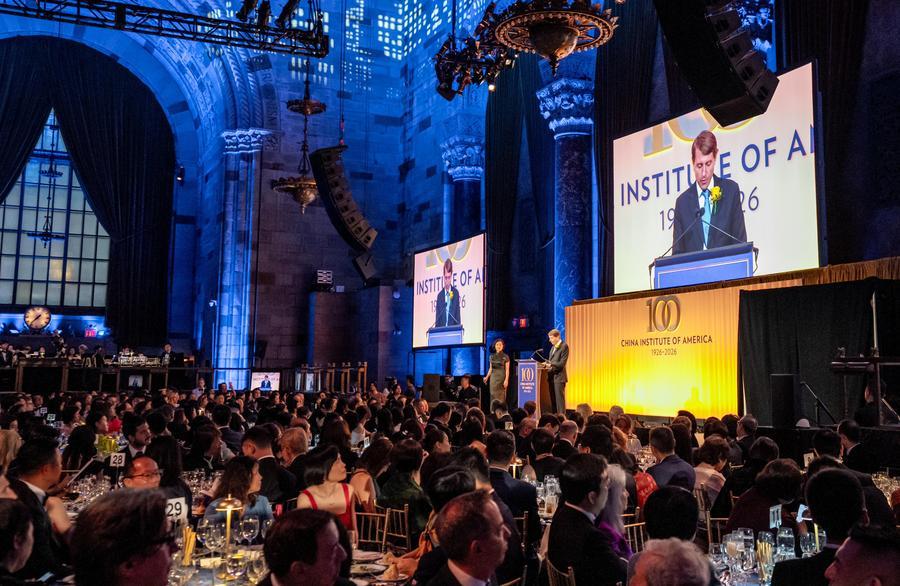
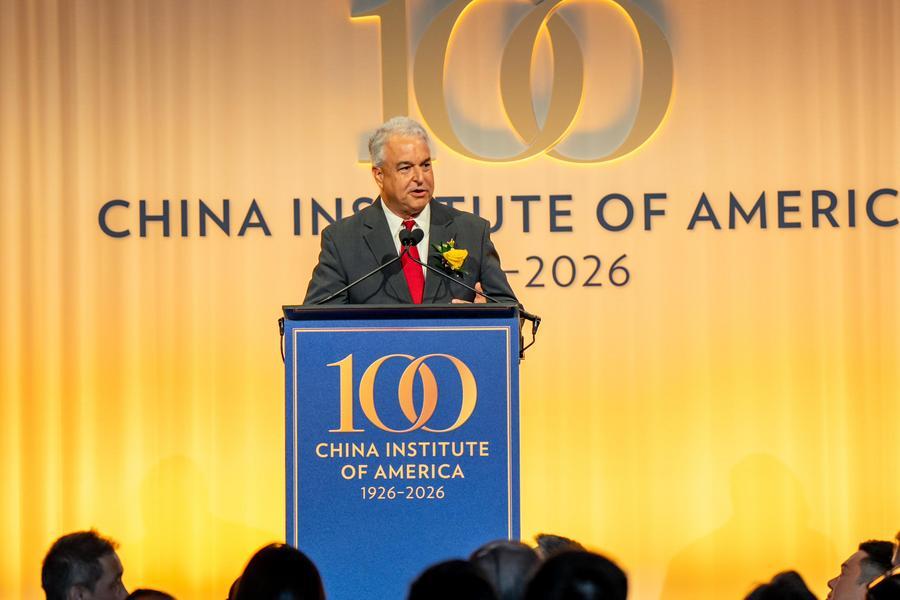
NEW YORK, June 1 (Xinhua) -- As the China Institute of America, a nonprofit organization dedicated to deepening understanding of China, marked its centennial, participants from various institutions and representatives of former U.S. presidents' families voiced support for U.S.-China engagement and people-to-people exchanges.
Christopher Nixon Cox, grandson of former U.S. President Richard Nixon, said that facing differences between China and the United States, his grandfather "promised something harder and more honest, a bridge to stand and to speak."
The lesson of 1972 is that even after decades of silence, even across the deepest gulf, people of goodwill can find a way to talk across it, said Cox, recalling then-President Nixon's landmark visit to China in 1972.
"My father, former President George H. W. Bush, believed deeply that lasting relationships between nations are built person to person through openness and continued engagement, values that China Institute has long championed," said Neil Bush, chairman of the George H. W. Bush Foundation for U.S.-China Relations, in a video message to the gala.
Building an understanding of China in the United States is something desperately needed today, David Firestein, president and CEO of George H. W. Bush Foundation for U.S.-China Relations, told the gala.
"So, we try to foster that spirit of cooperation" and dialogue, create a constructive environment for diplomacy and engagement, and advocate for sensible moderate policies that are good for America, China, the bilateral relationship and the world, said Firestein in an interview with Xinhua on the sidelines of the gala.
"What we try to do is help build a stronger U.S.-China relationship, because we believe that's really important," said Firestein.
People-to-people exchanges between China and the United States have seen encouraging progress thanks to the commitment from both sides.
Over 50,000 young Americans have visited China through exchange and study programs under a five-year initiative of China, achieving the target two and a half years ahead of schedule.
It shows that China is very committed to doing its part and to further fostering dialogue between the young people of both countries. "I think that's a very positive development. I salute the Chinese government for doing that. I think the United States needs to do more, and I hope we'll see more," Firestein said.
The people-to-people aspect of the bilateral relationship is the foundation and an important ballast that helps stabilize ties when the two countries disagree on various issues, said Firestein.
It is the youth that will shape our future and young people from both countries have a chance to spend some time in each other's countries so that they'll better understand the importance of the relationship, Jan Berris, vice president of the National Committee on U.S.-China Relations, told Xinhua on the sidelines of the event.
"It's really important for people to see for themselves what the other country is like, to have an opportunity to talk to others. Then you can make up your own mind," said Berris, adding, "There's no substitute for seeing things with your own eyes."
Berris stressed the need to invest in exchange programs for longer periods of time and for people of different ages. "Whether it's a semester, a whole year or at least several months, hopefully they can live with host families and can get a real understanding of what people think."
In addressing the audience at the gala, Chinese Ambassador to the United States Xie Feng stated that Chinese President Xi Jinping and U.S. President Donald Trump recently held a successful meeting in Beijing, during which the two sides agreed on a new vision of a constructive China-U.S. relationship of strategic stability. He emphasized that as China and the United States arrive once again at a historic crossroads, the two sides need more than ever before to seek common ground to forge ahead together.
"In this context, people-to-people and cultural exchanges have become all the more important," said Xie.■