
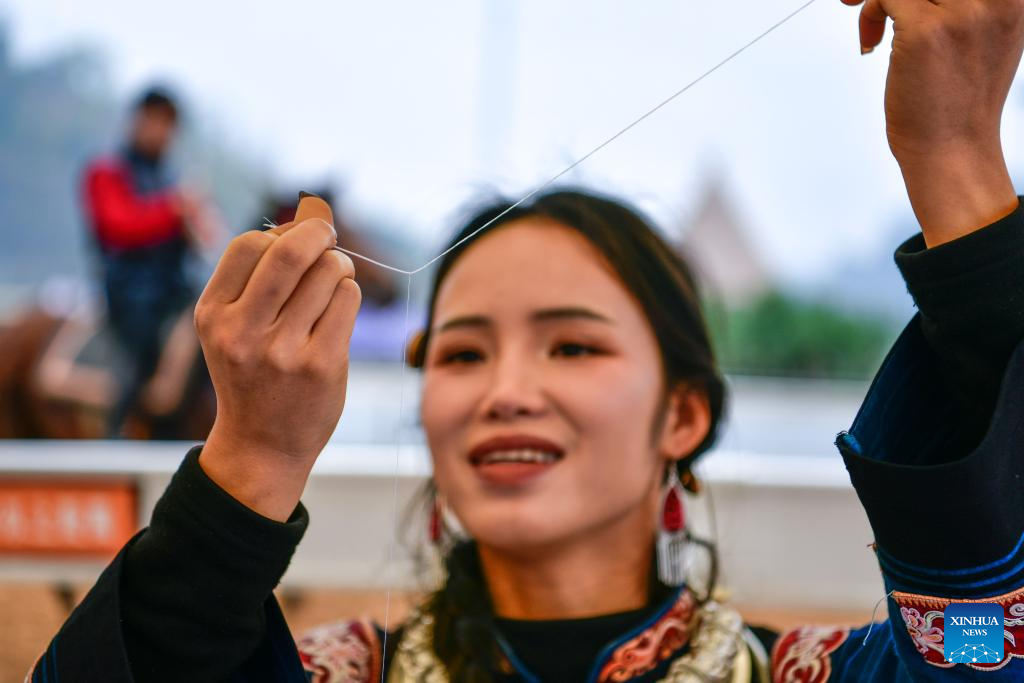
An embroiderer displays skills at a horse tail embroidery competition in Sandu Shui Autonomous County, southwest China's Guizhou Province, March 7, 2026. The horse tail embroidery of the Shui people in southwest China is characterized by unique prefabricated sewing threads made up of horse tail fibers wound with silk yarns from the outside. This highly regarded traditional art was recognized as a national intangible cultural heritage for its sophisticated techniques.
In recent years, Sandu Shui Autonomous County has enhanced support for intangible cultural heritage by establishing institutions to promote Shui ethnic culture, including horse tail embroidery making skills. By integrating modern artistic expressions into traditional embroidery, the county has developed horse tail embroidery creative cultural products, increasing the income of local people. This ancient art has been revitalized through inheritance and innovation. (Xinhua/Yang Wenbin)
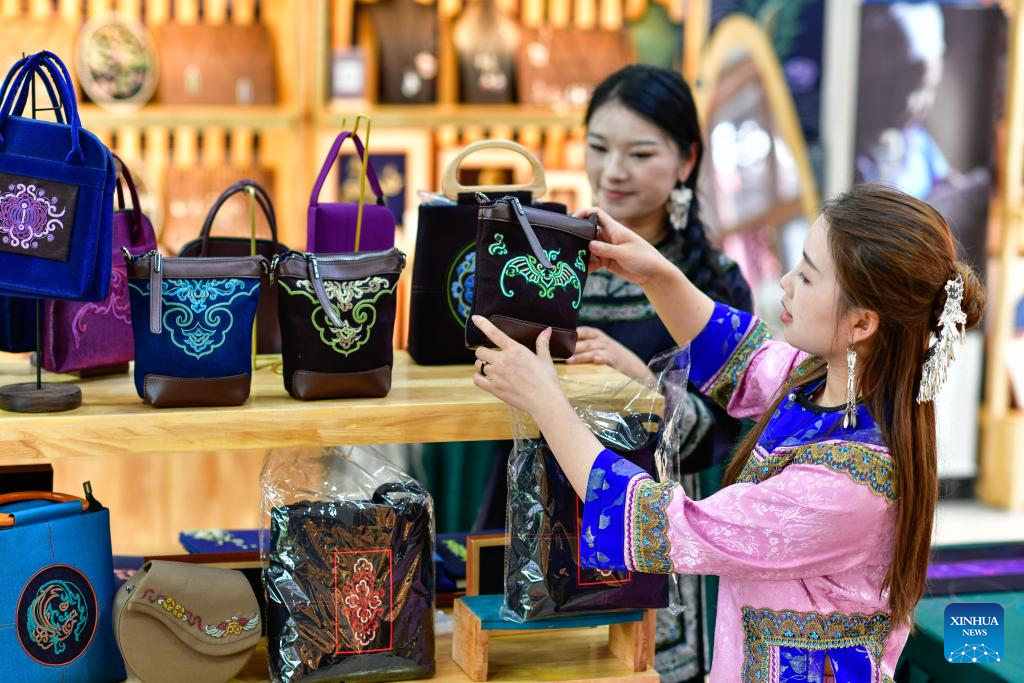
An embroiderer arranges horse tail embroidery-decorated handbags at a horse tail embroidery exhibition hall in Sandu Shui Autonomous County, southwest China's Guizhou Province, May 19, 2026. The horse tail embroidery of the Shui people in southwest China is characterized by unique prefabricated sewing threads made up of horse tail fibers wound with silk yarns from the outside. This highly regarded traditional art was recognized as a national intangible cultural heritage for its sophisticated techniques.
In recent years, Sandu Shui Autonomous County has enhanced support for intangible cultural heritage by establishing institutions to promote Shui ethnic culture, including horse tail embroidery making skills. By integrating modern artistic expressions into traditional embroidery, the county has developed horse tail embroidery creative cultural products, increasing the income of local people. This ancient art has been revitalized through inheritance and innovation. (Xinhua/Yang Wenbin)
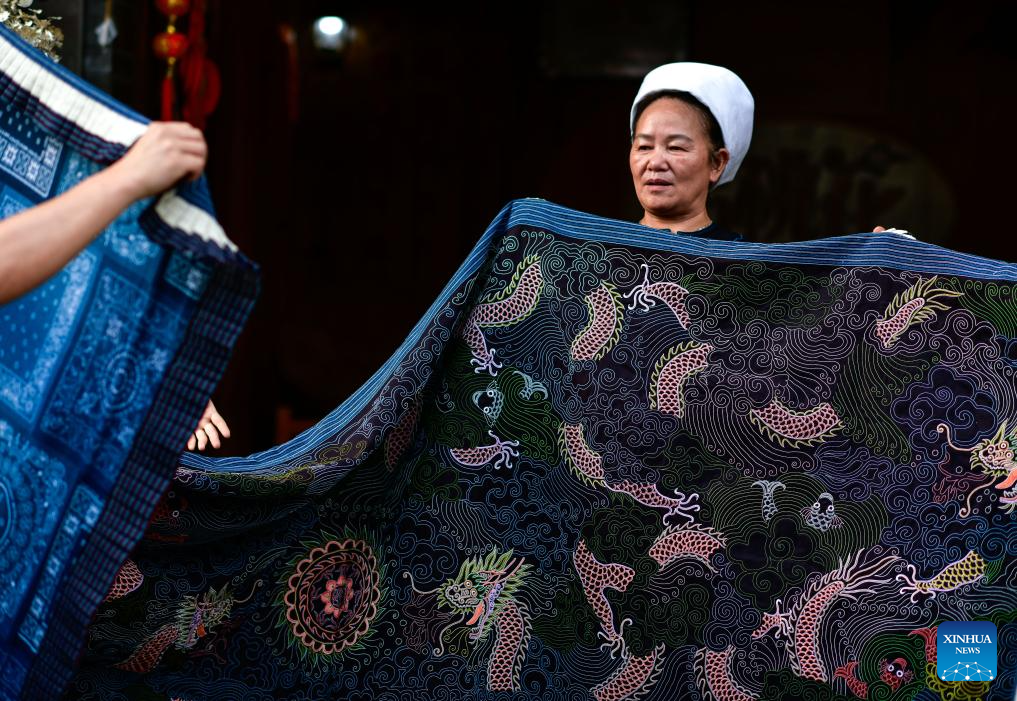
An embroiderer displays a horse tail embroidery work at a horse tail embroidery museum in Sandu Shui Autonomous County, southwest China's Guizhou Province, May 19, 2026. The horse tail embroidery of the Shui people in southwest China is characterized by unique prefabricated sewing threads made up of horse tail fibers wound with silk yarns from the outside. This highly regarded traditional art was recognized as a national intangible cultural heritage for its sophisticated techniques.
In recent years, Sandu Shui Autonomous County has enhanced support for intangible cultural heritage by establishing institutions to promote Shui ethnic culture, including horse tail embroidery making skills. By integrating modern artistic expressions into traditional embroidery, the county has developed horse tail embroidery creative cultural products, increasing the income of local people. This ancient art has been revitalized through inheritance and innovation. (Xinhua/Yang Wenbin)
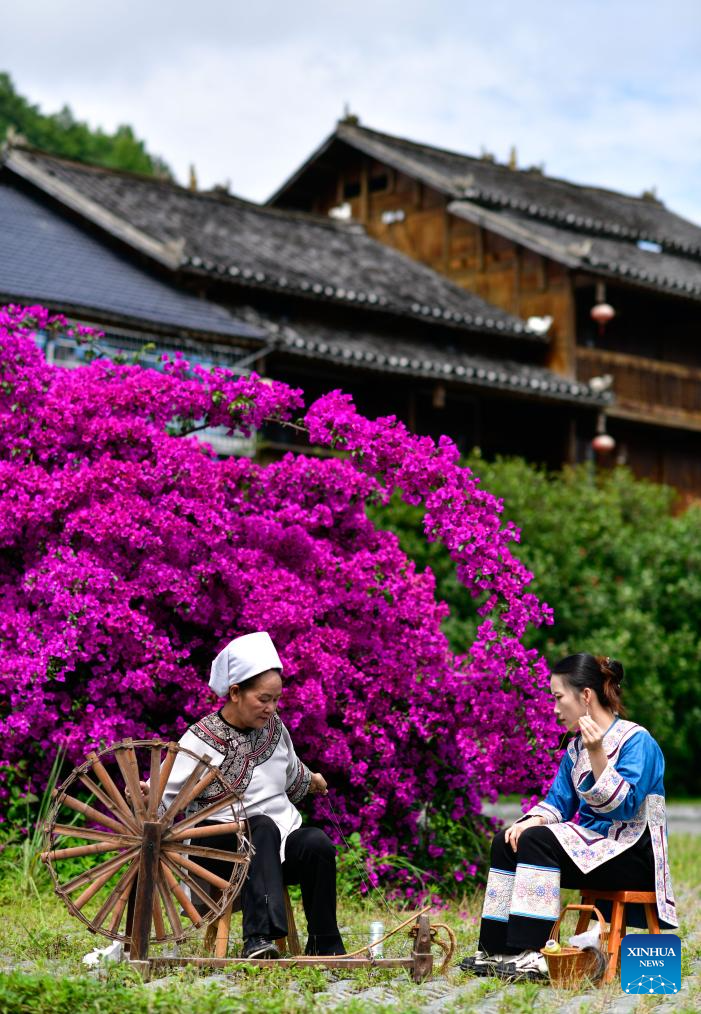
Embroiderers prepare materials for making horse tail embroidery at a horse tail embroidery museum in Sandu Shui Autonomous County, southwest China's Guizhou Province, May 20, 2026. The horse tail embroidery of the Shui people in southwest China is characterized by unique prefabricated sewing threads made up of horse tail fibers wound with silk yarns from the outside. This highly regarded traditional art was recognized as a national intangible cultural heritage for its sophisticated techniques.
In recent years, Sandu Shui Autonomous County has enhanced support for intangible cultural heritage by establishing institutions to promote Shui ethnic culture, including horse tail embroidery making skills. By integrating modern artistic expressions into traditional embroidery, the county has developed horse tail embroidery creative cultural products, increasing the income of local people. This ancient art has been revitalized through inheritance and innovation. (Xinhua/Yang Wenbin)
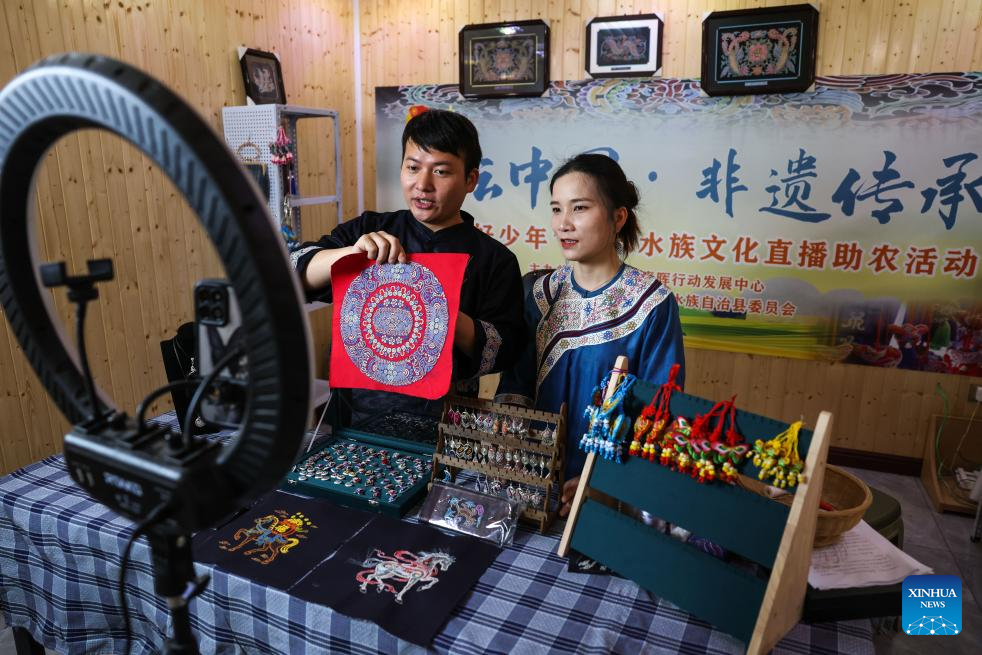
Staff members promote horse tail embroidery creative cultural products via livestream at a horse tail embroidery museum in Sandu Shui Autonomous County, southwest China's Guizhou Province, May 20, 2026. The horse tail embroidery of the Shui people in southwest China is characterized by unique prefabricated sewing threads made up of horse tail fibers wound with silk yarns from the outside. This highly regarded traditional art was recognized as a national intangible cultural heritage for its sophisticated techniques.
In recent years, Sandu Shui Autonomous County has enhanced support for intangible cultural heritage by establishing institutions to promote Shui ethnic culture, including horse tail embroidery making skills. By integrating modern artistic expressions into traditional embroidery, the county has developed horse tail embroidery creative cultural products, increasing the income of local people. This ancient art has been revitalized through inheritance and innovation. (Xinhua/Yang Wenbin)
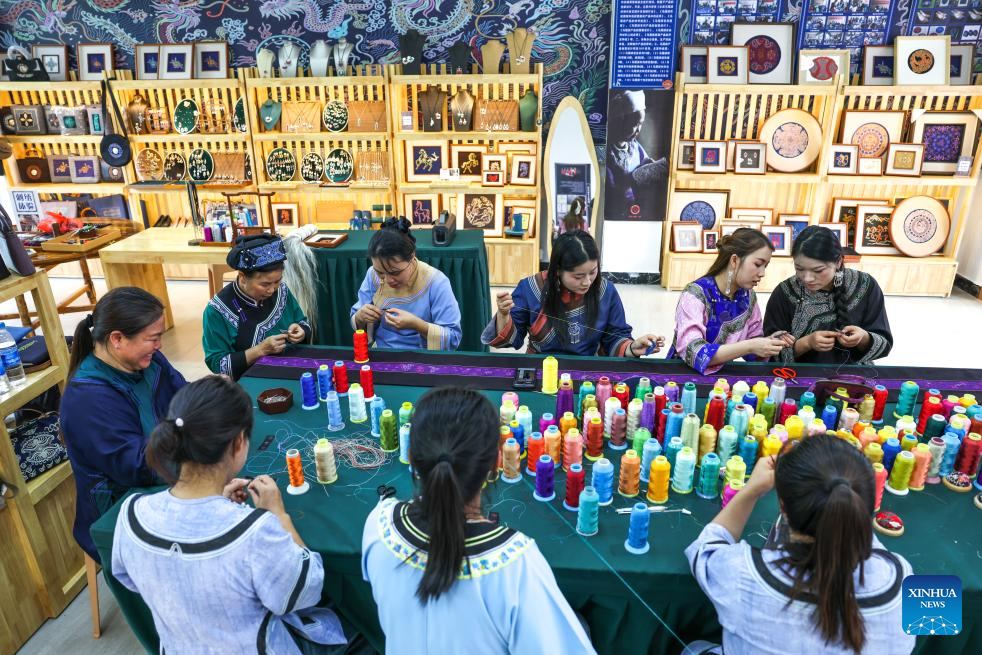
Embroiderers make horse tail embroidery works at a horse tail embroidery exhibition hall in Sandu Shui Autonomous County, southwest China's Guizhou Province, May 19, 2026. The horse tail embroidery of the Shui people in southwest China is characterized by unique prefabricated sewing threads made up of horse tail fibers wound with silk yarns from the outside. This highly regarded traditional art was recognized as a national intangible cultural heritage for its sophisticated techniques.
In recent years, Sandu Shui Autonomous County has enhanced support for intangible cultural heritage by establishing institutions to promote Shui ethnic culture, including horse tail embroidery making skills. By integrating modern artistic expressions into traditional embroidery, the county has developed horse tail embroidery creative cultural products, increasing the income of local people. This ancient art has been revitalized through inheritance and innovation. (Xinhua/Yang Wenbin)
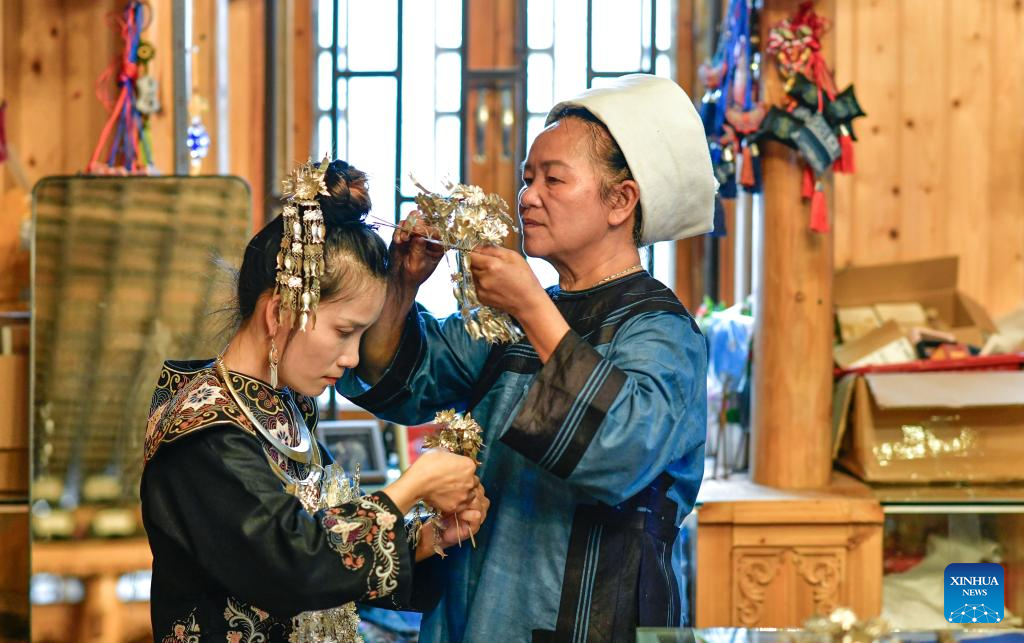
An embroiderer arranges silver accessories for another at a horse tail embroidery museum in Sandu Shui Autonomous County, southwest China's Guizhou Province, May 19, 2026. The horse tail embroidery of the Shui people in southwest China is characterized by unique prefabricated sewing threads made up of horse tail fibers wound with silk yarns from the outside. This highly regarded traditional art was recognized as a national intangible cultural heritage for its sophisticated techniques.
In recent years, Sandu Shui Autonomous County has enhanced support for intangible cultural heritage by establishing institutions to promote Shui ethnic culture, including horse tail embroidery making skills. By integrating modern artistic expressions into traditional embroidery, the county has developed horse tail embroidery creative cultural products, increasing the income of local people. This ancient art has been revitalized through inheritance and innovation. (Xinhua/Yang Wenbin)
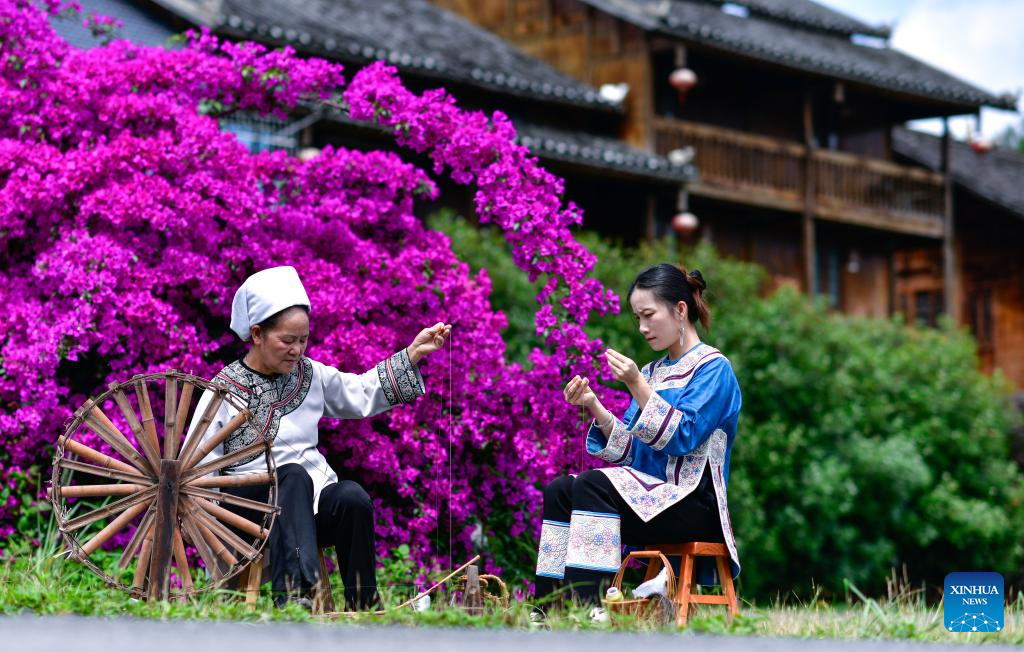
Embroiderers prepare material for making horse tail embroidery at a horse tail embroidery museum in Sandu Shui Autonomous County, southwest China's Guizhou Province, May 20, 2026. The horse tail embroidery of the Shui people in southwest China is characterized by unique prefabricated sewing threads made up of horse tail fibers wound with silk yarns from the outside. This highly regarded traditional art was recognized as a national intangible cultural heritage for its sophisticated techniques.
In recent years, Sandu Shui Autonomous County has enhanced support for intangible cultural heritage by establishing institutions to promote Shui ethnic culture, including horse tail embroidery making skills. By integrating modern artistic expressions into traditional embroidery, the county has developed horse tail embroidery creative cultural products, increasing the income of local people. This ancient art has been revitalized through inheritance and innovation. (Xinhua/Yang Wenbin)
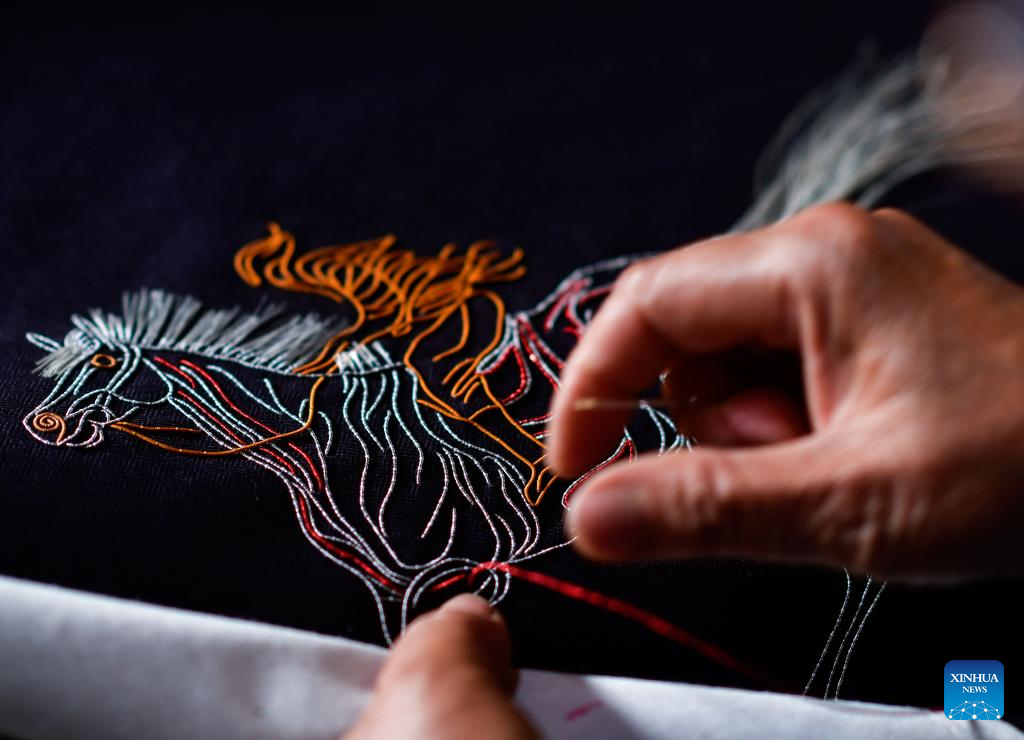
An embroiderer makes a horse tail embroidery work at a horse tail embroidery museum in Sandu Shui Autonomous County, southwest China's Guizhou Province, May 19, 2026. The horse tail embroidery of the Shui people in southwest China is characterized by unique prefabricated sewing threads made up of horse tail fibers wound with silk yarns from the outside. This highly regarded traditional art was recognized as a national intangible cultural heritage for its sophisticated techniques.
In recent years, Sandu Shui Autonomous County has enhanced support for intangible cultural heritage by establishing institutions to promote Shui ethnic culture, including horse tail embroidery making skills. By integrating modern artistic expressions into traditional embroidery, the county has developed horse tail embroidery creative cultural products, increasing the income of local people. This ancient art has been revitalized through inheritance and innovation. (Xinhua/Yang Wenbin)
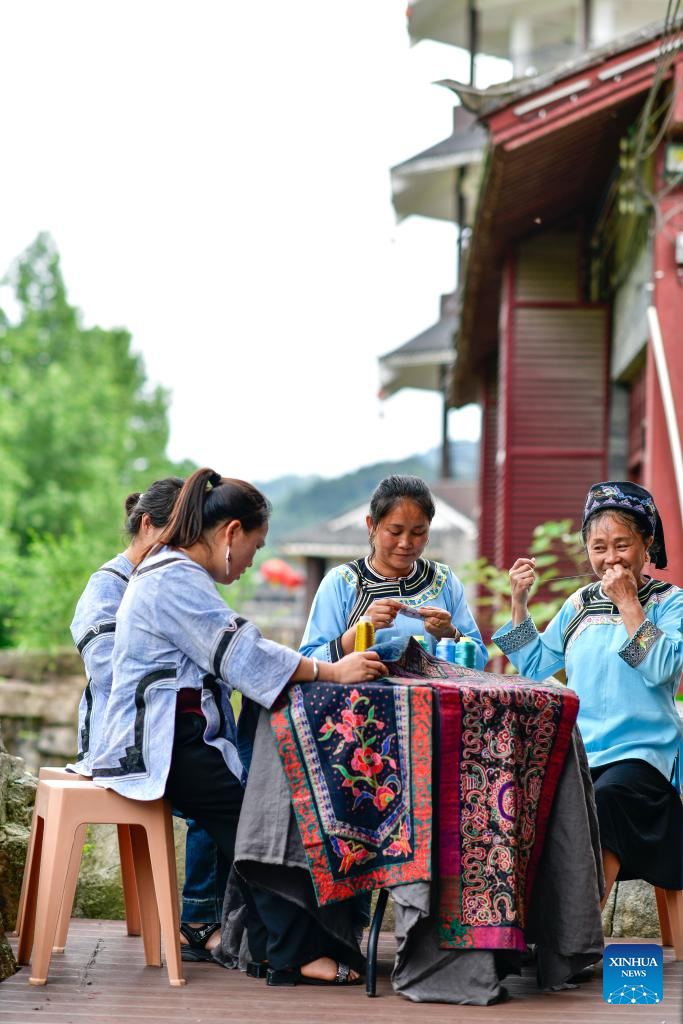
Embroiderers make horse tail embroidery works at a horse tail embroidery exhibition hall in Sandu Shui Autonomous County, southwest China's Guizhou Province, May 19, 2026. The horse tail embroidery of the Shui people in southwest China is characterized by unique prefabricated sewing threads made up of horse tail fibers wound with silk yarns from the outside. This highly regarded traditional art was recognized as a national intangible cultural heritage for its sophisticated techniques.
In recent years, Sandu Shui Autonomous County has enhanced support for intangible cultural heritage by establishing institutions to promote Shui ethnic culture, including horse tail embroidery making skills. By integrating modern artistic expressions into traditional embroidery, the county has developed horse tail embroidery creative cultural products, increasing the income of local people. This ancient art has been revitalized through inheritance and innovation. (Xinhua/Yang Wenbin)
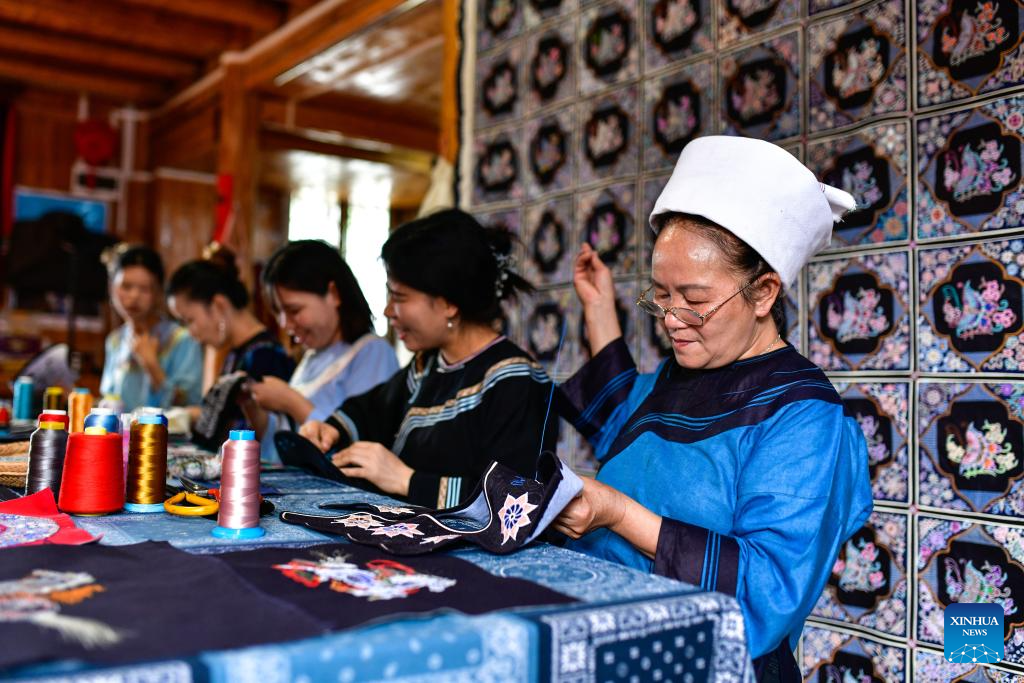
Embroiderers make horse tail embroidery works at a horse tail embroidery museum in Sandu Shui Autonomous County, southwest China's Guizhou Province, May 19, 2026. The horse tail embroidery of the Shui people in southwest China is characterized by unique prefabricated sewing threads made up of horse tail fibers wound with silk yarns from the outside. This highly regarded traditional art was recognized as a national intangible cultural heritage for its sophisticated techniques.
In recent years, Sandu Shui Autonomous County has enhanced support for intangible cultural heritage by establishing institutions to promote Shui ethnic culture, including horse tail embroidery making skills. By integrating modern artistic expressions into traditional embroidery, the county has developed horse tail embroidery creative cultural products, increasing the income of local people. This ancient art has been revitalized through inheritance and innovation. (Xinhua/Yang Wenbin)
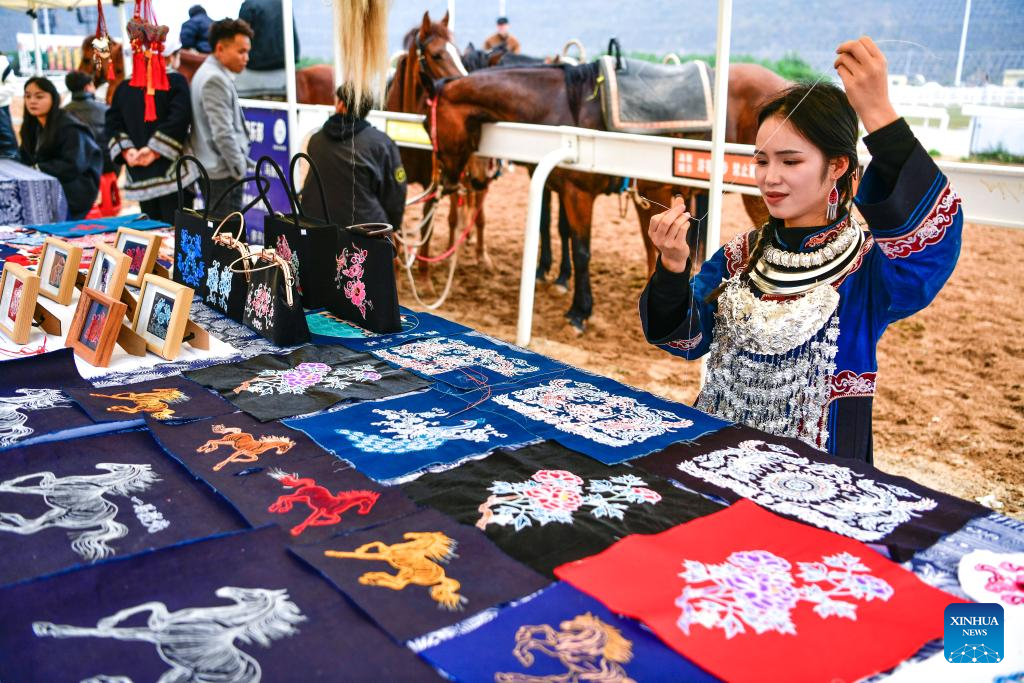
An embroiderer displays works at a horse tail embroidery competition in Sandu Shui Autonomous County, southwest China's Guizhou Province, March 7, 2026. The horse tail embroidery of the Shui people in southwest China is characterized by unique prefabricated sewing threads made up of horse tail fibers wound with silk yarns from the outside. This highly regarded traditional art was recognized as a national intangible cultural heritage for its sophisticated techniques.
In recent years, Sandu Shui Autonomous County has enhanced support for intangible cultural heritage by establishing institutions to promote Shui ethnic culture, including horse tail embroidery making skills. By integrating modern artistic expressions into traditional embroidery, the county has developed horse tail embroidery creative cultural products, increasing the income of local people. This ancient art has been revitalized through inheritance and innovation. (Xinhua/Yang Wenbin)
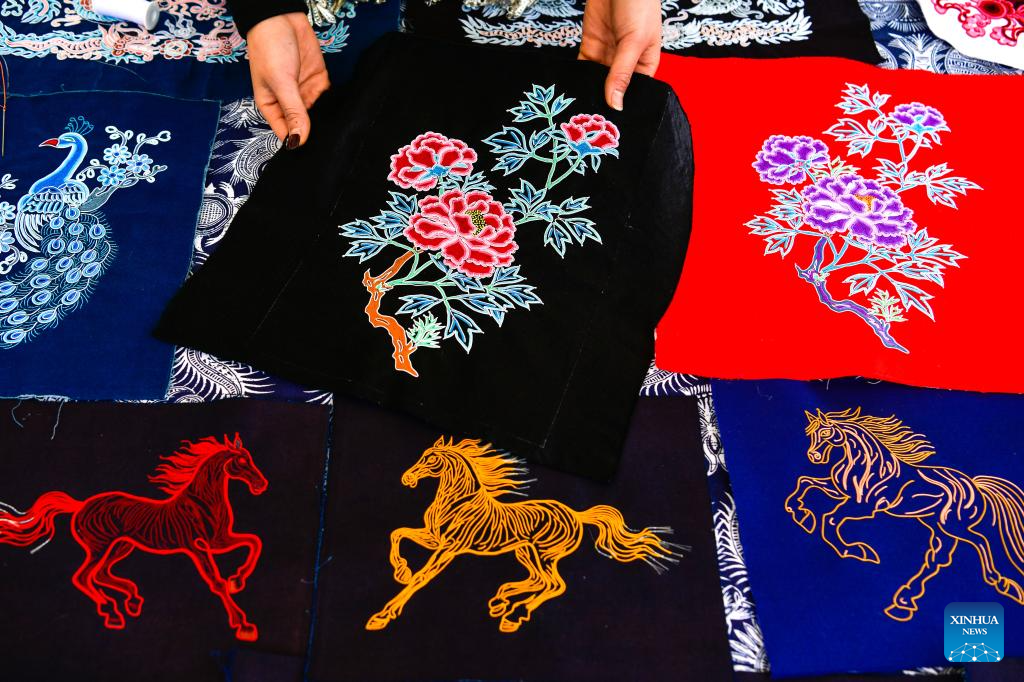
An embroiderer displays works at a horse tail embroidery competition in Sandu Shui Autonomous County, southwest China's Guizhou Province, March 7, 2026. The horse tail embroidery of the Shui people in southwest China is characterized by unique prefabricated sewing threads made up of horse tail fibers wound with silk yarns from the outside. This highly regarded traditional art was recognized as a national intangible cultural heritage for its sophisticated techniques.
In recent years, Sandu Shui Autonomous County has enhanced support for intangible cultural heritage by establishing institutions to promote Shui ethnic culture, including horse tail embroidery making skills. By integrating modern artistic expressions into traditional embroidery, the county has developed horse tail embroidery creative cultural products, increasing the income of local people. This ancient art has been revitalized through inheritance and innovation. (Xinhua/Yang Wenbin)
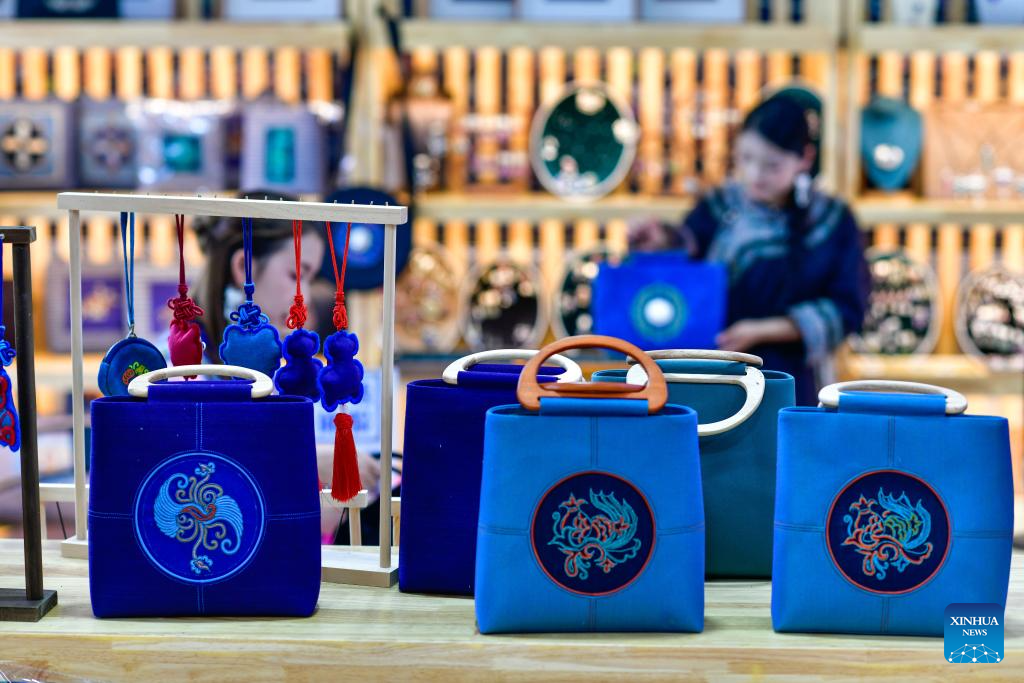
An embroiderer arranges horse tail embroidery-decorated handbags at a horse tail embroidery exhibition hall in Sandu Shui Autonomous County, southwest China's Guizhou Province, May 19, 2026. The horse tail embroidery of the Shui people in southwest China is characterized by unique prefabricated sewing threads made up of horse tail fibers wound with silk yarns from the outside. This highly regarded traditional art was recognized as a national intangible cultural heritage for its sophisticated techniques.
In recent years, Sandu Shui Autonomous County has enhanced support for intangible cultural heritage by establishing institutions to promote Shui ethnic culture, including horse tail embroidery making skills. By integrating modern artistic expressions into traditional embroidery, the county has developed horse tail embroidery creative cultural products, increasing the income of local people. This ancient art has been revitalized through inheritance and innovation. (Xinhua/Yang Wenbin)
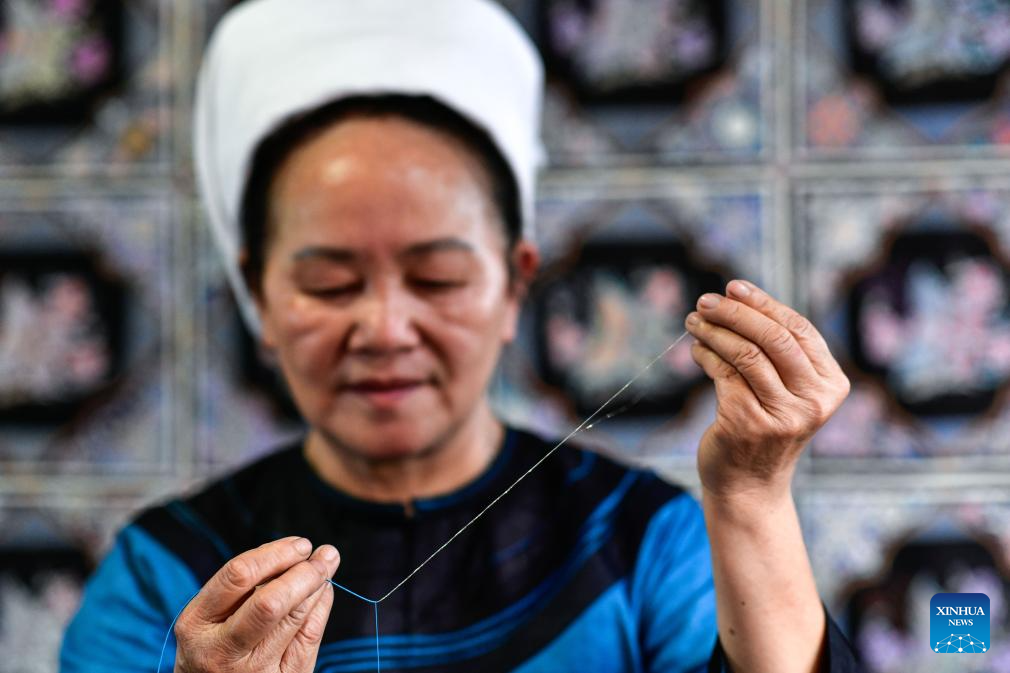
An embroiderer makes a horse tail embroidery work at a horse tail embroidery museum in Sandu Shui Autonomous County, southwest China's Guizhou Province, May 19, 2026. The horse tail embroidery of the Shui people in southwest China is characterized by unique prefabricated sewing threads made up of horse tail fibers wound with silk yarns from the outside. This highly regarded traditional art was recognized as a national intangible cultural heritage for its sophisticated techniques.
In recent years, Sandu Shui Autonomous County has enhanced support for intangible cultural heritage by establishing institutions to promote Shui ethnic culture, including horse tail embroidery making skills. By integrating modern artistic expressions into traditional embroidery, the county has developed horse tail embroidery creative cultural products, increasing the income of local people. This ancient art has been revitalized through inheritance and innovation. (Xinhua/Yang Wenbin)
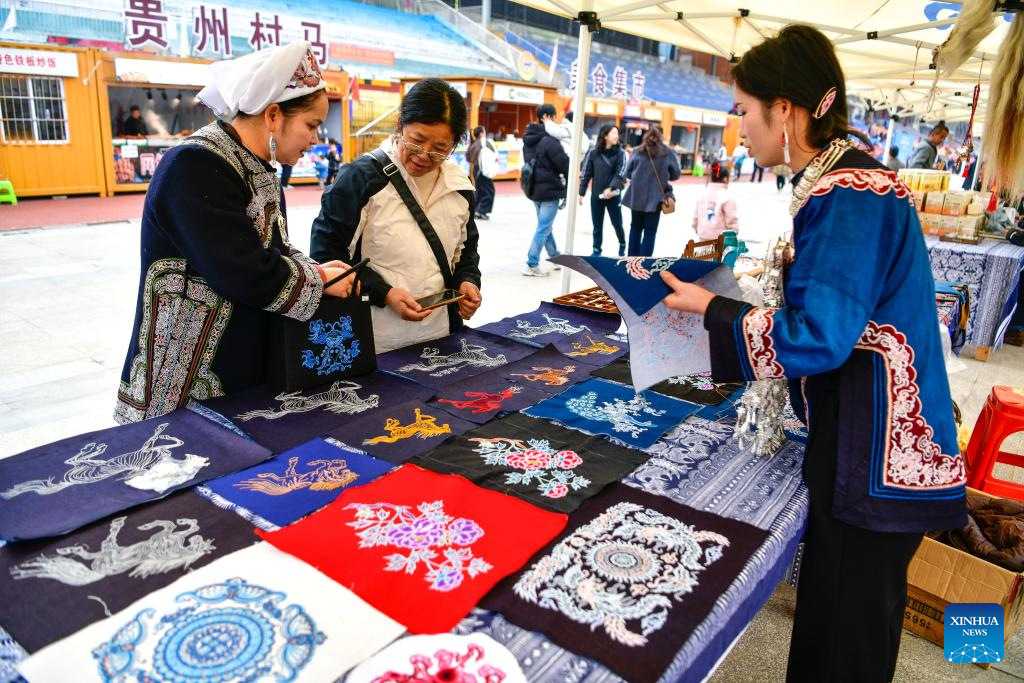
An embroiderer displays works at a horse tail embroidery competition in Sandu Shui Autonomous County, southwest China's Guizhou Province, March 7, 2026. The horse tail embroidery of the Shui people in southwest China is characterized by unique prefabricated sewing threads made up of horse tail fibers wound with silk yarns from the outside. This highly regarded traditional art was recognized as a national intangible cultural heritage for its sophisticated techniques.
In recent years, Sandu Shui Autonomous County has enhanced support for intangible cultural heritage by establishing institutions to promote Shui ethnic culture, including horse tail embroidery making skills. By integrating modern artistic expressions into traditional embroidery, the county has developed horse tail embroidery creative cultural products, increasing the income of local people. This ancient art has been revitalized through inheritance and innovation. (Xinhua/Yang Wenbin)
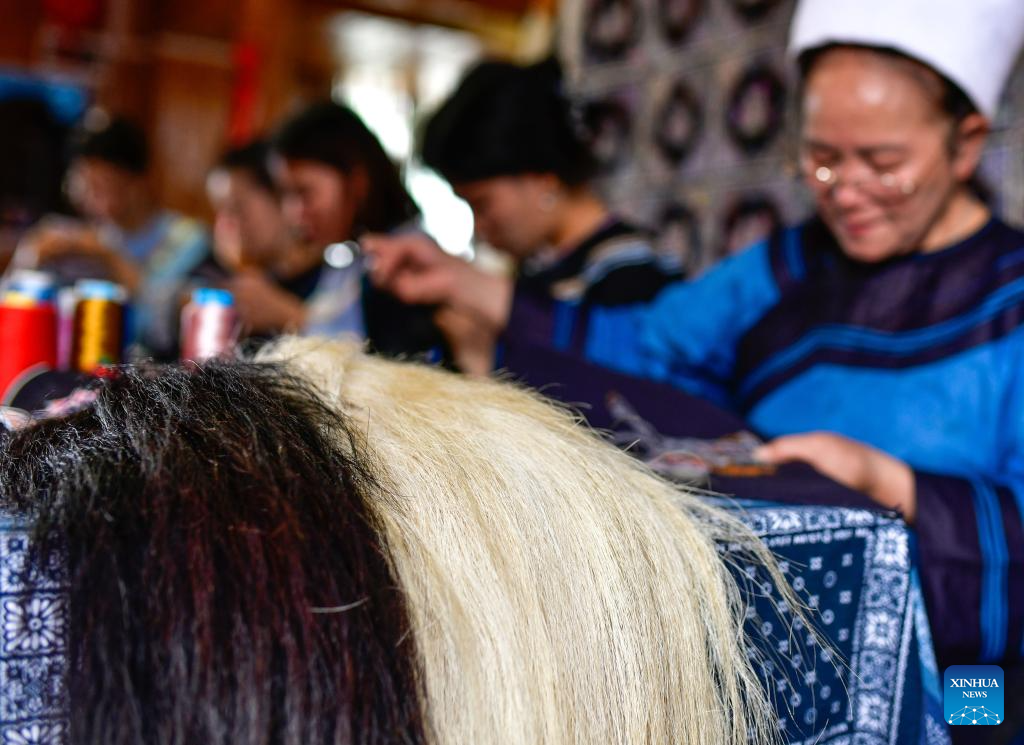
Material for making horse tail embroidery is pictured at a horse tail embroidery museum in Sandu Shui Autonomous County, southwest China's Guizhou Province, May 19, 2026. The horse tail embroidery of the Shui people in southwest China is characterized by unique prefabricated sewing threads made up of horse tail fibers wound with silk yarns from the outside. This highly regarded traditional art was recognized as a national intangible cultural heritage for its sophisticated techniques.
In recent years, Sandu Shui Autonomous County has enhanced support for intangible cultural heritage by establishing institutions to promote Shui ethnic culture, including horse tail embroidery making skills. By integrating modern artistic expressions into traditional embroidery, the county has developed horse tail embroidery creative cultural products, increasing the income of local people. This ancient art has been revitalized through inheritance and innovation. (Xinhua/Yang Wenbin)
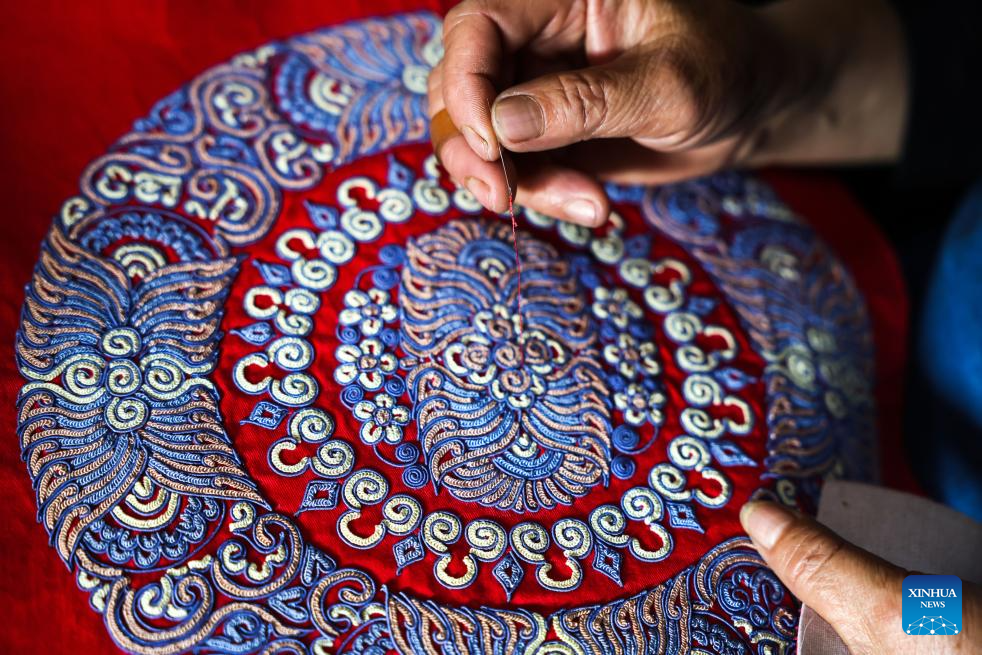
An embroiderer makes a horse tail embroidery work at a horse tail embroidery museum in Sandu Shui Autonomous County, southwest China's Guizhou Province, May 19, 2026. The horse tail embroidery of the Shui people in southwest China is characterized by unique prefabricated sewing threads made up of horse tail fibers wound with silk yarns from the outside. This highly regarded traditional art was recognized as a national intangible cultural heritage for its sophisticated techniques.
In recent years, Sandu Shui Autonomous County has enhanced support for intangible cultural heritage by establishing institutions to promote Shui ethnic culture, including horse tail embroidery making skills. By integrating modern artistic expressions into traditional embroidery, the county has developed horse tail embroidery creative cultural products, increasing the income of local people. This ancient art has been revitalized through inheritance and innovation. (Xinhua/Yang Wenbin)


