
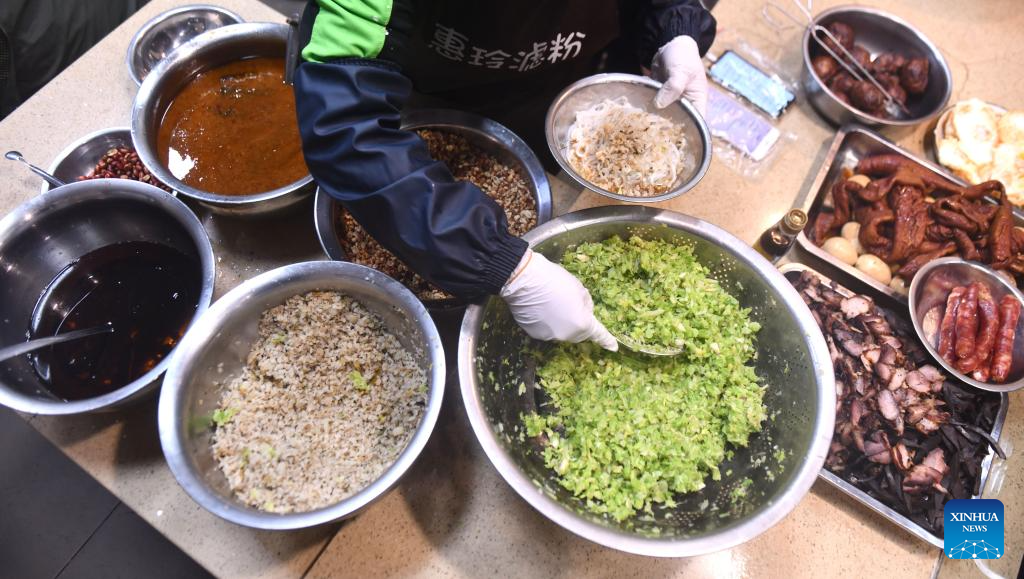
A staff member adds toppings on a bowl of Lyufen at an eatery in Rong'an County of Liuzhou City, south China's Guangxi Zhuang Autonomous Region, March 3, 2026. Lyufen, a traditional delicacy in Liuzhou, is made by pouring rice batter through a filter into boiling water, where it instantly sets into round noodles. The cooked noodles are then served with broth, scallions, pickled vegetables, and various other toppings. Known for its smooth and tender texture, delightful taste, and affordable price, Lyufen has long been a favorite among locals.
In 2012, the craft of making Lyufen was inscribed on the list of provincial-level intangible cultural heritage. Nowadays, with the development of local cultural and tourism industry and the revitalization of traditional food culture, more and more tourists come to enjoy this noodles dish. (Xinhua/Huang Xiaobang)
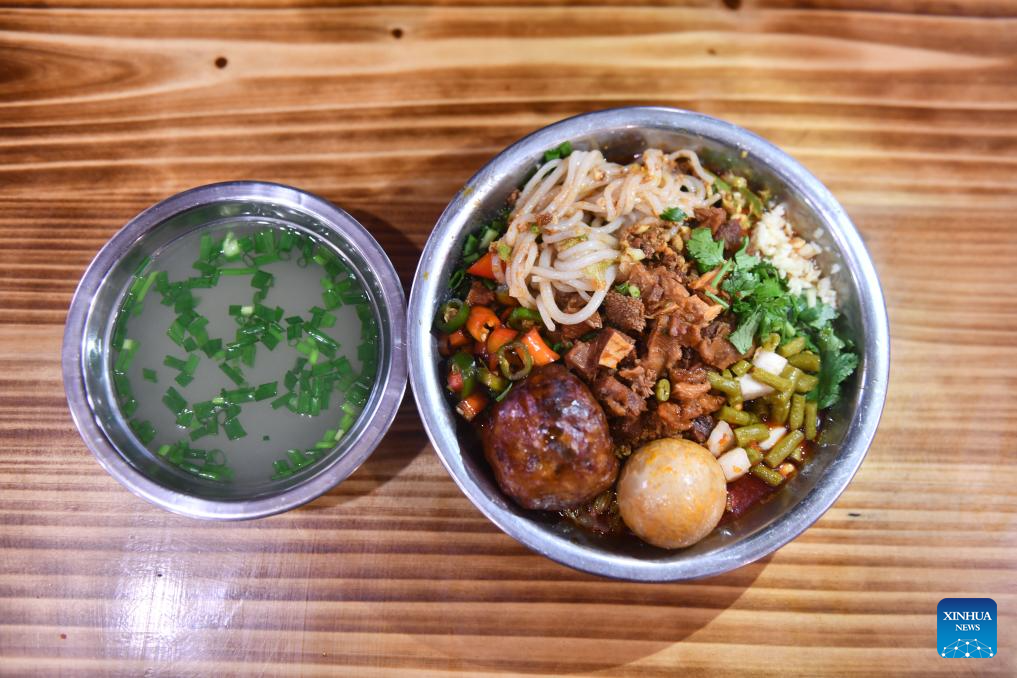
This photo taken on March 3, 2026 shows a bowl of Lyufen at an eatery in Rong'an County of Liuzhou City, south China's Guangxi Zhuang Autonomous Region. Lyufen, a traditional delicacy in Liuzhou, is made by pouring rice batter through a filter into boiling water, where it instantly sets into round noodles. The cooked noodles are then served with broth, scallions, pickled vegetables, and various other toppings. Known for its smooth and tender texture, delightful taste, and affordable price, Lyufen has long been a favorite among locals.
In 2012, the craft of making Lyufen was inscribed on the list of provincial-level intangible cultural heritage. Nowadays, with the development of local cultural and tourism industry and the revitalization of traditional food culture, more and more tourists come to enjoy this noodles dish. (Xinhua/Huang Xiaobang)
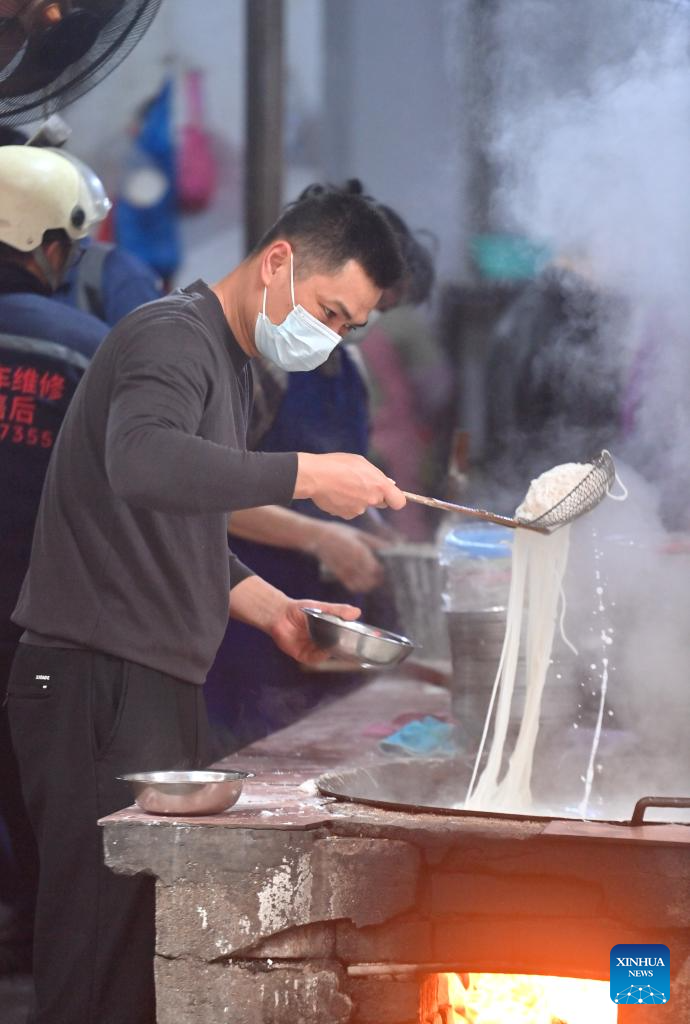
A staff member makes Lyufen at an eatery in Rongshui Miao Autonomous County of Liuzhou City, south China's Guangxi Zhuang Autonomous Region, March 25, 2026. Lyufen, a traditional delicacy in Liuzhou, is made by pouring rice batter through a filter into boiling water, where it instantly sets into round noodles. The cooked noodles are then served with broth, scallions, pickled vegetables, and various other toppings. Known for its smooth and tender texture, delightful taste, and affordable price, Lyufen has long been a favorite among locals.
In 2012, the craft of making Lyufen was inscribed on the list of provincial-level intangible cultural heritage. Nowadays, with the development of local cultural and tourism industry and the revitalization of traditional food culture, more and more tourists come to enjoy this noodles dish. (Xinhua/Huang Xiaobang)
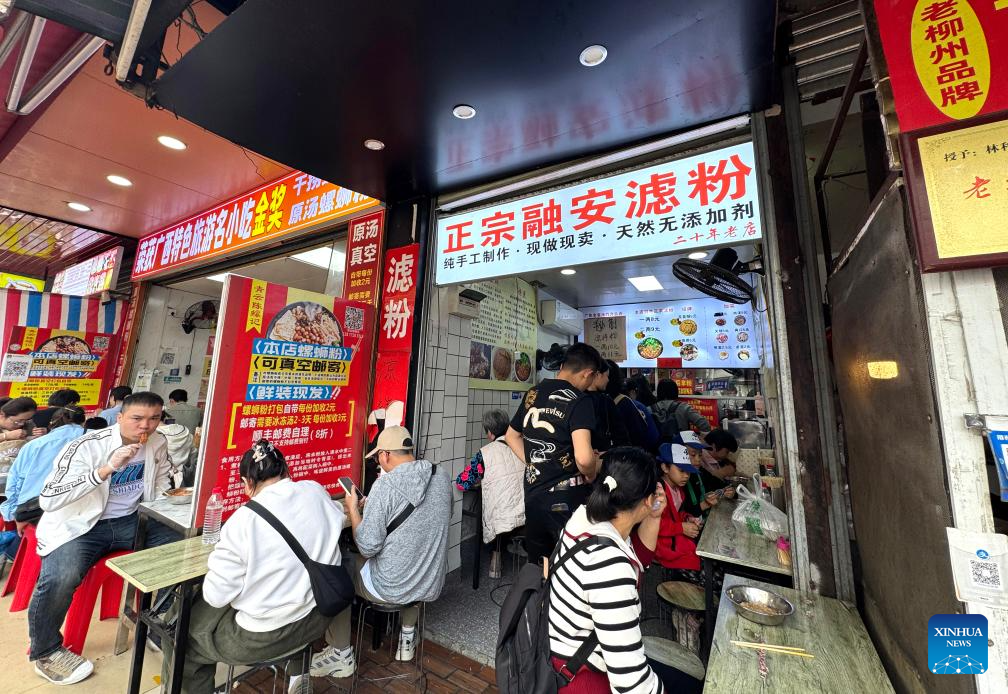
People enjoy Lyufen at an eatery in Liuzhou City, south China's Guangxi Zhuang Autonomous Region, March 14, 2026. Lyufen, a traditional delicacy in Liuzhou, is made by pouring rice batter through a filter into boiling water, where it instantly sets into round noodles. The cooked noodles are then served with broth, scallions, pickled vegetables, and various other toppings. Known for its smooth and tender texture, delightful taste, and affordable price, Lyufen has long been a favorite among locals.
In 2012, the craft of making Lyufen was inscribed on the list of provincial-level intangible cultural heritage. Nowadays, with the development of local cultural and tourism industry and the revitalization of traditional food culture, more and more tourists come to enjoy this noodles dish. (Photo by Zheng Changhao/Xinhua)
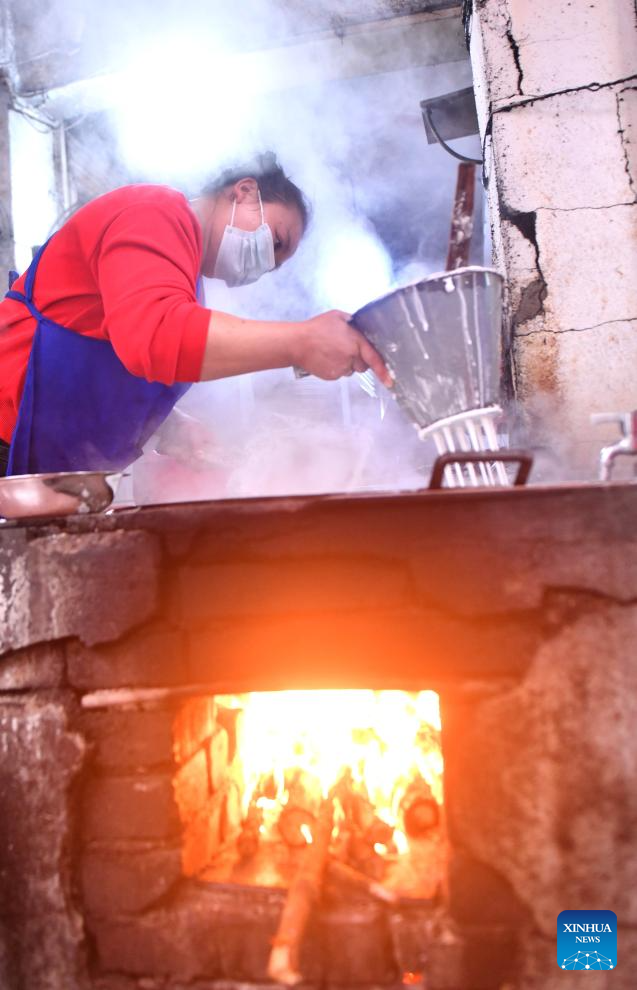
A staff member makes Lyufen at an eatery in Rongshui Miao Autonomous County of Liuzhou City, south China's Guangxi Zhuang Autonomous Region, March 25, 2026. Lyufen, a traditional delicacy in Liuzhou, is made by pouring rice batter through a filter into boiling water, where it instantly sets into round noodles. The cooked noodles are then served with broth, scallions, pickled vegetables, and various other toppings. Known for its smooth and tender texture, delightful taste, and affordable price, Lyufen has long been a favorite among locals.
In 2012, the craft of making Lyufen was inscribed on the list of provincial-level intangible cultural heritage. Nowadays, with the development of local cultural and tourism industry and the revitalization of traditional food culture, more and more tourists come to enjoy this noodles dish. (Xinhua/Huang Xiaobang)
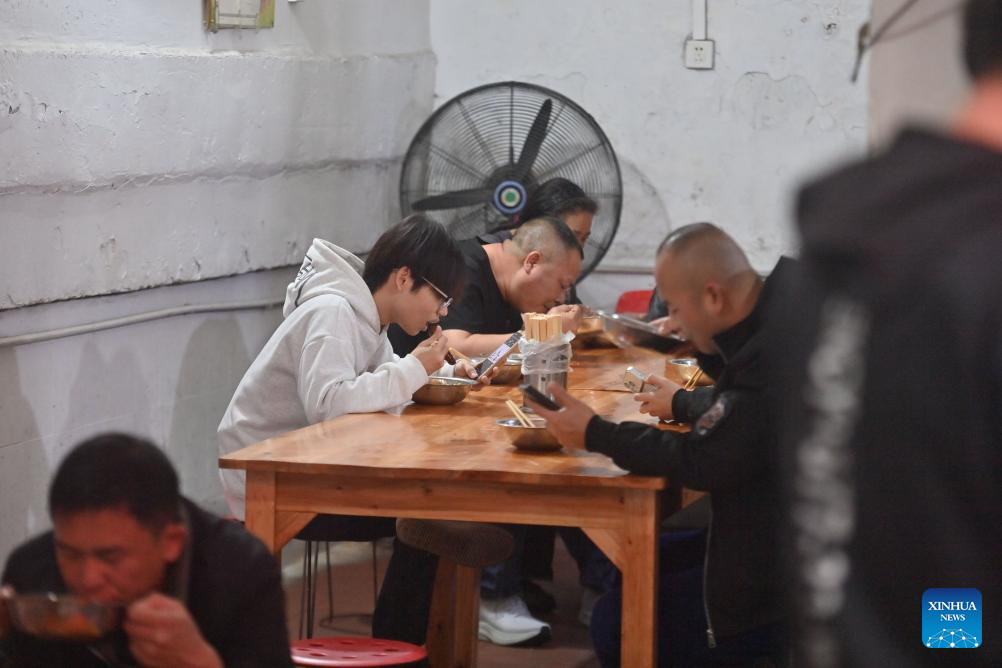
People enjoy Lyufen at an eatery in Rongshui Miao Autonomous County of Liuzhou City, south China's Guangxi Zhuang Autonomous Region, March 25, 2026. Lyufen, a traditional delicacy in Liuzhou, is made by pouring rice batter through a filter into boiling water, where it instantly sets into round noodles. The cooked noodles are then served with broth, scallions, pickled vegetables, and various other toppings. Known for its smooth and tender texture, delightful taste, and affordable price, Lyufen has long been a favorite among locals.
In 2012, the craft of making Lyufen was inscribed on the list of provincial-level intangible cultural heritage. Nowadays, with the development of local cultural and tourism industry and the revitalization of traditional food culture, more and more tourists come to enjoy this noodles dish. (Xinhua/Huang Xiaobang)
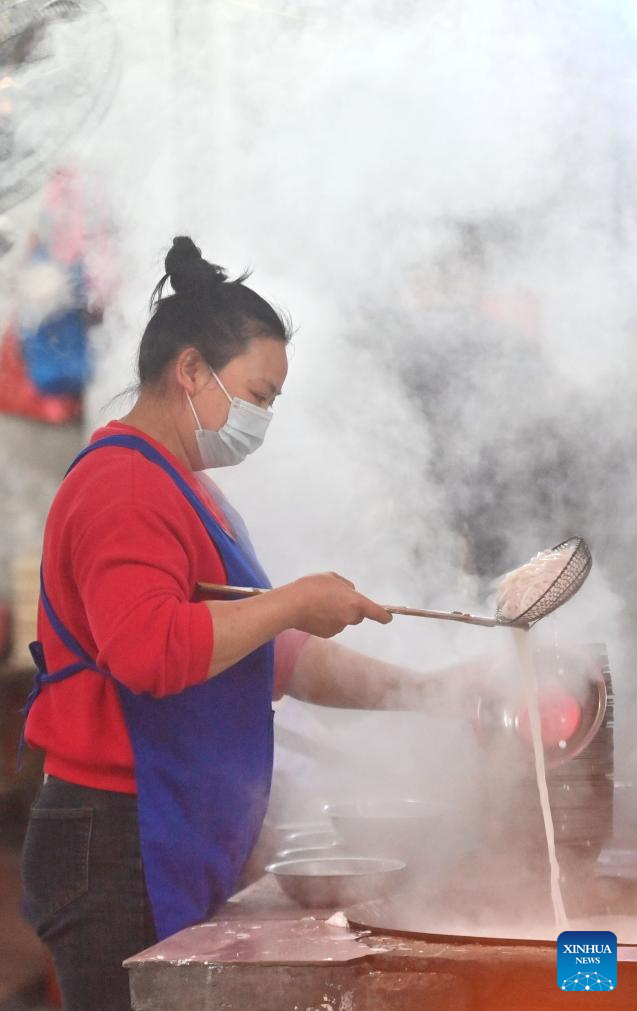
A staff member makes Lyufen at an eatery in Rongshui Miao Autonomous County of Liuzhou City, south China's Guangxi Zhuang Autonomous Region, March 25, 2026. Lyufen, a traditional delicacy in Liuzhou, is made by pouring rice batter through a filter into boiling water, where it instantly sets into round noodles. The cooked noodles are then served with broth, scallions, pickled vegetables, and various other toppings. Known for its smooth and tender texture, delightful taste, and affordable price, Lyufen has long been a favorite among locals.
In 2012, the craft of making Lyufen was inscribed on the list of provincial-level intangible cultural heritage. Nowadays, with the development of local cultural and tourism industry and the revitalization of traditional food culture, more and more tourists come to enjoy this noodles dish. (Xinhua/Huang Xiaobang)


