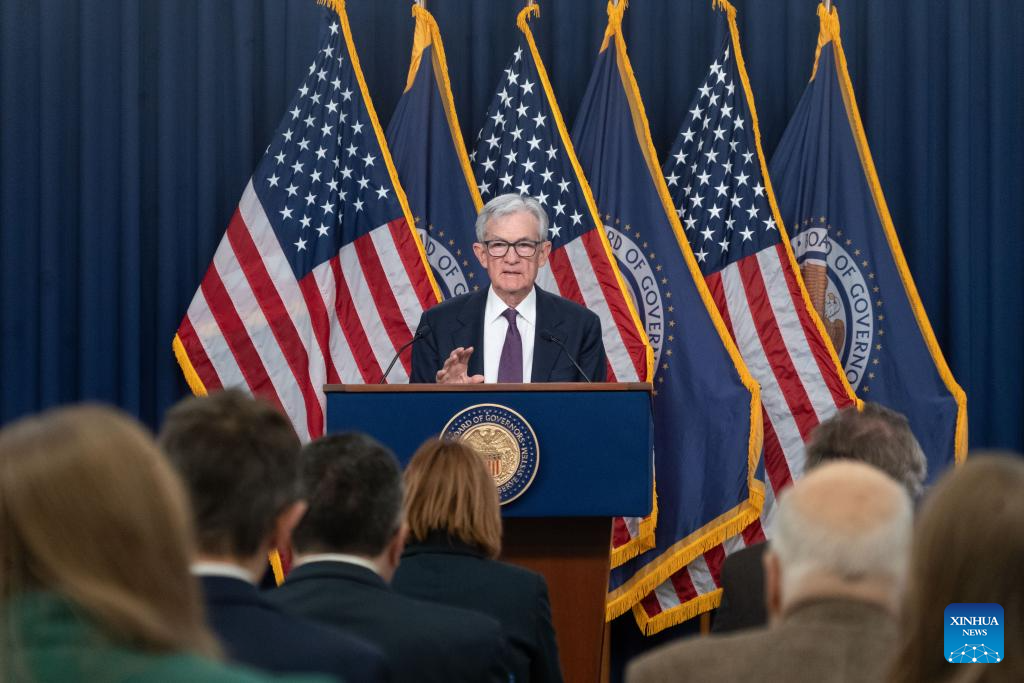
U.S. Federal Reserve Chair Jerome Powell attends a press conference in Washington, D.C., the United States, March 18, 2026. The U.S. Federal Reserve on Wednesday decided to maintain its target range for the federal funds rate at 3.5-3.75 percent, in line with market expectations. (Photo by Li Yuanqing/Xinhua)
WASHINGTON, March 18 (Xinhua) -- The U.S. Federal Reserve on Wednesday decided to maintain its target range for the federal funds rate at 3.5-3.75 percent, in line with market expectations.
"Available indicators suggest that economic activity has been expanding at a solid pace. Job gains have remained low, and the unemployment rate has been little changed in recent months. Inflation remains somewhat elevated," said the Federal Open Market Committee (FOMC) in a statement.
Nevertheless, "uncertainty about the economic outlook remains elevated. The implications of developments in the Middle East for the U.S. economy are uncertain. The Committee is attentive to the risks to both sides of its dual mandate," the statement said.
"In support of its goals, the Committee decided to maintain the target range for the federal funds rate at 3-1/2 to 3-3/4 percent," the statement said. "In considering the extent and timing of additional adjustments to the target range for the federal funds rate, the Committee will carefully assess incoming data, the evolving outlook, and the balance of risks."
In the statement, the FOMC reiterated its strong commitment to supporting maximum employment and returning inflation to its 2 percent objective.
Of the 12 FOMC members, 11 voted for keeping the rate unchanged.
Addressing a press conference after the meeting, Fed Chair Jerome Powell said that surging oil prices due to the conflict in the Middle East are expected to increase inflation in the near term. "In the near term, higher energy prices will push up overall inflation."
Powell admitted that it is too soon to know the scope and duration of the potential effects of the conflict on the economy. "We're in a difficult situation."
Nonetheless, Powell refused to use word "stagflation" to describe the U.S. economy. "I would reserve the term stagflation for a much more serious set of circumstances."
The Fed projects that inflation will ease this year, but the progress will not be as much as "we had hoped," said Powell.
For Fed's Economic Projections of two more rate cuts this year, Powell said that could change if inflation remains stubborn, reiterating that the Fed's monetary policy is not following a fixed path. "We'll make our decisions on a meeting by meeting basis."
Responding to a question whether he will leave while the Justice Department's investigation over him and the Fed is ongoing, Powell hinted he will continue to serve as a governor after his term as Fed Chair expires in May, adding "I will make that decision based on what I think is best for the institution and for the people we serve."
Just days ago, a federal judge blocked the Justice Department from obtaining Fed records related to its building renovation costing 2.5 billion U.S. dollars, saying federal prosecutors have "produced essentially zero evidence to suspect Chair Powell of a crime."
Powell in a video statement announced the investigation in January, calling it "a consequence of the Federal Reserve setting interest rates based on our best assessment of what will serve the public rather than following the preferences of the president."
Following the Fed's decision to further keep rates unchanged, U.S. stocks prices slid to session lows, U.S. dollar index rose, and gold kept slipping below 4,900 dollars per ounce.
With the inflation forecast revised to 2.7 percent from 2.5 percent in the Economic Projections, the Fed's decision to leave rates unchanged was expected, said Art Hogan, chief market strategist at B. Riley Wealth Management.
"The War's impact on energy markets has lifted inflation expectations at a time when central banks were already cautious about easing," said Ole Hansen, head of commodity strategy at Saxo Bank. "The surge in oil and refined product prices has reduced the likelihood of near-term rate cuts and, in some cases, pushed market pricing toward a 'higher-for-longer' rate outlook."
The Federal Reserve is in a "wait and see" mode, awaiting clarity on the Iran conflict developments, said Lindsay Rosner, head of multi-sector fixed income investing at Goldman Sachs Asset Management. But she still expects two more rate cuts this year, with timing dependent on the length of the conflict.
The FOMC holds eight meetings per year to discuss monetary policy and the federal funds rate, but can also convene unscheduled meetings if necessary to review economic and financial development.
U.S. President Donald Trump on Monday urged Powell to call a special meeting and lower interest rates "immediately, not waiting for the next meeting." ■
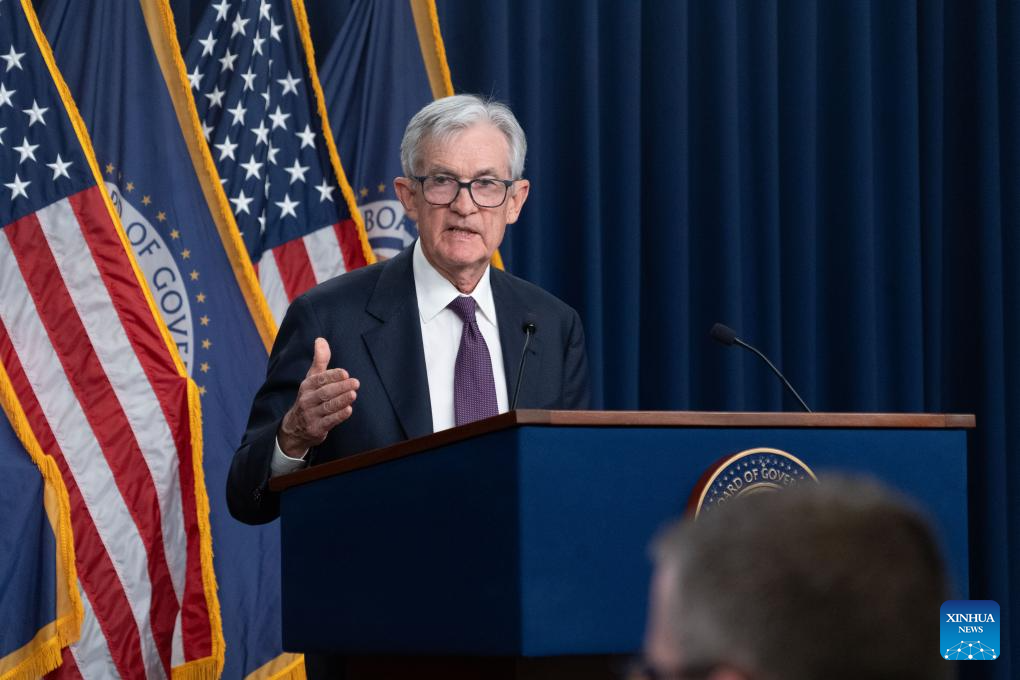
U.S. Federal Reserve Chair Jerome Powell attends a press conference in Washington, D.C., the United States, March 18, 2026. The U.S. Federal Reserve on Wednesday decided to maintain its target range for the federal funds rate at 3.5-3.75 percent, in line with market expectations. (Photo by Li Yuanqing/Xinhua)
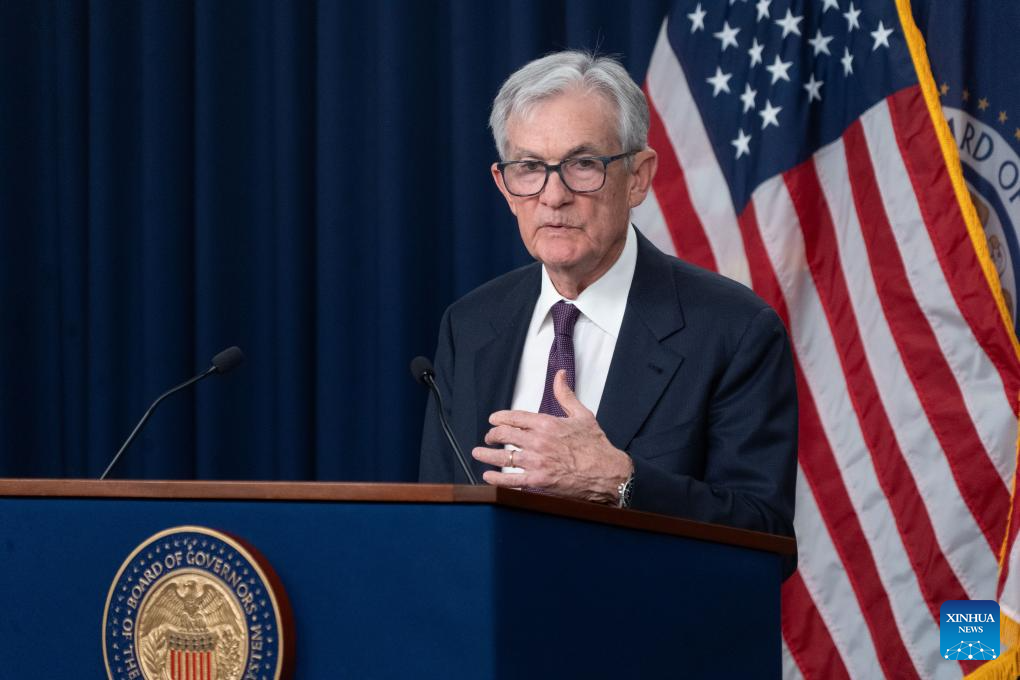
U.S. Federal Reserve Chair Jerome Powell attends a press conference in Washington, D.C., the United States, March 18, 2026. The U.S. Federal Reserve on Wednesday decided to maintain its target range for the federal funds rate at 3.5-3.75 percent, in line with market expectations. (Photo by Li Yuanqing/Xinhua)
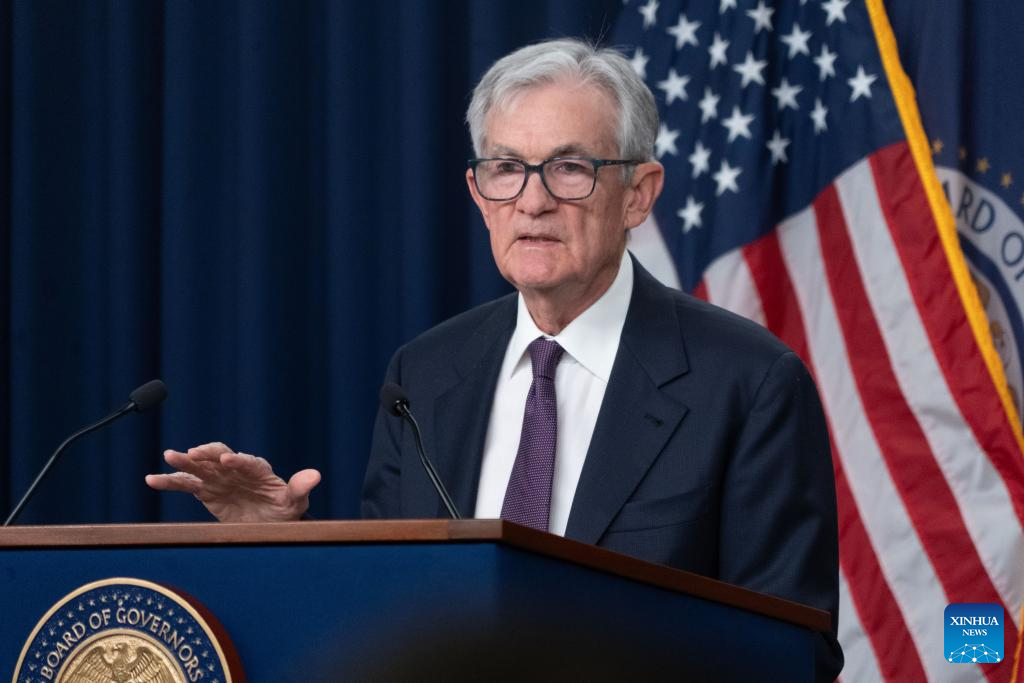
U.S. Federal Reserve Chair Jerome Powell attends a press conference in Washington, D.C., the United States, March 18, 2026. The U.S. Federal Reserve on Wednesday decided to maintain its target range for the federal funds rate at 3.5-3.75 percent, in line with market expectations. (Photo by Li Yuanqing/Xinhua)
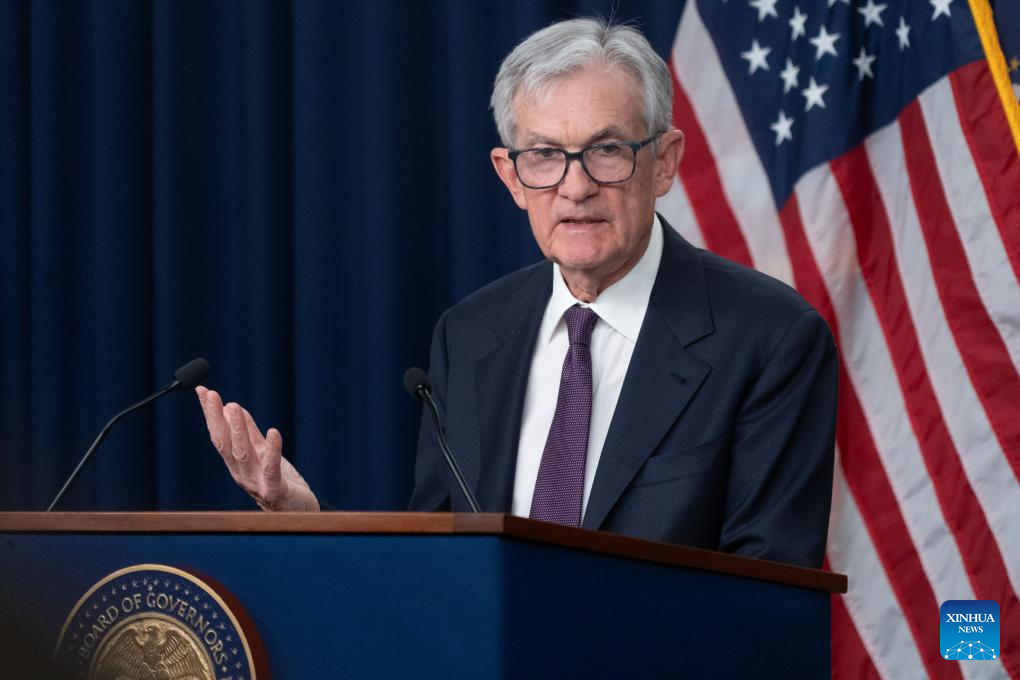
U.S. Federal Reserve Chair Jerome Powell attends a press conference in Washington, D.C., the United States, March 18, 2026. The U.S. Federal Reserve on Wednesday decided to maintain its target range for the federal funds rate at 3.5-3.75 percent, in line with market expectations. (Photo by Li Yuanqing/Xinhua)


