
* China's economic growth target for 2026 is proactive and pragmatic, reflecting a broad assessment of domestic conditions and shifts in the external environment.
* The 15th Five-Year Plan marks a pivotal stretch in China's modernization drive, and its ambitions reach well beyond domestic growth metrics. By directing capital into frontier technologies, deepening trade and investment linkages, and advancing green development, the blueprint is poised to affect the global economy across multiple dimensions, from the tempo of the energy transition to the landscape of advanced manufacturing worldwide.
* For a global economy straining under the weight of trade tensions, geopolitical fragmentation and weak growth, China's dual pledges -- to sustain its own steady expansion and to open its vast market further to the world -- offer a rare note of predictability.
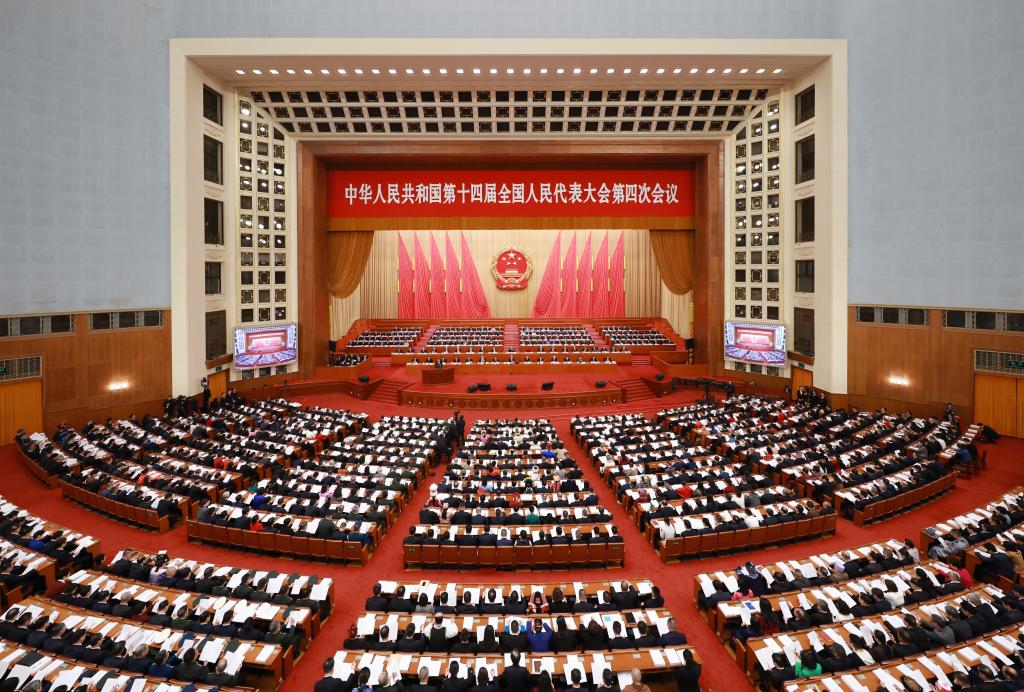
BEIJING, March 5 (Xinhua) -- China on Thursday set an economic growth target of 4.5 to 5 percent for 2026, aiming for a good start to the new five-year plan that charts the course for high-quality development and offers much-needed certainty to a troubled world economy.
The GDP growth target is well aligned with China's long-range objectives through the year 2035 and broadly in line with the long-term growth potential of China's economy, said a government work report submitted to the country's top legislature for deliberation.
China's economic growth target for 2026 is proactive and pragmatic, reflecting a broad assessment of domestic conditions and shifts in the external environment, said Shen Danyang, head of the group responsible for drafting this year's government work report.
The projected pace would also be among the highest for major economies globally, Shen said.
"The signal this target sends to the international community is clear that China is no longer pursuing growth speed alone," said Zhang Ying, associate dean of the Guanghua School of Management at Peking University, in an interview with Xinhua. "This year's target reflects China's firm commitment to high-quality development."
The country has made it clear that it will strive for better in practice regarding this year's growth target, and favorable conditions for achieving this target are in place, according to the report.
FURTHER ASSURANCE
The government work report outlined this year's major tasks, including building a robust domestic market, fostering new growth drivers at a faster pace, and moving faster to achieve greater self-reliance and strength in science and technology.
To achieve these goals, China will continue to implement a more proactive fiscal policy and apply an appropriately accommodative monetary policy. The orientations highlight policy continuity and offer further assurance to a global economy unnerved by trade and geopolitical tensions.
China's global economic heft means its policy moves are pivotal to the world economy. Over the 14th Five-Year Plan period (2021-2025), China saw its economy grow at an average annual pace of 5.4 percent, well above the global average, and contributed around 30 percent of global growth.
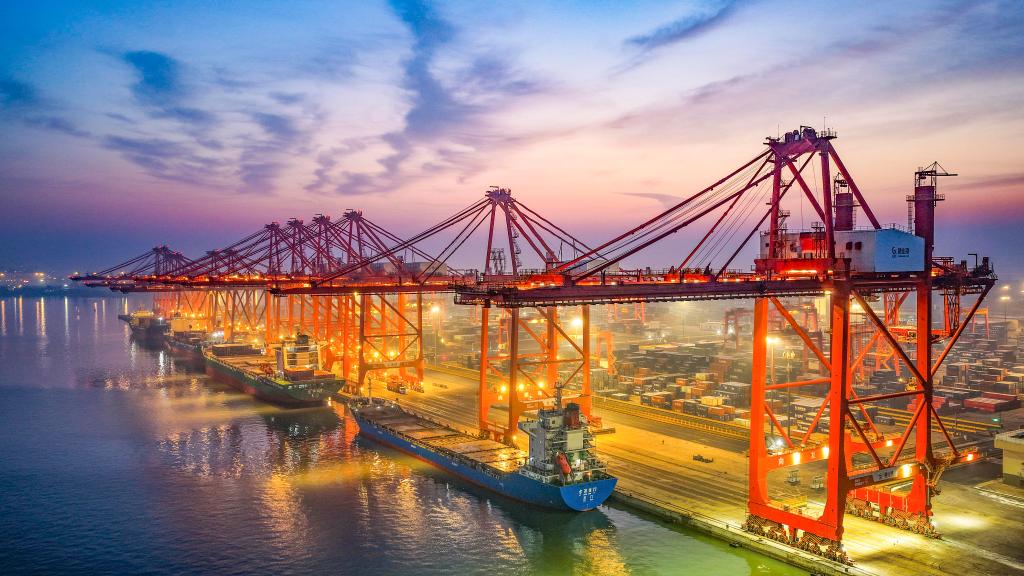
The country has remained the world's second-largest importer for 16 consecutive years, has cemented its position as the world's largest trader of goods, and has become a major trading partner of more than 160 countries and regions.
The weight of the role is only set to grow. According to a World Bank forecast, global growth is projected to ease to 2.6 percent in 2026. If the forecast holds, the 2020s are on track to be the weakest decade for global growth since the 1960s.
"What we achieved in 2025 was indeed hard won," according to the government work report. "Rarely in many years have we encountered such a grave and complex landscape, where external shocks and challenges were intertwined with domestic difficulties and tough policy choices."
LONG-TERM PREDICTABILITY
In a sign of assurance to the troubled global economy in the longer term, China on Thursday unveiled a slew of development priorities for the 15th Five-Year Plan period (2026-2030).
The 15th Five-Year Plan sets a clear anchor: doubling China's 2020 per capita GDP by 2035 to reach the level of a moderately developed country. Getting there will require navigating a middle stretch that China has chosen not to over-prescribe, as annual growth targets will be set year by year, a flexibility that reflects both confidence in the trajectory and awareness of the uncertainties ahead.
The 15th Five-Year Plan marks a pivotal stretch in China's modernization drive, and its ambitions reach well beyond domestic growth metrics. By directing capital into frontier technologies, deepening trade and investment linkages, and advancing green development, the blueprint is poised to affect the global economy across multiple dimensions, from the tempo of the energy transition to the landscape of advanced manufacturing worldwide.
Simon Smith, director and general manager of Taikoo Engine Services (Xiamen) Co., Ltd., an engineering branch of the multinational company Swire Group, said long-term policy clarity changes the calculus for multinationals operating in China.
"The five-year plan transforms investment decisions from probabilistic bets to calculated strategic positioning," Smith told Xinhua in an interview. "Without the plan, the company may hesitate on a specific capability expansion or investment, uncertain whether regulatory support, skilled labor availability, or customer demand will materialize."
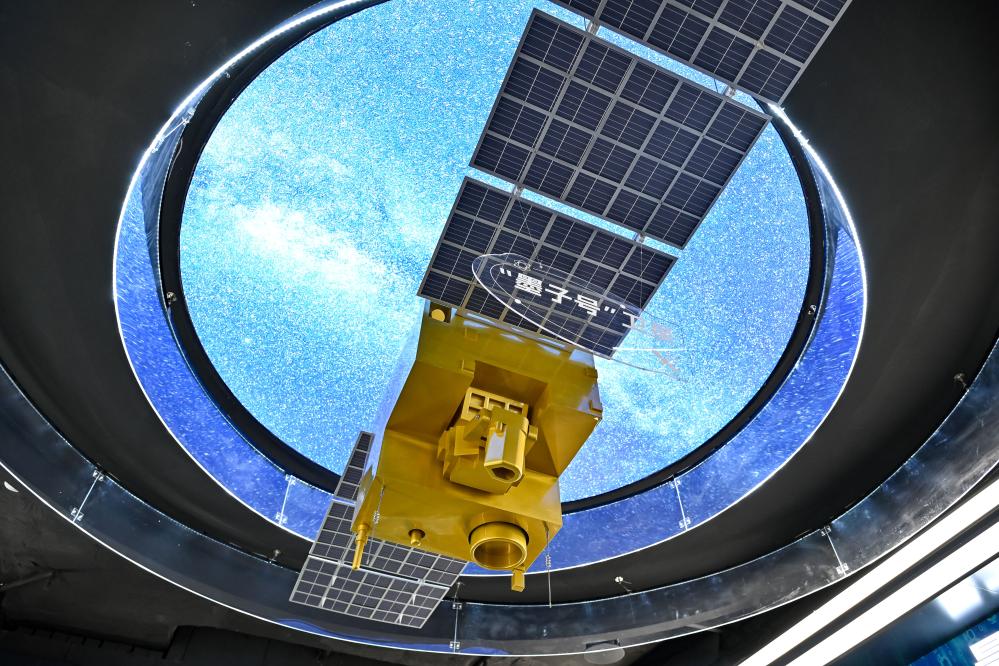
That strategic positioning comes with a concrete roadmap. According to China's technology agenda, the country will nurture emerging industries and industries of the future. During the 2026-2030 period, China will foster new drivers of economic growth such as quantum technology, biomanufacturing, hydrogen and nuclear fusion power, brain-computer interfaces, embodied artificial intelligence, and 6G mobile communications.
Hu Jinbo, a national political advisor and head of the Shanghai Institute of Organic Chemistry, said the next five years represent a critical window for China's economic transition from high-speed growth to high-quality development, and sci-tech innovation will serve as the core engine of this transformation.
BROADER OPPORTUNITIES
As China continues to achieve sci-tech innovation breakthroughs, developing countries can draw on China's experience to accelerate their own industrialization, while developed countries will also gain broader opportunities for collaboration in advanced manufacturing and frontier technologies, Hu said.
For the rest of the world, what may matter most in the longer run is not the pace of growth, but its composition. China has set an explicit goal of raising household consumption as a share of GDP over the next five years.
For a global economy straining under the weight of trade tensions, geopolitical fragmentation and weak growth, China's dual pledges -- to sustain its own steady expansion and to open its vast market further to the world -- offer a rare note of predictability.
A more balanced Chinese economy underpinned by stronger domestic demand would generate far-reaching spillover effects globally, according to a recent Bloomberg article citing Robin Xing, chief China economist at Morgan Stanley.
"Chinese and foreign companies alike would benefit from the depth and scale of the China market, which would help cushion today's geopolitical challenges," Xing was quoted as saying.
According to the government work report, China will deepen reform of the institutional framework for promoting foreign investment this year. It will open wider to the outside world, with efforts to expand market access and open up more areas, particularly in the service sector.
Zhang Ying highlighted three aspects of China's opportunities for global investors: a massive unified market with rising purchasing power of residents, highly efficient and cost-effective supply chains, and an increasingly open, pro-investment regulatory environment.
"Against a backdrop of global volatility and macroeconomic headwinds, these fundamentals offer significant appeal to international investors and corporations," Zhang said.
(Video reporters: Zhou Yang, Zheng Xin, Wu You, Wu Yimeng, Mei Yuanlong, Fang Kuan, Li Hengyi, Long Lingyu, Liu Fangzhou, He Canling and Meng Fanyu; video editors: Hong Ling, Wei Yin and Zhang Nan) ■


