
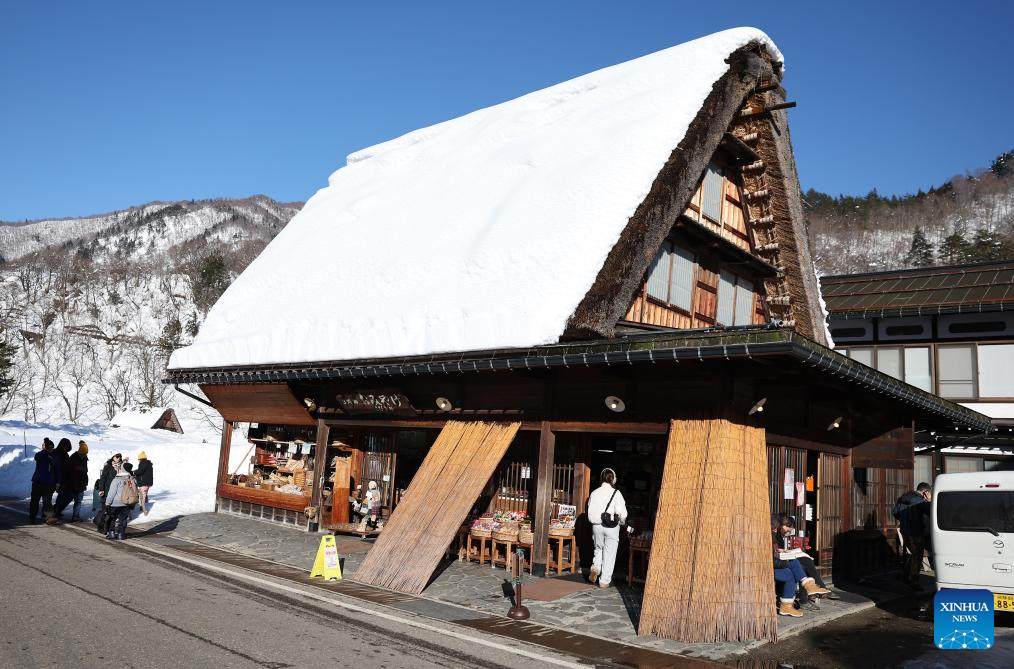
This photo taken on Feb. 25, 2025 shows a souvenir store in a Gassho-zukuri house in Shirakawa-go, Japan. Shirakawa-go in Japan's Ono District of Gifu Prefecture is surrounded by towering mountains, where heavy snowfall of more than 1 meter thick in winter often causes traffic interruptions.
The harsh climate there has given birth to its unique architectural style known as "Gassho-zukuri," characterized by its steeply pitched, thatched roofs resembling a pair of hands pressed together in prayer.
The roof, built entirely with wood and straw without the use of nails, forms a 60-degree angle to let the snow slide off easily. The beam of the house is oriented east-west to ensure ample natural lighting and to reduce wind resistance.
Today, visitors can immerse themselves in an open-air, living museum for Gassho-zukuri, which features 25 of such traditional houses, complemented by waterwheels and temples. Guests are allowed to closely observe the architectural details of the Gassho-zukuri roofs, relax by a hearth, and savor a bowl of traditional mochi red bean soup. (Xinhua/Jia Haocheng)
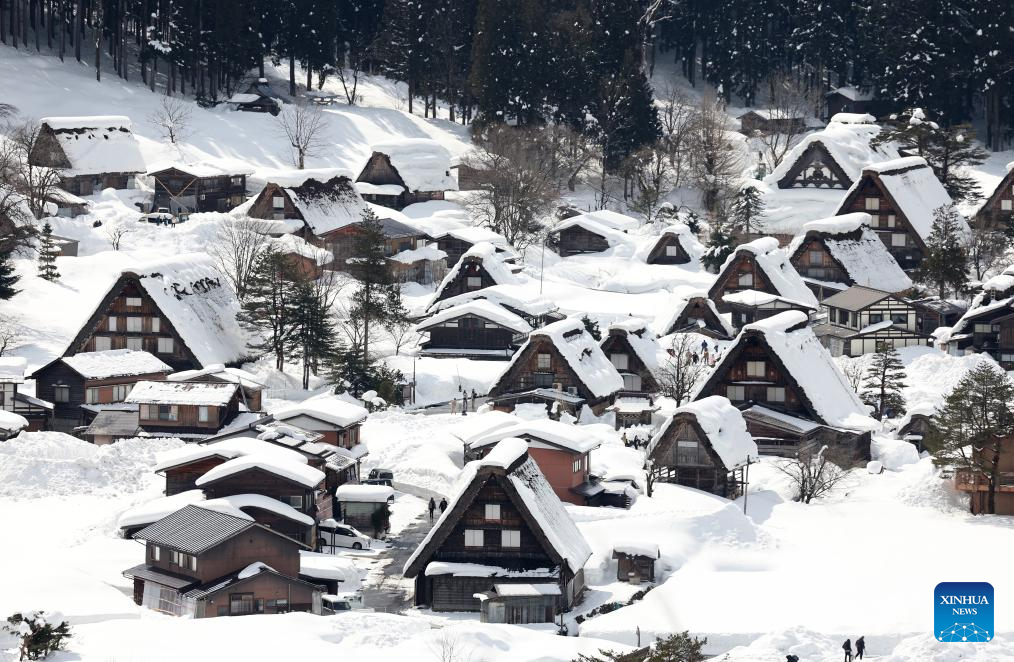
This photo taken on Feb. 26, 2025 shows Gassho-zukuri houses covered in snow in Shirakawa-go, Japan. Shirakawa-go in Japan's Ono District of Gifu Prefecture is surrounded by towering mountains, where heavy snowfall of more than 1 meter thick in winter often causes traffic interruptions.
The harsh climate there has given birth to its unique architectural style known as "Gassho-zukuri," characterized by its steeply pitched, thatched roofs resembling a pair of hands pressed together in prayer.
The roof, built entirely with wood and straw without the use of nails, forms a 60-degree angle to let the snow slide off easily. The beam of the house is oriented east-west to ensure ample natural lighting and to reduce wind resistance.
Today, visitors can immerse themselves in an open-air, living museum for Gassho-zukuri, which features 25 of such traditional houses, complemented by waterwheels and temples. Guests are allowed to closely observe the architectural details of the Gassho-zukuri roofs, relax by a hearth, and savor a bowl of traditional mochi red bean soup. (Xinhua/Jia Haocheng)
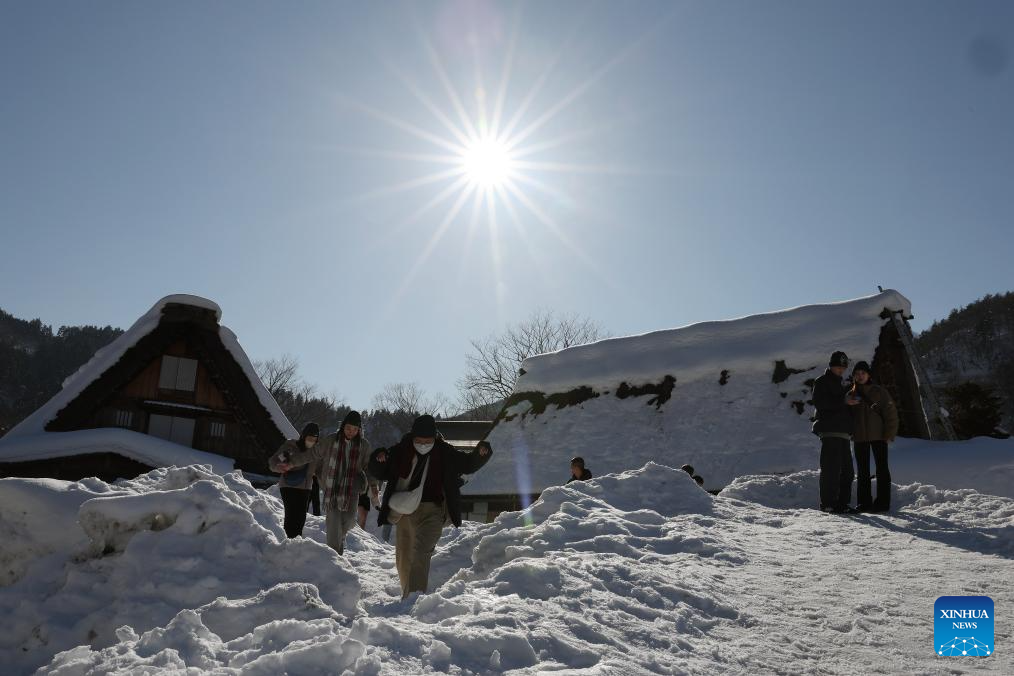
Tourists visit Gassho-zukuri houses in Shirakawa-go, Japan, Feb. 25, 2025. Shirakawa-go in Japan's Ono District of Gifu Prefecture is surrounded by towering mountains, where heavy snowfall of more than 1 meter thick in winter often causes traffic interruptions.
The harsh climate there has given birth to its unique architectural style known as "Gassho-zukuri," characterized by its steeply pitched, thatched roofs resembling a pair of hands pressed together in prayer.
The roof, built entirely with wood and straw without the use of nails, forms a 60-degree angle to let the snow slide off easily. The beam of the house is oriented east-west to ensure ample natural lighting and to reduce wind resistance.
Today, visitors can immerse themselves in an open-air, living museum for Gassho-zukuri, which features 25 of such traditional houses, complemented by waterwheels and temples. Guests are allowed to closely observe the architectural details of the Gassho-zukuri roofs, relax by a hearth, and savor a bowl of traditional mochi red bean soup. (Xinhua/Jia Haocheng)
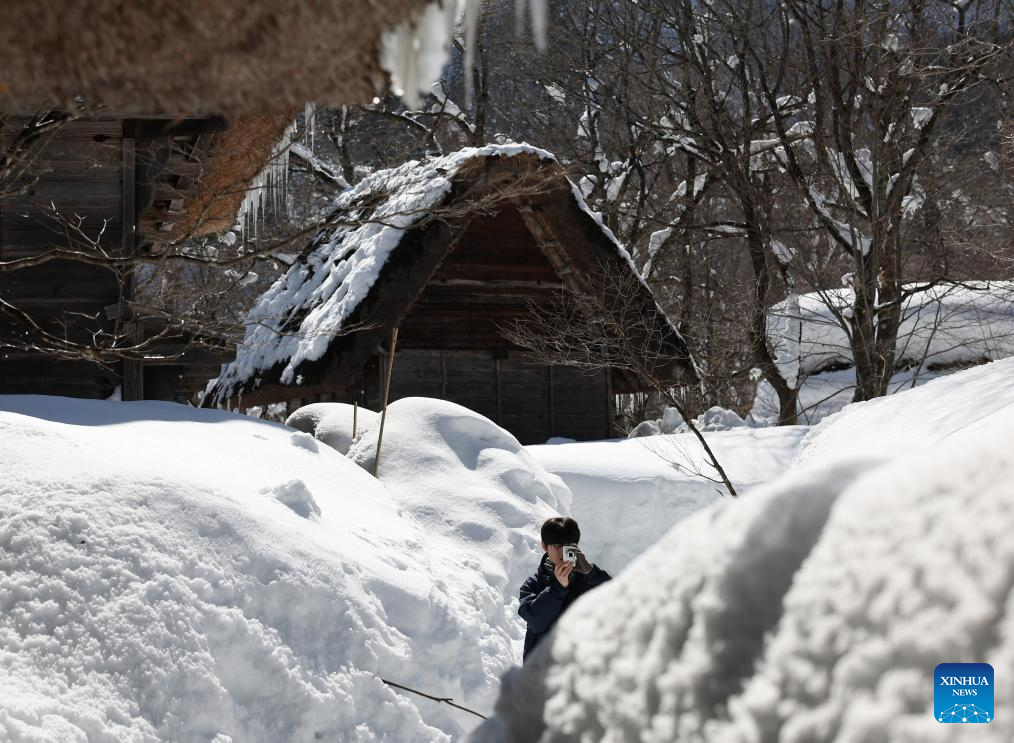
A tourist visits an open-air museum for Gassho-zukuri in Shirakawa-go, Japan, Feb. 25, 2025. Shirakawa-go in Japan's Ono District of Gifu Prefecture is surrounded by towering mountains, where heavy snowfall of more than 1 meter thick in winter often causes traffic interruptions.
The harsh climate there has given birth to its unique architectural style known as "Gassho-zukuri," characterized by its steeply pitched, thatched roofs resembling a pair of hands pressed together in prayer.
The roof, built entirely with wood and straw without the use of nails, forms a 60-degree angle to let the snow slide off easily. The beam of the house is oriented east-west to ensure ample natural lighting and to reduce wind resistance.
Today, visitors can immerse themselves in an open-air, living museum for Gassho-zukuri, which features 25 of such traditional houses, complemented by waterwheels and temples. Guests are allowed to closely observe the architectural details of the Gassho-zukuri roofs, relax by a hearth, and savor a bowl of traditional mochi red bean soup. (Xinhua/Jia Haocheng)
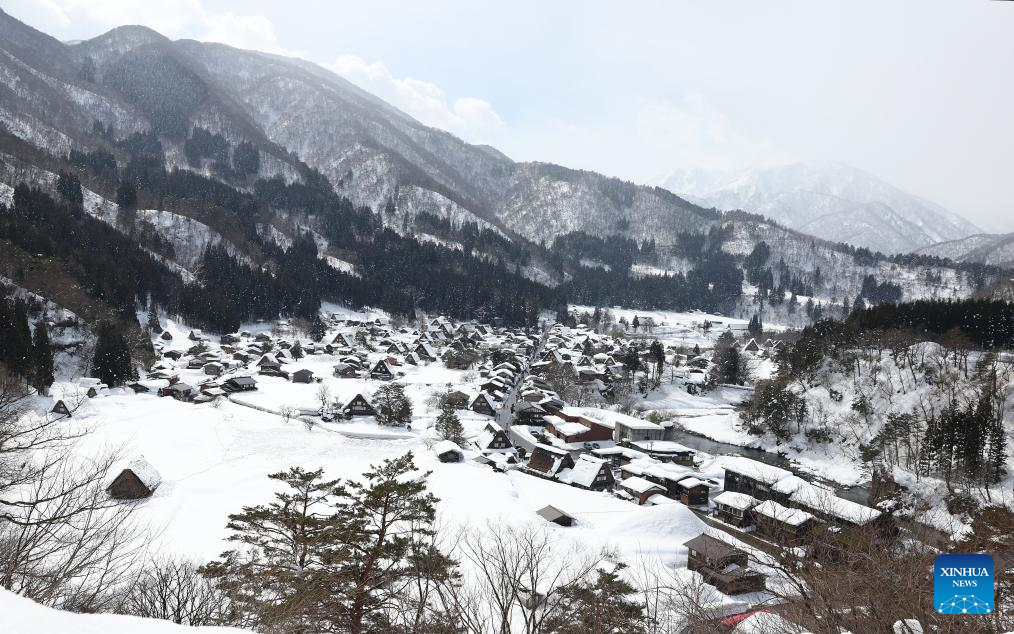
This photo taken on Feb. 26, 2025 shows a view of Shirakawa-go surrounded by towering mountains in Japan. Shirakawa-go in Japan's Ono District of Gifu Prefecture is surrounded by towering mountains, where heavy snowfall of more than 1 meter thick in winter often causes traffic interruptions.
The harsh climate there has given birth to its unique architectural style known as "Gassho-zukuri," characterized by its steeply pitched, thatched roofs resembling a pair of hands pressed together in prayer.
The roof, built entirely with wood and straw without the use of nails, forms a 60-degree angle to let the snow slide off easily. The beam of the house is oriented east-west to ensure ample natural lighting and to reduce wind resistance.
Today, visitors can immerse themselves in an open-air, living museum for Gassho-zukuri, which features 25 of such traditional houses, complemented by waterwheels and temples. Guests are allowed to closely observe the architectural details of the Gassho-zukuri roofs, relax by a hearth, and savor a bowl of traditional mochi red bean soup. (Xinhua/Jia Haocheng)
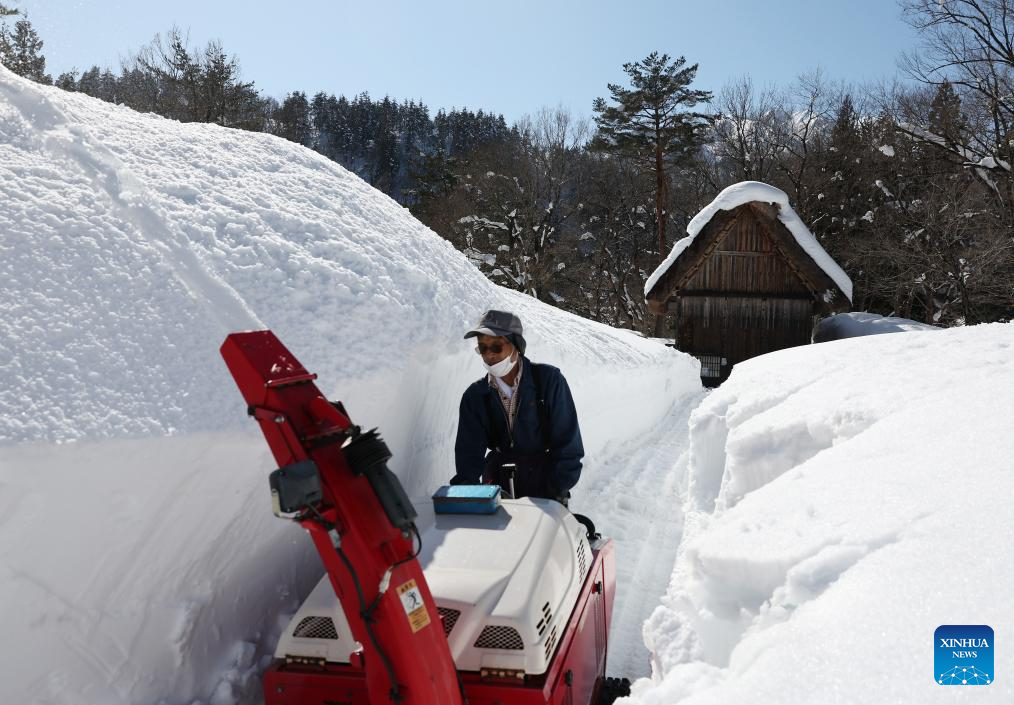
A staff member clears snow at an open-air museum for Gassho-zukuri in Shirakawa-go, Japan, Feb. 25, 2025. Shirakawa-go in Japan's Ono District of Gifu Prefecture is surrounded by towering mountains, where heavy snowfall of more than 1 meter thick in winter often causes traffic interruptions.
The harsh climate there has given birth to its unique architectural style known as "Gassho-zukuri," characterized by its steeply pitched, thatched roofs resembling a pair of hands pressed together in prayer.
The roof, built entirely with wood and straw without the use of nails, forms a 60-degree angle to let the snow slide off easily. The beam of the house is oriented east-west to ensure ample natural lighting and to reduce wind resistance.
Today, visitors can immerse themselves in an open-air, living museum for Gassho-zukuri, which features 25 of such traditional houses, complemented by waterwheels and temples. Guests are allowed to closely observe the architectural details of the Gassho-zukuri roofs, relax by a hearth, and savor a bowl of traditional mochi red bean soup. (Xinhua/Jia Haocheng)
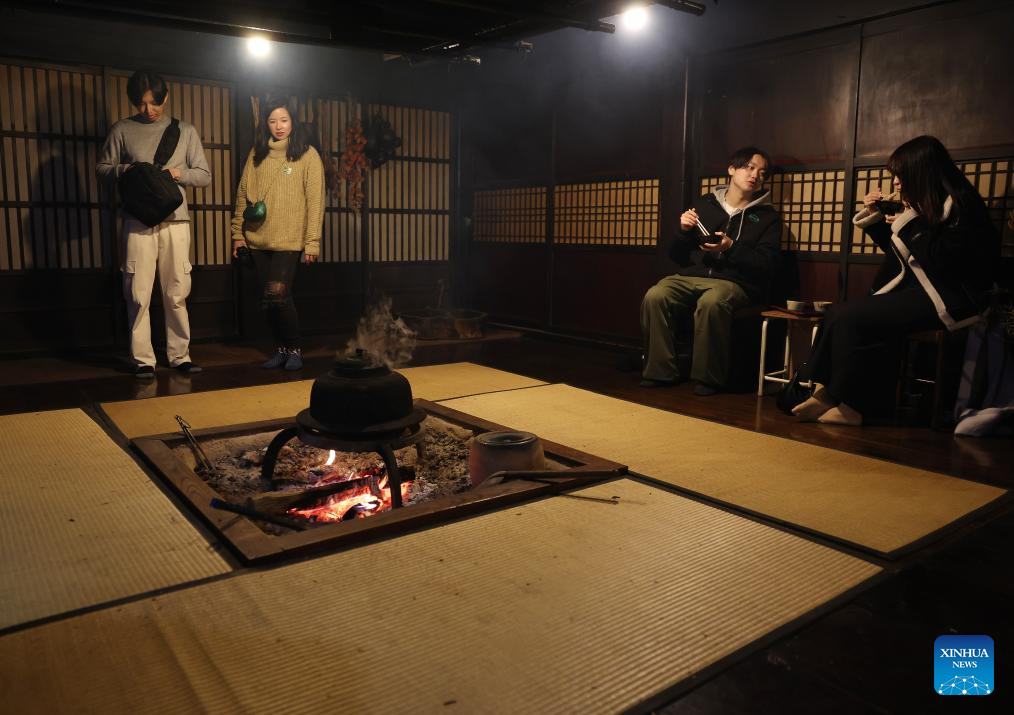
Tourists experience local lifestyle inside a Gassho-zukuri house in Shirakawa-go, Japan, Feb. 25, 2025. Shirakawa-go in Japan's Ono District of Gifu Prefecture is surrounded by towering mountains, where heavy snowfall of more than 1 meter thick in winter often causes traffic interruptions.
The harsh climate there has given birth to its unique architectural style known as "Gassho-zukuri," characterized by its steeply pitched, thatched roofs resembling a pair of hands pressed together in prayer.
The roof, built entirely with wood and straw without the use of nails, forms a 60-degree angle to let the snow slide off easily. The beam of the house is oriented east-west to ensure ample natural lighting and to reduce wind resistance.
Today, visitors can immerse themselves in an open-air, living museum for Gassho-zukuri, which features 25 of such traditional houses, complemented by waterwheels and temples. Guests are allowed to closely observe the architectural details of the Gassho-zukuri roofs, relax by a hearth, and savor a bowl of traditional mochi red bean soup. (Xinhua/Jia Haocheng)
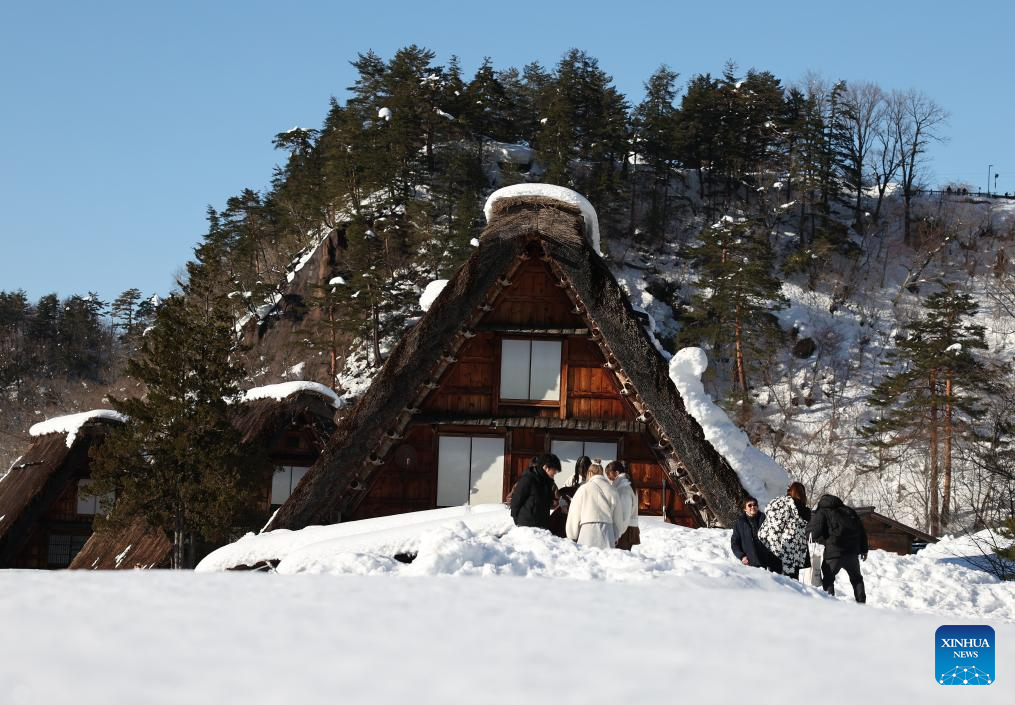
Tourists visit a Gassho-zukuri house in Shirakawa-go, Japan, Feb. 25, 2025. Shirakawa-go in Japan's Ono District of Gifu Prefecture is surrounded by towering mountains, where heavy snowfall of more than 1 meter thick in winter often causes traffic interruptions.
The harsh climate there has given birth to its unique architectural style known as "Gassho-zukuri," characterized by its steeply pitched, thatched roofs resembling a pair of hands pressed together in prayer.
The roof, built entirely with wood and straw without the use of nails, forms a 60-degree angle to let the snow slide off easily. The beam of the house is oriented east-west to ensure ample natural lighting and to reduce wind resistance.
Today, visitors can immerse themselves in an open-air, living museum for Gassho-zukuri, which features 25 of such traditional houses, complemented by waterwheels and temples. Guests are allowed to closely observe the architectural details of the Gassho-zukuri roofs, relax by a hearth, and savor a bowl of traditional mochi red bean soup. (Xinhua/Jia Haocheng)
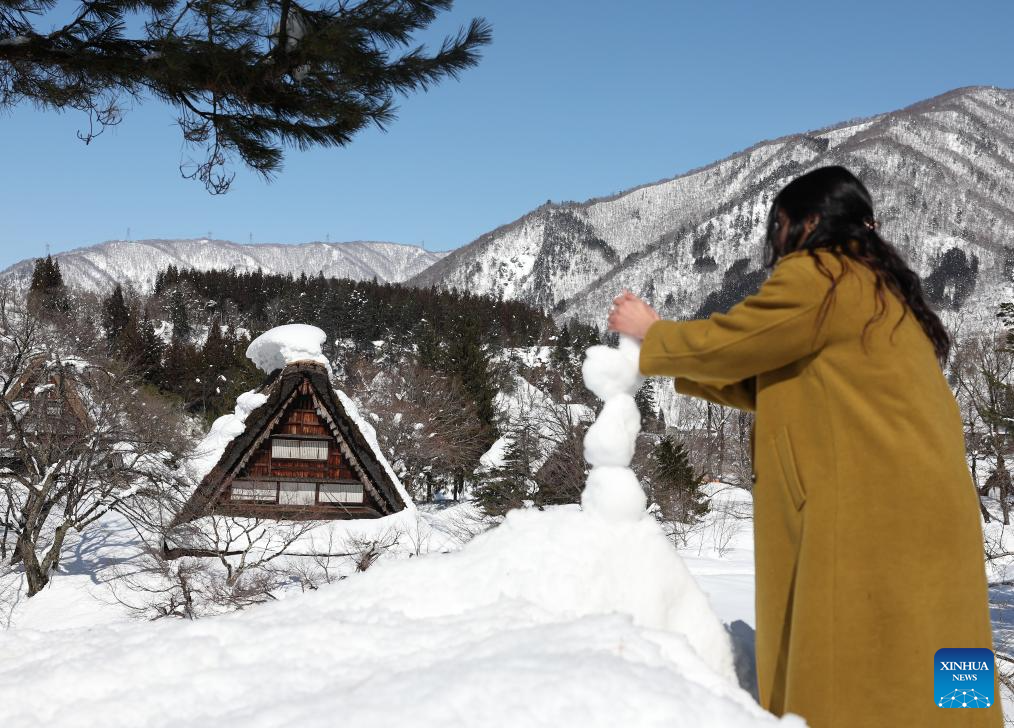
A tourist has fun at an open-air museum for Gassho-zukuri in Shirakawa-go, Japan, Feb. 25, 2025. Shirakawa-go in Japan's Ono District of Gifu Prefecture is surrounded by towering mountains, where heavy snowfall of more than 1 meter thick in winter often causes traffic interruptions.
The harsh climate there has given birth to its unique architectural style known as "Gassho-zukuri," characterized by its steeply pitched, thatched roofs resembling a pair of hands pressed together in prayer.
The roof, built entirely with wood and straw without the use of nails, forms a 60-degree angle to let the snow slide off easily. The beam of the house is oriented east-west to ensure ample natural lighting and to reduce wind resistance.
Today, visitors can immerse themselves in an open-air, living museum for Gassho-zukuri, which features 25 of such traditional houses, complemented by waterwheels and temples. Guests are allowed to closely observe the architectural details of the Gassho-zukuri roofs, relax by a hearth, and savor a bowl of traditional mochi red bean soup. (Xinhua/Jia Haocheng)
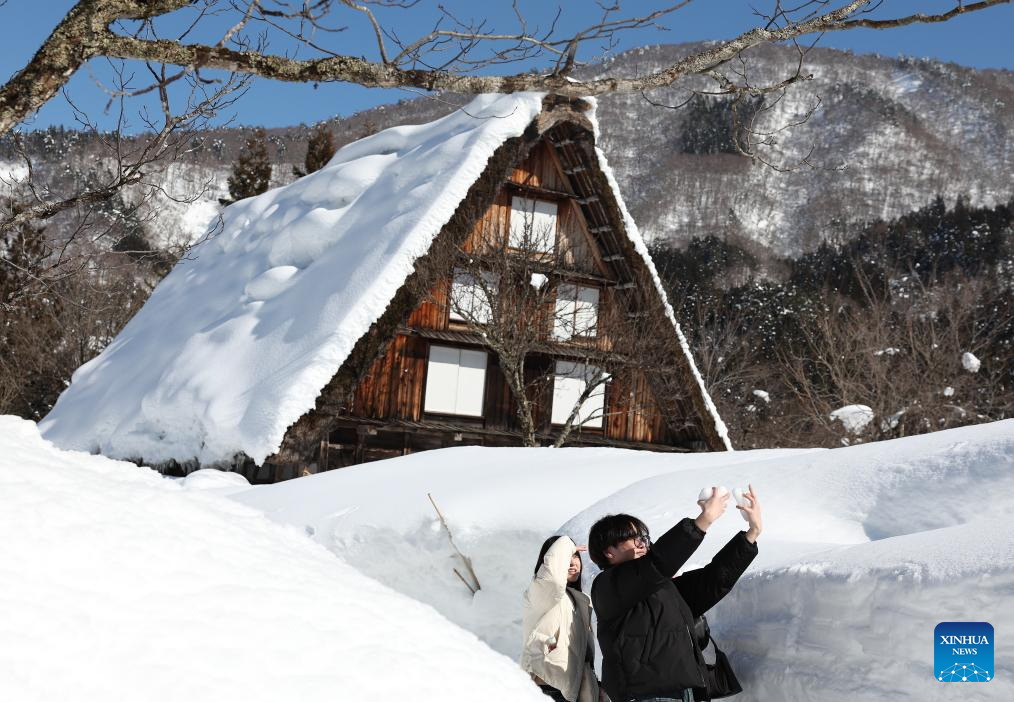
Tourists visit an open-air museum for Gassho-zukuri in Shirakawa-go, Japan, Feb. 25, 2025. Shirakawa-go in Japan's Ono District of Gifu Prefecture is surrounded by towering mountains, where heavy snowfall of more than 1 meter thick in winter often causes traffic interruptions.
The harsh climate there has given birth to its unique architectural style known as "Gassho-zukuri," characterized by its steeply pitched, thatched roofs resembling a pair of hands pressed together in prayer.
The roof, built entirely with wood and straw without the use of nails, forms a 60-degree angle to let the snow slide off easily. The beam of the house is oriented east-west to ensure ample natural lighting and to reduce wind resistance.
Today, visitors can immerse themselves in an open-air, living museum for Gassho-zukuri, which features 25 of such traditional houses, complemented by waterwheels and temples. Guests are allowed to closely observe the architectural details of the Gassho-zukuri roofs, relax by a hearth, and savor a bowl of traditional mochi red bean soup. (Xinhua/Jia Haocheng)
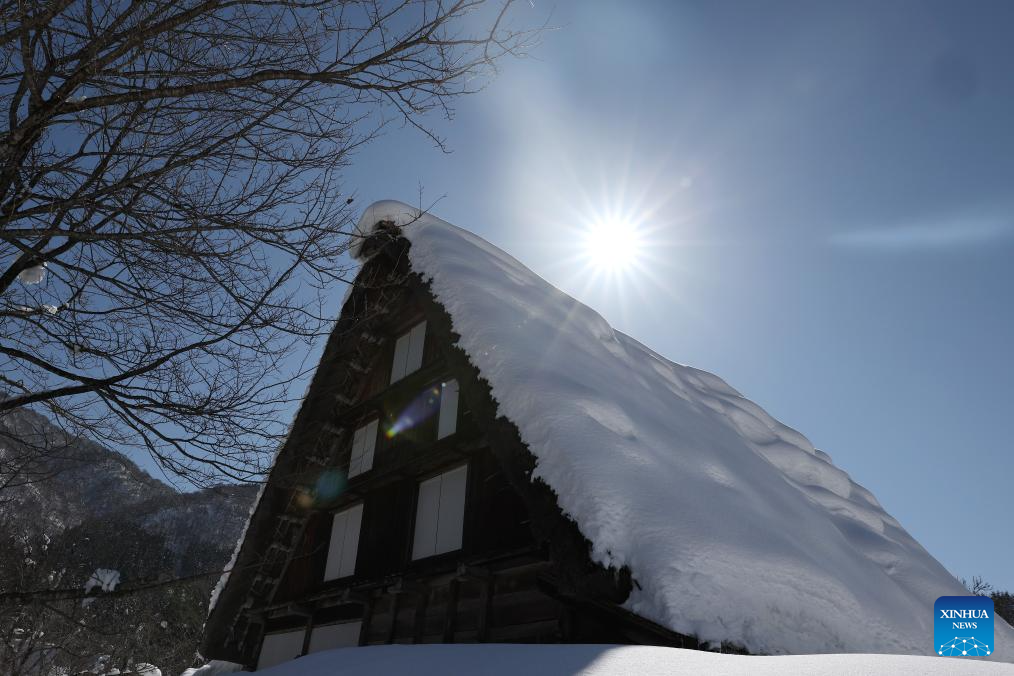
This photo taken on Feb. 25, 2025 shows a Gassho-zukuri house covered in snow in Shirakawa-go, Japan. Shirakawa-go in Japan's Ono District of Gifu Prefecture is surrounded by towering mountains, where heavy snowfall of more than 1 meter thick in winter often causes traffic interruptions.
The harsh climate there has given birth to its unique architectural style known as "Gassho-zukuri," characterized by its steeply pitched, thatched roofs resembling a pair of hands pressed together in prayer.
The roof, built entirely with wood and straw without the use of nails, forms a 60-degree angle to let the snow slide off easily. The beam of the house is oriented east-west to ensure ample natural lighting and to reduce wind resistance.
Today, visitors can immerse themselves in an open-air, living museum for Gassho-zukuri, which features 25 of such traditional houses, complemented by waterwheels and temples. Guests are allowed to closely observe the architectural details of the Gassho-zukuri roofs, relax by a hearth, and savor a bowl of traditional mochi red bean soup. (Xinhua/Jia Haocheng)
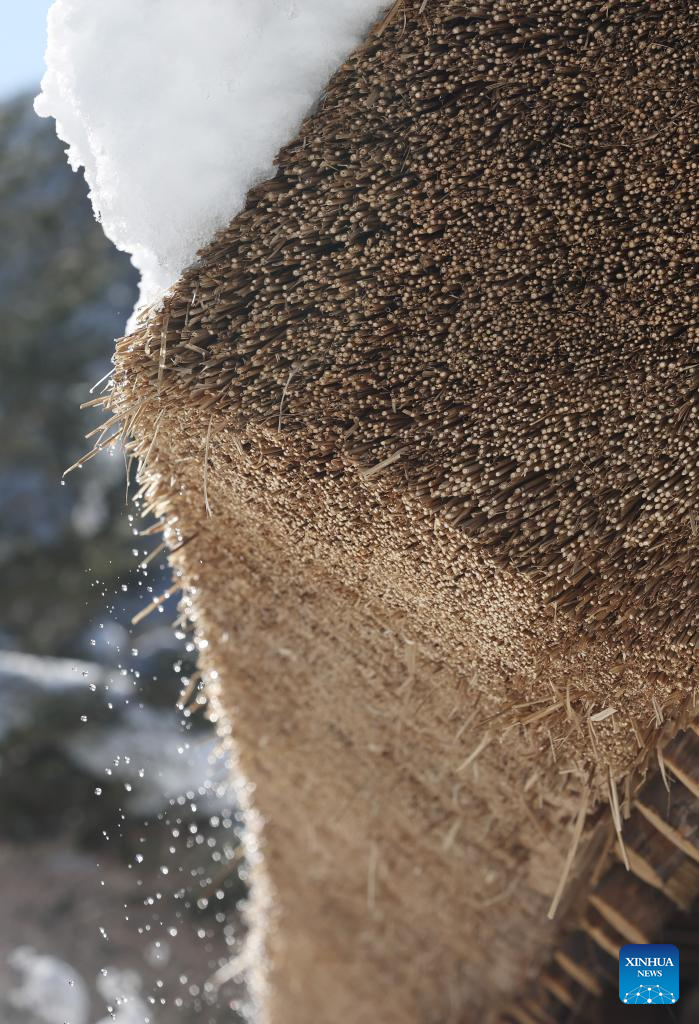
This photo taken on Feb. 25, 2025 shows part of the steeply pitched, thatched roof of a Gassho-zukuri house in Shirakawa-go, Japan. Shirakawa-go in Japan's Ono District of Gifu Prefecture is surrounded by towering mountains, where heavy snowfall of more than 1 meter thick in winter often causes traffic interruptions.
The harsh climate there has given birth to its unique architectural style known as "Gassho-zukuri," characterized by its steeply pitched, thatched roofs resembling a pair of hands pressed together in prayer.
The roof, built entirely with wood and straw without the use of nails, forms a 60-degree angle to let the snow slide off easily. The beam of the house is oriented east-west to ensure ample natural lighting and to reduce wind resistance.
Today, visitors can immerse themselves in an open-air, living museum for Gassho-zukuri, which features 25 of such traditional houses, complemented by waterwheels and temples. Guests are allowed to closely observe the architectural details of the Gassho-zukuri roofs, relax by a hearth, and savor a bowl of traditional mochi red bean soup. (Xinhua/Jia Haocheng)
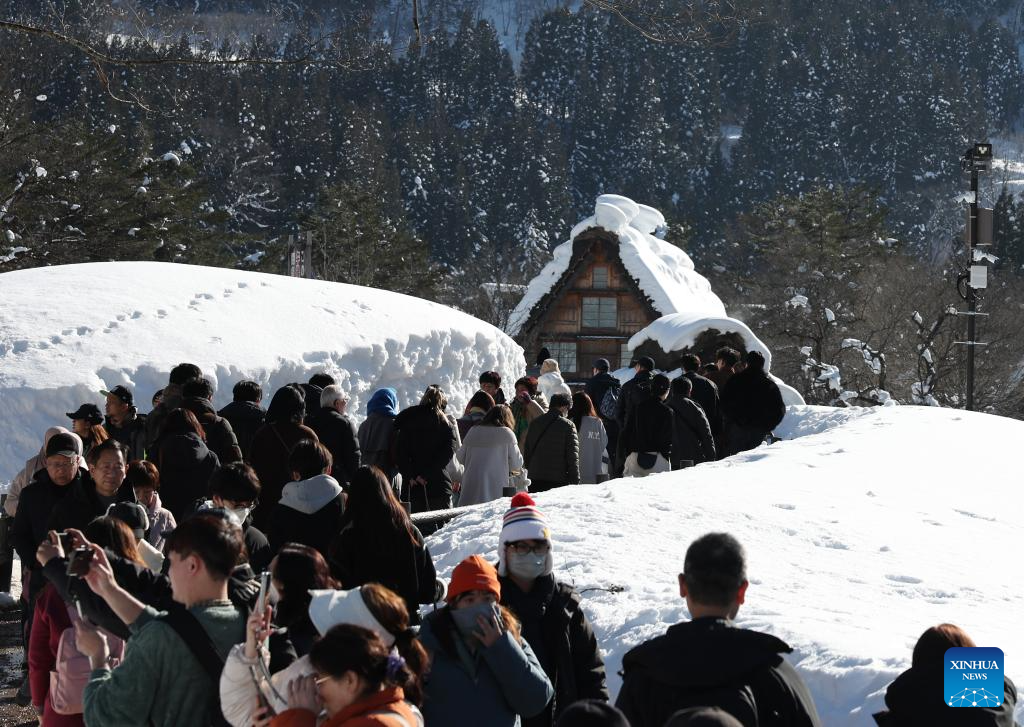
Tourists visit Gassho-zukuri houses in Shirakawa-go, Japan, Feb. 25, 2025. Shirakawa-go in Japan's Ono District of Gifu Prefecture is surrounded by towering mountains, where heavy snowfall of more than 1 meter thick in winter often causes traffic interruptions.
The harsh climate there has given birth to its unique architectural style known as "Gassho-zukuri," characterized by its steeply pitched, thatched roofs resembling a pair of hands pressed together in prayer.
The roof, built entirely with wood and straw without the use of nails, forms a 60-degree angle to let the snow slide off easily. The beam of the house is oriented east-west to ensure ample natural lighting and to reduce wind resistance.
Today, visitors can immerse themselves in an open-air, living museum for Gassho-zukuri, which features 25 of such traditional houses, complemented by waterwheels and temples. Guests are allowed to closely observe the architectural details of the Gassho-zukuri roofs, relax by a hearth, and savor a bowl of traditional mochi red bean soup. (Xinhua/Jia Haocheng)
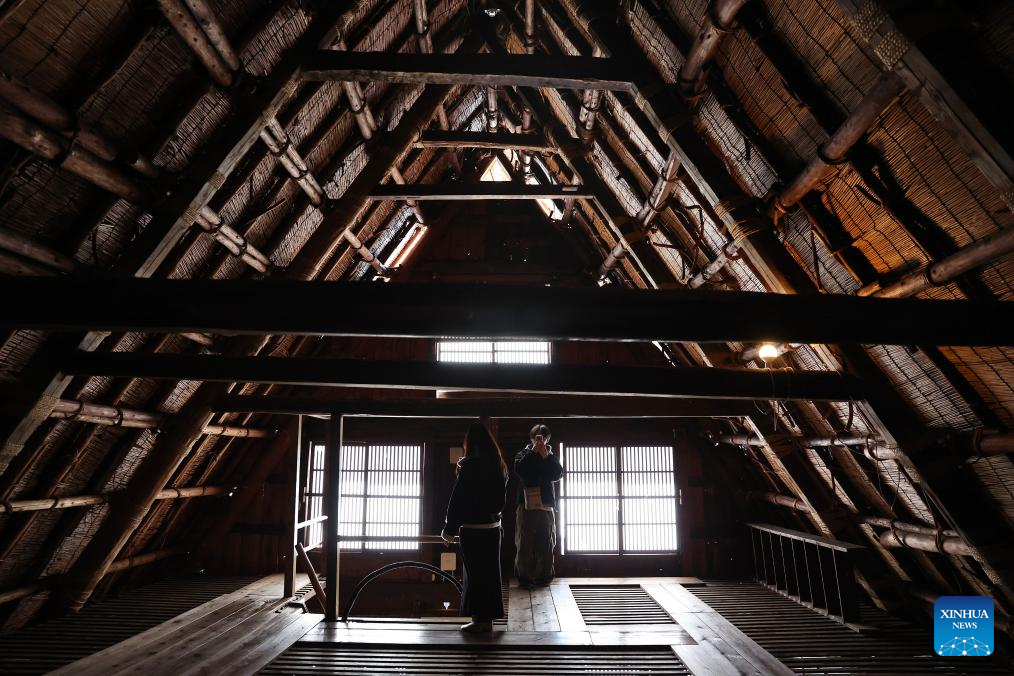
A tourist poses for photos inside the roof of a Gassho-zukuri house in Shirakawa-go, Japan, Feb. 25, 2025. Shirakawa-go in Japan's Ono District of Gifu Prefecture is surrounded by towering mountains, where heavy snowfall of more than 1 meter thick in winter often causes traffic interruptions.
The harsh climate there has given birth to its unique architectural style known as "Gassho-zukuri," characterized by its steeply pitched, thatched roofs resembling a pair of hands pressed together in prayer.
The roof, built entirely with wood and straw without the use of nails, forms a 60-degree angle to let the snow slide off easily. The beam of the house is oriented east-west to ensure ample natural lighting and to reduce wind resistance.
Today, visitors can immerse themselves in an open-air, living museum for Gassho-zukuri, which features 25 of such traditional houses, complemented by waterwheels and temples. Guests are allowed to closely observe the architectural details of the Gassho-zukuri roofs, relax by a hearth, and savor a bowl of traditional mochi red bean soup. (Xinhua/Jia Haocheng)
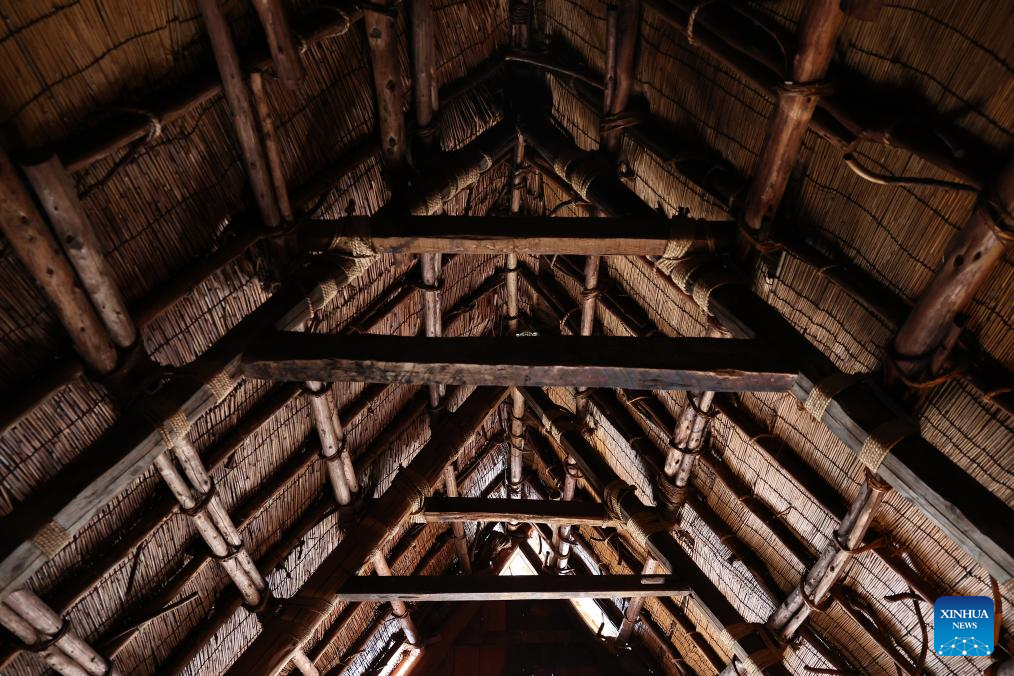
This photo taken on Feb. 25, 2025 shows the roof framing of Gassho-zukuri in Shirakawa-go, Japan. Shirakawa-go in Japan's Ono District of Gifu Prefecture is surrounded by towering mountains, where heavy snowfall of more than 1 meter thick in winter often causes traffic interruptions.
The harsh climate there has given birth to its unique architectural style known as "Gassho-zukuri," characterized by its steeply pitched, thatched roofs resembling a pair of hands pressed together in prayer.
The roof, built entirely with wood and straw without the use of nails, forms a 60-degree angle to let the snow slide off easily. The beam of the house is oriented east-west to ensure ample natural lighting and to reduce wind resistance.
Today, visitors can immerse themselves in an open-air, living museum for Gassho-zukuri, which features 25 of such traditional houses, complemented by waterwheels and temples. Guests are allowed to closely observe the architectural details of the Gassho-zukuri roofs, relax by a hearth, and savor a bowl of traditional mochi red bean soup. (Xinhua/Jia Haocheng)


