

(220602) -- LANGXI, June 2, 2022 (Xinhua) -- Photo taken on June 2, 2022 shows an artificially-bred Chinese alligator to be released to the wild at a national nature reserve in Langxi County, east China's Anhui Province. Over 370 artificially-bred Chinese rare alligators, also known as the Yangtze alligator, will be released to the wild at a national nature reserve from June 2.
The Yangtze alligator has lived on earth for over 200 million years. It is a first-class protected animal endemic to China.
Since 2019, protections of the species, including reintroduction to the wild and habitat conservation, have been implemented in the province to restore its population.
Thanks to the efforts, the population of the Chinese alligators living in the wild has surpassed 1,000. Those alligators have adapted to the wild environment and successively reproduced. (Xinhua/Du Yu)
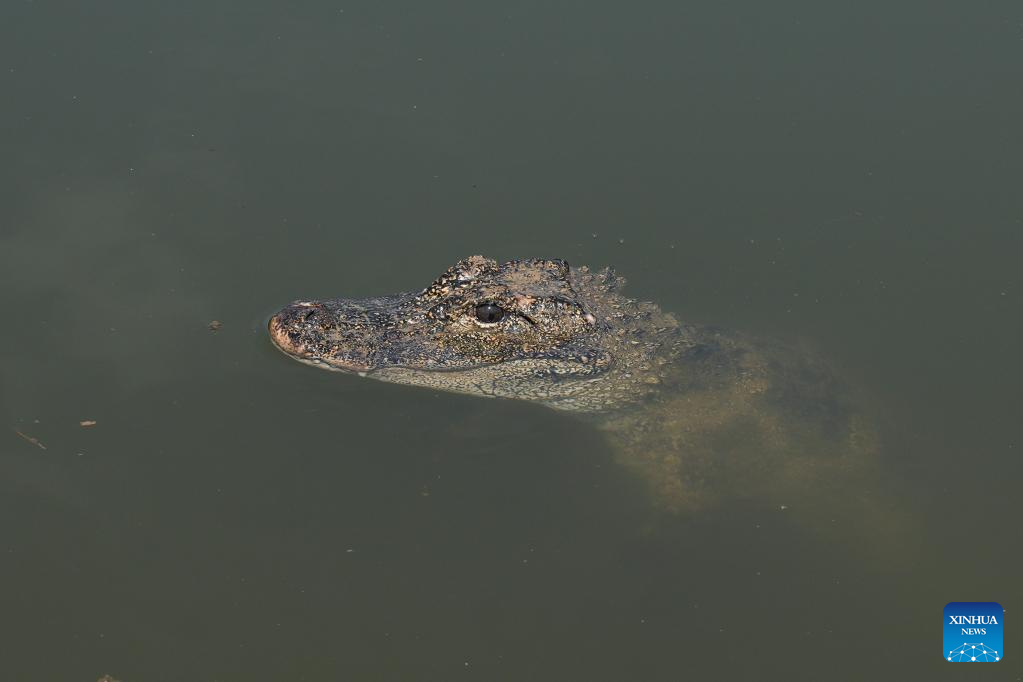
Photo taken on June 2, 2022 shows an artificially-bred Chinese alligator released to a pond at a national nature reserve in Langxi County, east China's Anhui Province. Over 370 artificially-bred Chinese rare alligators, also known as the Yangtze alligator, will be released to the wild at a national nature reserve from June 2.
The Yangtze alligator has lived on earth for over 200 million years. It is a first-class protected animal endemic to China.
Since 2019, protections of the species, including reintroduction to the wild and habitat conservation, have been implemented in the province to restore its population.
Thanks to the efforts, the population of the Chinese alligators living in the wild has surpassed 1,000. Those alligators have adapted to the wild environment and successively reproduced. (Xinhua/Du Yu)
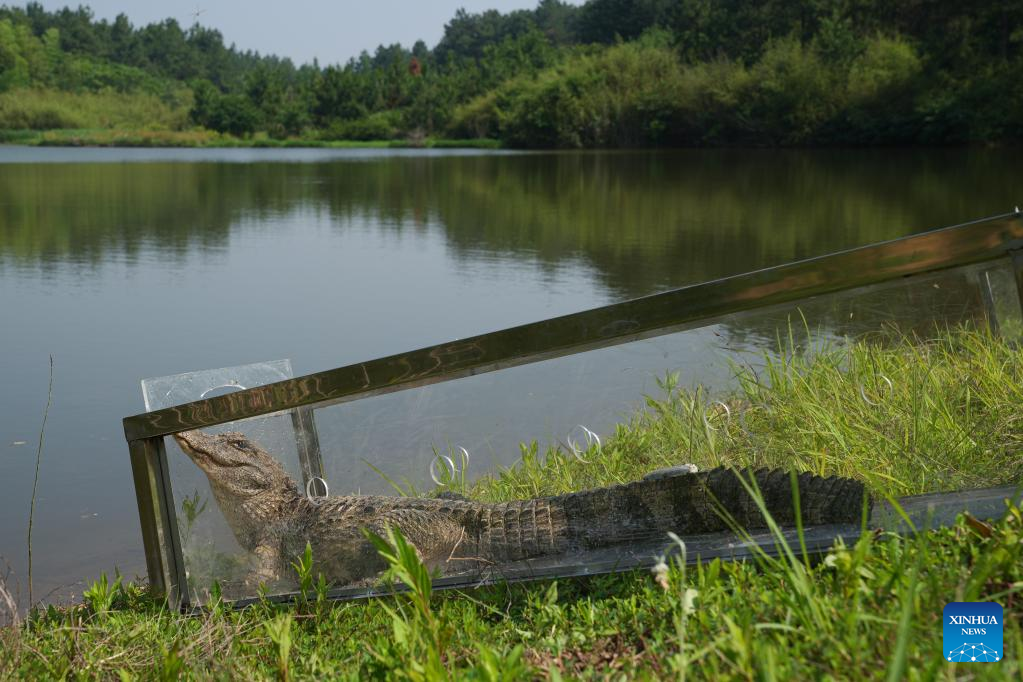
Photo taken on June 2, 2022 shows an artificially-bred Chinese alligator to be released to the wild at a national nature reserve in Langxi County, east China's Anhui Province. Over 370 artificially-bred Chinese rare alligators, also known as the Yangtze alligator, will be released to the wild at a national nature reserve from June 2.
The Yangtze alligator has lived on earth for over 200 million years. It is a first-class protected animal endemic to China.
Since 2019, protections of the species, including reintroduction to the wild and habitat conservation, have been implemented in the province to restore its population.
Thanks to the efforts, the population of the Chinese alligators living in the wild has surpassed 1,000. Those alligators have adapted to the wild environment and successively reproduced. (Xinhua/Du Yu)
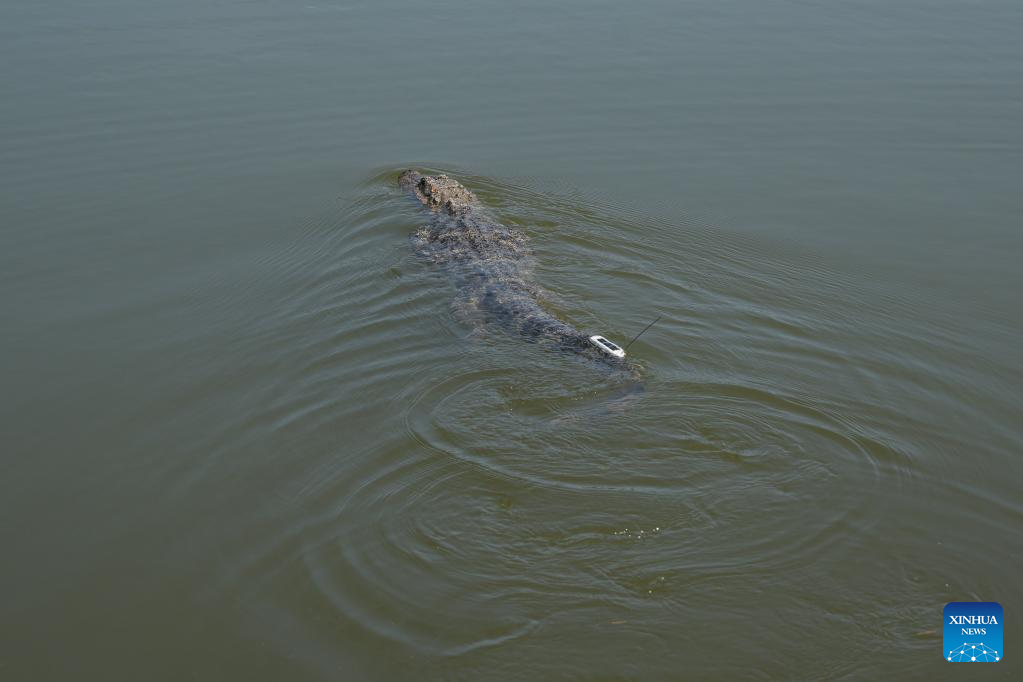
Photo taken on June 2, 2022 shows an artificially-bred Chinese alligator released to a pond at a national nature reserve in Langxi County, east China's Anhui Province. Over 370 artificially-bred Chinese rare alligators, also known as the Yangtze alligator, will be released to the wild at a national nature reserve from June 2.
The Yangtze alligator has lived on earth for over 200 million years. It is a first-class protected animal endemic to China.
Since 2019, protections of the species, including reintroduction to the wild and habitat conservation, have been implemented in the province to restore its population.
Thanks to the efforts, the population of the Chinese alligators living in the wild has surpassed 1,000. Those alligators have adapted to the wild environment and successively reproduced. (Xinhua/Du Yu)
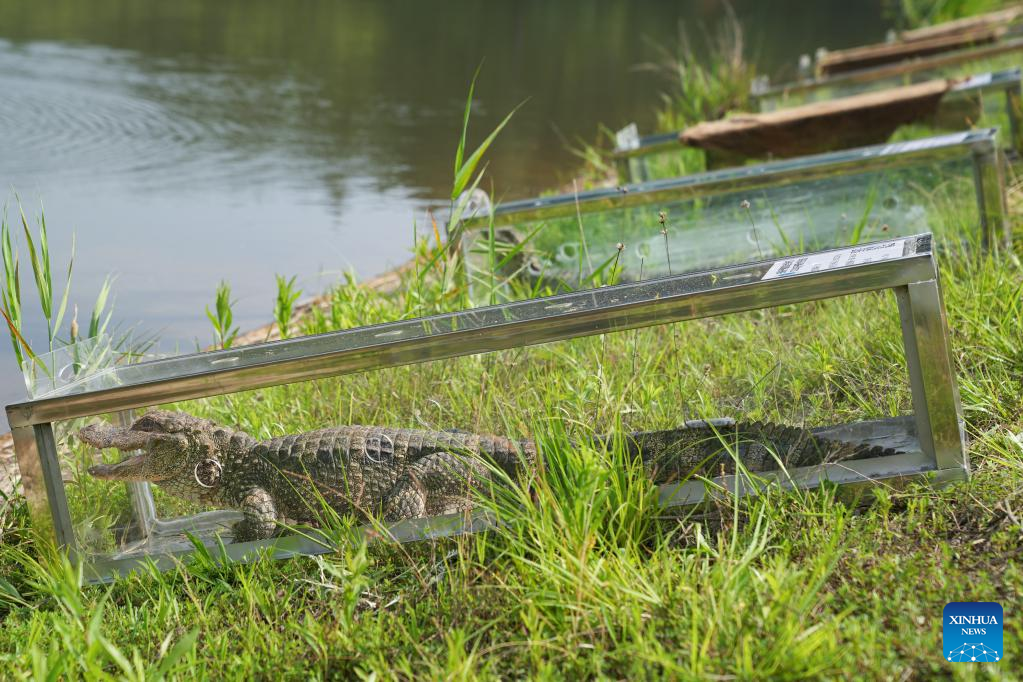
Photo taken on June 2, 2022 shows artificially-bred Chinese alligators to be released to the wild at a national nature reserve in Langxi County, east China's Anhui Province. Over 370 artificially-bred Chinese rare alligators, also known as the Yangtze alligator, will be released to the wild at a national nature reserve from June 2.
The Yangtze alligator has lived on earth for over 200 million years. It is a first-class protected animal endemic to China.
Since 2019, protections of the species, including reintroduction to the wild and habitat conservation, have been implemented in the province to restore its population.
Thanks to the efforts, the population of the Chinese alligators living in the wild has surpassed 1,000. Those alligators have adapted to the wild environment and successively reproduced. (Xinhua/Du Yu)
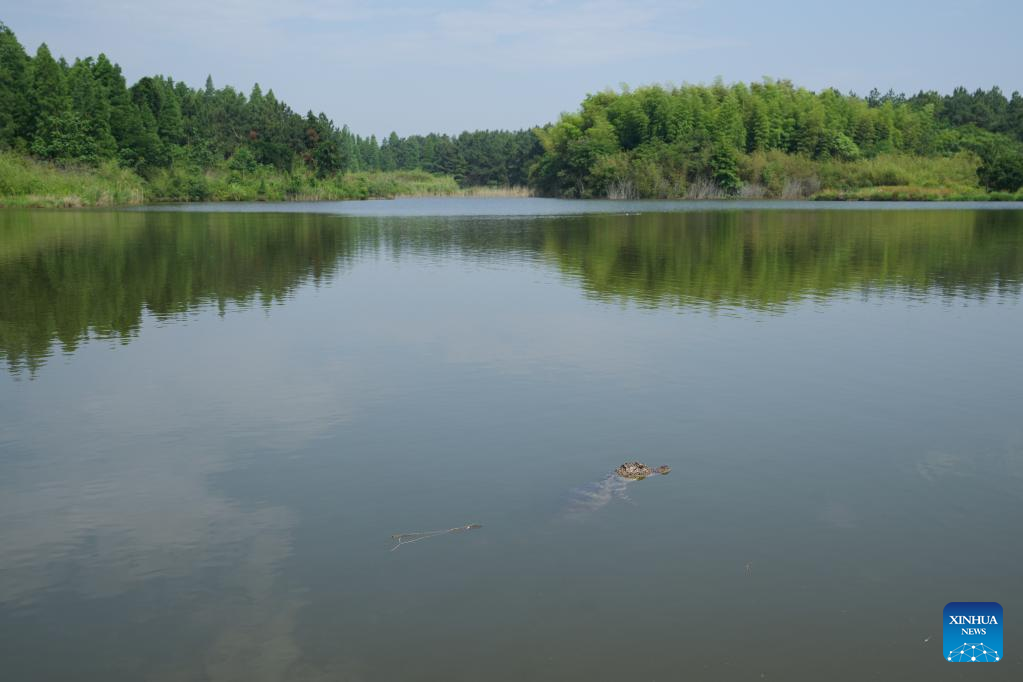
Photo taken on June 2, 2022 shows an artificially-bred Chinese alligator released to a pond at a national nature reserve in Langxi County, east China's Anhui Province. Over 370 artificially-bred Chinese rare alligators, also known as the Yangtze alligator, will be released to the wild at a national nature reserve from June 2.
The Yangtze alligator has lived on earth for over 200 million years. It is a first-class protected animal endemic to China.
Since 2019, protections of the species, including reintroduction to the wild and habitat conservation, have been implemented in the province to restore its population.
Thanks to the efforts, the population of the Chinese alligators living in the wild has surpassed 1,000. Those alligators have adapted to the wild environment and successively reproduced. (Xinhua/Du Yu)
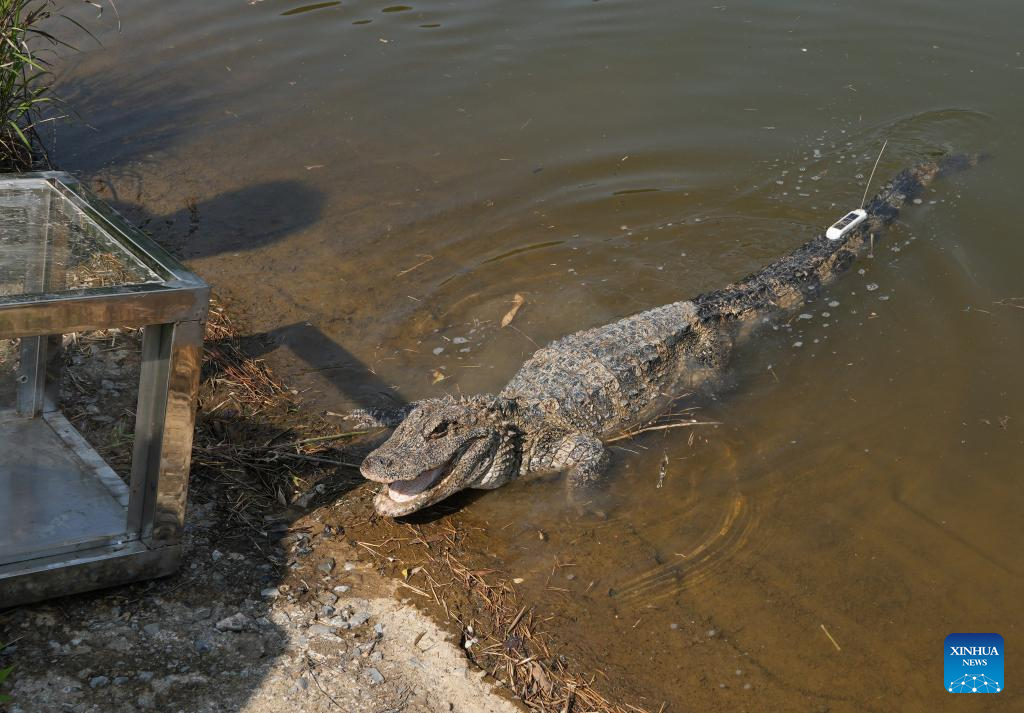
Photo taken on June 2, 2022 shows an artificially-bred Chinese alligator released to a pond at a national nature reserve in Langxi County, east China's Anhui Province. Over 370 artificially-bred Chinese rare alligators, also known as the Yangtze alligator, will be released to the wild at a national nature reserve from June 2.
The Yangtze alligator has lived on earth for over 200 million years. It is a first-class protected animal endemic to China.
Since 2019, protections of the species, including reintroduction to the wild and habitat conservation, have been implemented in the province to restore its population.
Thanks to the efforts, the population of the Chinese alligators living in the wild has surpassed 1,000. Those alligators have adapted to the wild environment and successively reproduced. (Xinhua/Du Yu)
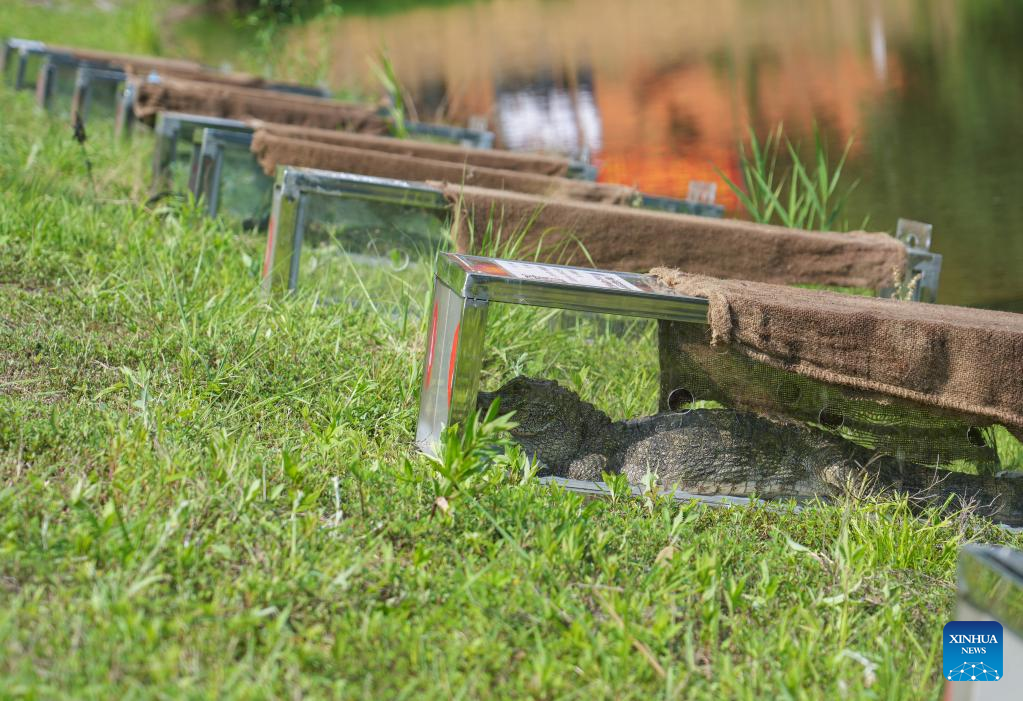
Photo taken on June 2, 2022 shows artificially-bred Chinese alligators to be released to the wild at a national nature reserve in Langxi County, east China's Anhui Province. Over 370 artificially-bred Chinese rare alligators, also known as the Yangtze alligator, will be released to the wild at a national nature reserve from June 2.
The Yangtze alligator has lived on earth for over 200 million years. It is a first-class protected animal endemic to China.
Since 2019, protections of the species, including reintroduction to the wild and habitat conservation, have been implemented in the province to restore its population.
Thanks to the efforts, the population of the Chinese alligators living in the wild has surpassed 1,000. Those alligators have adapted to the wild environment and successively reproduced. (Xinhua/Du Yu)
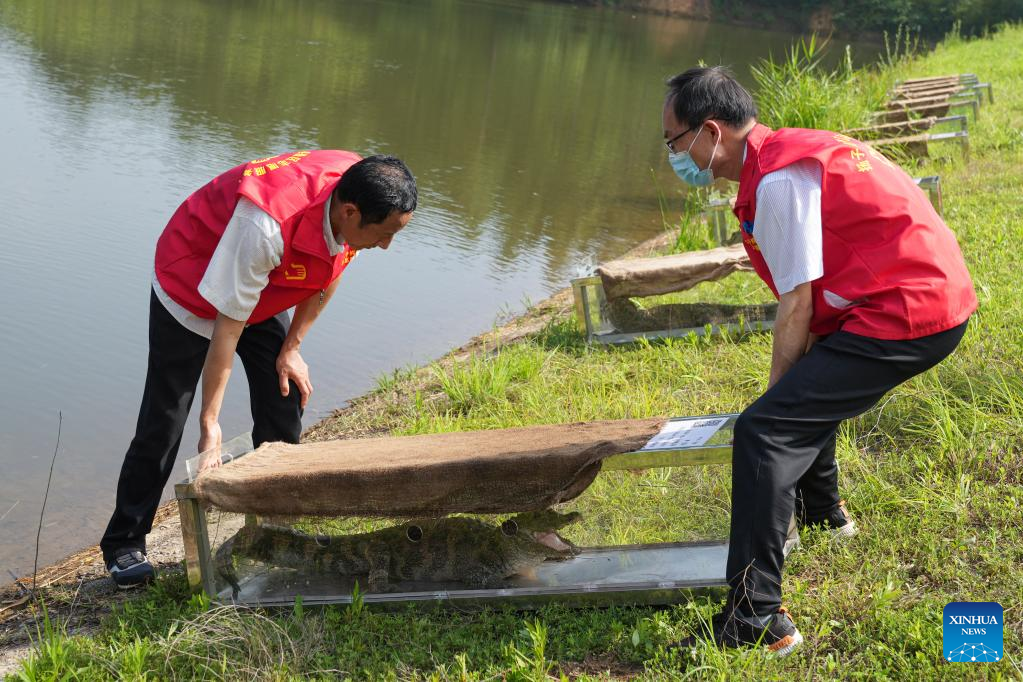
Staff members prepare to set an artificially-bred Chinese alligator free to the wild at a national nature reserve in Langxi County, east China's Anhui Province, June 2, 2022. Over 370 artificially-bred Chinese rare alligators, also known as the Yangtze alligator, will be released to the wild at a national nature reserve from June 2.
The Yangtze alligator has lived on earth for over 200 million years. It is a first-class protected animal endemic to China.
Since 2019, protections of the species, including reintroduction to the wild and habitat conservation, have been implemented in the province to restore its population.
Thanks to the efforts, the population of the Chinese alligators living in the wild has surpassed 1,000. Those alligators have adapted to the wild environment and successively reproduced. (Xinhua/Du Yu)

Photo taken on June 2, 2022 shows artificially-bred Chinese alligators to be released to the wild at a national nature reserve in Langxi County, east China's Anhui Province. Over 370 artificially-bred Chinese rare alligators, also known as the Yangtze alligator, will be released to the wild at a national nature reserve from June 2.
The Yangtze alligator has lived on earth for over 200 million years. It is a first-class protected animal endemic to China.
Since 2019, protections of the species, including reintroduction to the wild and habitat conservation, have been implemented in the province to restore its population.
Thanks to the efforts, the population of the Chinese alligators living in the wild has surpassed 1,000. Those alligators have adapted to the wild environment and successively reproduced. (Xinhua/Du Yu)
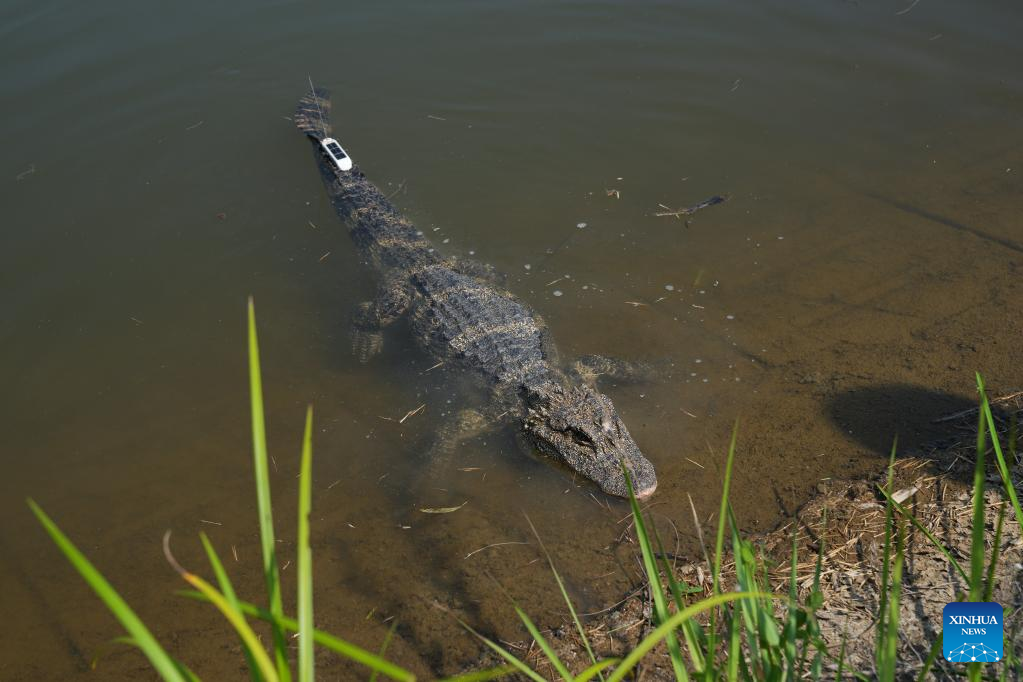
A released artificially-bred Chinese alligator is seen in a pond at a national nature reserve in Langxi County, east China's Anhui Province, June 2, 2022. Over 370 artificially-bred Chinese rare alligators, also known as the Yangtze alligator, will be released to the wild at a national nature reserve from June 2.
The Yangtze alligator has lived on earth for over 200 million years. It is a first-class protected animal endemic to China.
Since 2019, protections of the species, including reintroduction to the wild and habitat conservation, have been implemented in the province to restore its population.
Thanks to the efforts, the population of the Chinese alligators living in the wild has surpassed 1,000. Those alligators have adapted to the wild environment and successively reproduced. (Xinhua/Du Yu)
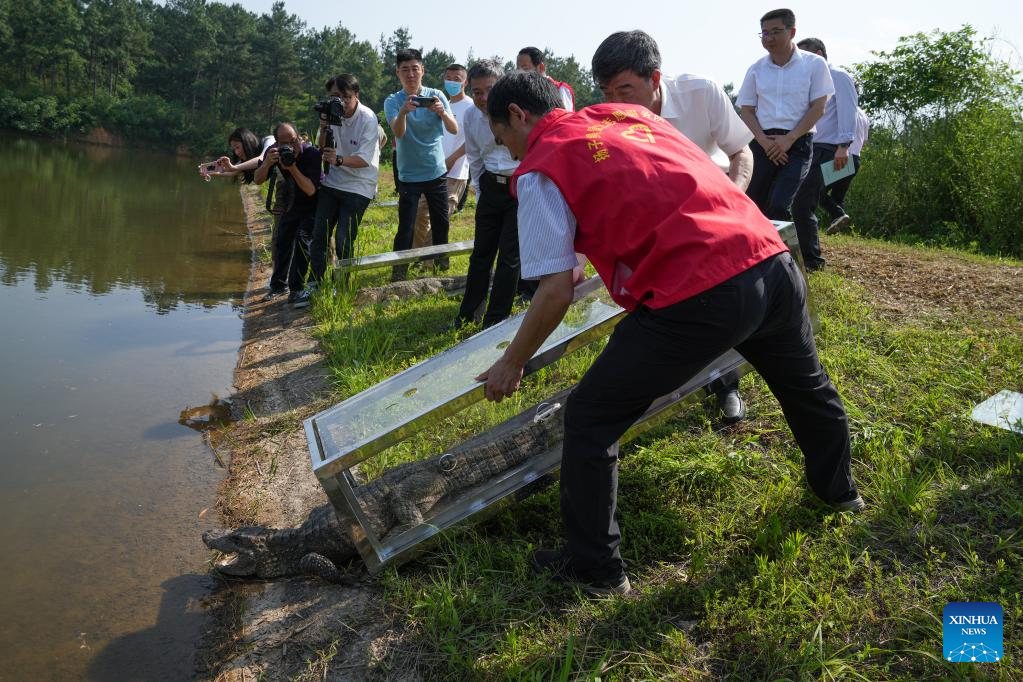
Staff members prepare to set an artificially-bred Chinese alligator free to the wild at a national nature reserve in Langxi County, east China's Anhui Province, June 2, 2022. Over 370 artificially-bred Chinese rare alligators, also known as the Yangtze alligator, will be released to the wild at a national nature reserve from June 2.
The Yangtze alligator has lived on earth for over 200 million years. It is a first-class protected animal endemic to China.
Since 2019, protections of the species, including reintroduction to the wild and habitat conservation, have been implemented in the province to restore its population.
Thanks to the efforts, the population of the Chinese alligators living in the wild has surpassed 1,000. Those alligators have adapted to the wild environment and successively reproduced. (Xinhua/Du Yu)


